
🌳 Ash
What it looks like
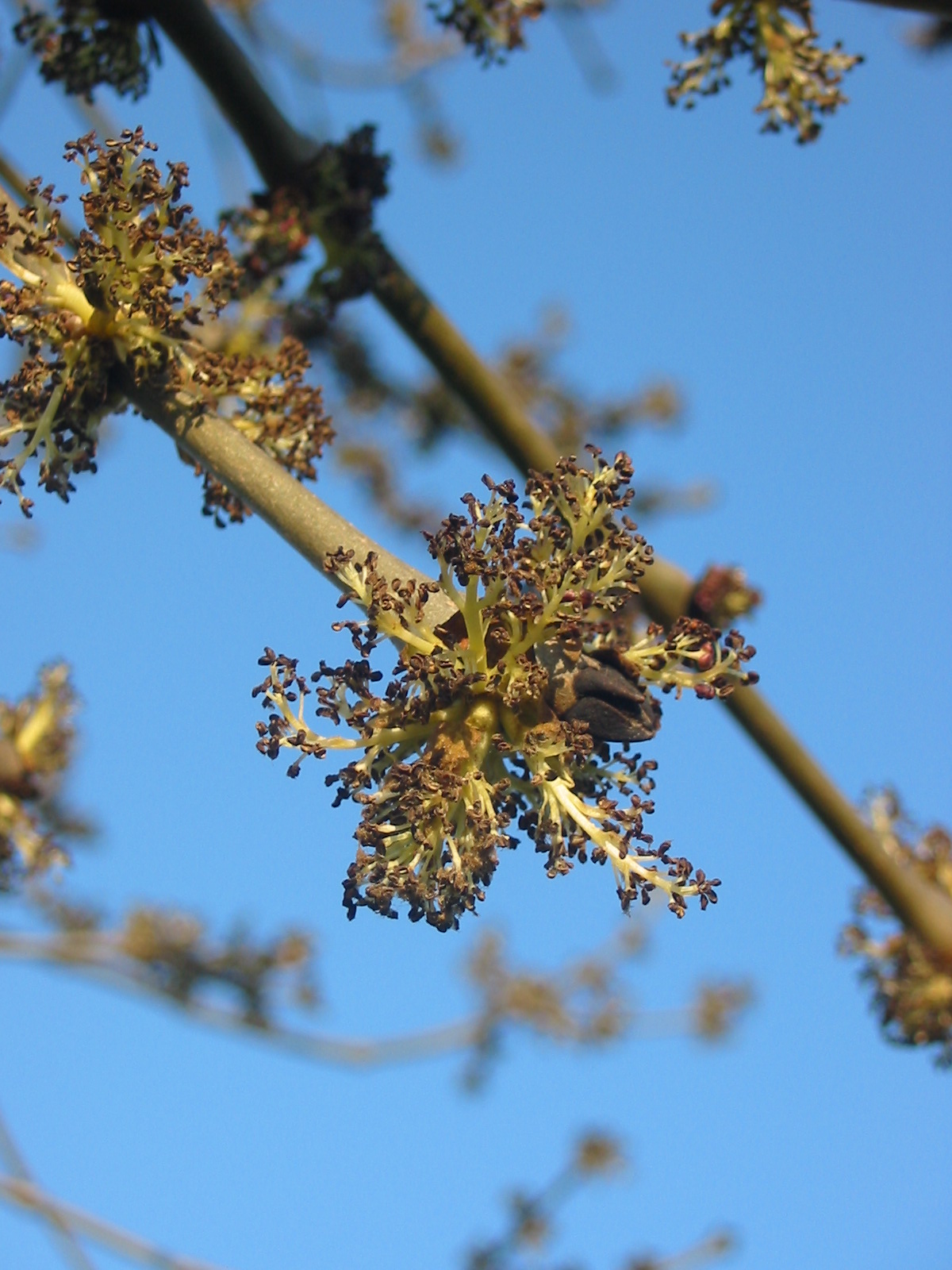
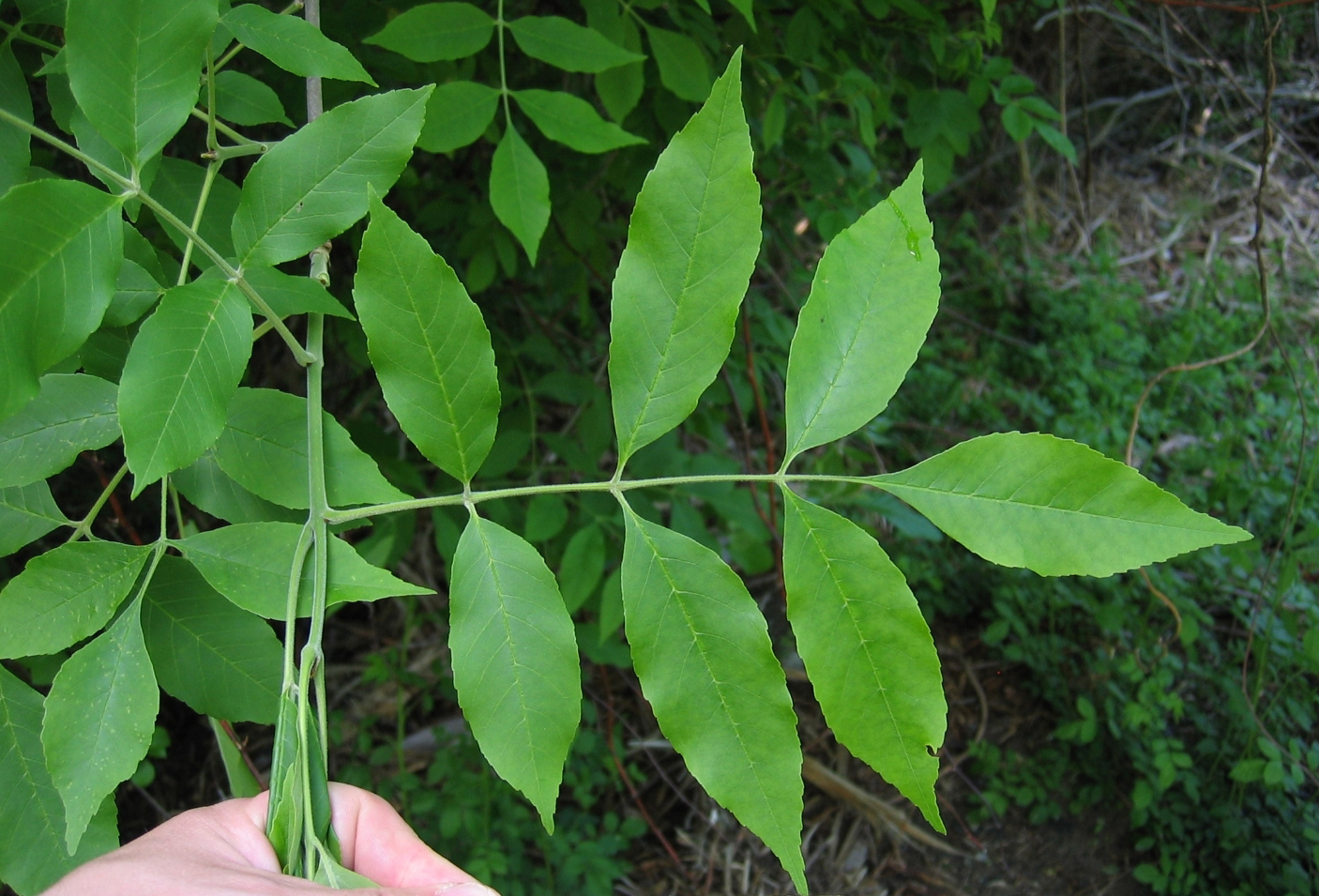
Ash is a genus of 45 to 65 species of usually medium-to-large trees, most of them deciduous, native to the temperate regions of the Northern Hemisphere, and it belongs to the olive family, Oleaceae — which makes the ash a cousin of the olive, the lilac and the privet, a family reunion nobody would predict from looking at the guest list. The name Fraxinus is simply the classical Latin name for the tree, which is reassuringly straightforward in a botanical world that usually makes you work harder than that.
Identification starts with the leaves, and ash leaves are a pleasure to learn because they break the usual tree rules in a memorable way. They are opposite — arranged in pairs across the stem from each other, where most trees alternate — and they are mostly pinnately compound, a central stalk with leaflets arranged along it like a feather. Count the leaflets and you are halfway to the species: green ash usually has seven to nine leaflets, white ash usually seven, black ash has stalkless leaflets that sit directly on the stalk. The leaflets are toothed, glossy green above, and they turn yellow, sometimes purple or red, in autumn. In winter, when the leaves are gone, look at the buds and the bark: ash buds are stout and distinctive — jet-black in European ash, velvety reddish-brown in green ash — and mature bark forms interlacing ridges in a diamond or basket-weave pattern that, once learned, is unmistakable.
The flowers are not what you plant an ash for, and the tree knows it. They are small, inconspicuous, and petal-less, appearing in spring before or with the leaves in compact clusters, and they are wind-pollinated, which is why they do not need to dress up. Most Fraxinus species are dioecious, meaning male and female flowers grow on separate trees, so a female ash in autumn carries the fruit while her male neighbour carries nothing but pride. The fruit is the famous part: the samara, popularly called a key, a single-winged seed that hangs in dense, drooping clusters from female trees, ripens from green to tan-brown in late summer and fall, and spins away on the wind like a helicopter with somewhere to be. Children have thrown ash keys into the air for generations, and the tree has never once objected.
Size is the thing to respect before you plant. Green ash reaches 50 to 70 feet tall with a spread of 35 to 50 feet; white ash reaches 75 to 120 feet at maturity, with a straight trunk and a broadly oval crown; even the smaller ashes are substantial trees, not shrubs. An ash is a multi-decade commitment to shade, and it will reward that commitment with a broad, high canopy, deep shade in summer, and a stately presence that few other fast-growing trees can match. It will also drop a great many keys, which you will find in your gutters, your garden beds and, mysteriously, your shoes.
How to grow
Start with the honest warning, because it comes before the planting advice and it changes the decision. The emerald ash borer, Agrilus planipennis, a beetle native to Asia first discovered in the United States in 2002, has killed millions of ash trees across the Northeast and upper Midwest and continues to spread, and it typically kills an infested ash within three to five years. University extension sources now state plainly that green ash is not recommended for planting, and that the borer constitutes a serious threat to all North American ash species. That does not mean every ash everywhere is doomed — the borer’s spread is regional, some areas are still clear, and treated trees can be protected — but it does mean you should check your local emerald ash borer status before planting any ash, talk to your local extension service, and go in with your eyes open. Planting an ash in 2026 without checking for the borer is like buying a wooden boat without checking for shipworm: optimistic, and possibly expensive.
Where ash is still a sensible planting, give it full sun and room. Ashes grow best in full sun, tolerating part shade, and they want space for a broad crown — 35 to 50 feet of spread for the large species, which means spacing trees at least that far apart and well away from buildings, drives and power lines. They are fast growers, green ash famously more than two feet a year when young, and they will fill that space faster than you expect. A young ash in a small garden is a temporary condition; a mature ash in a small garden is a problem with a trunk.
Soil is where ash earns its reputation for toughness. Green ash grows in moist, well-drained soils and prefers consistently moist, humusy loams, but once established it adapts to a wide range of soils and growing conditions — clay, sand, wet bottomland and dry upland alike. White ash prefers the richer, well-drained forest soils of its native range, and black ash wants the wet lowlands, swamps and streamside forests where it is most at home. The common thread is moisture with drainage: ash likes a drink, but it does not like to stand in water indefinitely, except for black ash, which tolerates occasional flooding better than its cousins. A soil rich in organic matter, mulched well, and watered through dry spells will keep an ash happy; a compacted, bone-dry, alkaline construction site will not, though green ash will tolerate it longer than most trees before complaining.
Hardiness varies by species, so again, read the species. Green ash is listed for zones 3 to 9 and is a transcontinental species, from Nova Scotia to Alberta and south to Florida and Texas. White ash is listed for zones 4 to 9. Flowering ash, the European manna ash, is listed for zones 6 to 9 and likes cool summers. The genus as a whole spans zones 3 to 9 in its commonly planted members, which is most of the temperate world, and that breadth is part of why ash became such a ubiquitous street and shade tree — until the borer arrived and rewrote the story.
Plant in spring or fall, from nursery stock, and water deeply through the first few growing seasons. Female trees produce abundant seed crops in some years and may self-seed freely, so if you do not want a carpet of seedlings, choose a male tree or a seedless selection where one is offered — though with the borer in mind, the availability of named selections varies and you should buy from a reputable nursery that can tell you what it is actually selling. Stake a young tree only if it needs it, and remove the stake after a year; an ash that learns to stand on its own is an ash that will stand in a storm.
Water & feeding
Water an ash regularly through the growing season, especially in its first years, and reduce watering significantly in winter. A deep soak every ten to fourteen days in summer, wetting the root zone to a good depth, is the pattern one ash guide recommends, and the spirit is right: deep and occasional beats shallow and frequent, because it trains roots downward where they belong. Established ashes tolerate both drought and flooding better than most trees — green ash in particular withstands periods of each — but tolerance is not preference, and a tree watered through a dry spell will keep its canopy full and its growth steady where a neglected one will thin out and invite trouble.
Feeding is simple and infrequent. A spring application of a slow-release fertiliser is plenty for most garden ashes, and a mulch of compost or shredded bark does more good than a bag of fertiliser ever will: it holds moisture, feeds the soil slowly, suppresses weeds, and protects the trunk from mower damage, which is a real cause of young-tree decline. Keep mulch a few inches away from the trunk itself, because mulch piled against bark holds moisture there and invites rot and borers — and an ash has enough borer problems already without you building them a welcome mat. Do not fertilise a stressed or borer-damaged tree into recovery; feeding does not cure an infestation, and lush, soft growth can make a tree more attractive to pests, not less.
Pruning is a three- to five-year conversation, not an annual one. Prune in late winter or early spring while the tree is dormant, removing dead, crossing and damaged wood and opening the crown for airflow. Ash wood is strong and flexible — it is the traditional wood for tool handles, baseball bats, oars and picture frames — but a mature ash with a neglected, crowded crown is still a hazard in a storm, so keep up with the deadwood. Never top an ash. Topping destroys the tree’s structure, invites decay, and produces a flush of weak, fast-growing shoots that are more dangerous than the branches they replaced. If a mature ash needs major work, hire a certified arborist; a tree this size is not a do-it-yourself pruning project.
Common problems
- Emerald ash borer. The defining problem. Signs include D-shaped exit holes in the bark, thinning of the upper canopy, bark splitting, and increased woodpecker activity. If infestation is confirmed, options are preventive systemic insecticide for a valuable tree, or planned removal; once heavily infested, a tree is very difficult to save. Report suspected finds to your local extension or forestry service.
- Ash yellows. A phytoplasma disease that causes slow growth, tufted, yellowish foliage and decline. There is no cure; remove severely affected trees and do not propagate from them.
- Ash anthracnose and leaf spots. Fungal leaf diseases that cause blotches and early leaf drop, worst in cool, wet springs. Usually cosmetic; rake fallen leaves, improve airflow, and avoid overhead watering.
- Lilac borer, carpenterworm and scale. Green ash in particular hosts a long list of secondary insects. Healthy, well-watered trees resist them best; stressed trees invite them in.
- Seeds everywhere. Female trees rain samaras in autumn, and seedlings appear in beds, gutters and lawns. Choose a male tree if seedlings bother you, or accept the annual seedling harvest as the price of shade.
- Brittle branches in storms. Ash wood is strong but older, neglected trees can drop limbs. Regular deadwood pruning and a structural check by an arborist reduce the risk.
- It is not a prickly-ash. A naming trap: prickly-ash belongs to Zanthoxylum, a citrus relative, not to Fraxinus. If a butterfly guide mentions prickly-ash as a host, it means a different plant entirely, and this guide does not cover it.
Harvest
There is no fruit harvest from an ash, and this guide will not dress one up. The harvest is wood, shade and seed, in that order of practicality. Ash wood is famously flexible, workable, strong and lightweight — the traditional choice for tool handles, baseball bats, tennis rackets, oars, furniture and firewood — and a removed ash tree, sadly common in borer areas, yields excellent firewood once seasoned. If you must remove an ash, use the wood rather than chipping the whole tree: it is a small consolation, but a real one, and it honours a tree that gave decades of shade.
The seed harvest is for the birds, not for you. Samaras persist on the tree into winter and feed birds and small mammals through the lean months, which is one reason to leave a healthy ash standing as long as it is safe to do so. And the leaf harvest, such as it is, is mulch: ash leaves break down quickly and make good leaf mould, which is more than can be said for some trees whose leaves linger for years. Rake them onto beds in autumn and let them feed the soil that fed the tree — the closed loop, in miniature, that this whole project is about.
Browse all plant & pest guides
Saving seeds
Ash seed comes with its own helicopter. Every Fraxinus species in this group — white ash (Fraxinus americana), green ash (Fraxinus pennsylvanica), black ash (Fraxinus nigra), and their kin — produces samaras, those single-winged fruits that spin away from the tree in autumn like nature’s tiny drones. Saving ash seed is therefore mostly a matter of catching the helicopters before they leave the pad. Collect in autumn, when the samaras have turned tan to brown and started to drop, and gather them from the tree or fresh off the ground on a calm, dry day. A windy day is a donation to your neighbors’ gardens.
One quirk to know before you count your harvest: many ashes bear male and female flowers on separate trees, so a lone ash may set little or no seed at all. If your tree never seems to produce samaras, it may simply be a male — or a female with no male nearby — and no amount of encouragement will fix that. Collect from a tree that actually fruits, and gather plenty, because germination is erratic and squirrels and birds consider samaras a snack.
Clean off any debris, dry the samaras briefly in a shaded, airy spot, and store them cool and dry until you are ready to stratify. Ash seed has dormancy that a winter’s chill breaks, and this is where sources diverge, so take the range honestly: most guides give one to three months of cold, moist stratification — seed mixed with damp sand or peat in a bag in the refrigerator — while some species and seed lots need longer, and a few stubborn lots stretch germination into a second spring. Sow in spring, about a half inch to an inch deep, in deep pots of well-draining mix (ash, like oak, leads with a taproot), keep the mix moist but not soggy, and protect the pots from rodents. Germination can take weeks to months, and it may be staggered, so don’t discard a quiet pot too soon.
What will you get? Seedlings of a species, with all the natural variation that implies — which is exactly the point if you are growing species ash. What you will not get is a named cultivar: a seedling of a named ash variety will not come true, because cultivars are propagated by grafting or cuttings to keep them identical. If you want an exact ‘Autumn Purple’ or any other cultivar, you need vegetative propagation, not seed. And one practical note before you plant a small ash forest: check the emerald ash borer situation in your area first, since a tree you raise from seed still has to survive the pests waiting for it. An ash from a samara is a long, slow, slightly stubborn project — which, if you think about it, is exactly what a tree ought to be.
Species in this group
White ash — Fraxinus americana — The great eastern forest ash, 75 to 120 feet tall, with a straight trunk, broadly oval crown, diamond-patterned bark, and usually seven leaflets per leaf with pale, glaucous undersides; zones 4 to 9.
Green ash — Fraxinus pennsylvanica — The most widely distributed American ash, 50 to 70 feet tall with a 35 to 50 foot spread, zones 3 to 9, famously adaptable to wet and dry soils alike; once the default urban shade tree, now not recommended for planting where emerald ash borer is present.
Black ash — Fraxinus nigra — A slender, slow-growing tree of cold northern swamps, wet woods and streamside forests; leaflets stalkless, samaras 1 to 1.5 inches long and broadest near the tip, persisting into winter.
Velvet ash / Arizona ash — Fraxinus velutina — A desert Southwest shade tree with velvety-textured leaflets, sold commercially as Fantex ash; dioecious, with paddle-shaped samaras about 1 inch long, and brilliant yellow autumn colour.
European ash / common ash — Fraxinus excelsior — The Old World ash, 12 to 18 metres tall and exceptionally to 43 metres, with smooth pale grey bark on young trees becoming thick and fissured with age, and distinctive jet-black winter buds.
Flowering ash / manna ash — Fraxinus ornus — A southern European and Asia Minor ash grown for its spring bloom, 15 to 50 feet tall, with dark green pinnate leaves of 5 to 9 leaflets; zones 6 to 9, and like its cousins, not recommended for cultivation where emerald ash borer is a problem.
Oregon ash — Fraxinus latifolia — The Pacific Northwest ash of moist to well-drained sites, with a good shade canopy; the western counterpart to the eastern ashes above.
Singleleaf ash — Fraxinus anomalus — The botanical oddity of the genus, bearing mostly simple, undivided leaves where nearly every other ash bears compound leaves; a small tree of Utah canyon country.
Note: prickly-ash is not an ash at all — it belongs to Zanthoxylum, not Fraxinus — and it is deliberately not listed here. If you arrived looking for prickly-ash, you want a different guide.