
🌿 Baccharis Glutinosa
What it looks like
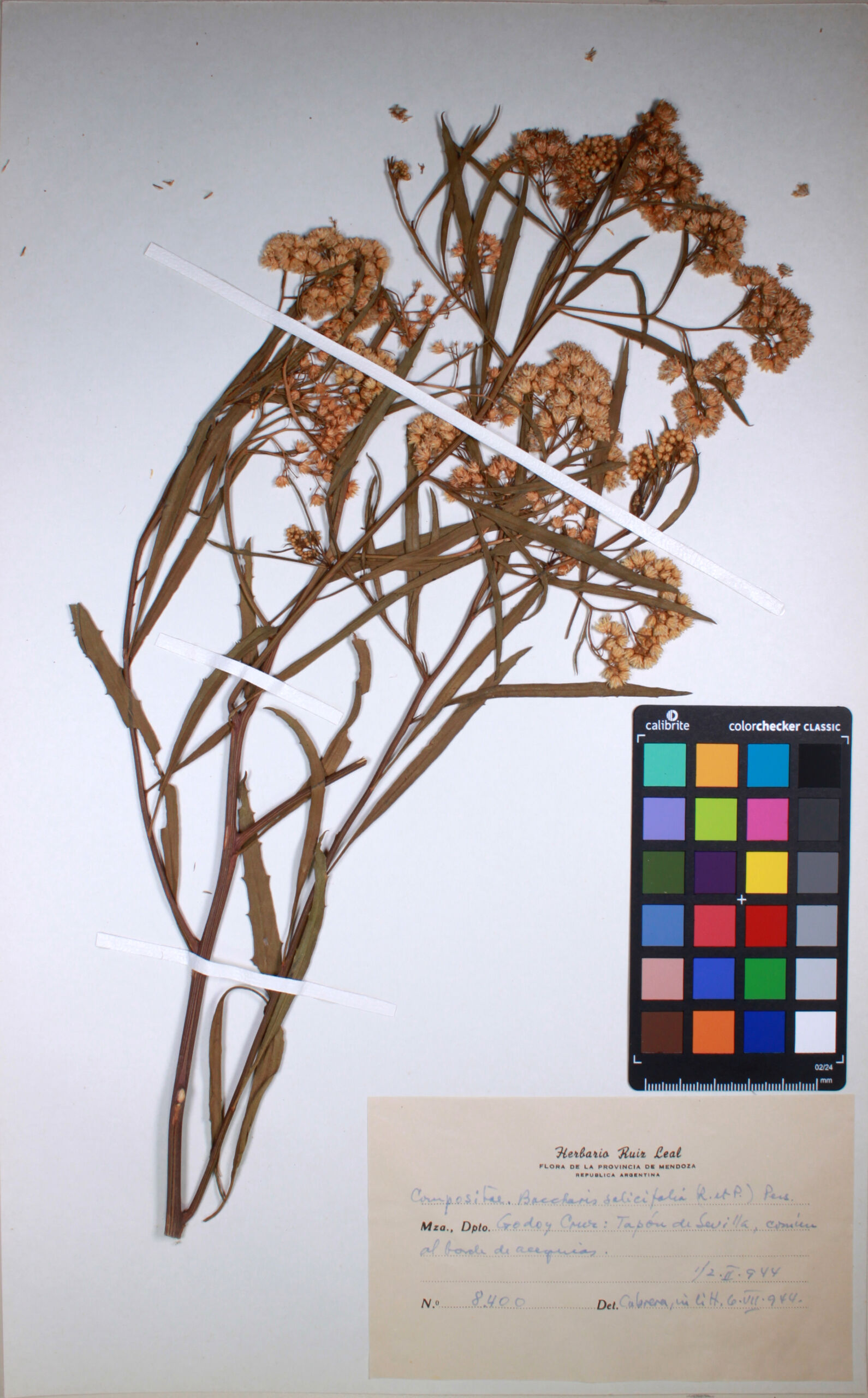
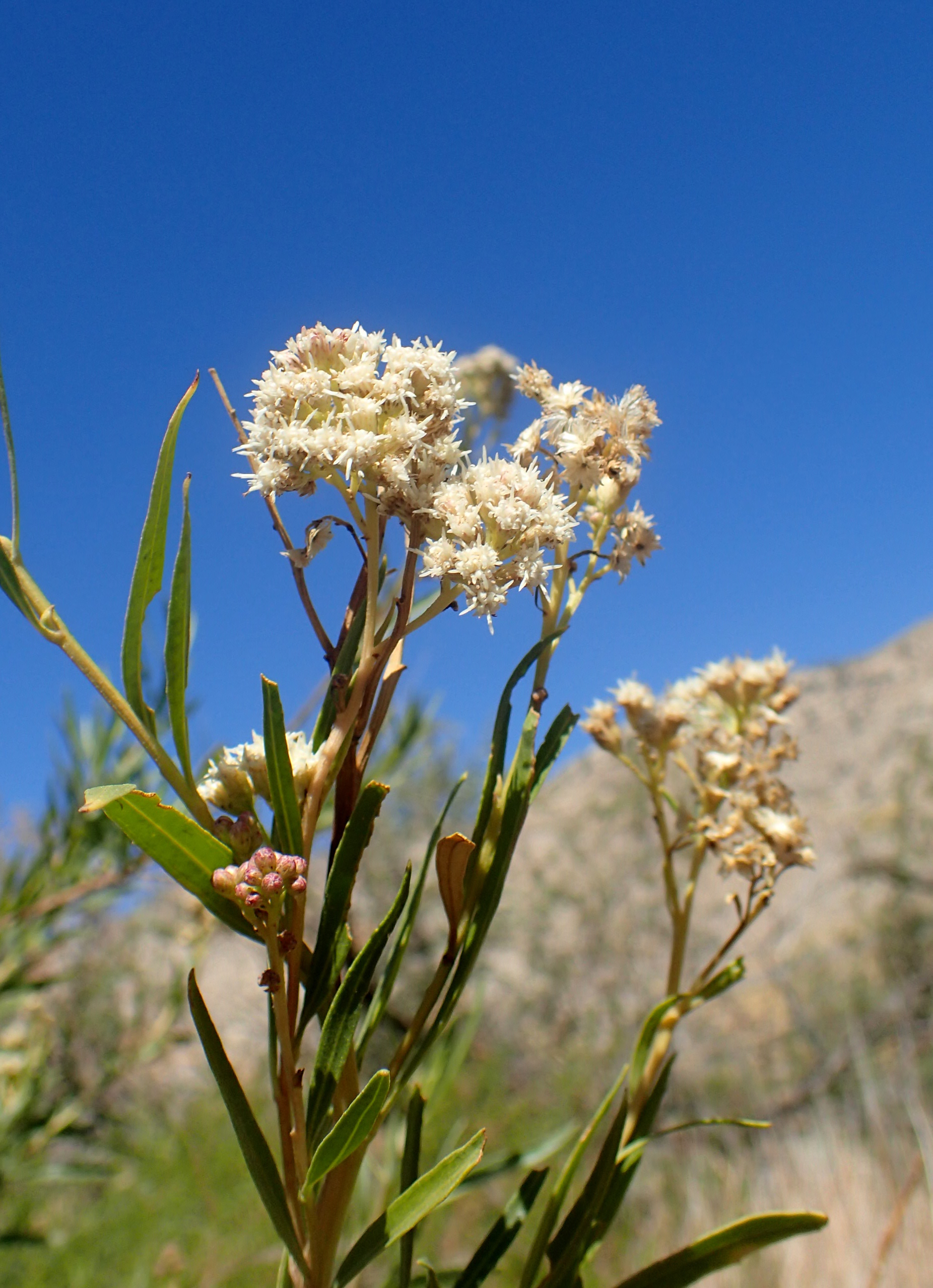
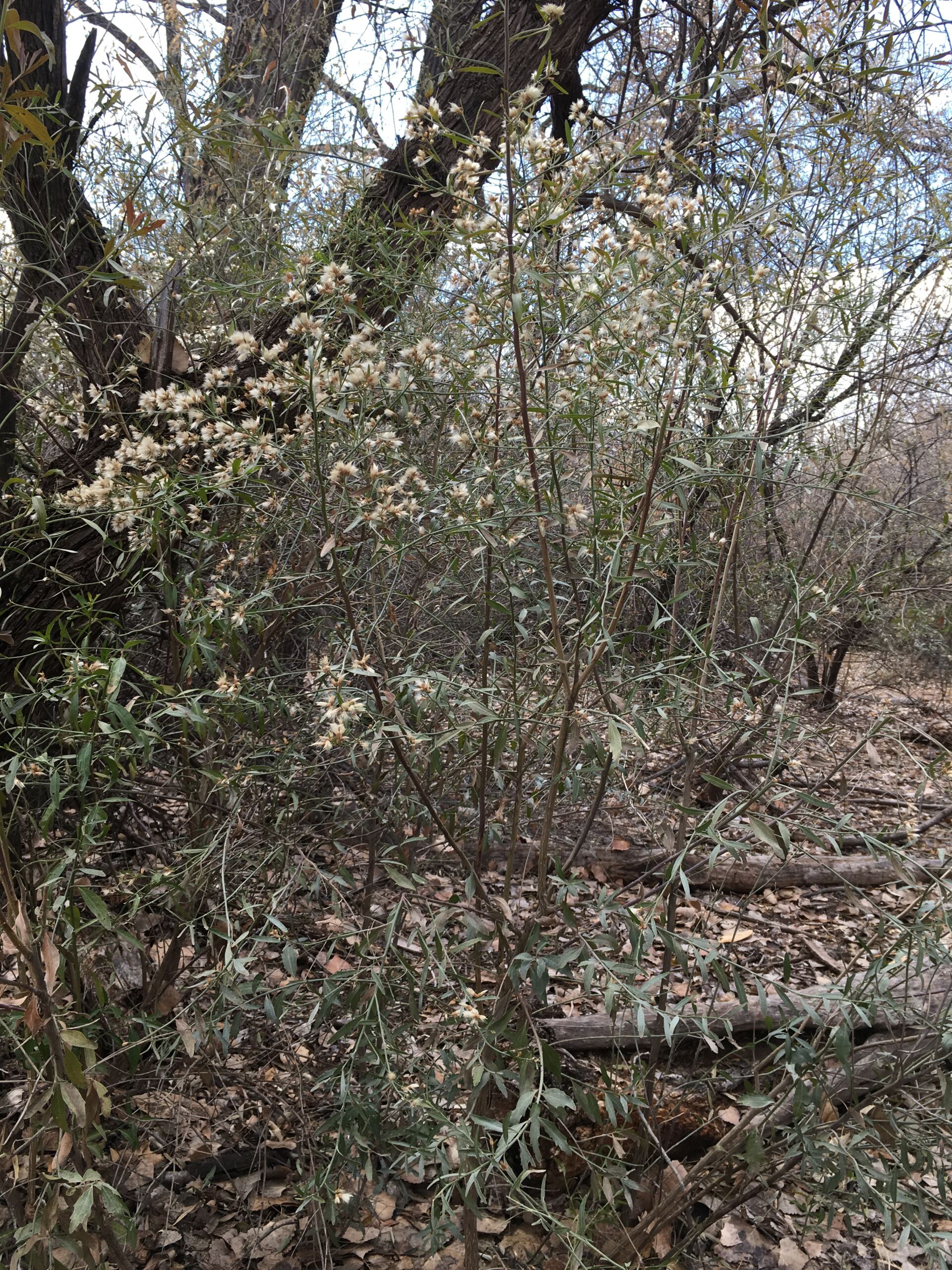
First, the name on the door, because it matters. The butterfly guides call this plant seepwillow, Baccharis glutinosa, also called saltmarsh baccharis — and this guide files it under that name, because that is the name the guides use and the name the linking project must match. But current botanical treatments call the same plant Baccharis salicifolia, and say plainly that the North American plants were once known as B. glutinosa or B. viminea, separated by differences in woodiness, leaf size and serration, and flowering time that did not hold up as species boundaries. So when you see photographs captioned B. salicifolia in this guide, you are not looking at the wrong plant: you are looking at this plant under its current name, and the captions say so rather than quietly relabeling the pictures. One candidate photograph filed literally as B. glutinosa was dropped during drafting because its file page would not load, and this guide would rather show you the same taxon honestly captioned than gamble on a file it could not verify.
What you are looking at, under either name, is a perennial, warm-season shrub of the sunflower family that grows along stream banks and can reach 3 to 12 feet tall, occasionally becoming a small tree up to about 20 feet in the south of its range. The stems are wandlike and flexible when young, becoming woody with maturity, arising many together from a central base, green to tan, ridged and angled, and resinous — sometimes varnished with resin until they shine. The leaves are the reason for the common name: willowlike, narrowly lance-shaped, 30 to 150 millimeters long and only 3 to 20 wide, tapered at the base, finely serrate along most of the margin or sometimes entire, acute to acuminate at the tip, three-veined from near the base, gland-dotted, and sticky-resinous to the touch, pleasantly fragrant when brushed. They are larger and broader than those of willow baccharis, its close look-alike, and that breadth plus the resin is how you tell them apart in the field.
Like the rest of its genus, seepwillow is dioecious: male and female flowers grow on separate plants. The heads are small — about 6 millimeters across — but produced in dense, terminal, flat-topped, panicle-like arrays crowded with dozens to hundreds of florets, cream to pale pink, with no ray flowers at all. Flowering runs chiefly from late summer through early spring in the southern California account, and from January through October, mostly March to October, in the Flora of North America account — a long season, with individual plants in flower in nearly any month, which is exactly why it is such a reliable butterfly plant. The female heads mature into fluffy white to pinkish puffs of silky pappus, and a female seepwillow in seed looks like it has been dusted with thistledown. The caterpillars of the fatal metalmark feed on it in the Southwest, which is why it appears in this project at all: a streamside shrub most gardeners have never planted, quietly raising metalmark caterpillars on its resinous leaves.
How to grow
Grow seepwillow the way its habitat grows it: near water, in sun, with room. This is a riparian shrub, found on stream banks, in dry washes, on sandy floodplains, in riparian woodlands, in ditches, and in disturbed sites from 30 to 2,400 meters elevation, across Arizona, California, Colorado, Nevada, New Mexico, Texas, and Utah, and south through Mexico and Central America all the way to Argentina and Chile. That range is the growing advice in one sentence: if your site is a sunny, moist low spot in the Southwest, seepwillow will feel at home; if your site is a dry hilltop, a shady woodland, or a Florida garden, it will not, and you should plant the baccharis native to your region instead. This is not a Florida plant — the Florida baccharis is eastern baccharis, B. halimifolia, covered by the genus guide — and planting a southwestern riparian shrub in Florida because a butterfly guide mentioned it would be exactly the kind of well-meaning mismatch this project tries not to cause.
Site it in full sun with its roots within reach of moisture: a stream bank, a swale, a rain garden, the damp edge of a pond, or any low spot that stays moist after rain. Give it room to form a thicket — stems cluster from the base and the shrub spreads by its own vigor, so several feet in every direction is not generosity, it is realism. Plant at the depth it grew in its pot, water it in deeply, and mulch lightly with leaves or wood chips kept off the stems. If you want the fluffy female seed heads, remember the dioecious rule: only female plants make them, and a male plant alone will flower cream and never go cottony. Buy in flower or in seed if the display matters, or plant several and let the odds sort it out.
Prune to shape after the main flowering flush, cutting out dead or crossing stems and keeping the thicket from swallowing its neighbors — seepwillow is vigorous where it is happy, and a streamside shrub left entirely alone becomes a wall. It resprouts readily, so do not be shy with the shears. Do not plant it where its seedlings would be a problem in a wetland you are trying to keep open, and do not plant it outside its native range: a riparian shrub with wind-blown seed is a plant that travels, and the responsible move is to keep it where it belongs. Where it belongs, it is nearly indestructible, which is why restoration plantings along southwestern streams use it for bank stabilization — it holds soil, tolerates flooding, and comes back after disturbance, all while feeding butterflies.
Water & feeding
Water is the whole story with seepwillow, and the story is simple: it wants to be near water. In its native washes and stream banks it grows where soil remains water-soaked or moist, and in a garden it wants the same deal — consistent moisture, regular deep watering while establishing, and a site that does not dry out completely in summer. This is not a xeriscape plant despite living in the desert Southwest; it lives in the desert’s wet lines, the ribbons of green along watercourses, and a seepwillow planted in dry upland soil will sulk, drop leaves, and eventually give up. If your garden has no moist spot, this is not your shrub, and no amount of watering a dry bed will fake a stream bank for long.
Feeding is not a topic. Seepwillow grows in sandy floodplains, ditches, and disturbed ground — soils nobody would call rich — and it does not need fertilizer. Feed it and you will mostly get soft, leggy growth that flops and invites aphids. If a plant looks pale, check water first, light second, and whether you have planted it in the right region third; the pantry is the last place to look. A light mulch holds moisture around the roots, which is worth more than any fertilizer bag.
Common problems
Seepwillow’s problems are few, and most of them are yours, not its. The commonest is planting it dry: a streamside shrub in upland soil drops leaves, thins out, and dies back, and the fix is a wetter site, not a spray. The second is planting a male and expecting seed heads, which dioecy forbids — buy female or buy several. The third is letting a happy thicket swallow a path, a fence, or a smaller neighbor; prune after flowering and the shrub takes it in stride.
Pests are minor. Aphids may cluster on soft new growth in spring; a strong jet of water handles them. The resinous leaves deter most generalist chewers, which is precisely why the plant is valuable to specialist caterpillars like the fatal metalmark — the insects that can eat it are the ones that evolved for it, and gardeners should welcome them rather than spray them. Rusts and leaf spots appear but rarely threaten a vigorous plant; prune affected stems for airflow. One real caution, borrowed from the genus: some baccharis species are toxic to livestock, so do not plant seepwillow as forage and do not assume a baccharis is safe for grazing animals. It is a riparian wildlife shrub, not a pasture plant.
Harvest
There is no food harvest from seepwillow, and this guide invents none. Traditionally the plant has been harvested from the wild for local medicinal use — leaf and stem preparations appear in folk practice — but this guide does not recommend medicinal use, does not give preparations, and does not dose anything: a butterfly host plant is not a pharmacy, and a growing guide is not a medical text. What you do harvest is ecological and practical: a bank held against floods, a thicket that shelters birds, a long season of small cream flowers feeding butterflies and pollinators, and — on female plants — the fluffy seed heads that make a streamside shrub look snowed-on in the desert. Cut stems are flexible and useful for rustic work, and the fall seed heads make striking dried material. Mostly, though, the harvest is the sight of a fatal metalmark working a shrub that most people walk past without noticing, which is a good return on a plant that mostly asks for sun and wet feet.
Nerdy fact: Seepwillow is a species complex that fooled botanists for over a century: the North American plants were split into B. glutinosa and B. viminea on woodiness, leaf size, serration, and flowering time, and then reunited when one researcher tagged and measured individual plants through a whole year and found the same plant wearing different seasonal forms — the shrub literally changes its look with the season, like a plant with a summer wardrobe and a winter one. It also carries a chromosome surprise: counts of both 2n = 18 and 2n = 36 are recorded, meaning some populations carry a doubled genome, which is one more way this unassuming ditch shrub quietly complicates the textbooks.
Saving seeds
Here is the honest version first: sources disagree about how reliably salt marsh baccharis (Baccharis glutinosa, also sold under its old name Baccharis douglasii) grows from seed. Some propagation references describe seed sowing in detail, while others report poor or erratic germination and recommend cuttings as the dependable route. So treat seed saving here as a worthy experiment with a backup plan, not a guarantee — and if you need an exact copy of a plant you already love, take semi-hardwood cuttings in spring or early summer, dip them in rooting hormone, and keep them moist and humid until they root. That method is the reliable one.
For the seed experiment, collect in fall or winter, when the fluffy seed heads on female plants begin to break apart and drift. Like the rest of the genus, this baccharis is generally dioecious, with male and female flowers on separate plants, so a lone female with no male nearby may set little or no viable seed. Snip brown, dry heads into a paper bag, let them dry further indoors, then crush them gently or rub them over a screen to free the tiny dark seeds from the fluff.
Surface-sow the seed on a well-draining mix and press it in lightly rather than burying it — baccharis seed wants light to wake up. Some protocols report that a few weeks of cold, moist stratification in the refrigerator improves germination, so if your first sowing is sluggish, try chilling the next batch for four to six weeks before sowing. Keep the mix consistently moist, which suits a marsh-edge plant, give it bright indirect light, and expect germination to be uneven and slow, over several weeks rather than days. Sow thickly to compensate, and pot up the strongest seedlings once they are sturdy enough to handle.
A note on responsibility: this is a wetland colonizer by nature, happiest with its feet near water, and it seeds itself around happily where it is at home. Do not scatter saved seed near marshes, ditches, or restoration sites outside its native range, and pull volunteers that show up where you did not invite them. For storage, dry the seed completely before it goes into a jar — Florida humidity will quietly ruin a damp seed stash — and store it airtight with a desiccant in a cool, dark place. Seeds from open-pollinated, wild-type plants will grow into the species, but they will not reproduce a named selection exactly; only cuttings do that.
Varieties and relatives
Baccharis glutinosa — the name this guide files under, the butterfly-guide name, the name used for seepwillow and saltmarsh baccharis in the fatal metalmark guide. Current treatments place this plant as Baccharis salicifolia; see the note below rather than treating the two names as two plants.
Baccharis salicifolia — the current name for the same plant. If you buy this shrub from a nursery, this is very likely the name on the label. It is not a different species, a variety, or a substitute: it is seepwillow, renamed by taxonomic revision, and this guide’s photographs are captioned under this name for that reason.
Baccharis viminea — a former name for part of this same complex, now folded into salicifolia. Older books and labels may use it; treat it as the same plant, not a separate species to hunt down.
Baccharis salicina — willow baccharis, a different species and a genuine look-alike, with narrower leaves than seepwillow. Do not confuse the two: salicina is the narrower-leaved cousin, salicifolia (glutinosa) the broader-leaved one.
Baccharis halimifolia — eastern baccharis, the Florida and Atlantic coast species, a different species covered by the genus guide. Plant this one in Florida, not seepwillow.
Other Baccharis species — the genus holds roughly 250 to 450 species, and only the ones named here are claimed by this guide. A label reading only “Baccharis” is a genus member, not seepwillow.