
🌿 Baccharis
What it looks like
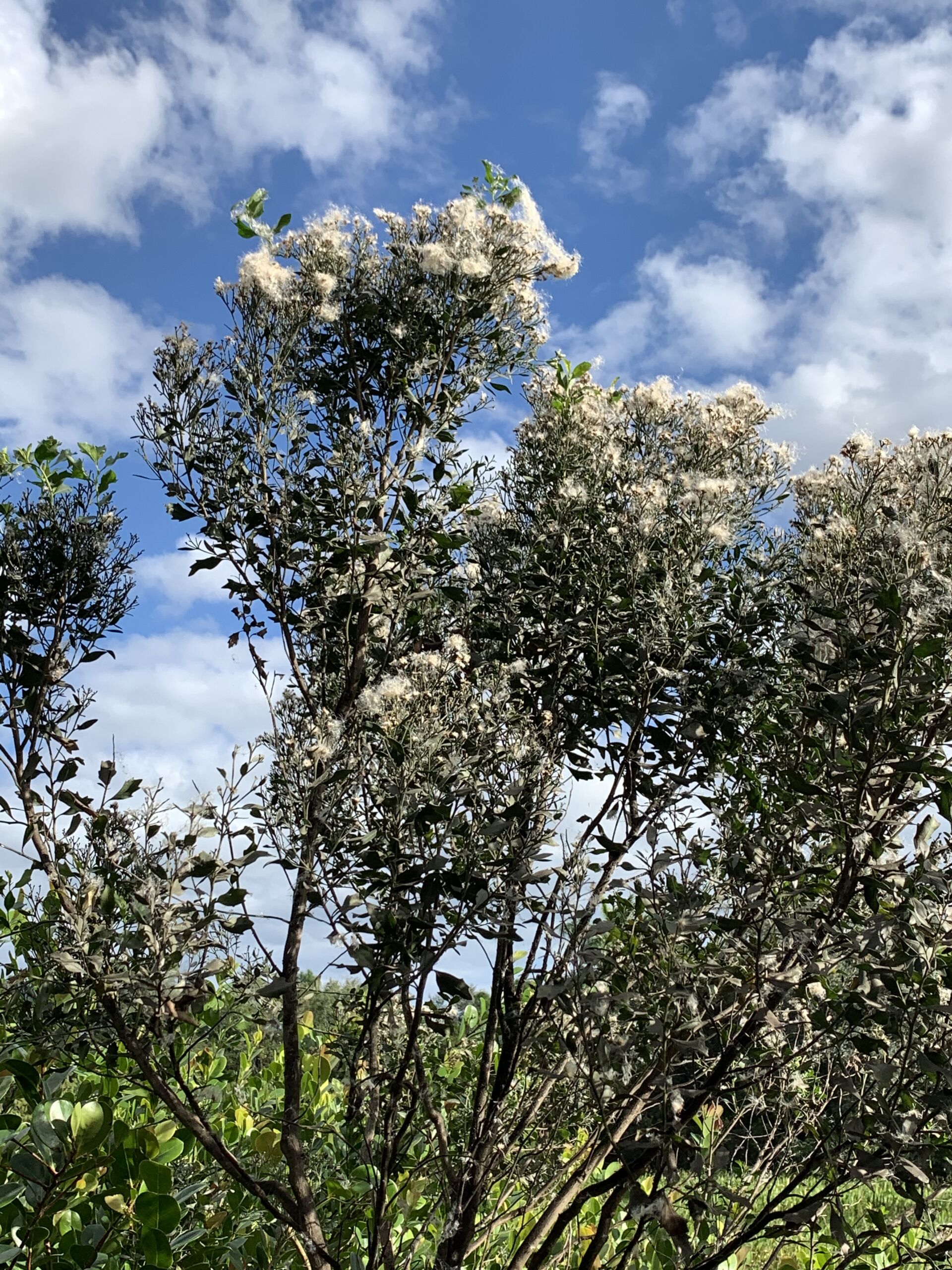
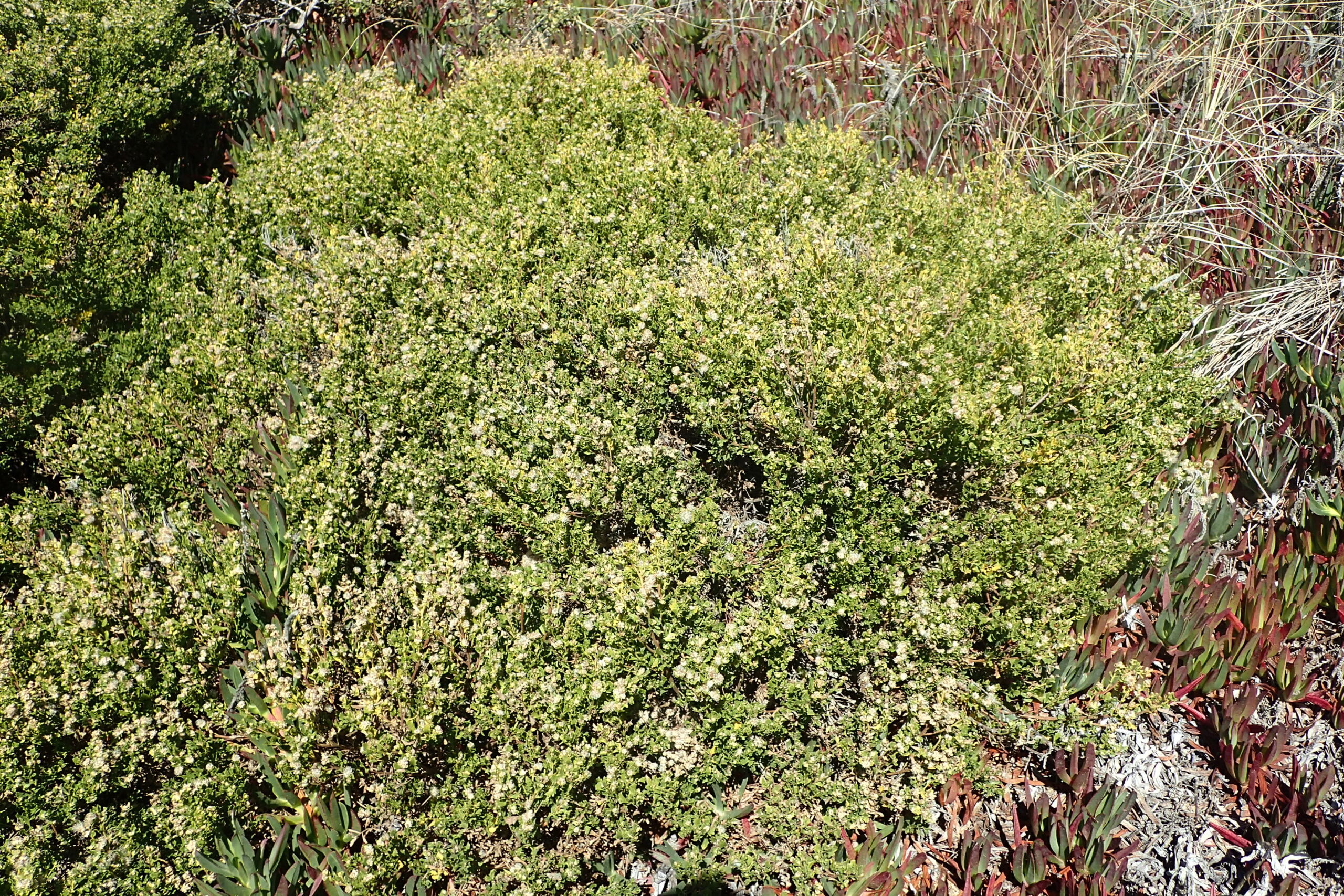
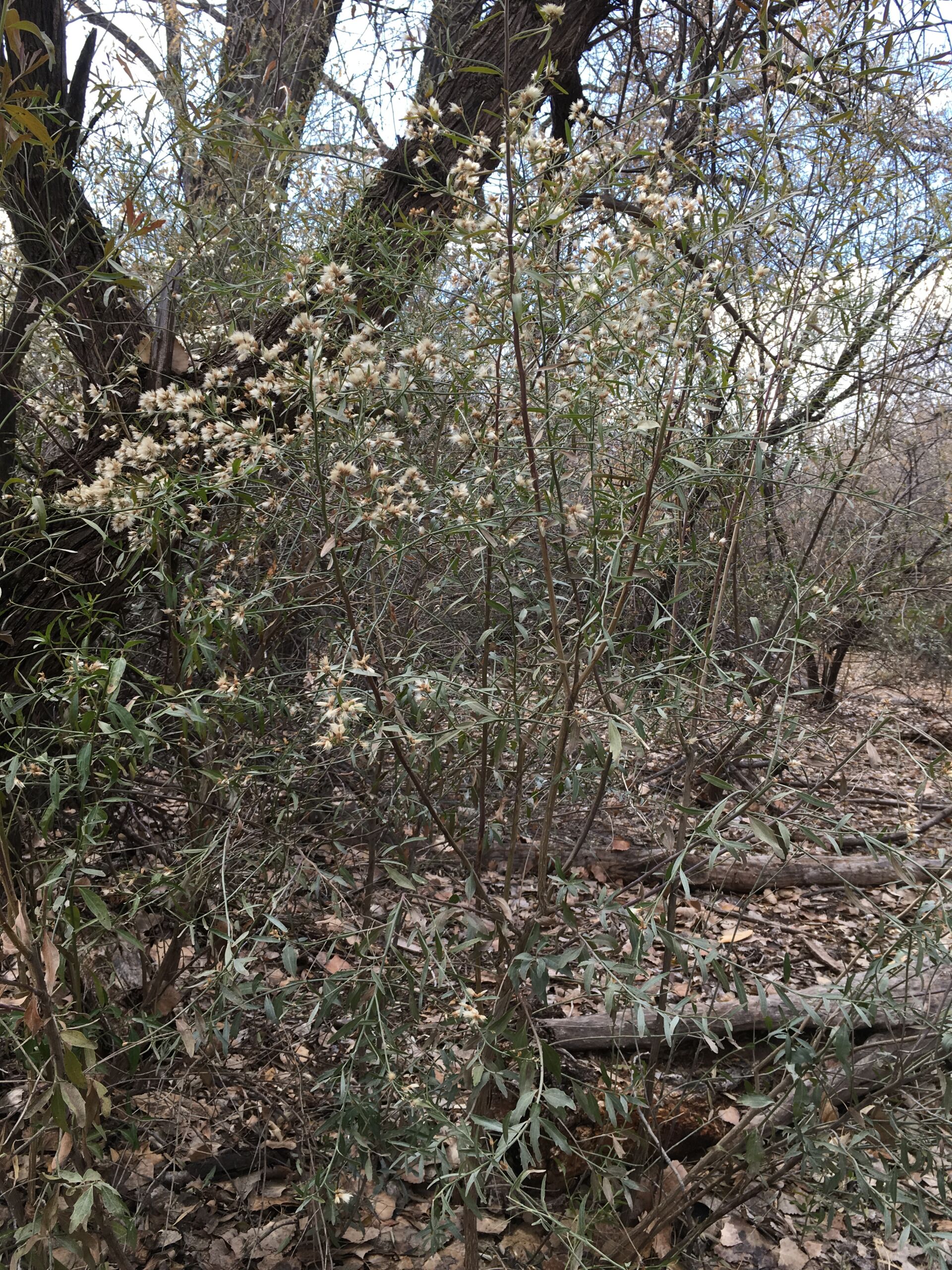
Baccharis is not one plant but a crowd: somewhere between 250 and 450 species, depending on which authority you ask — the Flora of North America counts 350 to 450, with 21 in its flora, while other counts say 250 to 400, and at least one says over 500 — of perennials, subshrubs, shrubs, and occasionally small trees in the aster family, found only in the Americas and most diverse in the warmer regions of Brazil, Argentina, Colombia, Chile, and Mexico. What unites them is a look and a lifestyle rather than a single silhouette. The leaves, when present, sit alternately along stems that are often angled or ridged, green, and dotted with glands that secrete a sticky resin — run a baccharis leaf between your fingers and it feels faintly tacky, a chemical “do not eat me” note that deters most herbivores while failing completely against the specialized insects that evolved to ignore it. Some species are almost leafless brooms of green twigs, which is why gardeners call several of them “brooms” even though they are not related to true brooms at all.
The flowers are the giveaway that you are looking at an aster doing something unusual. Baccharis heads have disk florets only — no showy ray petals, no daisy fringe — just clusters of small white or pinkish florets packed into heads, arranged in branching arrays at the stem tips. And here is the genus’s signature trick: almost every baccharis is dioecious, with male and female flowers on separate plants. The single famous exception is Baccharis monoica, the one species that breaks the rule its genus is named by. In fall, the female plants of the eastern species turn snowy white with cottony seed heads, each tiny fruit tipped with a tuft of bristles that carries it on the wind, so a female baccharis in seed looks like it has been caught in a snowstorm that only fell on one shrub. That fall display is also butterfly season: baccharis flowers are small and open, exactly the kind of accessible nectar source that keeps adult butterflies — including the Acmon blue, whose guides list baccharis among its nectar plants — fed when showier flowers have finished.
The name itself is a small mystery. Linnaeus formally described the genus in Species Plantarum in 1753, and the name is traditionally said to honor Bacchus, the Roman god of wine, though Flora of North America drily notes the allusion is obscure and the name may originally have belonged to a different plant. Either way, a genus named for wine that mostly grows in ditches has a certain poetry to it, and the plants live up to the hard-drinking reputation: they colonize stream banks, washes, ditches, marshes, salty shores, and disturbed ground where fussier shrubs give up.
How to grow
The first rule of growing baccharis is to grow your local one. A genus spread from Nova Scotia to Argentina does not have one set of growing instructions, and the species that thrives on a salty Florida shore is not the species that thrives on a dry California hillside. In Florida, that means eastern baccharis, Baccharis halimifolia — the groundsel tree, sea myrtle, or saltbush, native from Massachusetts south to Florida and west to Texas, and in most of its range simply called “baccharis” because no other member of the genus grows nearby. In the Southwest, it means seepwillow or desertbroom; on the California coast, coyote brush. Buy the species native to your region from a native nursery, and most of the advice below takes care of itself.
Site it in full sun. Baccharis species are sun plants of open ground; shade makes them leggy and sparse, and a baccharis planted under trees is a baccharis apologizing. Give large species several feet of space — eastern baccharis reaches about 12 feet tall and about as wide, and the western shrubs are comparably broad — and site them where their enthusiasm is an asset: a hedge, a windbreak, a bank that needs holding, a wet corner nothing else likes. The dense but flexible stems that make baccharis good windbreak material also make it good at shrugging off coastal wind, and several species tolerate salt spray and brackish soil that would crisp a less amphibious shrub.
Soil is the least of your worries. Baccharis species grow in moist to wet soils, sandy floodplains, ditches, and poor ground, and the eastern species is unusually salt-tolerant, found along salty and brackish shores, marsh edges, and barrier islands. Drainage preferences vary — seepwillow wants its feet near water, desertbroom wants it drier — but none of them want rich, pampered, heavily amended garden soil, and none of them need it. Plant at the same depth the plant grew in its pot, water it in, and then largely leave it alone. Prune after flowering if you want a tidier shrub, and remember the dioecious catch: if you want the showy white seed heads, you need a female plant, and a male plant alone will never give you a single fluffy seed. Nurseries do not always label sex, so if the cottony fall display matters to you, buy in fall when the females are showing off, or buy several plants and let probability do the work.
One caution before you plant with abandon: baccharis seeds travel on the wind, and the eastern species in particular seeds freely into wetlands and disturbed ground. In its native range that is ecology; outside it, check whether the species is weedy or listed in your area, and do not plant a southwestern baccharis in Florida or vice versa. The right baccharis in the right region is a tough native ally. The wrong one is a plant with a plane ticket and no return flight.
Water & feeding
Water according to the species you actually planted, because “baccharis” covers both streamside shrubs and desert brooms. The streamside and coastal species — seepwillow, eastern baccharis — want consistent moisture and tolerate outright wet feet; water deeply while they establish, and in a garden setting give them a drink during dry spells rather than letting them bake. The desert species — desertbroom, coyote brush — want the opposite: deep, infrequent watering once established, and soil that drains sharply. What unites them is establishment: every baccharis needs regular water for its first season while roots find their range, and every established baccharis resents being fussed over more than it resents being ignored.
Feeding is barely a topic. These are plants of ditches, washes, and poor coastal soils; they do not need fertilizer, and feeding them mostly buys soft growth that flops in wind and invites aphids. If a baccharis looks pale or stunted, check water, light, and whether you planted a desert species in a swamp or a streamside species on a dry hill — the problem is almost always the site, not the pantry. A light mulch of leaves or wood chips around the base holds moisture and keeps weeds down; keep it off the stems, as with any shrub.
Common problems
Baccharis species have remarkably few enemies, which is part of their charm and part of their ecological story: the resinous, gland-dotted leaves deter most generalist herbivores, leaving the plants to the specialists. Aphids may cluster on soft new growth in spring; a jet of water or insecticidal soap handles them, and a plant that is not overfed is less appetizing to begin with. Rusts and leaf spots occur but rarely threaten a vigorous shrub; prune out badly affected stems and improve air circulation rather than reaching for a spray.
The real problems are human and horticultural. Planting the wrong species for the site — a desert broom in a wet hollow, a streamside seepwillow on a dry ridge — is the commonest failure, and it looks like a sick plant when it is actually a mismatched one. Planting a single male and wondering where the fluffy seed heads are is the second: dioecy means sex matters, and only female plants make the cottony fall display. Seeding into places you did not intend is the third, especially with eastern baccharis in wet country; deadhead female plants before seed ripens if volunteers would be unwelcome, or site the plant where its seedlings are a feature rather than a weed. And one serious note: some baccharis species are toxic to livestock — Baccharis coridifolia in particular can cause gastrointestinal necrosis in cattle, horses, sheep, and rabbits — so do not plant baccharis as forage, and keep livestock away from species known to be poisonous. This is a wildlife and windbreak shrub, not a pasture plant.
Harvest
There is no food harvest from baccharis, and this guide will not pretend otherwise. What you harvest instead is function: a windbreak that flexes instead of snapping, a bank held against erosion, a fall nectar bar for butterflies and pollinators when little else is blooming, and — on female plants — a cloud of white seed heads that looks like the shrub got into a pillow fight. If you want cut material, the flexible stems have traditional uses, and the fall seed heads make striking, if short-lived, dried arrangements. Otherwise the harvest is ecological: plant a female baccharis near a butterfly garden and watch the fall visitors arrive, because small, open, accessible flowers are exactly what a tired migrating butterfly needs, and baccharis serves them by the thousand.
Nerdy fact: Baccharis is one of the largest genera in the aster family in the Western Hemisphere, and its dioecy makes it a natural experiment in sexual dimorphism: male and female plants of the same species can differ in growth, flowering time, and even which insects visit them, because a male plant offers pollen and a female plant offers nectar and then seed — two different businesses run from the same species nameplate. The genus is also a case study in convergent confusion: its willow-like species are not willows, its broom-like species are not brooms, and its groundsel-tree name borrows from a completely different plant — three common names, three wrong family reunions, one very successful genus.
Saving seeds
Saving baccharis seed starts with a botanical plot twist: most Baccharis species are dioecious, which is the fancy way of saying male flowers and female flowers grow on separate plants. Only the female plants make seed, and only if a male plant is close enough for wind and insects to do the matchmaking. If your shrub flowers beautifully every year and never produces a single fluffy seed head, congratulations, you probably own a male. Nurseries mostly sell males on purpose, because the females’ seed display, while spectacular, is also spectacularly messy.
On a female plant, watch the flower clusters through fall. They ripen into clouds of white fluff, each tiny seed riding a parachute of fine hairs called a pappus, the same trick dandelions use. Collect before the wind collects them for you: snip whole dry heads into a paper bag, let them finish drying indoors for a few days, then crush and rub the heads over a tray or screen to shake the small dark seeds free from the fluff. Winnowing is optional but satisfying — pour the seed gently from one container to another in front of a light breeze and watch the chaff float away.
Sow baccharis seed on the surface of a well-draining seed mix and press it in lightly without burying it. These seeds want light to germinate, so treat them like tiny solar panels, not buried treasure. Keep the mix evenly moist but never soggy, give it bright indirect light, and be patient: germination is erratic and can take several weeks, and not every seed will sprout, so sow generously. Pot seedlings up once they are big enough to handle without snapping.
Two honest warnings before you sow. First, seed-grown baccharis is a genetic lottery. You cannot tell whether a seedling will grow up male or female until it flowers, and a named cultivar will not come true from seed — if you want an exact copy of a plant you love, take cuttings instead. Second, female baccharis plants are enthusiastic self-seeders, and some species seed so freely that gardeners pull hundreds of volunteers each spring. Do not let seed-grown plants loose near natural areas where that species is not native, and pull volunteers while they are small. In Florida, eastern baccharis (Baccharis halimifolia) is native but famously eager, so give it the same respect you would give any plant that writes its own expansion plan.
One more plain warning: baccharis is not food. Several species in the genus are documented as poisonous to livestock, so never graze animals on it and never plant seed-grown unknowns in a pasture. For storage, Florida humidity is the enemy of every saved seed: dry your baccharis seed thoroughly, store it airtight with a desiccant packet, and keep it cool and dark until sowing time.
Species in this group
Baccharis halimifolia — eastern baccharis, groundsel tree, groundsel bush, sea myrtle, saltbush. The Florida and Atlantic coast species, fall-flowering, salt-tolerant, about 12 feet tall, with snowy-white female seed heads. In most of its range it is simply called baccharis.
Baccharis salicifolia — seepwillow, mule fat, water-wally. The southwestern streamside species, willow-like resinous leaves, sticky and fragrant. Its older name Baccharis glutinosa has its own species guide in this project, filed under that butterfly-guide name.
Baccharis pilularis — coyote brush, coyote bush, dwarf baccharis. The California coast species, a dense rounded shrub of maritime country, widely planted for erosion control and habitat.
Baccharis neglecta — false willow, Roosevelt weed, poverty weed. A Texas and southern plains species of damp ground, willow-like and thicket-forming.
Baccharis sarothroides — desertbroom, broom baccharis. The desert species of the Southwest, nearly leafless green brooms of stems built for heat and drought.
Baccharis emoryi — Emory’s baccharis. A southern California and Arizona species of washes and moist ground, named for the surveyor-botanist William Emory.
Baccharis coridifolia — the cautionary species. A South American baccharis toxic to livestock, included here so nobody mistakes “baccharis” for “forage” — it is not.
Baccharis monoica — the rule-breaker. The one baccharis species that is not dioecious, carrying both male and female flowers on the same plant, and the exception that proves how consistent the rest of the genus is.
Other Baccharis species — roughly 250 to 450 in total, mostly in South America, and not covered individually here. A plant labeled only “baccharis” is a genus member, not a species, and the species guides in this project cover only the species they name.