
🍅 Bacterial Spot
Signs and symptoms
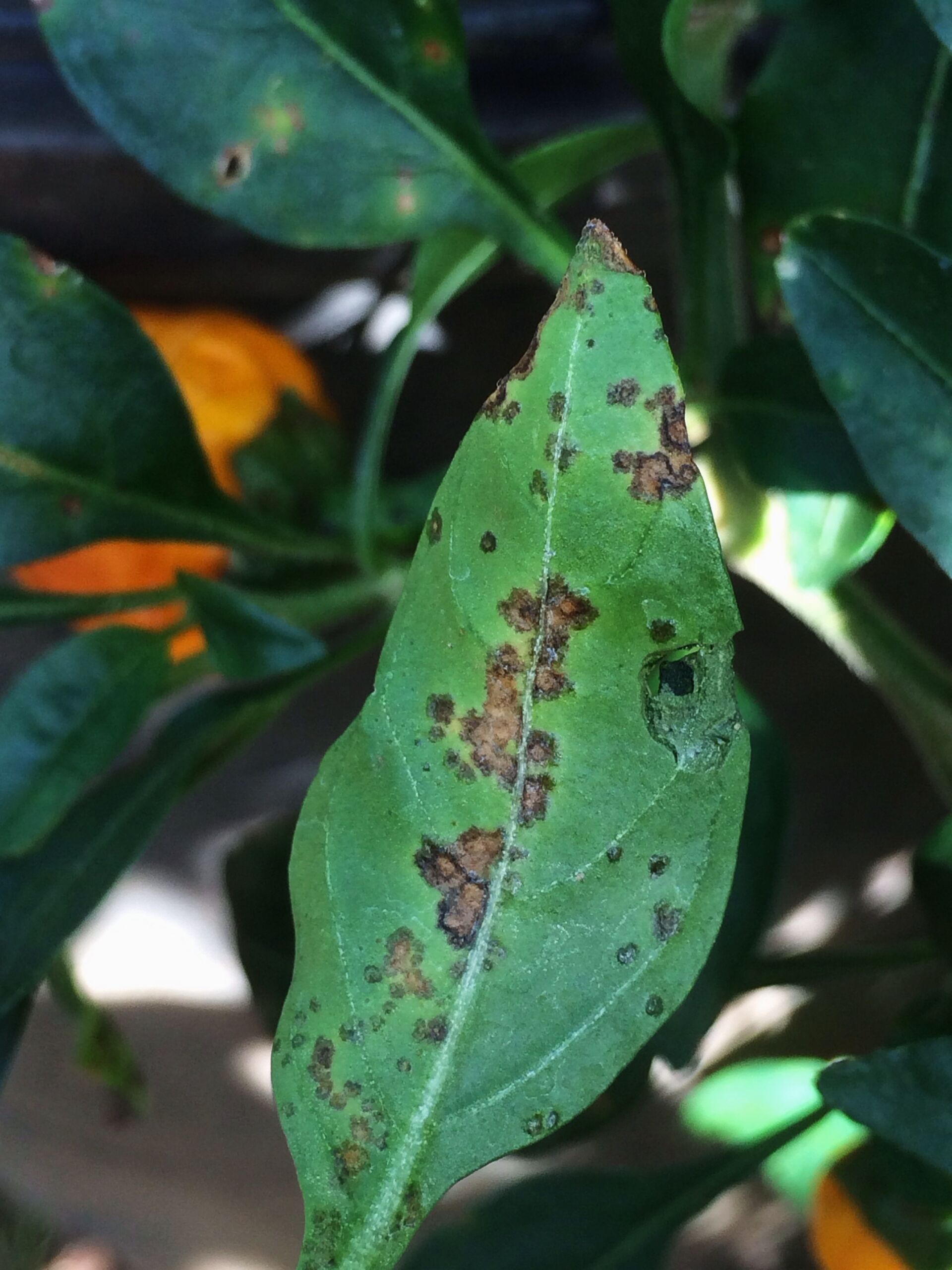
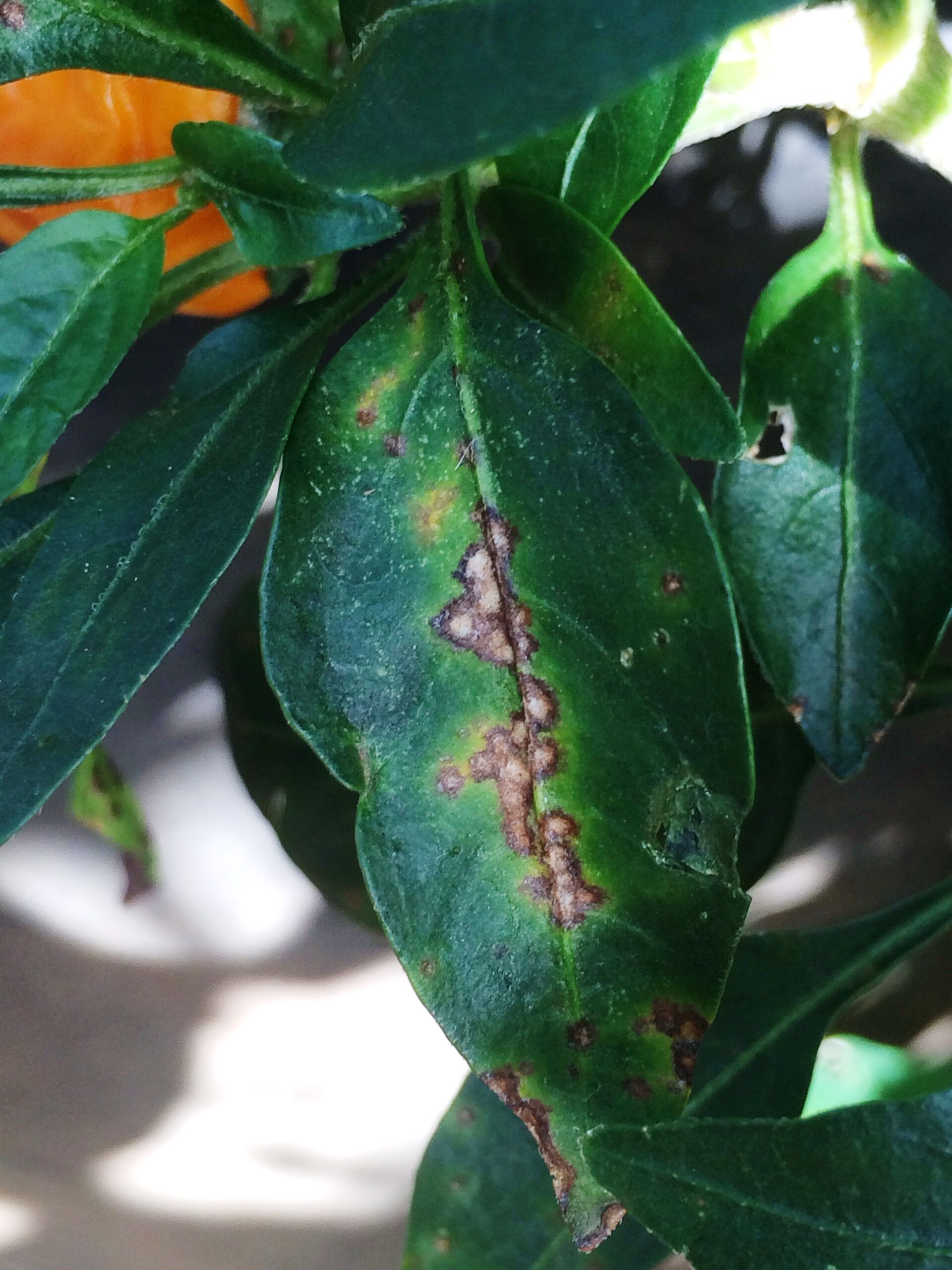
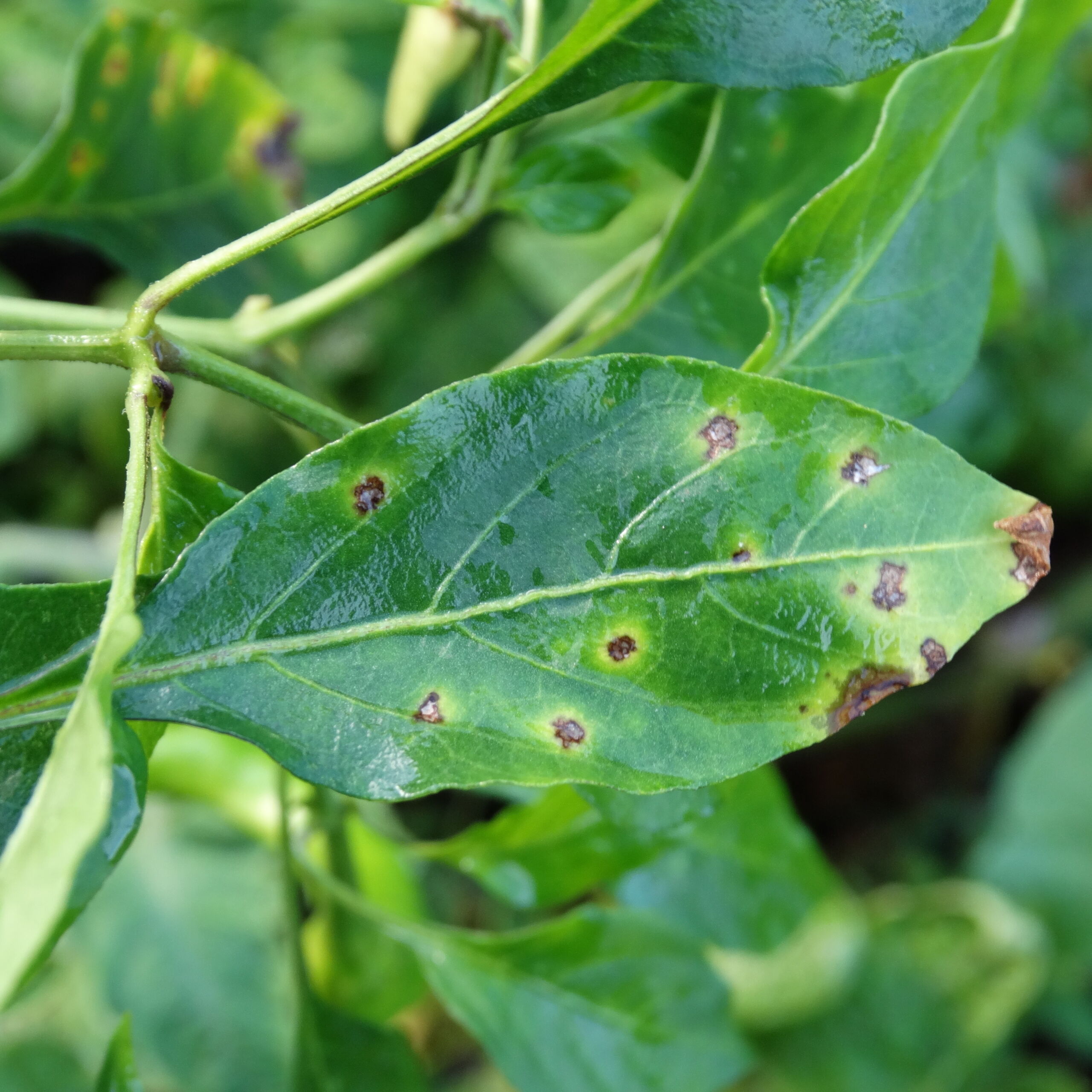
Water-soaked leaf spots that turn dark and greasy-looking, sometimes with yellow halos. Dead centres drop out, leaving a shot-hole look, and bad infections scorch leaves from the bottom up. On fruit, lesions start as slightly raised blisters and become raised and scabby — NOT sunken. Sunken fruit lesions point more to target spot, so that raised-versus-sunken check is worth making. In Florida tomato, X. perforans race T4 is now the dominant race. The complex behind it: X. euvesicatoria (T1), X. vesicatoria / X. gardneri (T2), and X. perforans (T3/T4). It spreads on contaminated seed and transplants and in wind-driven rain.
Plants it attacks
Tomato and pepper. This is the tomato/pepper bacterial spot complex with its own races and fruit symptoms — not the same page as the general bacterial leaf spot guide.
What to do
- Remove badly affected leaves promptly and bag them — do not compost.
- Do not handle wet plants, and disinfect tools between plants; wet foliage is when this bacterium travels best.
- Stop overhead watering and switch to watering at the base.
- Copper is a labelled later option only, and here is the honest version: copper protects, it does not cure. Sprayed on clean leaves it can shield them; it will not heal spots that are already there. Always follow the label.
Prevention
Start with certified disease-free seed and transplants — this is the single most important step, since contaminated transplants are how many gardens get it. Rotate crops, space plants for air flow, water at the base, and choose resistant varieties where available.