
🎄 Balsam Fir
Abies balsamea
Balsam fir is the smell of Christmas in tree form. Crush a needle and the resinous, balsam scent that comes off it is the reason this tree has been the classic Christmas tree of the Northeast for generations, and the reason a walk through a balsam forest smells like a candle shop that got everything right. It is a beautiful, cold-hardy, northern evergreen — and this guide will be honest with you up front: it is not a tree for warm climates, and pretending otherwise helps nobody.
Quick facts
- Sun: Full sun to part shade
- Soil: Moist, well-drained, slightly acidic soil; dislikes drought and heat
- Size: Roughly 40–70 feet tall and 15–25 feet wide at maturity
- Life cycle: Evergreen conifer, long-lived
- Zones: USDA zones 3–5 (some references stretch to zone 6 in cool locations)
- Native range: Northern North America, from Canada across the Great Lakes states and New England
What it is
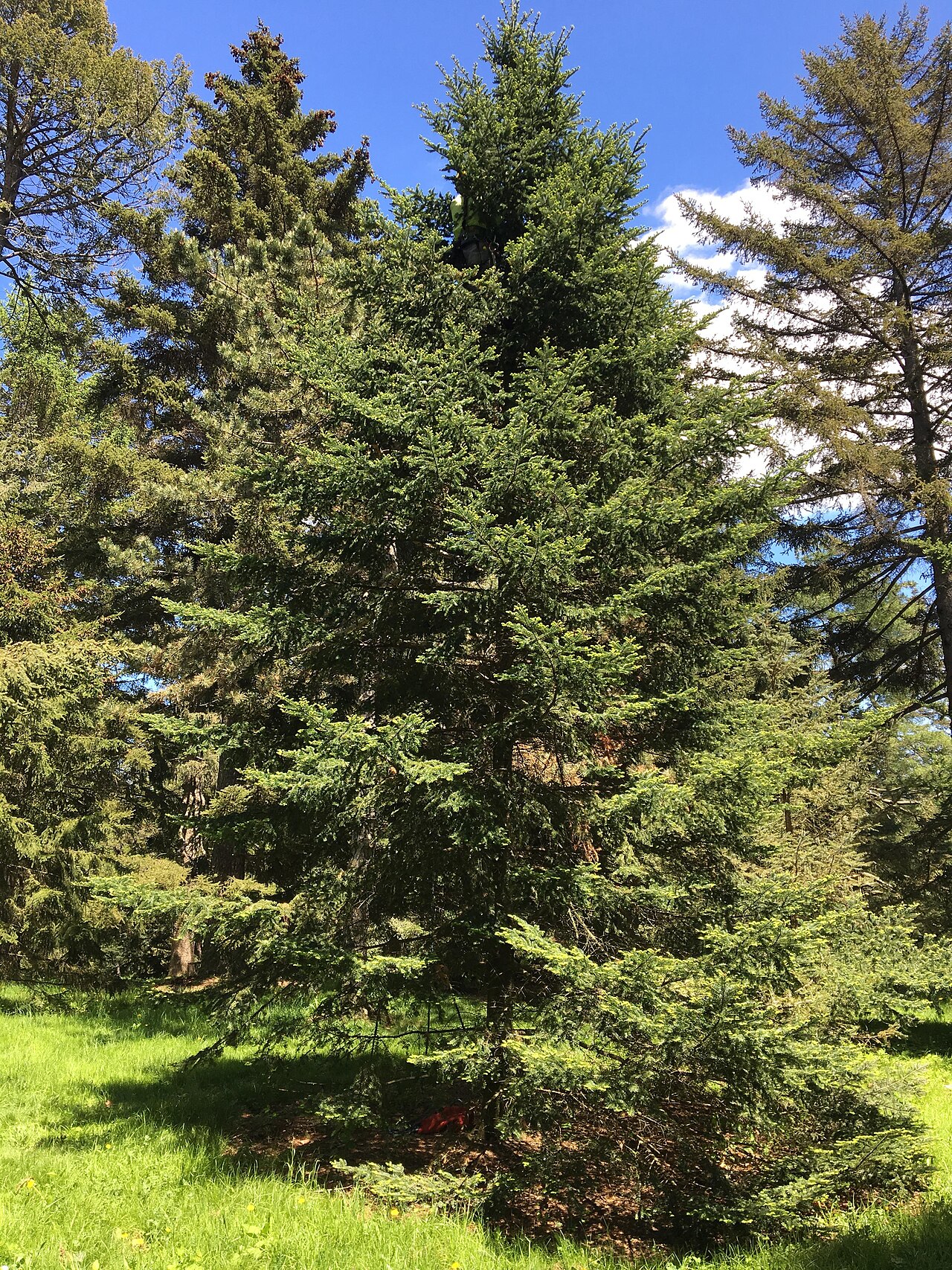
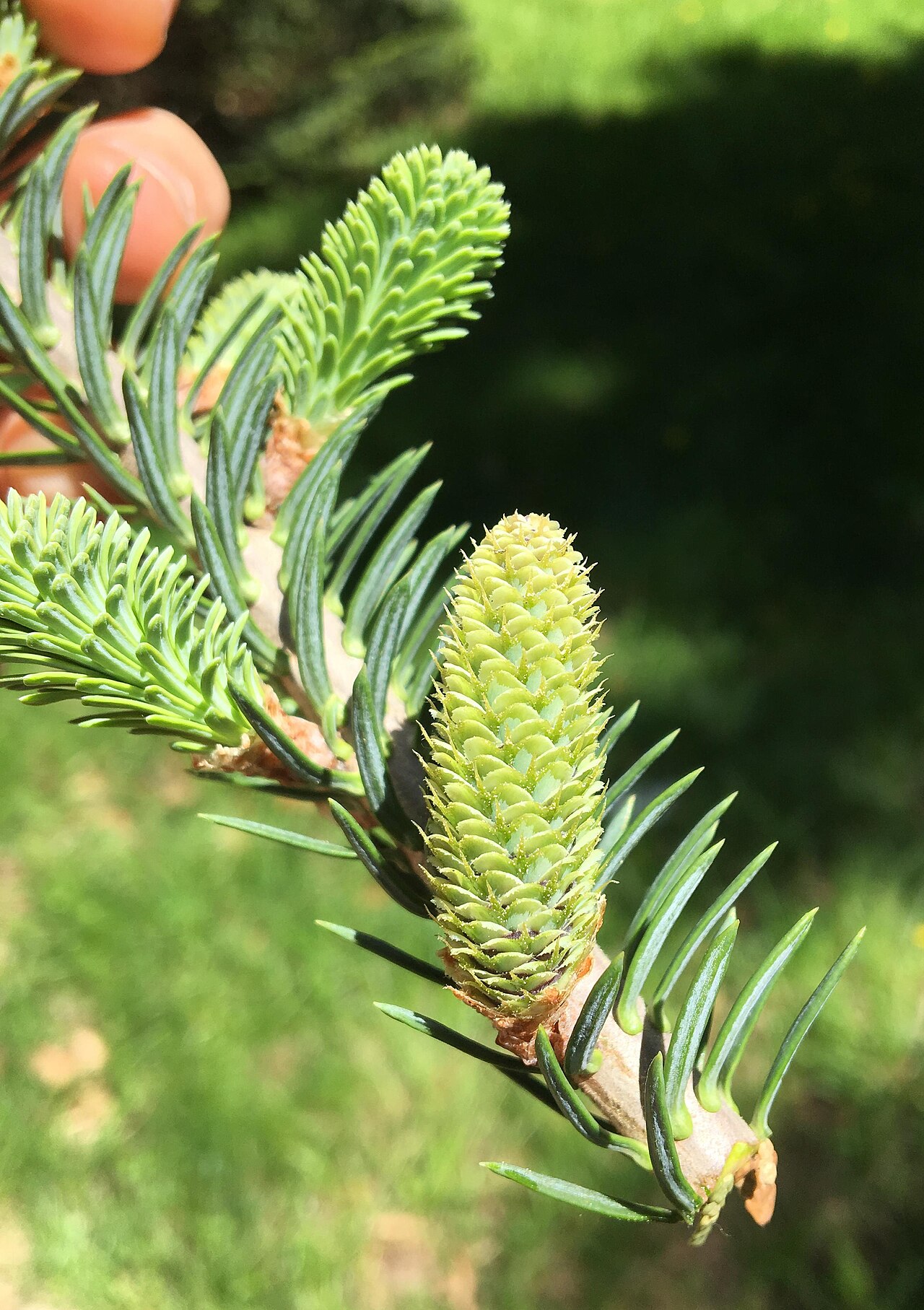
Balsam fir (Abies balsamea) is an evergreen conifer in the pine family, Pinaceae, native to the boreal and north-temperate forests of Canada and the northern United States. It grows into a narrow, conical pyramid with dense, dark green foliage, flat needles about 3/4 to 1 inch long with two white stomatal bands underneath, and smooth gray bark marked with resin blisters — squeeze one gently and you get pure, sticky balsam resin, the substance once sold as Canada balsam for everything from microscope slides to cough remedies.
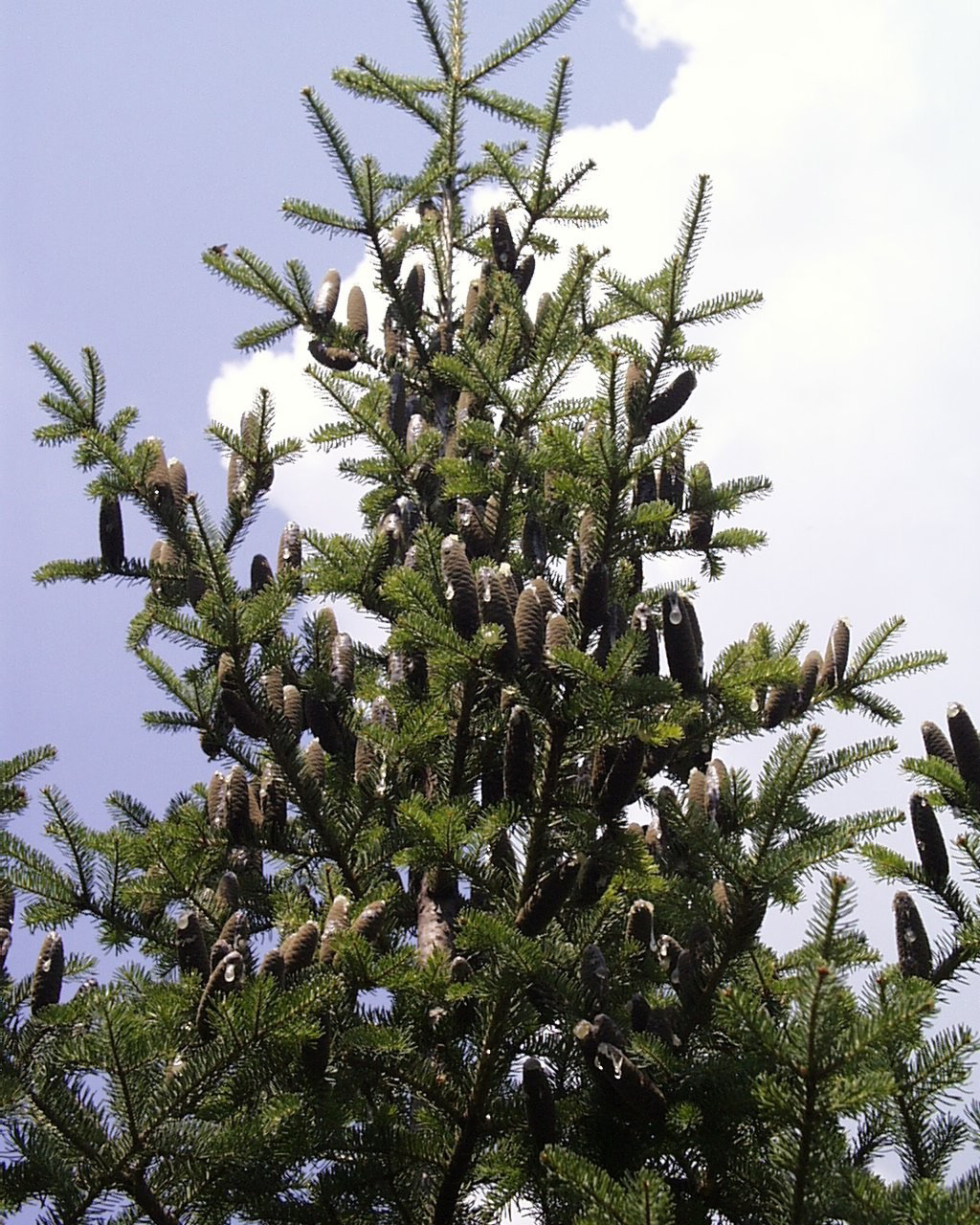
The cones are a fir giveaway: they sit upright on the branches, 2–4 inches long, and break apart on the tree to release their seeds instead of falling whole like pine cones. The wood is light and soft, the growth rate is slow to medium, and the tree is a genuine forest tree — it grows in association with black spruce, white spruce, and trembling aspen across a huge northern range, and it is one of the most northerly fir species in the world.
The honest climate note
Balsam fir needs cold winters, cool summers, and consistent moisture, and it fails on all three counts in warm, humid climates. It is not heat tolerant, not drought tolerant, and it is easily pushed into premature growth by mild winters, after which the tender new growth gets damaged by late frosts. Its northern zones of 3–5 are not a suggestion — they are the tree telling you where it evolved to live. This guide exists as a reference: for northern gardeners planting a real tree, for Christmas-tree lovers who want to know what they are bringing into the house, and for everyone else as a reminder that the right tree for your climate beats the prettiest tree in the catalog. If your summers are hot and humid, this is not your tree, and no amount of watering changes that.
How to grow it (where the climate fits)
Site. Full sun for best form, with shelter from desiccating winter wind. Cool, moist conditions are the requirement, not a preference.
Soil. Well-drained, moist, acidic soil. It tolerates a range of soil textures but not drought, not waterlogging, and not hot, dry, exposed sites. Mulch to keep roots cool and moist.
Care. Transplant in spring. Water through dry spells — a balsam fir that dries out does not forgive quickly. Prune little, and only to maintain a single leader or remove damaged wood; firs do not resprout from old wood the way some shrubs do.
Trouble spots
Balsam woolly adelgid, spruce budworm, and root rots in wet soil are the main threats in its home range, along with its thin bark, which makes it susceptible to fire damage. In the landscape its great weakness is climate mismatch: planted south of its range it declines slowly and then all at once, and the decline looks like a mystery until you check the zone map. As a cut Christmas tree, though, it is peerless — fragrant, with good needle retention — which is how most warm-climate gardeners will, and should, enjoy it.
For the whole fir family — from the mountain firs to the Christmas-tree classics — see the Fir guide.
What it looks like
Saving seeds
First, the Florida honesty check, since this guide already told you plainly: balsam fir (Abies balsamea) is a cold-climate tree for zones 3 to 5, not a Florida tree. This section is written for northern gardeners planting a real tree, and for everyone else as a window into how a fir reproduces. If you are growing it where it belongs, though, seed is the way firs are propagated — cuttings root poorly, and seed is how the forest does it.
Timing is the first challenge. Balsam firs do not produce a useful seed crop every year; good crops come only every two to four years, and young trees may take twenty to thirty years before they bear well. The cones are a fir giveaway: they stand upright on the upper branches, ripen to dark purple or brown in late summer and early autumn, and then — unlike pine cones — they break apart on the tree itself, showering winged seeds to the wind. That means you must collect cones while they are ripe but still intact, before they disintegrate. Gather them in early autumn, spread them somewhere warm and dry, and as the scales loosen and fall apart, shake or rub out the winged seeds. Handle the seed gently; fir seed damages easily, and damaged seed is dead seed.
Next comes the winter trick. Balsam fir seed has a dormant embryo that needs a cold, moist period — stratification — before it will germinate, the seed’s way of making sure it does not sprout the week before winter. Here the sources disagree on the dose: some recommend as little as two to four weeks of cold, moist storage, others two to three months. A practical middle path is to mix the seed with barely damp peat moss, vermiculite, or sand in a labeled bag, refrigerate it for roughly a month to three months, checking now and then that the medium stays moist but never wet, and then sow. Fresh seed sown outdoors in autumn may skip the refrigerator entirely and let real winter do the work.
Sow stratified seed shallowly in a well-draining, slightly acidic mix, keep it evenly moist, and expect germination to be poor and erratic — often taking six to eight weeks, with a good fraction of seed never sprouting at all. Sow thickly to compensate, give seedlings bright light and good air circulation, and do not overwater: damping-off, the fungal collapse of seedlings in soggy conditions, is the main killer of baby firs. Be equally honest about storage: sources disagree on how long balsam fir seed keeps, with some putting viability at about a year and others claiming several years under ideal dry, cool storage. The safe rule is to use fresh seed and not to bank on a jar from years ago. And one more genetic note: firs are strong outbreeders, so seed from a lone, isolated tree often grows poorly, and firs hybridize freely with other fir species nearby. Seed from a healthy tree standing among other firs is your best bet — and whatever you raise, remember you are starting a tree that thinks in decades, not seasons.
Varieties
Every named variety of Balsam Fir with its own growing guide:
- Nana Balsam Fir — The classic dwarf balsam: a dense, dark-green globe that smells like Christmas and stays small enough for a rock garden.
- Piccolo Balsam Fir — The miniature balsam: an even tighter, finer globe than Nana, with prominent brown buds for winter interest.
- Tyler Blue Balsam Fir — The blue balsam: a broad, upright tree with vivid blue-green foliage for gardeners who want color, not just green.