
🌿 Basketgrass
What it looks like
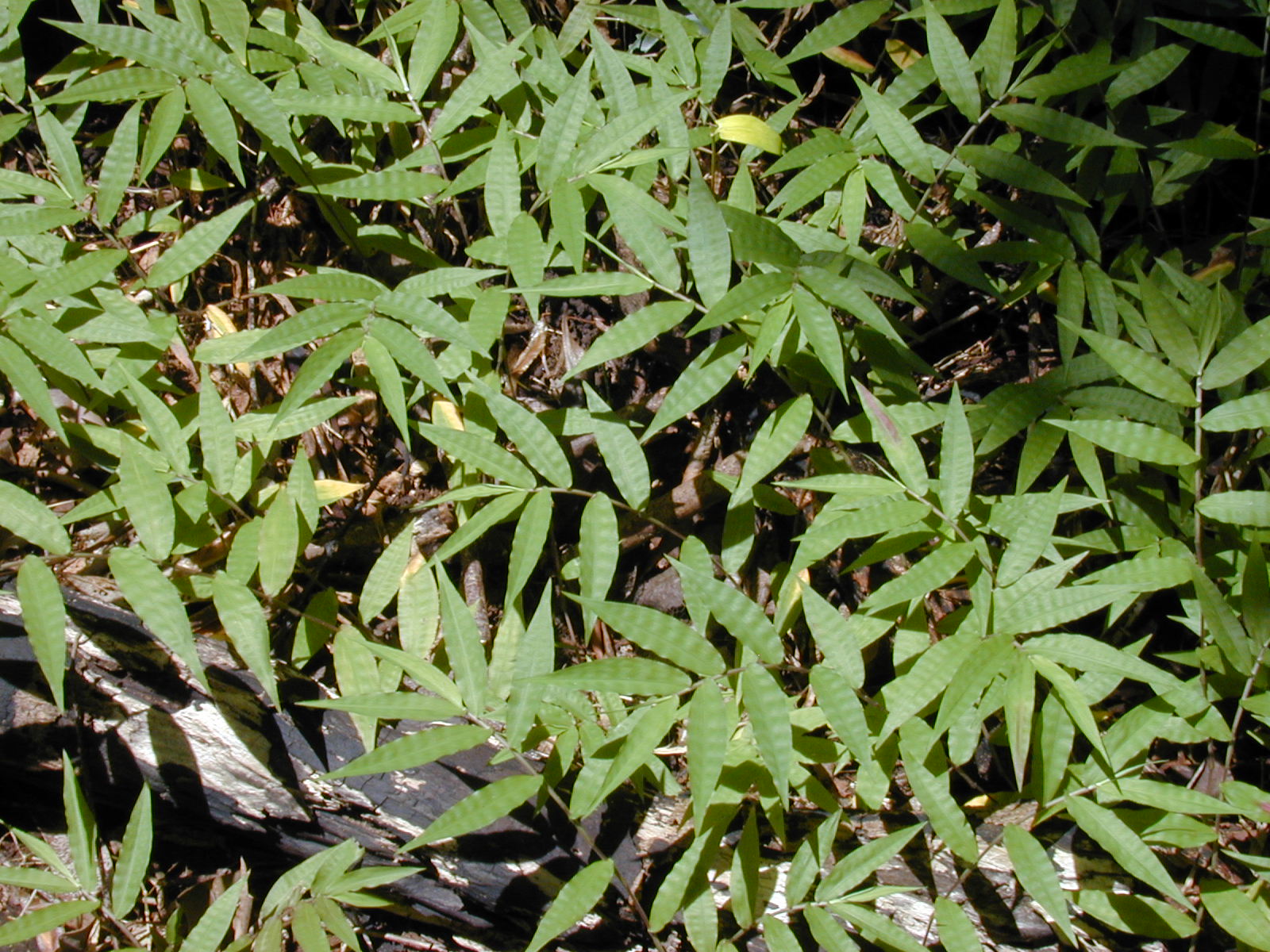
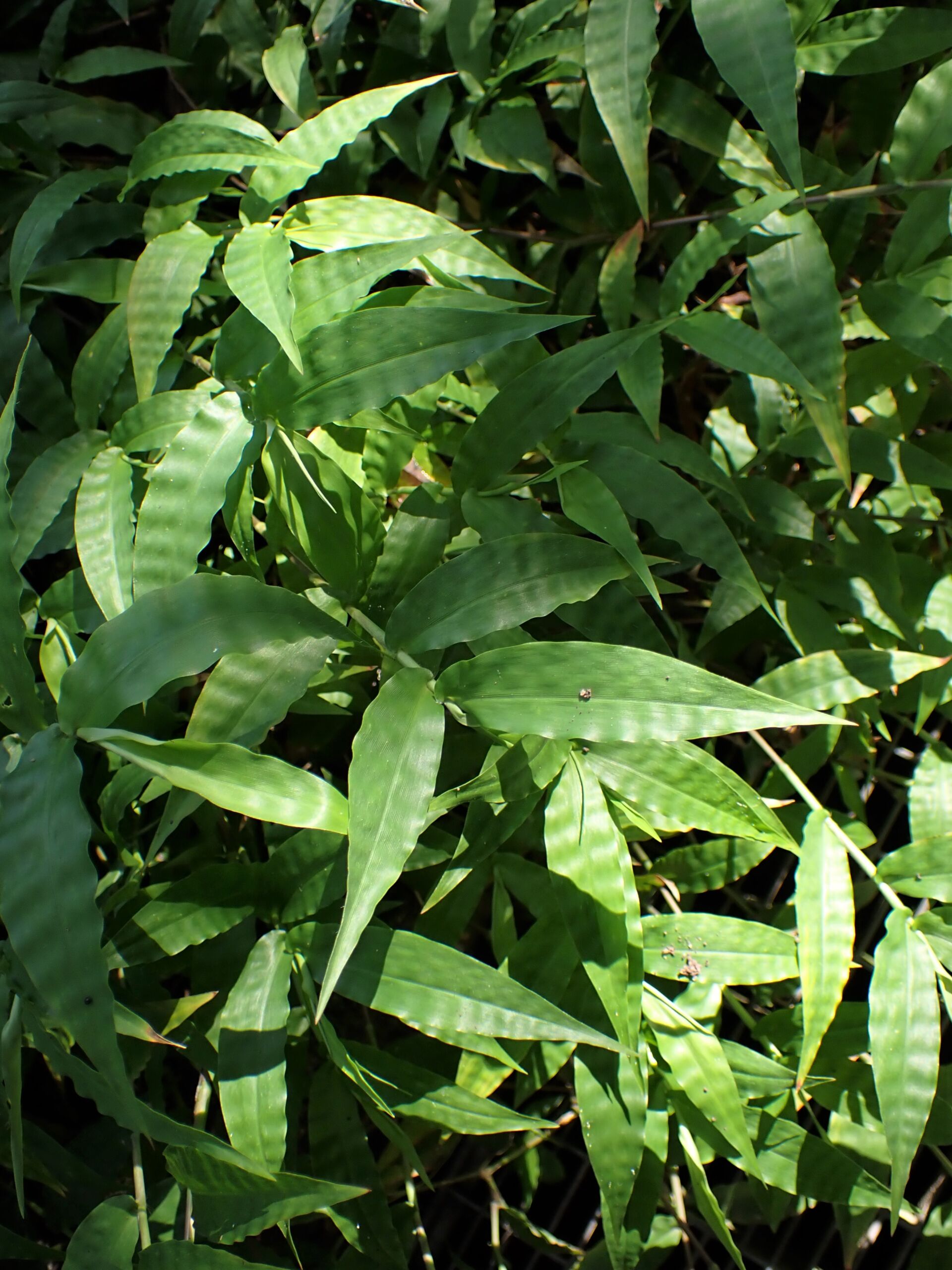
Basketgrass is the grass that solved the hardest problem in the garden: how to be a grass in deep shade. Most grasses want sun the way cats want a warm windowsill, and they thin out, sulk, and die in the shade under trees. Oplismenus hirtellus does the opposite. It is a perennial grass in the grass family (Poaceae), in the subfamily Panicoideae, and it lives on forest floors, along stream banks, and at shady woodland edges across the tropics and subtropics worldwide — every continent except Antarctica, with its stronghold in coastal tropical and subtropical regions and on islands like Hawaii, New Zealand, Australia, and Madagascar. In the United States it is considered native to the Southeast, from Alabama, Arkansas, Florida, Georgia, Louisiana, Mississippi, North Carolina, South Carolina, Texas, and Oklahoma, and it is the plant the Intricate Satyr’s caterpillars eat in shady woodland, alongside woodoats and rosette grasses. If you have a patch of woods where nothing grassy will grow, basketgrass is not a compromise plant. It is the plant that was already growing there.
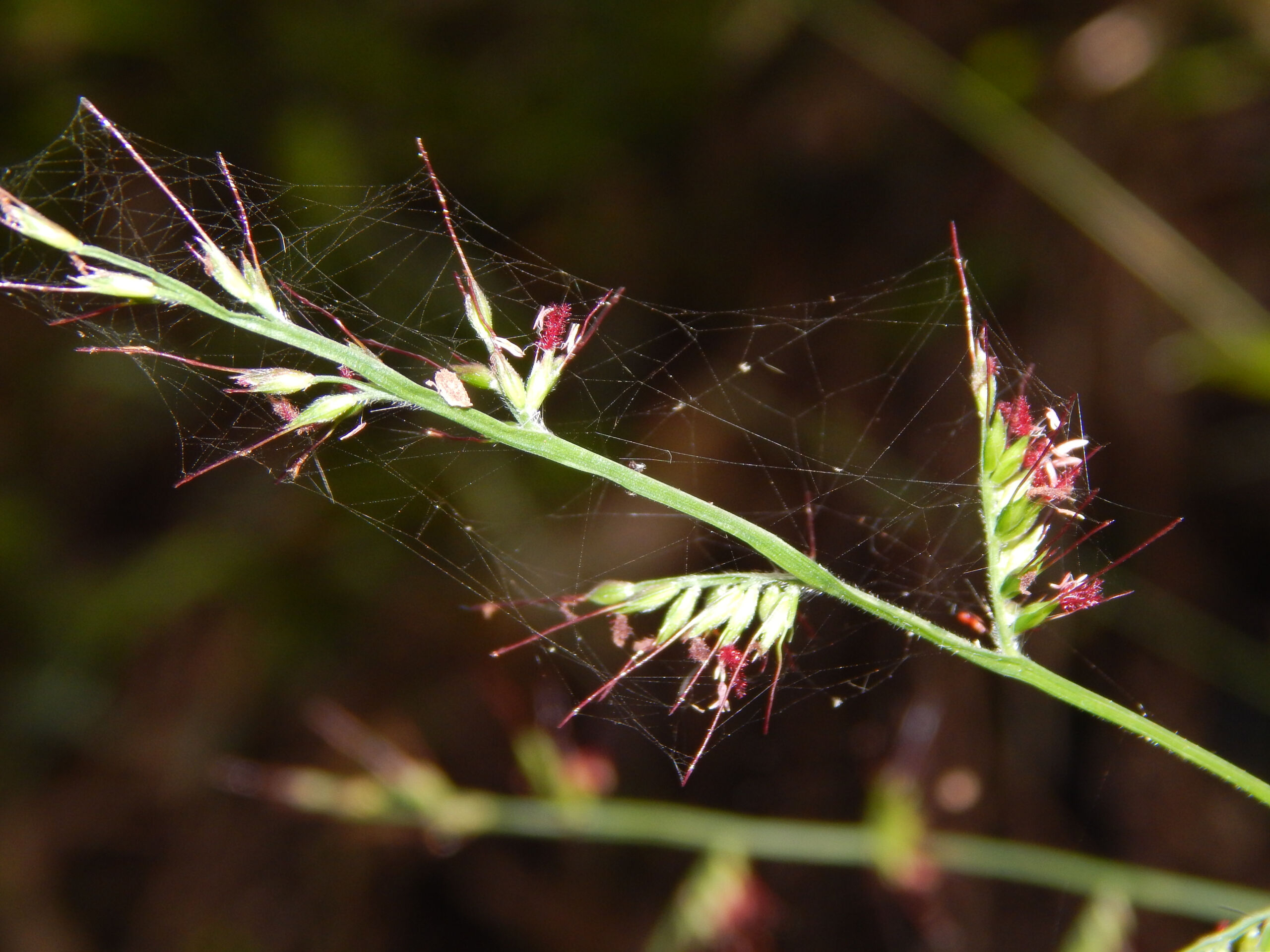
It does not look like a lawn grass, and that is the point. Basketgrass is a scrambling, trailing herb: its stems creep along the ground and root at the nodes wherever they touch soil, so one plant becomes a mat, and a mat becomes a carpet. The foliage is low — about six inches tall in the University of North Florida’s campus description, with flower spikes standing just above the leaves, and other descriptions put the whole plant around a foot high — and the leaves are the giveaway: lance-shaped to ovate blades, often distinctly crimped or rippled across the surface, dark green, with hairy leaf sheaths and scattered hairs, whitish on the underside and narrow near the midrib. The flowering stalk rises roughly 200 millimetres (about eight inches) above the leaves, carrying small flowers that are typically deep reddish or purple, with sticky, purple-tinged awns. That flower color matters, because it is how you tell basketgrass from its closest lookalike: the sister species wavyleaf basketgrass (Oplismenus undulatifolius) has white or very lightly colored flowers, and the two have been confused so often that the white-flowered grass found in Maryland and Virginia in 1996 was first called a subspecies of basketgrass and only later recognized as its own species. Buy and identify by Latin name and flower color, not by the word basketgrass alone.
The seeds are the plant’s travel plan, and they are gloriously shameless about it. Basketgrass is self-pollinated, and its seeds carry sticky awns that adhere to fur, feathers, and clothing, so animals, birds, and gardeners all serve as its seed-dispersal service. Walk through a fruiting patch in socks and you will carry the next generation home with you, which is either a charming bit of ecology or the reason you are picking seeds off your shoelaces, depending on your mood. The common name, meanwhile, comes from the other end of the plant’s relationship with people: basketgrass leaves have been used in basket weaving by Indigenous communities in Mexico and Central America, and the name stuck to the whole genus. A grass that weaves baskets, feeds satyr caterpillars, and hitchhikes on your dog is a grass with range.
One plain-text taxonomy warning, because this genus is a taxonomic argument wearing a plant costume, and this guide refuses to pretend otherwise. Botanists have proposed over 100 names in Oplismenus and recognize only about seven species, and Oplismenus hirtellus itself carries numerous subspecies across its huge pantropical range. The butterfly guide this draft serves names the plant as Oplismenus hirtellus, and this guide follows that Latin exactly. But Florida gardeners should know the local wrinkle: the Florida Plant Atlas treats the common Florida plant as bristle basketgrass (Oplismenus setarius), formerly considered a subspecies of Oplismenus hirtellus, and notes that Oplismenus hirtellus in the strict sense has been documented from only one Florida county and is non-native there. So a Florida patch of “basketgrass” is very likely Oplismenus setarius, the close cousin, not the strict species — and the butterfly connection still runs through the same shady-grass habitat. This guide covers Oplismenus hirtellus as the butterfly guide names it; it does not claim the Florida cousin, and it does not sort out a century of grass taxonomy in a garden guide. Check which basketgrass your local patch actually is before you plant it on purpose.
How to grow
Growing basketgrass starts with admitting what it wants, which is the opposite of what most grasses want: shade, moisture, and to be left alone. Plant it in part shade to full shade — under trees, on the north side of a fence, along a shady woodland edge, or in a shade bed where lawn grass has already surrendered. Direct sunlight scorches the leaves and stunts the plant, and a basketgrass in full sun is a plant filing a formal complaint. Give it moist, humus-rich, well-drained soil: woodland soil, leaf-litter soil, soil with compost worked in, soil that holds moisture without staying soggy. It adapts to a wide range of soil pH, and sources that pin a number put it slightly acidic to neutral, but the honest summary is that it is not picky about pH and is very picky about shade and moisture. Space divisions about a foot apart in a patch you want carpeted, and then step back: the creeping stems root at the nodes and fill in on their own, which is the whole point of planting a stoloniferous grass.
Propagation is the easy part, because the plant propagates itself every time a stem touches soil. Divide rooted sections in spring or early summer, press the rooted nodes into moist soil in their new spot, and keep them damp until they take hold. Seed works too, though the sticky seeds are easier to collect off your clothes than out of a packet, and self-pollination means seed-grown plants come true enough for a groundcover. Indoors, basketgrass is also grown as a trailing houseplant — the variegated cultivar ‘Variegatus’, with white-striped leaves, is a European hanging-basket classic — and the indoor rules are the same as the outdoor ones: bright indirect light, never harsh direct sun, consistent moisture, and a pot with drainage. Outdoors in warm climates it is a perennial groundcover; where winters bite, it is a tender plant, reliably perennial only around zones 9 to 11 for the tropical forms, so cold-climate gardeners should treat it as a container plant to bring in, or as a native woodland grass to admire in its own range rather than force into theirs.
Florida note, stated with the taxonomy warning attached, because Florida is where this plant’s story gets complicated. In Florida, basketgrass habitat is shady, moist woodland and stream-bank ground, and the plant you meet there is most likely bristle basketgrass (Oplismenus setarius), common across the state, rather than strict Oplismenus hirtellus. Either way, the garden advice is the same — shade, moisture, leaf litter, no mowing — and the butterfly advice is the same too: the Intricate Satyr’s world is shady woodland with a grassy understory of woodoats, basketgrass, and rosette grasses, and protecting that understory protects the butterfly. Do not mow the woodland floor, do not rake it bare, and do not “clean up” the shady grass into lawn. The satyrs do not eat lawn. They eat the woodland floor, and basketgrass is part of that floor.
Water & feeding
Water is the other half of the shade equation, and basketgrass wants it steady. Keep the soil consistently moist — not waterlogged, not dried out, just woodland-floor damp. In a naturally moist, shady site with leaf litter and normal rainfall, it largely waters itself once established; in a dry shade bed under a thirsty tree, it wants supplemental watering in dry spells, because a basketgrass that dries out thins, browns, and stops carpeting, which defeats the purpose of planting it. A mulch of leaf litter is the perfect topdressing here, holding moisture, cooling the roots, and feeding the soil food web the way a forest floor does it: leaves fall, microbes and fungi and invertebrates break them down, nutrients cycle back into the soil, and the grass grows on the interest. That is the soil science of a shade garden in one sentence — the litter is not mess, it is the fertilizer program.
Feeding: light, across the board. Basketgrass grows in humus-rich soil, and a spring topdressing of compost is the right scale of feeding — not a heavy fertilizer schedule, which mostly produces soft, leggy growth that flops and invites trouble. In a woodland site, the nutrients arriving with leaf litter are often plenty on their own. The plant’s real fertilizer is shade and water: give it the dim, damp conditions it evolved for, and it will do the rest, creeping, rooting, flowering purple-red above the leaves, and setting sticky seed for the next patch over. A basketgrass patch in deep shade, fed by its own leaf litter, is a small closed loop — light filtered through trees, water held by mulch, nutrients cycling through soil life — and it runs without you, which is the best kind of garden plant.
Common problems
- Too much sun. The number one problem, and the most avoidable. Leaf scorch, stunting, and thinning all mean the same thing: move it to shade, or pick a different grass for the sunny spot.
- Drying out. A basketgrass that dries out stops spreading and starts browning. Mulch with leaf litter, site it moist, and water in dry spells — or accept that a dry shade bed under a maple is a hard site for any plant.
- Running where you did not invite it. Stems root at the nodes, so a happy patch spreads. In a shade garden that is a feature; at a bed edge it needs occasional trimming back, or a mowing strip as a boundary.
- Sticky seeds everywhere. The awned seeds adhere to fur, feathers, and clothing. That is the dispersal system working, not a defect — but check the dog before he comes inside.
- Wrong basketgrass. Wavyleaf basketgrass (Oplismenus undulatifolius, white flowers) is a separate, invasive species in parts of the mid-Atlantic, and Florida’s common basketgrass is bristle basketgrass (Oplismenus setarius). Identify by Latin name and flower color before planting, especially outside this species’ native range.
- Not a turf grass. Basketgrass makes a woodland groundcover, not a lawn. It will not take foot traffic, mowing, or full sun the way turf does, and planting it as lawn is planting it to fail.
- Escape outside its range. In Hawaii, where it has been present for over 150 years, basketgrass dominates shaded forests and is described as potentially invasive. Plant the locally native form, in its native range, and do not release it into wild shade where it does not belong.
Harvest
Basketgrass’s harvest is divisions, seed, and caterpillars — in that order, and with one firm boundary this guide states plainly. This is not a food or medicine plant in this guide, and no part of this guide recommends eating or brewing it: its value is as groundcover, as weaving material in the traditions that named it, and as caterpillar food for the Intricate Satyr. If you want more plants, divide rooted stems in spring or early summer and press the rooted nodes into moist soil, or collect the sticky seed and sow it where you want the next patch — though collecting it usually means picking it off your socks, which is a perfectly good collection method. If you want weaving material, harvest leaves the way basket makers do, from a patch you grew for the purpose, and leave plenty standing.
The simplest harvest, though, is a summer walk through shady woodland with no agenda at all: a low green carpet under the trees, purple-red flower stalks just above the leaves, and the knowledge that the grass underfoot is feeding satyr caterpillars you will probably never see, because satyr caterpillars are grass-eating ghosts of the woodland floor. Leave the woodland floor unmown, leave the leaf litter where it falls, and let the basketgrass creep. That is the crop, and it arrives without a single spray — because spraying it would kill the very thing you planted it for, and because a grass that has run its shade-floor and hitchhiking-seed system across every continent except Antarctica does not need your intervention, only your willingness to plant it in the shade and then get out of its way.
Browse all plant & pest guides
Propagation
Basketgrass does not ask you to save seed — it asks you to stop it from saving itself all over your garden, and then to take advantage of the same habit. Oplismenus hirtellus spreads by creeping stems that root wherever a node touches moist soil, which means the plant is constantly propagating itself for free. The practical way to make new plants is simply to formalize what it is already doing: divide it.
In spring, when growth is active, lift a section of an established patch and tease or cut it apart so that each piece carries both roots and leafy stems — a rooted node or two is all a division really needs. Replant each piece at the same depth it was growing, in the moist, humus-rich, shaded soil basketgrass loves, and keep it evenly moist until new growth shows it has settled in. You can also peg a long, trailing stem down onto moist soil, let it root at its nodes, and then snip the rooted sections free — the same trick, with less digging.
Seed exists, and the plant makes plenty of it, but division is faster, surer, and keeps the exact plant you already like, while seed is slower and, thanks to those clinging, hitchhiking spikelets, more likely to turn up uninvited on your socks than in your seed tray. That hitchhiking habit deserves a plain warning: check your shoes and cuffs after working in a seeding patch, and never dump divisions or clippings where they can wash into wild shade. Basketgrass is a vigorous spreader — a virtue inside a shady bed, a nuisance the moment it leaves one.
Species
Oplismenus is a small genus — about seven recognized species out of over 100 proposed names — and this guide covers one of them, Oplismenus hirtellus, the basketgrass named in the Intricate Satyr guide, in plain text, with its lookalikes named so they are not mistaken for it. Wavyleaf basketgrass (Oplismenus undulatifolius) is the white-flowered sister species, formerly confused with this one, invasive in parts of the mid-Atlantic, and it is not covered by this guide. Bristle basketgrass (Oplismenus setarius) is the Florida-common plant formerly treated as a subspecies of Oplismenus hirtellus, and it is not covered by this guide either, though Florida gardeners will meet it first. Burmann’s basketgrass (Oplismenus burmannii) and Oplismenus compositus are other pantropical members of the genus, and they are listed here for completeness, not claimed by this guide. The variegated cultivar ‘Variegatus’ is a cultivated form of Oplismenus hirtellus grown as a trailing houseplant, and it is the one variety named here. Grow the species of your region, by its Latin name and flower color, and let this guide be the map of one basketgrass, not a substitute for its cousins.