
🌻 Beach Sunflower
What it looks like
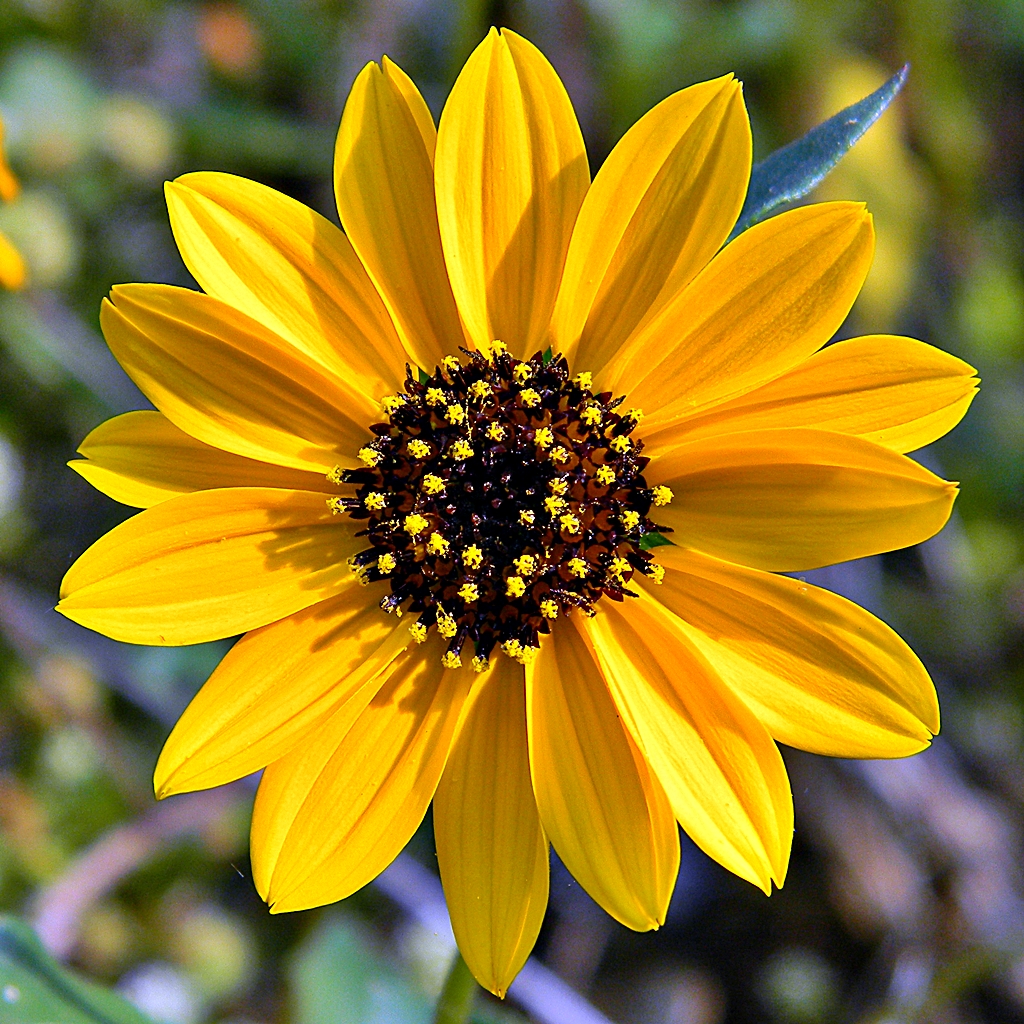
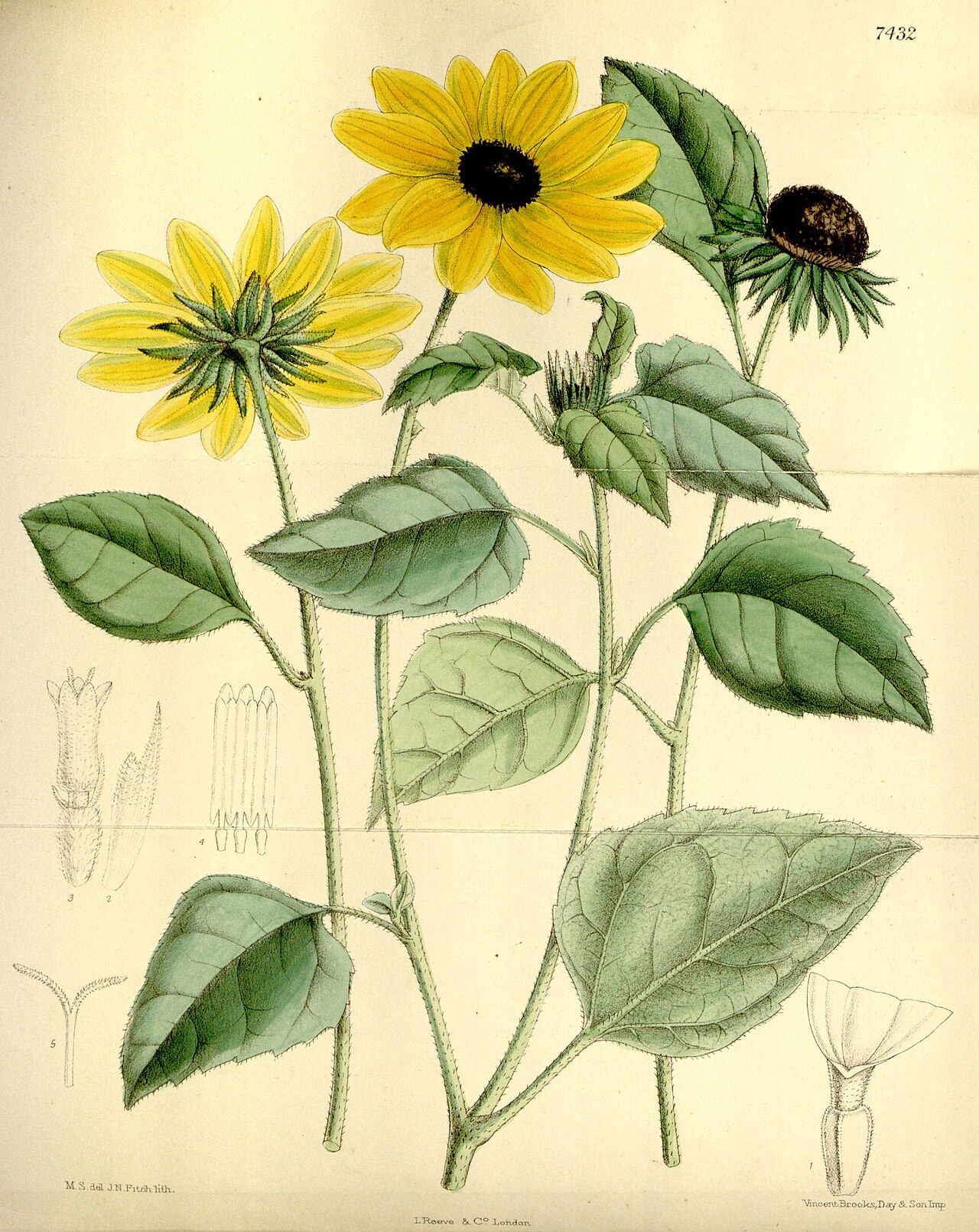
Beach sunflower is the Florida subspecies of Helianthus debilis, endemic to Florida, and it is a sprawling, low-growing perennial, 2 to 4 feet tall when it piles up on itself, but mostly spreading outward on decumbent stems that knit into a living mulch. The flowers are classic sunflowers in miniature: bright yellow rays around a purplish-brown disk, about 3 inches across, blooming nearly year-round in Florida, with no deadheading needed, though shearing spent stems tidies it up. The leaves are small, dark green, and irregularly lobed, and the whole plant has a tough, wiry energy that says it belongs on a dune.
The species name debilis means weak or feeble, which is hilariously wrong: this is one of the toughest plants in Florida, thriving in blazing beach sand with zero irrigation where almost nothing else survives. It is planted on beaches precisely because it forms a sand-binding groundcover that prevents erosion and stabilizes dunes, and in a garden it does the same job on a smaller scale: it holds hot, poor sand and turns it into flowers.
Why this variety
Choose beach sunflower when the site is hot, sandy, sunny, and unirrigated, and you want flowers anyway. Parking strips, dune edges, beach access paths, and any sunny spot with deep sand are its natural habitat, and in those spots it asks for nothing: no fertilizer, no irrigation, no deadheading, just sun and sand. It blooms nearly year-round, feeding native bees and butterflies, including sulphurs and skippers, in every month, and its seed heads attract small seed-eating birds.
It is also a short-lived perennial that reseeds freely, which means you should treat it as a permanent patch, not as a permanent plant: let seedlings replace older plants, and one planting usually becomes a self-renewing groundcover. That habit frustrates gardeners who want a tidy, long-lived specimen, and delights gardeners who want a living mulch that takes care of itself.
How to grow
Sow or plant in spring in the poorest sand you have, spacing 18 to 24 inches apart and letting it sprawl. Rich soil and fertilizer make it floppy, so do not improve the soil for this plant; the worse the sand, the better it behaves. Direct-sow seed in spring after the soil warms, with no cold treatment needed, or plant transplants with the root mass half an inch to an inch below the surface. It blooms nearly year-round with no deadheading needed, though shearing spent stems tidies it up, and it self-sows so freely that one planting usually becomes a permanent patch.
Florida note: beach sunflower subsp. debilis is endemic to Florida, which means it grows nowhere else in the wild, and planting it in a Florida garden is planting a true Florida original. It is the dune sunflower of Florida beaches, and it is at home statewide in coastal and sandy gardens, in zones 8 through 11. Do not confuse it with the imperiled hairy beach sunflower, subsp. vestitus, which is a rare Florida endemic known from only about 22 occurrences and is not a garden plant; this guide covers the common, garden-worthy beach sunflower, subsp. debilis, and its widespread cousin, cucumberleaf sunflower, subsp. cucumerifolius, which has its own guide.
Water & feeding
Water to establish, then almost nothing. Beach sunflower is extremely drought-tolerant once rooted in deep sand, and overwatering or fertilizing makes it floppy. In a beachfront garden it needs no irrigation at all; in an inland sandy bed, water only in a prolonged drought. Skip fertilizer entirely.
Common problems
Flopping in rich soil or with fertilizer: the most common failure, and the fix is poorer soil, not more care. Plant it in sand and leave it alone.
Short life: treat it as a short-lived perennial and let seedlings replace older plants, rather than expecting one plant to live forever.
Self-seeding beyond its bed: it reseeds freely. Edge it or let it fill a sandy area where roaming is fine.
Too much shade or water: full sun and dry sand are what it wants. Shade makes it leggy, wet soil rots it.
Harvest
The harvest is flowers and seed, nearly year-round: cut stems for cheerful bouquets, leave seed heads for small seed-eating birds, and let seedlings be the next generation. Historically, the flowers and seeds were used by Native peoples to produce pale green and purple-black colors for body painting and dyeing, a use this guide notes for history, not as a recommendation to try it yourself. The modern harvest is simpler: a sandy spot that flowers in every month, for free.
Saving seeds
Beach sunflower (Helianthus debilis subsp. debilis) is the seed-saver’s reward for choosing an easy plant: it practically saves its own seed, and your job is mostly to intercept some of it before the birds do. Let several flower heads stay on the plant until they turn brown and dry — do not deadhead everything, or you will deadhead your next generation too — then cut the dry heads, drop them in a paper bag, and rub or shake the small seeds free once they have finished drying indoors. Winnow out the chaff, and you have a pocketful of next year’s groundcover for the price of a paper bag.
There is no stratification ritual here, and that is a genuine pleasure after plants that demand months in the refrigerator. Beach sunflower seed needs no cold treatment: sow it in spring once the soil has warmed, press it lightly into a free-draining sandy mix or straight into poor sand, cover it only lightly, and keep it damp — not wet — until it is up, which is usually a matter of roughly one to two weeks. Starting indoors a few weeks ahead of warm weather works too, but direct sowing suits this plant’s character: it wants sun, sand, and benign neglect, and rich soil and fertiliser only make it floppy.
Think of beach sunflower as a permanent patch rather than a permanent plant. It is a short-lived perennial that reseeds freely, so one planting becomes a self-renewing groundcover as older plants wear out and seedlings take their place. Save seed every year even when the patch looks fine, because the patch is the seedlings, and a year with no seed set is a year the patch quietly retires. Leave some heads standing for small seed-eating birds — they are part of the garden’s economy, not thieves — and edge the bed or let it roam where roaming is fine, because a plant this happy to reseed will not ask permission before colonising the next sandy strip.
True-to-type notes, kept short because this is a species, not a hybrid minefield: seed from the straight species grows true in the broad sense, but if other subspecies, colour forms, or cultivars of beach sunflower are growing nearby, cross-pollination can produce seedlings that differ from the parent, so keep your seed patch reasonably isolated if uniformity matters to you. And the Florida storage rule, which applies to every seed you save in this state: dry the seed thoroughly, seal it airtight with a desiccant, and store it cool and dark. Florida humidity will turn a paper envelope in a shed into a science experiment, and not the fun kind.
Varieties
The beach sunflower group includes two garden forms: Beach Sunflower itself, Helianthus debilis subsp. debilis, endemic to Florida, and Cucumberleaf Sunflower, Helianthus debilis subsp. cucumerifolius, the subspecies with the widest distribution, from the Atlantic coast to Texas. Each has its own growing guide. Documented cultivars of the species include ‘Flora Sun’, selected in Florida for ease of establishment and low water needs, ‘Dazzler’, ‘Excelsior’, and ‘Orion’, though this guide covers the subspecies themselves, not those cultivars.