
🌿 Beargrass
What it looks like
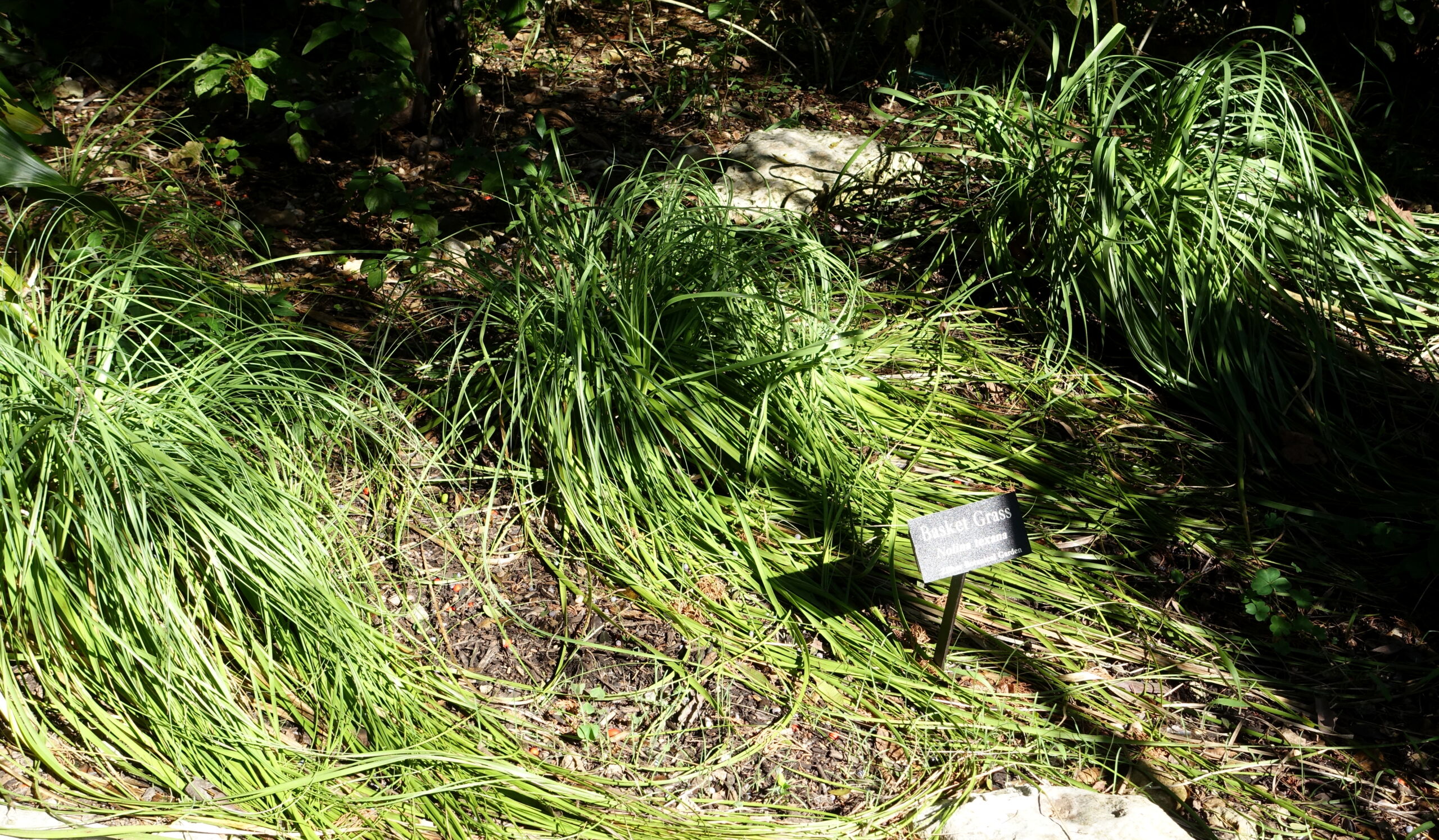


Beargrass is a lie told by a common name, and it is a glorious one. Nolina texana is not a grass at all. It is a perennial monocot in the asparagus family (Asparagaceae), a cousin of agaves, yuccas, and sotols, and it only looks like a grass because it grows as a dense mound of very narrow, wiry, evergreen leaves sprouting from the base, with no visible stem to give the game away. The butterfly guide that this draft serves calls it “beargrass (Nolina texana) in the agave family,” and that older family placement is still floating around in garden writing, so here is the honest version: modern classification puts it in Asparagaceae, and the agave family of older books is folded into that same family now, so the butterfly guide and this guide are describing the same plant, just from different editions of the family tree. Whatever family you file it under, the plant itself is unmistakable once you know it: a two-to-four-foot mound of grass-like leaves, and, in spring, a flower stalk that stays low, almost hidden inside the mound, instead of shooting skyward the way its relatives do.
The botany repays a close look, because this is a plant built like a desert survivor with a filing system. Nolina texana is stemless above ground (acaulescent) and clumping (cespitose): each tuft sprouts from the top of a woody caudex at the top of the roots, and the caudex branches underground, so one plant carries multiple rosettes. The leaves are stiff and wiry with a triangular cross-section, 40 to 90 centimetres long (16 to 35 inches) and only 2 to 7 millimetres wide at the base, usually less than 4 millimetres — about a tenth of an inch wide and up to four feet long, in the plain language of the Native Plant Society of Texas — with smooth margins, no waxy coating, and tips that die when the leaf is full grown, which is normal and not a disease. The flowering stem grows directly from the underground caudex, curves at the end, and carries a repeatedly branched (paniculate) inflorescence 25 to 70 centimetres tall and 5 to 17 centimetres wide, densely packed with tiny flowers whose parts are called tepals rather than petals or sepals because they do not clearly divide into the two — white, cream, or greenish-white, just 2.5 to 3.5 millimetres long. The fruit is a thin-walled, three-winged capsule 3 to 4 millimetres by 4.5 to 8 millimetres, holding rounded seeds 2.6 to 3.4 millimetres across. It was described and named in 1879 by Sereno Watson from specimens collected in Texas, which is where the species name comes from, and the genus name honors Abbé Pierre Charles Nolin, a French arboriculturist — so beargrass is named for a French nurseryman and the state of Texas, and looks like a grass, and is neither, which is a fine summary of common names in general.
The range is where this guide has to be careful, because the plant’s own botanists are careful about it. All sources agree it is native to Texas and New Mexico; Plants of the World Online adds Oklahoma and Colorado and northern Mexico, with the most frequent Mexican records from San Luis Potosí, while the USDA database additionally reports it in Arizona, a record Plants of the World Online disputes. And the Flora of North America account adds a live uncertainty: the very similar Nolina greenei grows in Colorado, New Mexico, and Oklahoma, and it is unknown how many observations there have been mistaken for Nolina texana. The habitat underneath all of that is consistent — grassland, shrubland, and rocky hillsides on limestone or granite soils, at 200 to 2,000 metres elevation — and the garden translation is just as consistent: sun, drainage, and dry air, not humidity and wet winters. This is a Chihuahuan-desert-edge plant, and it wants to be treated like one.
And then there is the butterfly, which is the reason this guide exists and the reason the plant’s Latin name matters so much. The Sandia Hairstreak (Callophrys mcfarlandi) is the official state butterfly of New Mexico, adopted in 2004 after a legislative memorial that described it, unusually accurately for a government document, as small and gold and green, living among beargrass, with pink, lavender, and white caterpillars. The butterfly was discovered in spring 1958 in La Cueva Canyon in the Sandia Mountains outside Albuquerque by Noel McFarland, then a student, and described the following year. Its caterpillars eat beargrass flowers and fruits — eggs are laid on the flower stalks, so the butterfly’s reproduction is tied to beargrass flowering — and the adults nectar on the flowers of the host plant itself, which is convenient and a little circular, and which is why the species is so local: southeast Colorado south through New Mexico and west Texas to northeast Mexico, in yucca-agave desert, in two flights in May and June, with no backup host to switch to. A bad beargrass year is a bad Sandia year. Planting Nolina texana in beargrass country is not decorating a xeriscape. It is keeping a state butterfly’s nursery open.
One plain-text disambiguation, because “beargrass” is one of the most overworked common names in American plants, and this guide claims exactly one of its bearers. This guide covers Nolina texana only — Texas beargrass, Texas sacahuista, bunchgrass, basket grass in the Texas sense. It does not cover western beargrass (Xerophyllum tenax), the tall white-plumed lily-family plant of the Pacific Northwest, which is the beargrass most flower arrangers mean. It does not cover big beargrass or sacahuista (Nolina microcarpa), the close cousin with a tall flower spike up to eight feet, where Nolina texana’s flower stalk stays low inside the foliage. And it does not cover Florida beargrass (Nolina atopocarpa), which already has its own native-plant profile on this site and is a different species for a different state. Buy by Latin name, species by species, and if the tag just says “beargrass,” put it back down until it says which one.
How to grow
Growing beargrass starts with the only decision that matters: can you give it a dry winter? Nolina texana is the species of its genus most often grown in gardens, valued for its evergreen foliage and flowers, and it grows in full sun or partial shade, in alkaline soil with good drainage. The recipe is desert-simple: sun, sharp drainage, and restraint. Plant it in a rock garden, a decomposed-granite bed, a raised berm, or a sunny slope — anywhere water runs away from the crown rather than sitting on it. It grows in clay and caliche in its home country, but only where drainage is good, and garden writers in wetter climates are blunt about the limit: it does not have a chance in wet winters. Space plants about three feet apart, because each one becomes a mound three to four feet across, and give it room to arch: young foliage arches upward, older foliage weeps into a long mound, and a crowded beargrass is a beargrass you cannot see properly.
Propagation follows the clump: the standard garden method is separating offsets, the young rosettes that form around the parent caudex, and replanting them in spring or early summer in the same sharp drainage. Seed works too — sow the small round seeds in a gritty, well-drained mix and be patient, because this is a slow, long-lived desert plant, not a quick annual — but offsets are faster and come true, which is what you want when you are planting a named species for a butterfly. Transplant while the plant is small if you must move it, because the woody caudex and deep root run resent disturbance once established, and give every new planting a full season to settle before you judge it. A beargrass that looks unimpressive in its first year is often just building its caudex, and a beargrass in its third year on a sunny, rocky slope is a green fountain with a flower stalk hidden inside it.
Florida note, stated plainly, because this site’s readers are Florida gardeners and this is not a Florida plant. Do not plant Nolina texana in Florida expecting Sandia Hairstreaks, and do not plant it in Florida expecting it to thrive: it is a Texas and New Mexico desert plant that wants alkaline soil, sharp drainage, and a dry winter, and Florida gives it humidity, summer wet, and wet winters, which is the combination its growers warn about. Florida’s own beargrass is Florida beargrass (Nolina atopocarpa), which has its own native-plant profile on this site — read that one if you garden in Florida. This guide is for the gardeners in beargrass country, in Texas, New Mexico, and the dry Southwest, where planting Nolina texana is planting the Sandia Hairstreak’s nursery, and where the plant’s needs and the butterfly’s needs line up exactly.
Water & feeding
Water, for beargrass, is a question of how little you can get away with, and the answer is: very little, once it is established. It is exceptionally drought-tolerant, built for arid and semi-arid country, and in its home range it grows in poor, unfertilized soil without watering. In the garden, water deeply but infrequently while it establishes, then back off and let it live on rainfall in a dry climate, giving it a drink only if a summer is totally hot and dry with no rain at all. The soil science here is the desert story: in limestone and granite soils with little organic matter, nutrients are scarce and water is scarcer, and the plant’s wiry, narrow leaves lose little water, its caudex stores reserves, and its roots run deep into cracks for what moisture there is. Overwatering is the enemy, not underwatering — wet soil rots the crown, wet winters rot the plant, and a beargrass killed by kindness is the most common beargrass failure in gardens outside its range. A mulch of gravel or decomposed granite helps enormously, keeping the crown dry and the roots cool, where a wood-chip mulch would hold exactly the damp the plant hates.
Feeding: almost none, and that is a feature. Beargrass grows in poor, unfertilized soil, and a light application of a low-nitrogen, slow-release fertilizer in the growing season is the most it ever wants — most gardeners give it nothing at all, and it thanks them by thriving. Heavy feeding mostly produces soft, leggy growth that flops and invites rot, which is the opposite of what a wiry desert mound should be. The plant’s real fertilizer is sun and drainage: give it the bright, dry, rocky conditions it evolved for, and it will do the rest, holding its evergreen mound through winter, flowering low inside the foliage in spring, and feeding the pink-and-lavender caterpillars that show up for the flowers while the adults drink from the same blooms. Planting a native beargrass on a sunny, rocky slope is therefore not just xeriscaping — it is installing a butterfly nursery on top of a desert soil system, and the wiry leaves are the nursery’s architecture.
Common problems
- Wet soil and wet winters. The most consequential problem in the species. Root and crown rot from water sitting on the caudex, and failure in humid, wet-winter climates, kill more beargrass than drought ever will. Plant high, drain sharp, mulch with gravel, and do not plant it where winters stay wet.
- Wrong beargrass. A tag that says only “beargrass” may be Xerophyllum tenax, Nolina microcarpa, or Nolina atopocarpa, and none of those is the Sandia Hairstreak’s host. Buy by Latin name: Nolina texana, and check that the flower stalk stays low in the foliage rather than towering.
- Leaf tips browning. The tips of the leaves die when the leaf is full grown, as a normal part of the plant’s growth. Brown tips alone are not a disease — trim them for looks if you like, and worry only if whole rosettes collapse, which means rot.
- Expecting a tall flower spike. Nolina texana’s inflorescence stays mostly within the rosette, unlike its cousin Nolina microcarpa with its spike up to eight feet. If you want a towering plume, you want the cousin, not this species — and the Sandia caterpillars want this one.
- Livestock toxicity. Beargrass is reported to cause sunburn (phototoxicity) in livestock, with observational evidence pointing to the buds and flowers as the significantly toxic parts, though the chemical cause is unknown. Do not let grazing animals browse the flowering stalks.
- Slow establishment. A desert clump plant builds its caudex before it shows off. A quiet first year is normal; judge it in its third year, not its first.
- Caterpillar feeding on the flowers. Sandia Hairstreak caterpillars eat beargrass flowers and fruits, and that is the point of planting it in beargrass country. A nibbled flower stalk is a nursery at work, so do not spray the caterpillars — they are the crop.
Harvest
Beargrass’s harvest is seed, offsets, and butterfly-watching — in that order, and with one firm boundary this guide states plainly. This is not a food plant in this guide, and no part of this guide recommends eating it: the buds and flowers are reported toxic to livestock, and the plant’s value is as a landscape clump, a weaving plant in the traditions that used its leaves for baskets, thatching, and ties for bundles, and as the Sandia Hairstreak’s sole host. If you want seed, collect the thin-walled capsules when they ripen, and sow the small round seeds in a gritty mix. If you want more plants, divide the offsets around the parent caudex in spring or early summer, and replant them in sharp drainage. If you want weaving material, harvest leaves from a plant you grew for the purpose, and leave plenty standing — wild beargrass colonies are the butterfly, in the practical sense, and losing a colony to collection is losing the butterfly from that place.
The simplest harvest, though, is a May or June morning in beargrass country with no agenda at all: a gold-green hairstreak the size of your thumbnail, sitting in a wiry mound, pink and lavender caterpillars on the flowers inside it, and the knowledge that the mound under your eyes is both the landscape and the nursery, and that the butterfly belongs to exactly that place. Leave most plants standing through the season for the caterpillars, let the flower stalks do their work, and let the clump come back bigger next spring. That is the crop, and it arrives without a single spray — because spraying it would kill the very thing you planted it for, and because a plant that has run its desert-mound and low-flower system in Texas and New Mexico for far longer than there has been a New Mexico to name a state butterfly does not need your intervention, only your willingness to plant the right species and then get out of its way.
Browse all plant & pest guides
Saving seeds
Beargrass (Nolina texana) gives you two honest ways to make more plants, and seed is the slower, stranger one — which, for a desert plant that measures its life in decades, feels entirely appropriate. Only plants that flowered and set fruit will give you seed: look for the thin-walled capsules on the tall flower stalk, and collect them once they have dried on the plant. Break them open to free the small, round seeds inside, and sow them shallowly in a gritty, sharply drained mix, kept barely moist and warm. Germination takes patience — weeks to months, unevenly — and seedlings grow slowly, because this is a plant building a woody caudex and a deep root run for the long haul, not a quick annual flashing its colours and dying.
The seed route’s charm is also its gamble: seedlings are the species, with individual variation, and they take years to become the bold, wiry mound you pictured when you sowed them. The faster, truer route is offsets — the young rosettes that form around the parent caudex — separated in spring or early summer with as much of their own root as you can manage, and replanted in the same sharp drainage. Offsets come true, they skip the seedling years, and they are the method this guide recommends if you want more plants rather than more suspense. Seed is for the patient, the curious, and the gardener with a spare pot and no deadline.
Two boundaries, stated plainly. First, this is not a food plant in this guide: the buds and flowers are reported toxic to livestock, so no part of this section is a suggestion to taste anything, and seed-saving here is about propagation, not pantry. Second, drainage is not a preference for beargrass, it is the whole deal — wet soil and wet winters rot the caudex faster than drought ever will, so plant seedlings and offsets high, in rocky or sandy ground, with gravel mulch, and never in a low spot where water sits. In Florida, that means only sites with genuinely sharp drainage and a dry winter will do; a soggy summer hollow will kill a desert plant no matter how much you love it.
For storage, the usual Florida rule applies with extra force for a desert seed: dry the seed thoroughly, seal it airtight with a desiccant, and keep it cool and dark. Humidity is the one thing a desert seed is not built to forgive. Label the packet with the species name and the year, because a small round seed in an unlabelled envelope is a mystery you will not enjoy solving, and beargrass seedlings all look alike for a long time before they declare themselves.
Species
Nolina is a genus of roughly 30 to 41 species, depending on the authority consulted, native to Mexico and the southern United States, and this guide covers one of them, Nolina texana, in plain text, with its lookalikes named so they are not mistaken for it. Big beargrass or sacahuista (Nolina microcarpa) is the close cousin with a tall flower spike up to eight feet, and it is not covered by this guide. Florida beargrass (Nolina atopocarpa) is the southeastern species with its own native-plant profile on this site, and it is not covered by this guide. Nolina greenei is the very similar species of Colorado, New Mexico, and Oklahoma whose observations may have been mistaken for Nolina texana, and it is not covered by this guide. Nolina lindheimeriana (Lindheimer’s nolina, devil’s shoestring) is the other nolina of south central Texas, with a taller inflorescence rising a few feet above the plant, and it is not covered by this guide. Synonyms a gardener may meet on old tags include Beaucarnea texana and Nolina affinis, and the variety name compacta is no longer recognized as distinct. Grow the species of your region, by its Latin name, and let this guide be the map of one beargrass, not a substitute for its cousins.