
🤍 Belle Etoile Mock Orange
What it looks like
Why this variety
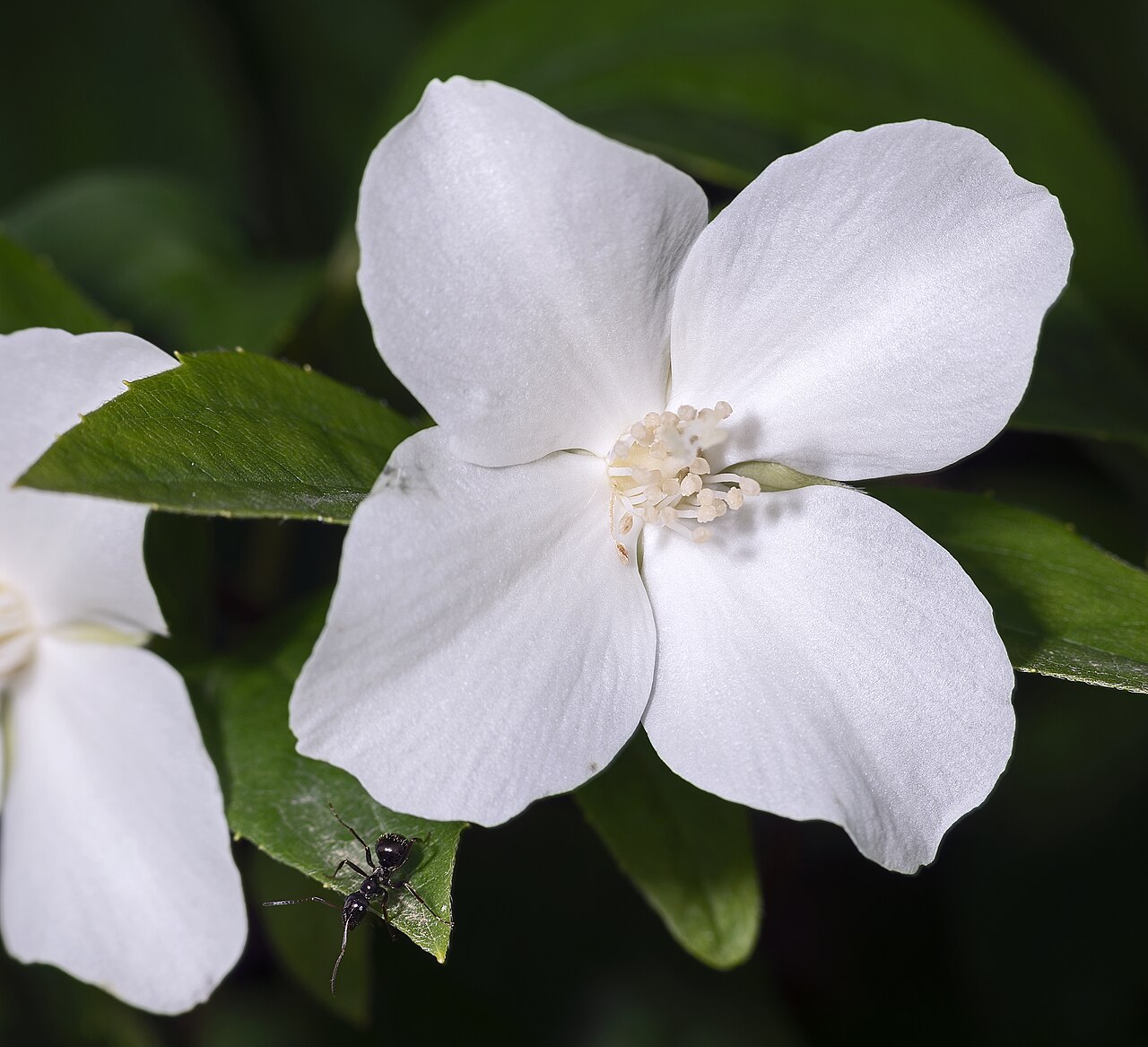
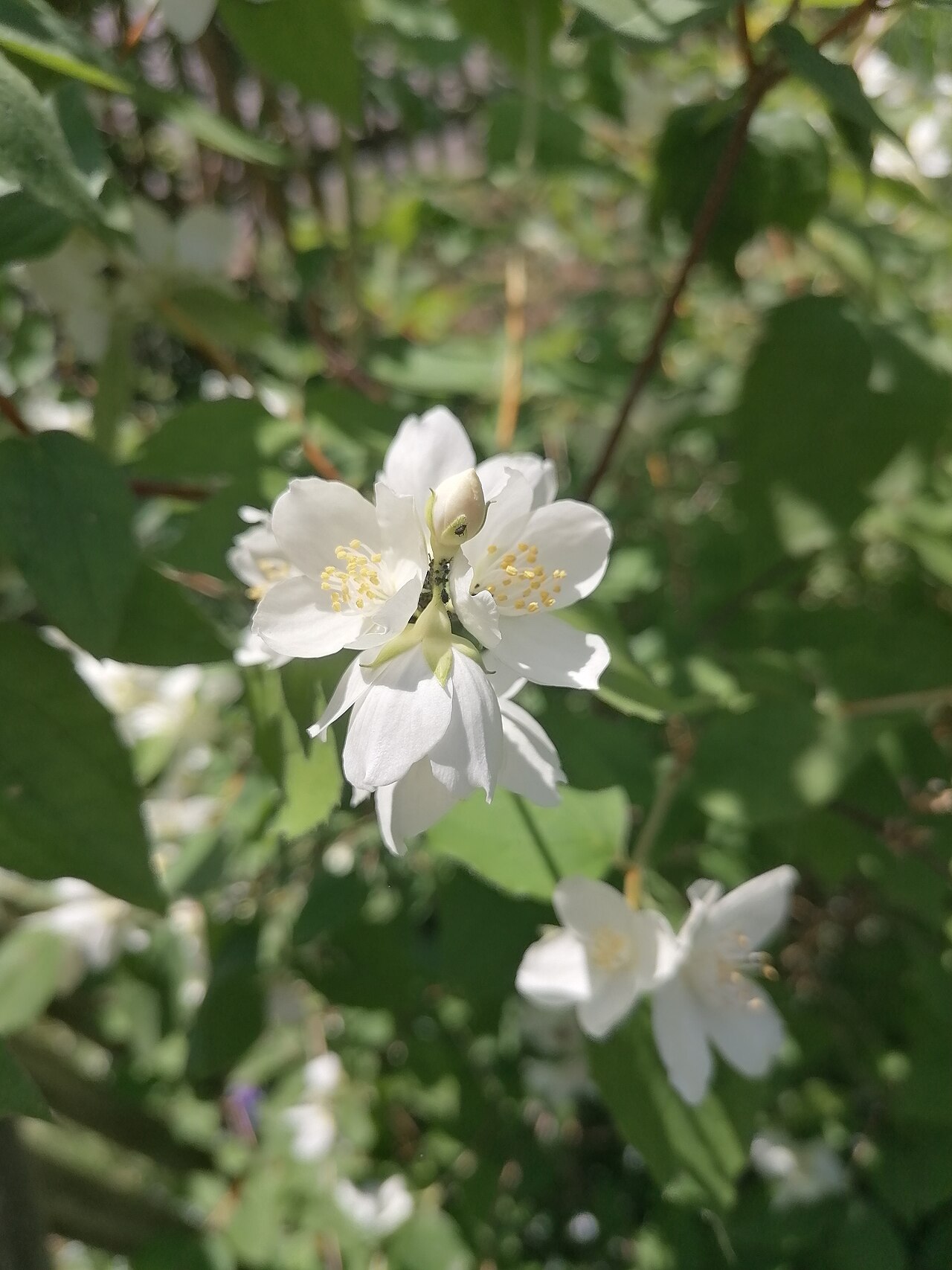
Belle Etoile is the mock orange for gardeners who want fragrance with a visual twist: white flowers with a distinctive purple-maroon blotch at the centre, intensely fragrant in late spring, on an arching shrub 5–6 feet tall and wide. It is a classic French hybrid, bred for perfume, and it delivers the mock orange promise — a yard that smells like an orange grove in June, from a shrub that has never met an orange — with flowers that reward a close look as well as a distant sniff.
In Florida, Belle Etoile is a north-Florida trial: sun to light shade with afternoon shade, well-drained soil, steady spring moisture, and room to arch. A crowded, sheared mock orange blooms less and looks worse, so let it be slightly wild, prune after flowering, and accept that a hot summer may thin the bloom — the perfume in a good year is worth the trial.
How to grow
Mock orange is grown for one glorious thing: intensely fragrant white flowers in late spring that perfume a whole yard, from a shrub that has never met an orange. Plant in spring or fall in well-drained soil in sun to light shade, and give it room — it is a vigorous, arching shrub, 8–12 feet tall, that looks best slightly wild, not sheared into a box, and a crowded mock orange blooms less and looks worse. Florida honesty first: this is a zone 4–8 shrub, so plant it only in the north, with afternoon shade, steady spring moisture, and the expectation that a hot Florida summer may thin the bloom — the perfume in a good year is worth the trial, and a thin year is a climate verdict, not a care failure.
Water & feeding
Water to establish and during dry spells; mature plants are moderately drought-tolerant, but steady moisture in spring supports the best bloom. Mulch to hold moisture. Feed lightly in spring. Prune after flowering, removing a third of the oldest stems at ground level — mock orange blooms on old wood, so a winter prune costs you the spring show.
Common problems
Few serious problems. Aphids may cluster on new growth in spring; water or ladybirds settle them. Leaf spot appears in wet years but rarely matters. The main management job is size and shape: let it arch, renew it after bloom, and do not shear it.
Harvest
The harvest is perfume and cut flowers: snip branches in late spring for the house, and the shrub will not mind. Prune after flowering, removing a third of the oldest stems at ground level — mock orange blooms on old wood, so a winter prune costs you the spring show, and that is the one rule that matters.
Nerdy fact: Mock orange’s genus, Philadelphus, is named for Ptolemy II Philadelphus, an Egyptian king — a grand name for a shrub whose real claim to fame is smelling like citrus without being citrus, thanks to shared aromatic compounds that fool the nose honestly.
Saving seeds
Belle Etoile is a classic French hybrid, so seed saved from it won’t come true — propagate it from cuttings instead. The Saving seeds section of the Mock Orange guide covers seed for the straight species.