
🫐 Bilberry
What it looks like
How to grow
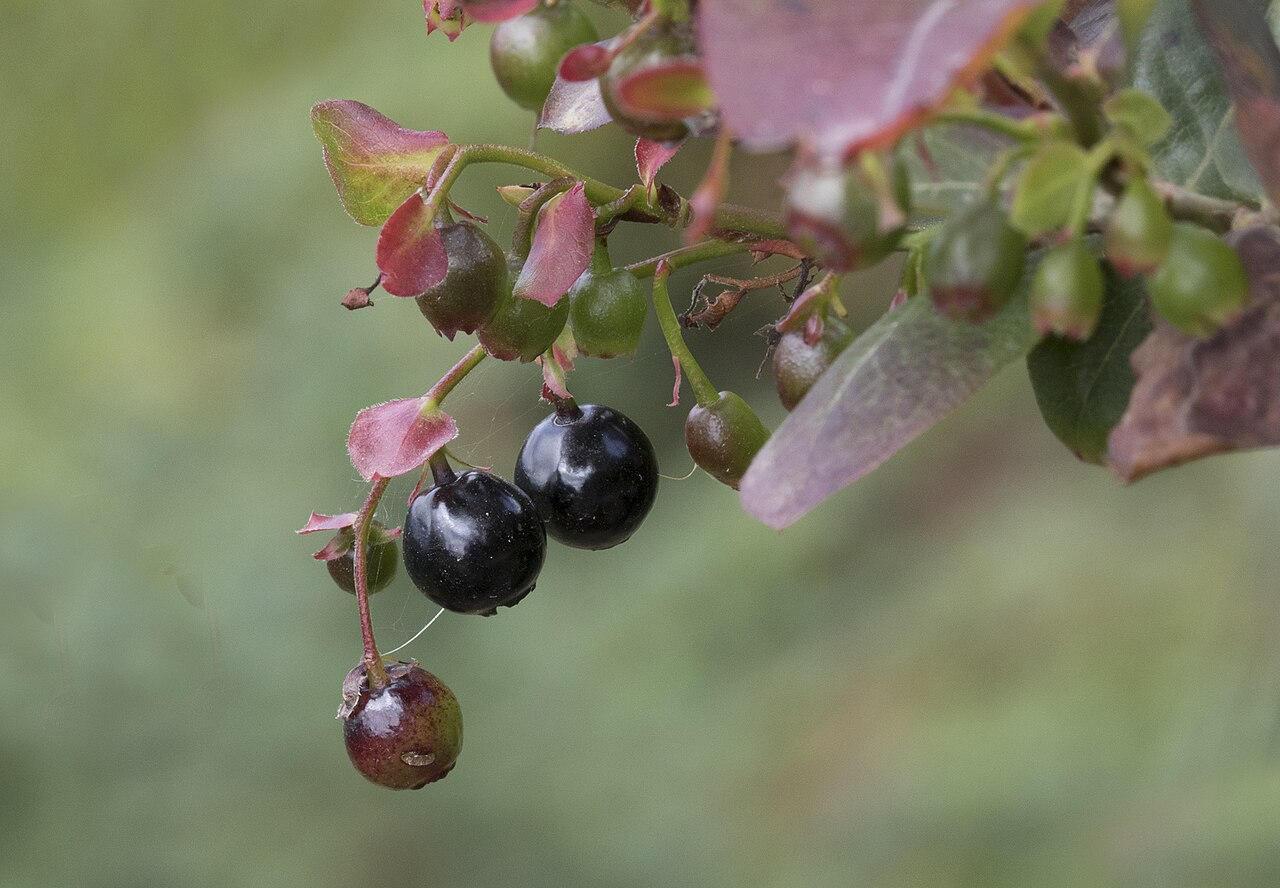
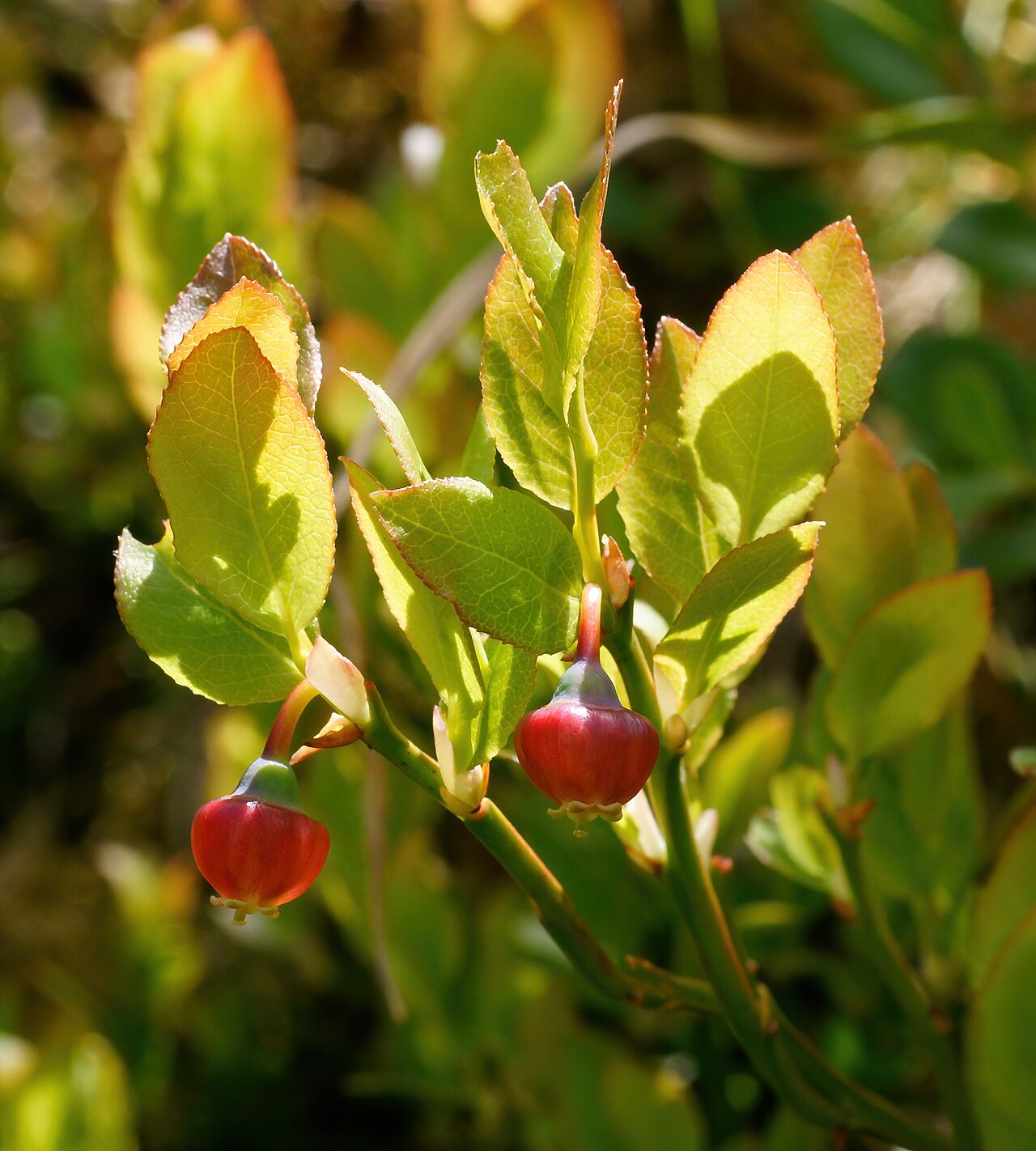
Bilberry is the low, wild blueberry of northern Europe and northern North America, a small deciduous shrub that makes intensely dark, purple-fleshed berries — unlike cultivated blueberries, whose flesh is pale green. Grow it where summers are cool: it wants acidic, moist, well-drained, humus-rich soil and light shade in warmer spots, and it sulks in hot, dry, alkaline gardens. Plant nursery stock in spring in a woodland-edge bed, mulch with pine needles or bark, and let it spread into a low colony. It is not a high-yield garden berry, and it will not out-produce a modern blueberry — grow it for flavor and for the deep purple stain, not for bulk.
Water & feeding
Keep soil moist but not waterlogged, especially in the first year and while fruit ripens. Mulch to keep roots cool and moist. Feed lightly with an acid fertilizer in spring if growth is weak; in rich woodland soil, compost mulch is often enough.
Common problems
- Heat and drought — bilberry is a cool-climate plant; afternoon shade and mulch are essential south of its comfort zone.
- Alkaline soil — chlorosis and stunting; acidify before planting.
- Birds — net small plantings if you want a harvest.
- Slow spread — bilberry colonizes by rhizomes at its own pace; do not expect a hedge in a season.
Harvest
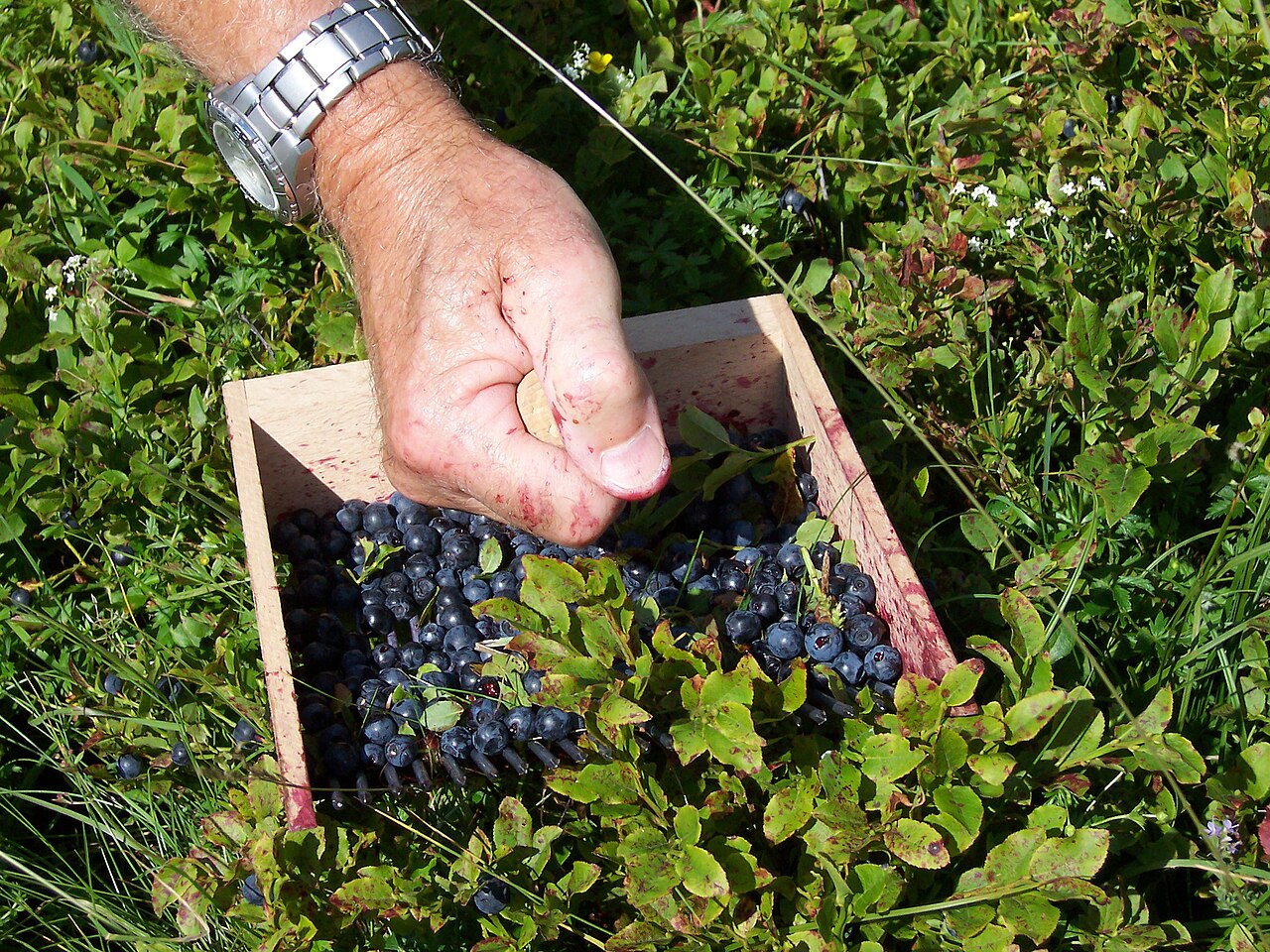
Pick when berries are fully dark blue-black and soft; they stain fingers and tongues purple, which is a feature, not a flaw. Eat fresh, cook into pies and sauces, or freeze. A handful goes a long way in baking because the flavor is concentrated.
Saving seeds
Bilberry (Vaccinium myrtillus) will let you save seed, but it will not hurry about it, and it is only fair to say that up front. If you want an exact copy of a named plant, division of a rhizomatous clump is the dependable route. Seed is for the patient gardener, the experimenter, and anyone happy to raise a crowd of variable seedlings and keep the best of them — which, for a wild berry, is a perfectly honourable way to garden.
Start with berries that are fully dark blue-black and soft, the ones that stain everything they touch. Mash a handful gently in a bowl of water, stir, and pour off the pulp and floating debris; the tiny seeds sink. Repeat the rinse until the water runs fairly clear, then spread the seeds on paper to dry for a few days until they feel papery. In Florida humidity, do this drying indoors with airflow and do not leave seed sitting damp — mould moves faster than germination ever will. Once dry, store the seed in a labelled envelope, cool, dark and airtight with a desiccant packet if you are holding it over winter.
The chilling question is one where sources give different answers, so take the middle of the road and do not panic about precision. Most propagation references call for a cold, moist period of roughly two to three months; some give shorter periods, and at least one study found chilling did not raise germination much at all. The standard home method still makes sense: mix the seed with damp peat or put it on damp paper in a sealed bag in the fridge for a couple of months over winter, then sow in late winter or spring. Sow on the surface of an acidic, peaty mix — bilberry seed is tiny and needs light, so barely cover it, if at all — keep it moist and humid under a cover, and wait. Germination is slow and uneven, often taking weeks to a few months, and seedlings need a lightly shaded spot and their first winter under cover before they are planted out. They will not fruit for a couple of years, and they will not all taste identical: seed-grown bilberries vary, which is the price of genetic diversity and also, arguably, the fun of it.
One Florida-shaped warning, because this guide’s plant is a cool-climate shrub of zones 3 to 7. Saving seed does not make bilberry heat-tolerant, and a seed packet will not rescue a plant sulking through a hot, alkaline summer. Save seed because you love the berry and have a cool, acidic corner for it — in a pot, in shade, with peat in the mix — not because you expect a Florida blueberry patch to appear by magic. And when you do get fruit, save seed from the plants that fruited best in your conditions, not just the first berry you picked: that is selection, and it is how a wild berry slowly becomes your berry.