
🌼 Blanche Sandman Honeysuckle
What it looks like
Why this variety
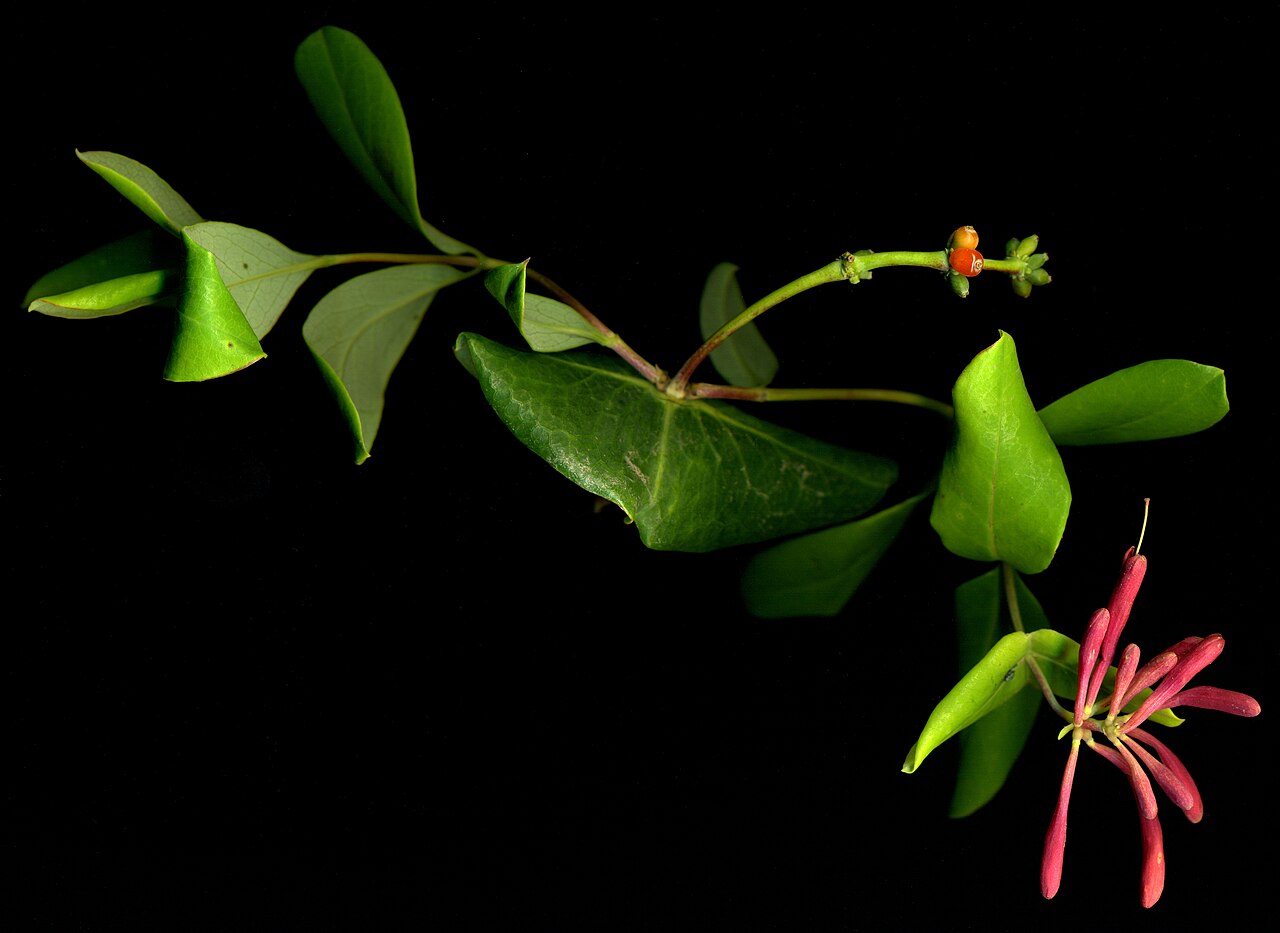
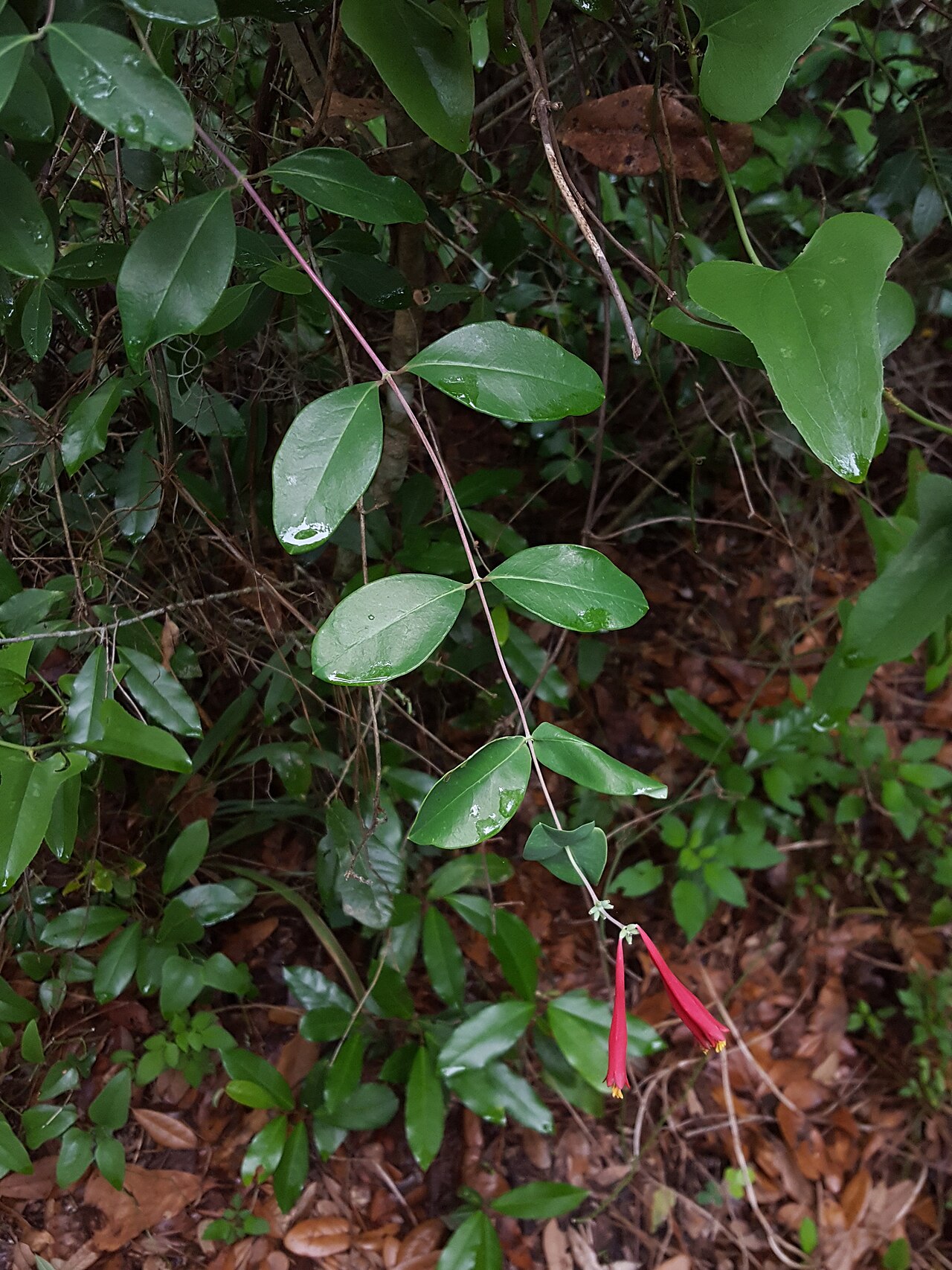
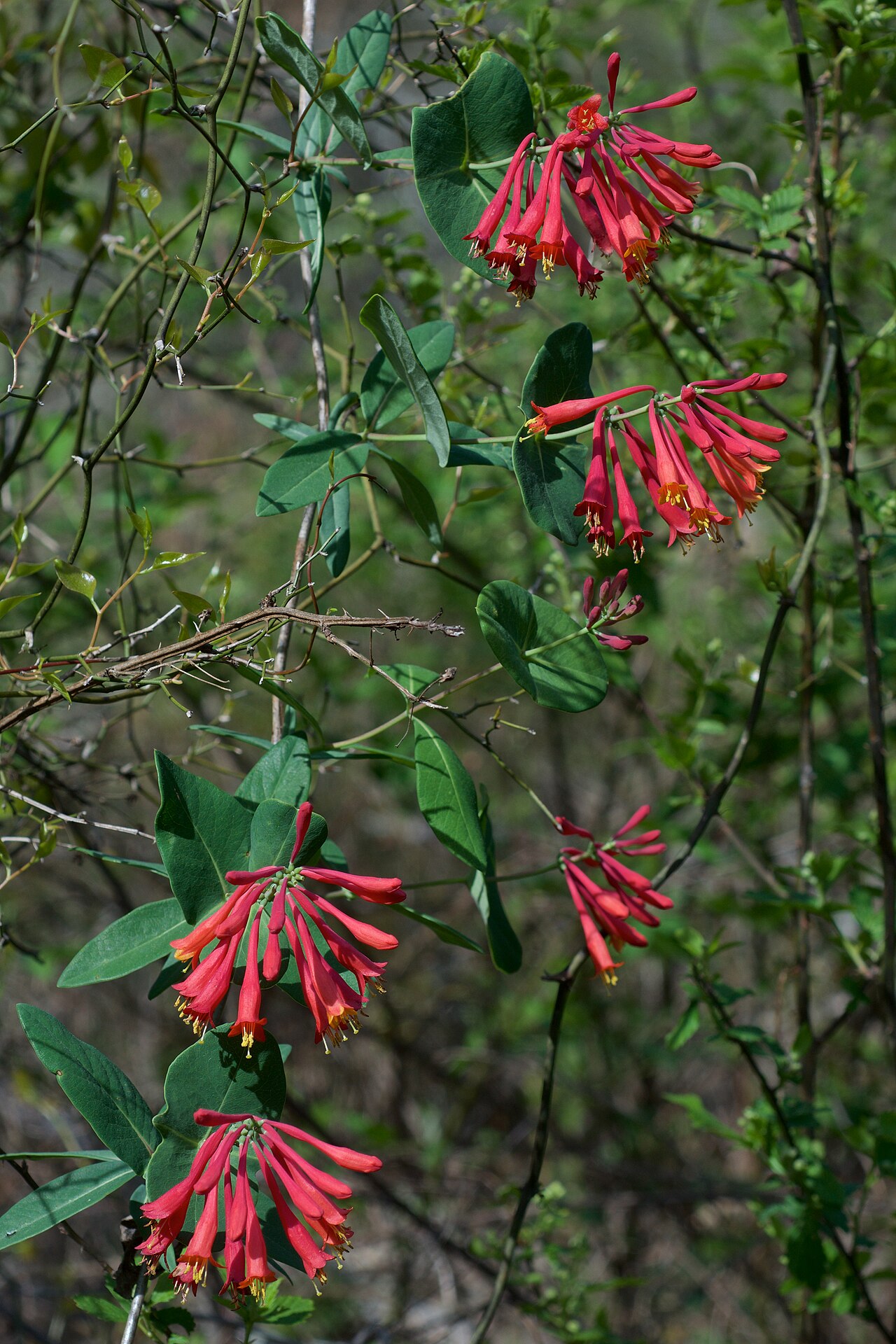
Blanche Sandman is the coral honeysuckle for gardeners who want hummingbirds without heartache: a disease-resistant, free-flowering selection of the southeastern native trumpet honeysuckle, with clusters of 2-inch, orange-red tubular flowers with yellow throats, blooming from late spring with sporadic rebloom into fall, on a twining vine 10 to 20 feet long. It is non-invasive, semi-evergreen to deciduous, and easy — the vine that covers a fence, feeds ruby-throated hummingbirds, and then feeds cedar waxwings and cardinals with its red berries in fall, without eating the neighborhood.
The trade-off is vigor managed, not vigor denied: Blanche Sandman still climbs fast and needs a sturdy trellis, fence, or arbor — not a flat wall, which defeats a twiner — and annual pruning after flowering keeps it shrubby rather than leggy. Do not confuse it with Japanese honeysuckle (Lonicera japonica): that vine is invasive in Florida and much of the eastern United States, smothering native vegetation, and this guide is not about it — plant native coral honeysuckle instead, and if you already have Japanese honeysuckle, remove it rather than feeding it. Blanche Sandman’s berries are for birds, not people: do not eat honeysuckle berries.
If you are new to choosing between cultivars, the Varieties Matter guide explains why the name after the plant matters as much as the plant itself. Blanche Sandman is a perfect example: it is not just a honeysuckle in the abstract, it is a honeysuckle with a specific job, a specific history, and specific strengths.
Florida honesty: coral honeysuckle is a genuine statewide native vine in Florida — it is native to the state, blooms for hummingbirds from spring into fall, and thrives in sun to part shade with drainage. Give Blanche Sandman a sturdy support, prune after flowering, and let it be the vine that proves a honeysuckle can be a good neighbor. If a neighbor’s vine smells sweetly fragrant in summer, that is likely Japanese honeysuckle — coral honeysuckle trumpets are largely scentless to us, and that scent difference is a field mark, not a flaw.
How to grow
Plant in spring or fall in sun to part shade and well-drained soil, against a sturdy trellis, fence, or arbor — coral honeysuckle twines, so it needs something to wrap around, not a flat wall. Work worm castings into the planting hole, water through the first season, and prune after flowering to keep it on its support rather than leggy. Do not plant Japanese honeysuckle (Lonicera japonica) — it is invasive in Florida — and remove it where you find it.
Set plants 5-10 feet apart on a trellis or fence in soil with a pH around 6.0-7.5. Work worm castings into the bed at planting and mulch to hold moisture. A well-fed honeysuckle plant rewards that care directly: steadier growth, better bloom, and a show that actually shows up.
Water & feeding
Water through the first season, then water in drought — established coral honeysuckle is fairly drought-tolerant, but a young vine that dries out stalls and blooms thinly. Water at the soil line, mulch to hold moisture, and feed lightly: castings at planting plus a balanced organic feed in spring is enough.
Common problems
- Confusion with invasive Japanese honeysuckle — Lonicera japonica is invasive in Florida and smothers native plants; plant native coral selections instead and remove Japanese honeysuckle where you find it.
- Vigorous escape off its support — prune after flowering and never let it climb into trees or onto roofs.
- Mildly toxic berries — honeysuckle berries are for birds, not people; do not eat them.
- Aphids on new growth — blast with water and encourage ladybugs; avoid broad-spectrum sprays.
- Leaf blight in humid, crowded plantings — space for air, water at the soil line, and remove affected leaves; Blanche Sandman resists it best.
Harvest
Cut a few flowering stems for scent and bouquets in summer, when trumpets are fully open — coral honeysuckle flowers last a day or two in water and suit small, hummingbird-garden bouquets, though their scent to us is faint. Prune after flowering for shape, and leave berries standing in fall for waxwings, cardinals, and finches — the birds’ harvest matters more than ours. Do not eat the berries.
Browse all plant & pest guides
Saving seeds
Blanche Sandman is a named selection, so seed saved from it won’t come true — propagate it from cuttings instead. The Saving seeds section of the Honeysuckle guide covers seed for the straight species.