
🦐 Blechum
What it looks like
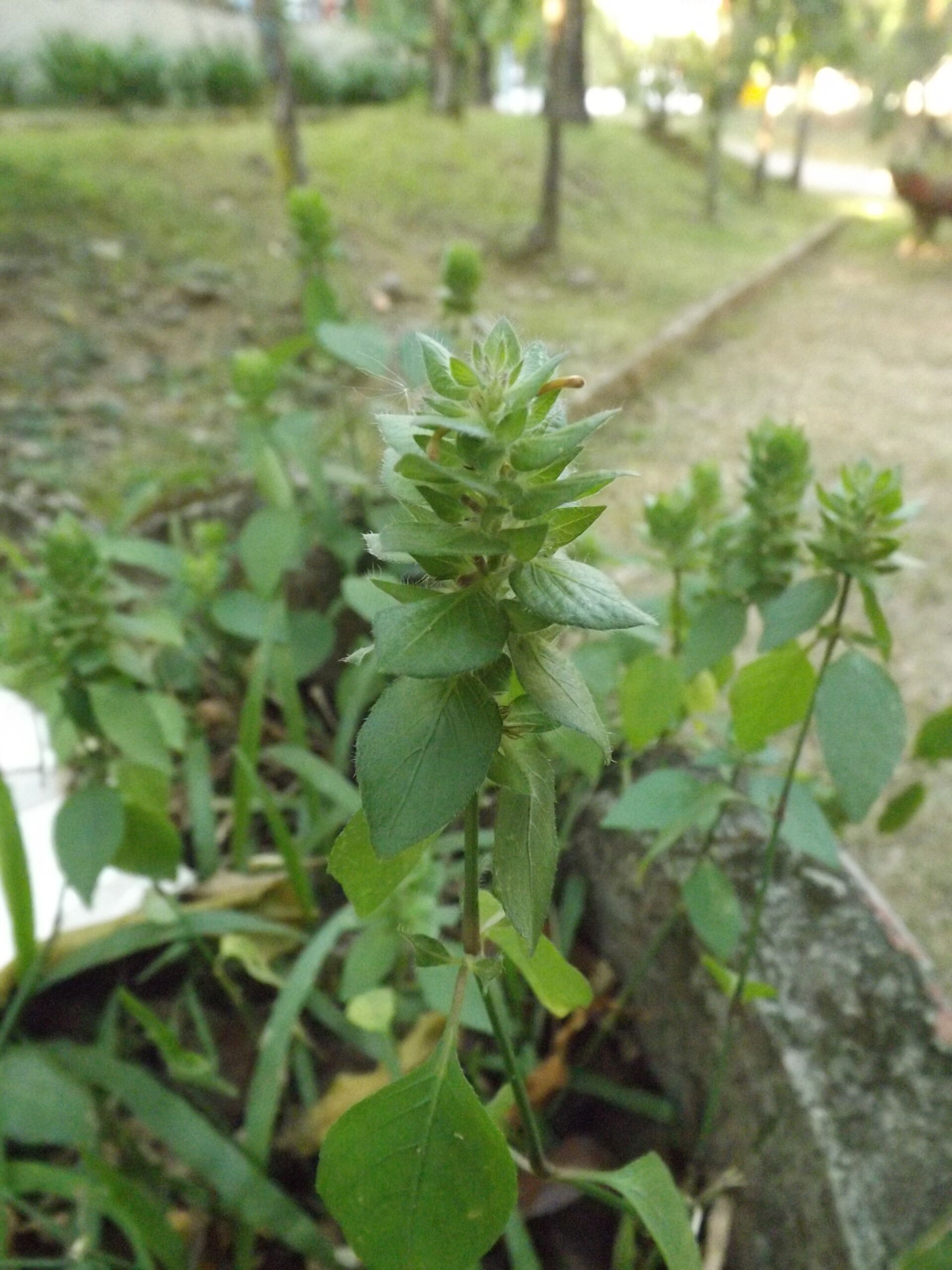
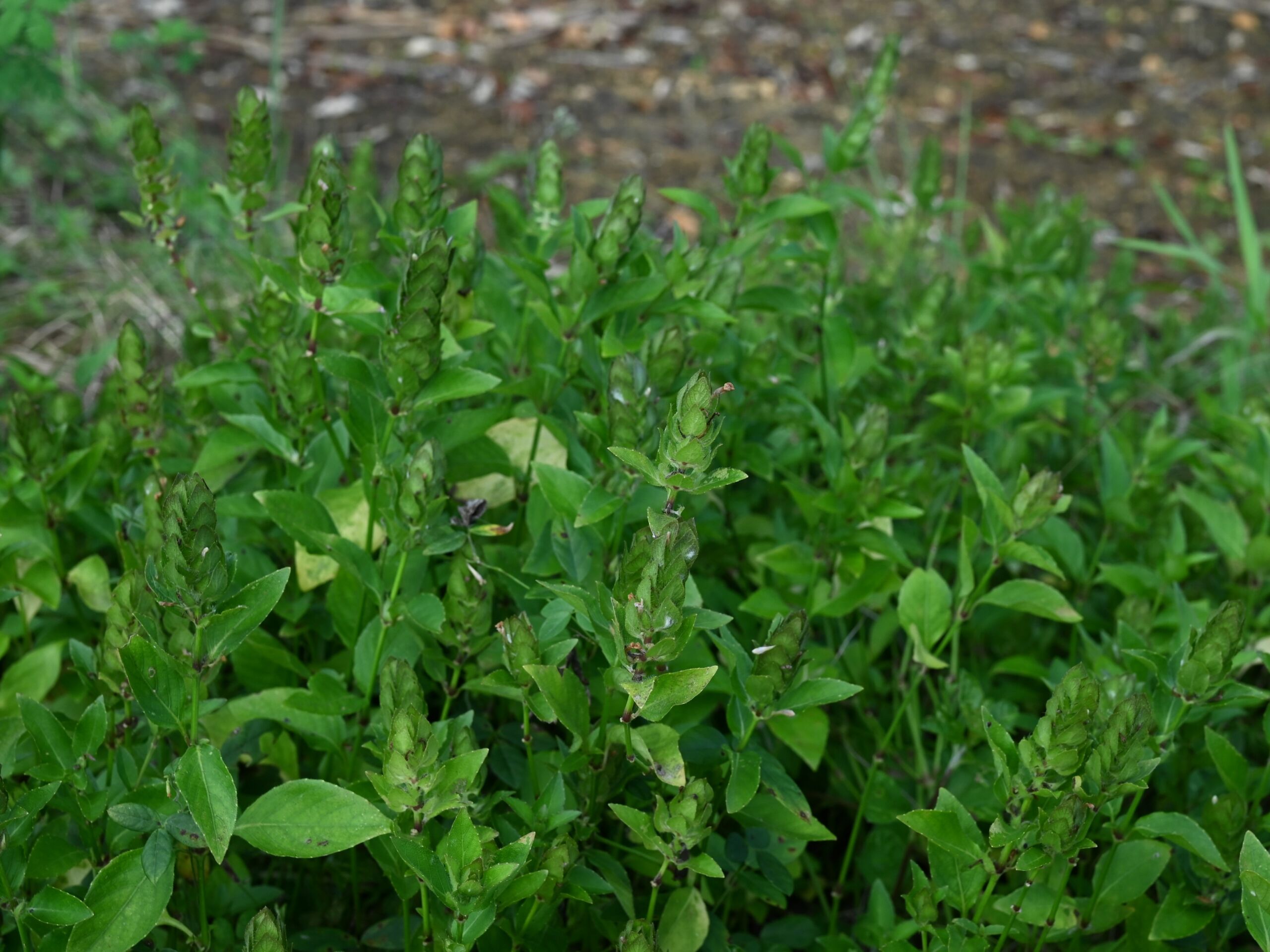
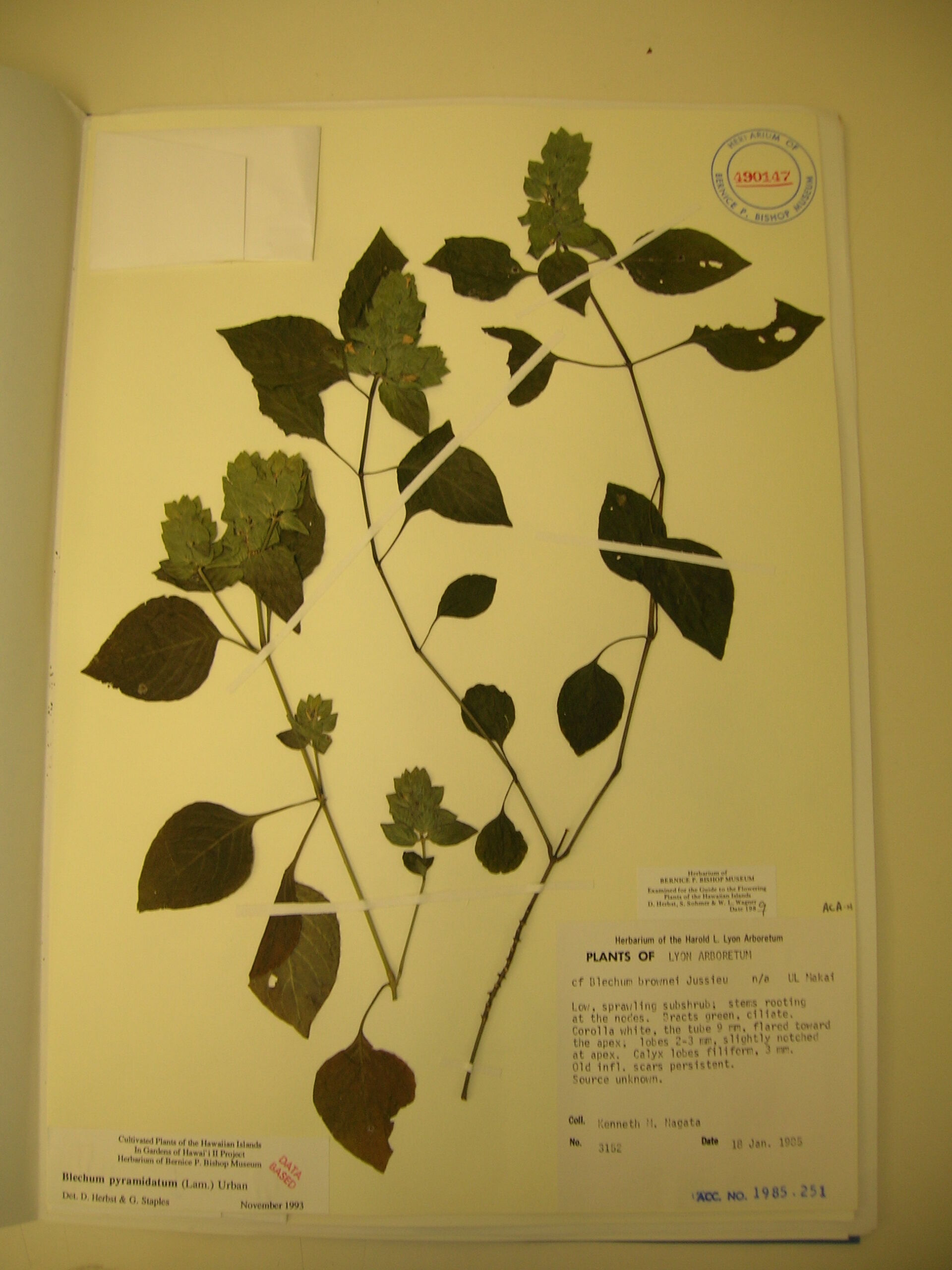
Blechum is a name you will meet in butterfly guides, in old nursery catalogs, and in the Latin names on herbarium sheets — and then, if you go looking for it in a modern flora, you will find it has moved house. Botanists now treat Blechum as a synonym of Ruellia, the wild petunia genus, and the plant the butterfly guides call “Blechum” is the green shrimp plant, Ruellia blechum, formerly Blechum brownei and Blechum pyramidatum. Same plant, new filing cabinet. This guide keeps the butterfly guides’ name in the title and gives you the current name alongside, because a gardener who only knows one of the two will miss the plant entirely.
What it looks like is unmistakable once you know the trick. It is an upright or clambering herbaceous perennial, about 20 inches tall, in the acanthus family (Acanthaceae), with opposite leaves and a flower spike that looks almost geometric: overlapping green-to-brown bracts stacked into a four-sided, pyramid-like spike, from which small white to pale lavender tubular flowers poke out, each one resembling a tiny wild petunia. That resemblance is no coincidence — wild petunias are its cousins, and now, taxonomically, its genus-mates. The spike is the “shrimp” in green shrimp plant, though the bracts here are green and angular rather than the pink overlapping scales of the Mexican shrimp plant, which is a different genus entirely (Justicia) and a different plant. Do not let the shared nickname fool you.
In the wild it is a plant of warm places: native to Mexico, the Caribbean, and northern and western South America, and now naturalized far beyond, including the Florida peninsula as far north as Alachua County and in Louisiana, carried around the world by the ornamental plant trade. In Florida it shows up in suburban woodlands, disturbed areas, and garden escapes — which brings us to the warning that belongs in any honest Blechum guide, right up front, before any planting advice: in Florida, this plant is listed as a Category II invasive, meaning it is spreading in the wild and being monitored for ecological damage. In Florida, the right relationship with Blechum is to recognize it, enjoy the butterflies it hosts, and pull it where it does not belong — not to plant more of it on purpose.
Outside its invasive range, in warm gardens where it is not a weed risk, it is grown as a low, cheerful, butterfly-friendly perennial for sun to part shade, flowering through the warm months. And everywhere, it is a butterfly plant first: the butterfly guides list plain “Blechum” as a host for the banded peacock and the rusty-tipped page, and the malachite guide lists both Blechum brownei and Ruellia blechum — the old name and the new name side by side, which is exactly the taxonomic tangle this guide is untangling. Where Blechum grows wild, peacock and page caterpillars grow with it.
How to grow
First, the Florida rule, because it overrides everything else in this section: if you garden in Florida, do not plant Blechum deliberately. It is already naturalized across the peninsula, it is a Category II invasive there, and planting it adds to a problem that land managers are already tracking. If it volunteers in your yard, you have a butterfly host for free — enjoy the caterpillars, and keep it from seeding into natural areas by deadheading before the seed ripens, or by pulling it if it starts to roam. That is the Florida growing advice in full, and it is deliberately short.
Outside Florida, in warm climates roughly zones 8 to 11, Blechum is an easy, low-maintenance perennial. Give it full sun to part shade in well-drained soil, water regularly while allowing the soil to dry between waterings, and expect it to form clumps that spread by seed — site it where volunteers are welcome, or deadhead the spikes before they set seed if you want it to stay put. It tolerates the neglect that kills fussier perennials, flowers over a long warm season, and pairs well with other tropical-subtropical perennials that like the same sun-and-drainage bargain. In cooler zones it can be grown as a container plant or a summer annual, brought under cover before frost, though honestly there are better-behaved acanthus cousins for cold-climate gardeners.
Propagation is by seed or by cuttings, and neither is difficult — which is, of course, part of why it naturalizes so readily. Seed sown in warm, bright conditions germinates without fuss, and stem cuttings root in moist soil. That ease is a feature in a garden you control and a bug in a landscape you do not, so the responsible move is to treat self-seeding as a management task from day one: deadhead, edge, and watch the beds around it the way you would watch any enthusiastic seeder.
A note on what you are actually buying: nursery and seed labels are a mess for this plant, because the name change from Blechum to Ruellia is still working its way through the trade. You may find it sold as green shrimp plant, Browne’s blechum, Blechum brownei, Blechum pyramidatum, or Ruellia blechum — all the same plant. Check the flower spike, not the label: the four-sided bract spike with small white-to-lavender trumpets is the giveaway. And check that you are not accidentally buying Mexican shrimp plant (Justicia brandegeeana), whose pink, arching spikes look nothing like this plant’s green geometry once you know both.
Water & feeding
Water regularly, allowing the soil to dry out between waterings — the standard tropical-perennial bargain. Blechum likes steady moisture in the growing season but not soggy ground, and it sulks in both bone-dry neglect and constant wet feet. In a container, that means a pot with real drainage holes and a saucer you empty, not a decorative cachepot with no way out.
Feeding: light and occasional. A balanced, dilute feed through the growing season, or a topdressing of compost in spring, is plenty; heavy feeding produces soft, leggy growth that flops and seeds even harder. This is a plant that makes its living in disturbed, sunny ground with modest fertility, and it does not need a rich diet to do it. In Florida, of course, the feeding advice is moot — you should not be planting it there at all, and the volunteers in your yard need nothing from you except, occasionally, removal.
Soil science note: the acanthus family is a mostly tropical family of about 2,500 species, and its members tend to share a strategy: fast growth, generous flowering, and seeds that travel. Blechum’s soil bargain is therefore a generalist one — adaptable, well-drained, not fussy about fertility — and its success as a naturalized plant comes from that generalism. A plant that can grow in a crack, a woodland edge, and a garden bed with equal enthusiasm is a plant that will not stay where you put it unless you watch it. Generalist roots are why it spreads, and why the Florida warning exists.
Common problems
- It spreads — in Florida, invasively. Category II invasive in Florida; naturalized across the peninsula. Do not plant it in Florida. Elsewhere, deadhead before seed ripens to keep it in bounds.
- Confusion with other “shrimp plants.” Mexican shrimp plant (Justicia brandegeeana) is a different genus with pink spikes. Check the green, four-sided bract spike to confirm you have Blechum.
- Name confusion. Labels may read Blechum brownei, Blechum pyramidatum, or Ruellia blechum. All three names point at the same plant; the current accepted name is Ruellia blechum.
- Cold damage. A warm-climate perennial, damaged or killed by frost. In marginal zones, grow it in a container you can shelter.
- Leggy growth in shade or rich soil. Too much shade or too much fertilizer makes it flop. Give it sun, lean soil, and a mid-season trim if it sprawls.
Harvest
Blechum has no food or cut-flower harvest to speak of, and this guide claims none — its value is ecological, not culinary. Its harvest is butterflies: banded peacock and rusty-tipped page caterpillars on the leaves, and adult butterflies visiting the small tubular flowers. If you grow it where growing it is responsible, cut a few flowering spikes for a mixed bouquet if you like — the geometric bracts are genuinely interesting indoors — but leave most of the plant standing for the caterpillars, and deadhead the rest before it seeds.
In Florida, the honest harvest is different: recognition. Learn the spike, spot the plant on a walk, and know that the peacocks and pages you see nearby may have started their lives on it. A plant can be both a butterfly host and a plant you should not plant, and holding both of those truths at once is the whole job of gardening in a state with as many naturalized species as Florida has.
Browse all plant & pest guides
Saving seeds
First, the warning that has to come before any seed-saving advice for this plant: in Florida, do not save, share, or sow blechum seed on purpose. Blechum — green shrimp plant, Ruellia blechum, also sold and listed under the older names Blechum pyramidatum and Blechum brownei — is a Category II invasive in Florida, naturalized across the peninsula and spreading in suburban woodlands and disturbed ground. The section below is for gardeners outside its invasive range, and for Floridians who want to understand the volunteers already in their yards so they can deadhead them before they seed. Everywhere else, the same vigor that makes it a problem in Florida makes it almost embarrassingly easy to grow from seed.
The seed lives in the plant’s signature structure: the four-sided green bract spike, which hides small tubular flowers and then small capsules. Watch the spike as the flowers fade. When the capsules start to split open, the seed is ripe — and because the capsules split rather than waiting politely for you, check often and catch them just as they open, or the seed will already be on its way to becoming next year’s volunteers. Snip the spike into a paper bag, let it finish drying indoors for a few days, then shake and rub the spike to release the small seeds and winnow away the chaff.
Sow in warm, bright conditions — this is a tropical-subtropical plant, and cool soil is the one thing that slows it down. Press the seed into moist, well-drained mix, cover it with only the thinnest dusting of soil, and keep it evenly moist but not waterlogged. Germination typically follows within a couple of weeks in warmth. Pot seedlings on once they are big enough to handle, and site them where you can watch them: blechum self-sows freely, and the responsible move with any enthusiastic seeder is to decide on day one where volunteers are welcome and where they are not, then deadhead the spikes you do not want seeding.
Two honesty notes. First, the name on the label may not be the plant you think it is. Nursery and seed labels for this group are famously tangled — Ruellia blechum, Blechum pyramidatum, Blechum brownei, and various shrimp-plant cousins get swapped around — so save seed under the name of the plant you actually grew, and note where it came from. Seed from a species plant grows true in the usual open-pollinated sense, but only if the parent was correctly identified in the first place. Second, cuttings are the faster, exact-copy route: a stem cutting in moist soil roots readily, and it is the better choice if you have one particular plant you want to repeat. Seed is for quantity, for sharing outside the invasive range, and for the simple pleasure of watching a plant do what it plainly loves doing.
Storage note, for gardeners where growing it is responsible: dry the seed thoroughly before it goes into a container — Florida gardeners reading this to manage volunteers already know what humidity does to stored seed — then keep it airtight with a desiccant packet, cool and dark, and sow within a year or two for best germination.
Species in this group
Green shrimp plant (Ruellia blechum; syn. Blechum brownei, Blechum pyramidatum) — the plant this guide is about: the upright-to-clambering, roughly 20-inch perennial with the four-sided green bract spike and small white-to-lavender flowers, native to Mexico, the Caribbean, and northern and western South America, naturalized in Florida and elsewhere. Most of the historical Blechum names you will meet in old books — Blechum linnaei, Blechum haenkei, Blechum trinitense, and others — are now treated as synonyms of this same species, not as separate garden plants, which is why this section has one real entry instead of a padded list. The wider Ruellia genus, into which Blechum has been folded, holds hundreds of species, including the wild petunias — but those are covered by the Ruellia guide, not this one.