
🤍 Bloodroot
What it looks like
How to grow
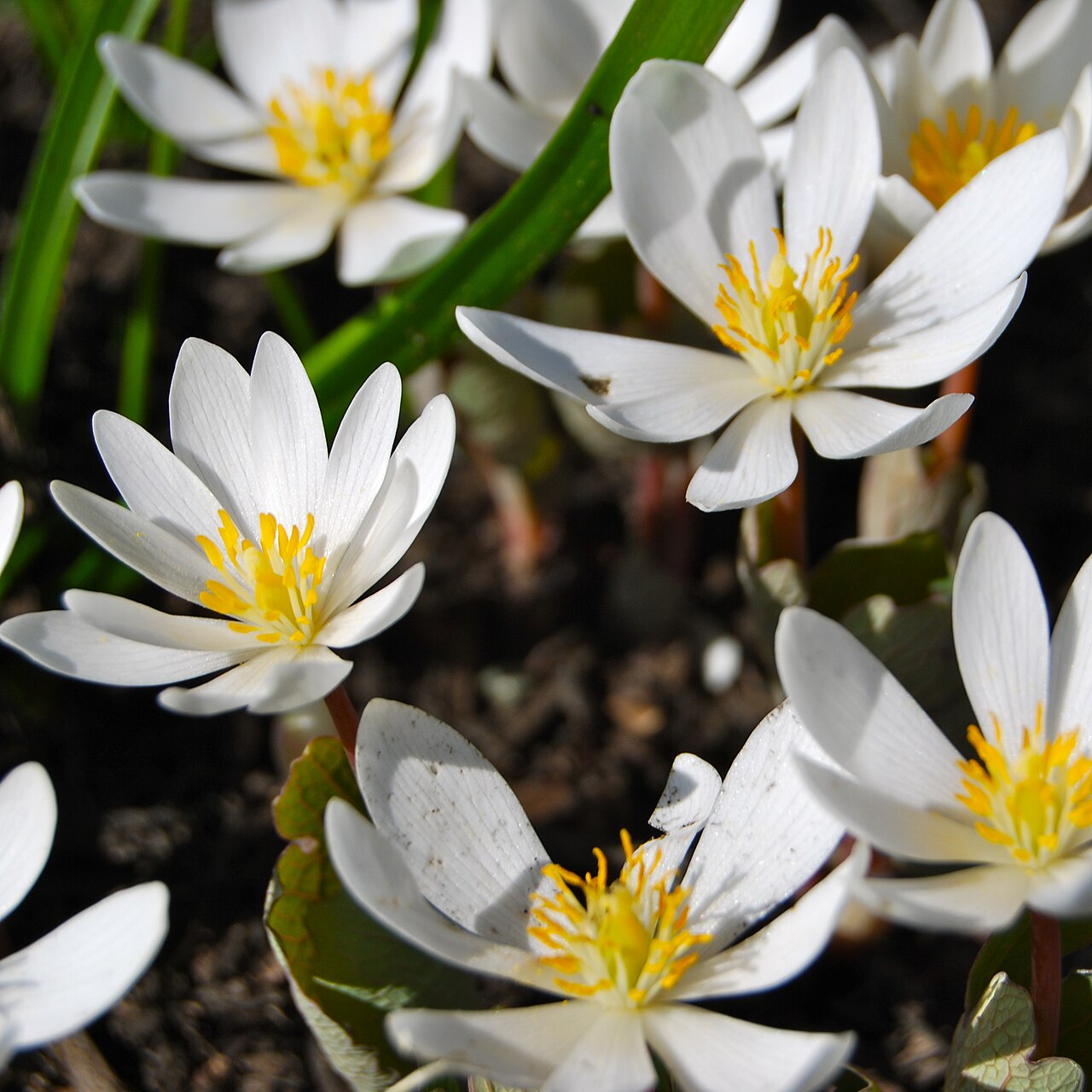
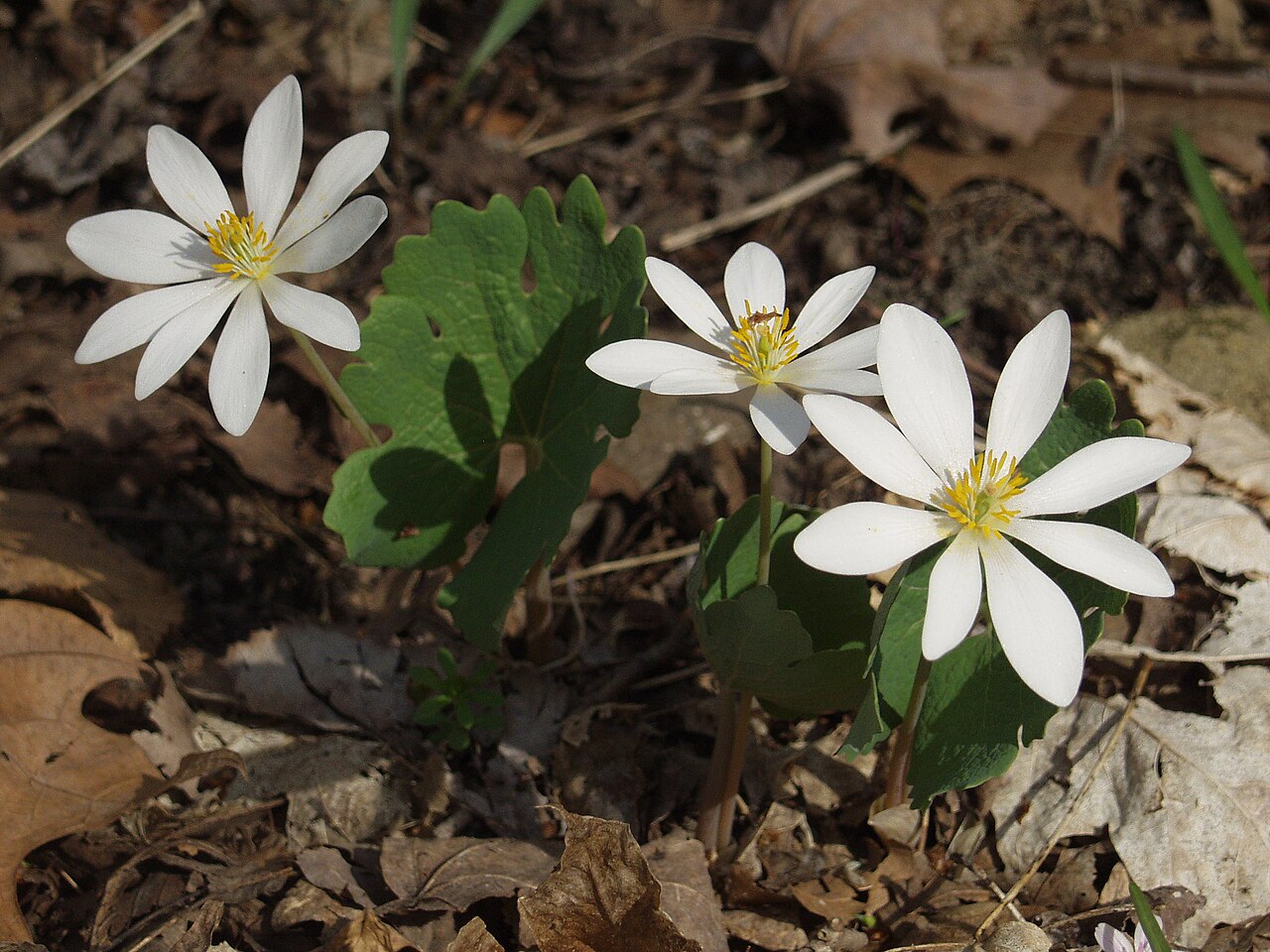
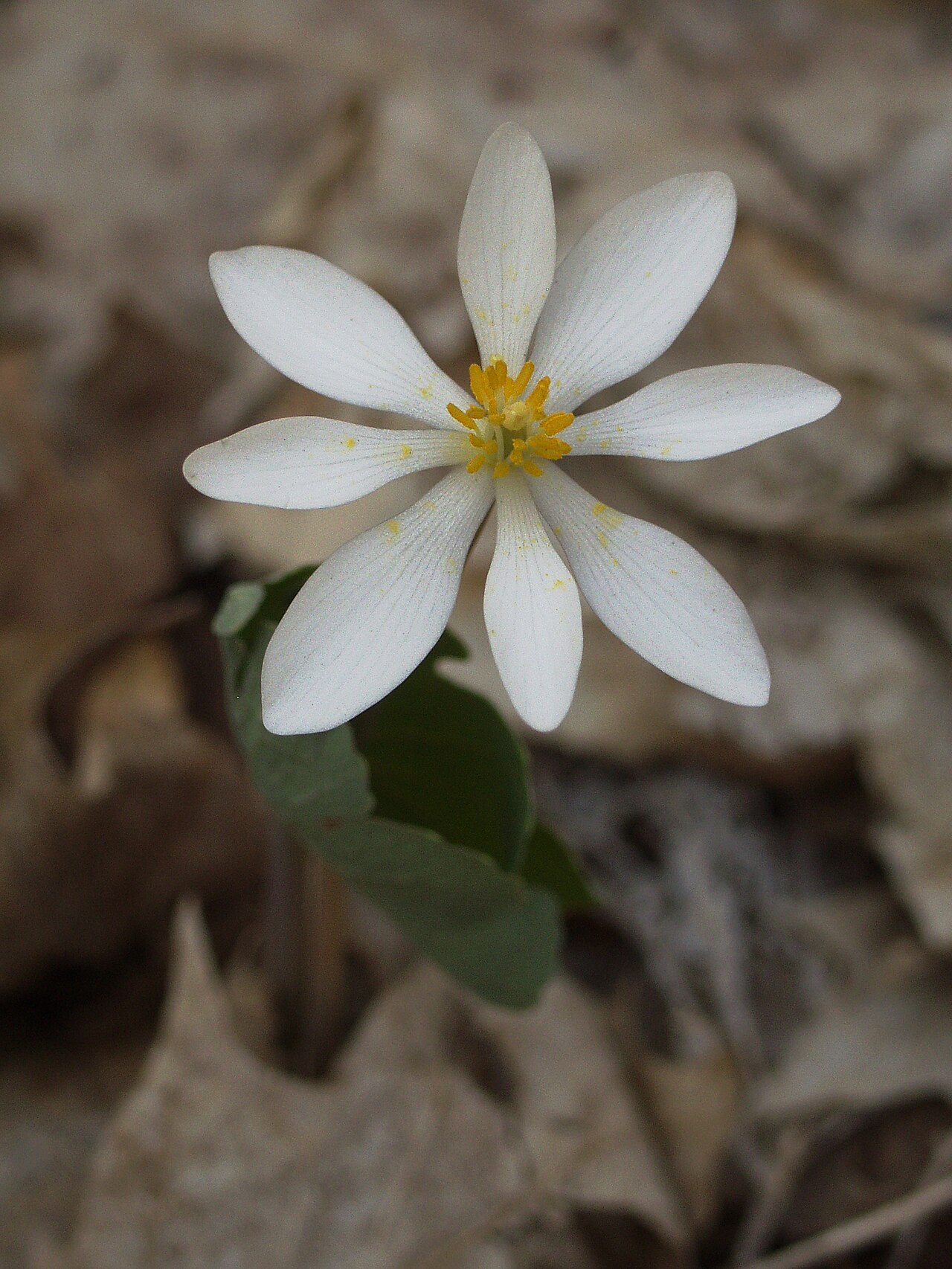
Bloodroot is a small woodland perennial, 6-10 inches tall, with a single, deeply lobed leaf that wraps around the flower stem, a single white flower with 8-12 petals in early spring, and a thick rhizome that bleeds red-orange sap when cut. Start from divisions in fall or early spring — the reliable route, since seed needs ants to disperse it and years to flower — or from nursery-grown plants, and plant in part to full shade in rich, humusy, well-drained woodland soil with leaf-litter mulch, mimicking the forest floor. It wants cool, moist springs and undisturbed ground; it goes dormant in summer heat, disappearing entirely by midsummer, which surprises new growers — mark the spot so you do not dig it up thinking it died. Ants disperse its seeds, so a bloodroot patch spreads slowly and naturally if left alone, and it makes a lovely spring carpet under deciduous trees.
Water & feeding
Keep soil consistently moist in spring — bloodroot is a woodland plant that needs steady moisture during its short growing season, then tolerates summer dormancy. Mulch with leaf litter, top-dress with compost in fall, and do not fertilize heavily; rich, humusy soil is enough. Water during dry springs, and leave the patch undisturbed in summer while it rests.
Common problems
- Summer dormancy — the plant disappears by midsummer, which is normal. Mark the spot and do not dig there in summer.
- Drought in spring — leaves wilt and flowers fail; water deeply in dry springs and mulch with leaf litter.
- Slugs on young leaves in damp shade — hand-pick at dusk; established plants outgrow minor damage.
- Slow spread — bloodroot spreads slowly by rhizomes and ants, so expect years before a patch carpets an area; do not disturb it to hurry it along.
Harvest
Bloodroot is grown for its spring flowers, not for harvest — leave the rhizomes alone and let the patch thicken year after year. If you must divide, do so in fall, wearing gloves, and replant pieces promptly. Safety note, plainly: bloodroot is toxic, its red sap stains skin and irritates it, and it has caused serious harm when taken internally, including in traditional preparations — do not eat it, do not use it medicinally at home, and keep it away from children and pets. Grow it as a beautiful, early-spring woodland wildflower, and leave its medicinal history in the past. Wash hands and tools after handling, even with gloves on.
Browse all plant & pest guides
Saving seeds
Bloodroot (Sanguinaria canadensis) has exactly one non-negotiable seed rule, and it is the opposite of the rule for most seeds you will ever save: do not let it dry out. Most garden seed wants a thorough drying and a cool jar. Bloodroot seed wants to go from capsule to soil while it is still fresh and moist, the way the ants that carry it would deliver it. Dry it, and you have either killed it or sentenced it to a long stratification sentence. Sow it fresh, and you are working with the plant instead of against it.
The timeline is short and spring-loaded. Bloodroot flowers in early spring, before the trees leaf out, and the slender green capsule that follows ripens roughly four weeks after flowering. Watch it: when the capsule splits and the round brown-to-black seeds show, each with a small white fleshy appendage called an elaiosome, collect immediately. The elaiosome is ant food — ants haul the seed away, eat the appendage, and discard the seed in their nest debris, which is how bloodroot colonizes a woodland floor. You can leave the elaiosome on when you sow; the ants are optional. Sow about a quarter inch deep, about two inches apart, in moist, humus-rich woodland soil in part to full shade, and keep the bed moist. Do not sow in a sunny, dry bed and hope for the best — this is a deciduous-forest plant, and it knows it.
Then comes the patience test. Bloodroot seed is doubly dormant: it needs a warm, moist period followed by a cold, moist one before the embryo is ready to grow. Sources disagree on how that plays out in practice — some say fresh-sown seed germinates the following spring, others warn that much of it needs the chill of two winters with a warm summer in between before it appears. The honest way to hold both is to sow fresh outdoors, mark the bed clearly (the plant vanishes underground by midsummer, and an unmarked bed gets dug up by accident), and wait without digging to check. Seedlings take two to three years to reach blooming size, so this is a woodland investment, not a quick annual.
If you want plants faster, divide rhizomes during dormancy, from fall into early winter: dig carefully, cut the rhizome into pieces each carrying at least one bud, dust the cut ends lightly if you like, and replant shallowly with the buds up. And know the sterile exception: double-flowered forms, sold as ‘Multiplex’ or ‘Flore Pleno’, produce no seed at all — those multiply by division only, and no seed-saving trick will change that.
Two final cautions, both plain. Bloodroot sap and roots are toxic if ingested, and the red sap irritates skin, so wear gloves when handling rhizomes and seed, and never use this plant as home medicine on the strength of old folklore. And never dig bloodroot from the wild to start your patch — buy nursery-propagated plants, save seed from your own garden colony, and let the colony build the way it builds in the woods: slowly, from fresh seed, one spring at a time. Florida note: this is a cool-woodland plant hardy roughly to zone 8, so in Florida it is a north-Florida shade-garden experiment at best, and seed should be sown in pots in deep shade and kept moist — dry Florida air is exactly what fresh bloodroot seed cannot survive.
Varieties
Every named variety of Bloodroot with its own growing guide:
- Multiplex Bloodroot — The double bloodroot: sterile, many-petaled white flowers that last a week or more — the connoisseur’s woodland ephemeral, found near Dayton in 1916.