
💜 Blue Dicks
What it looks like
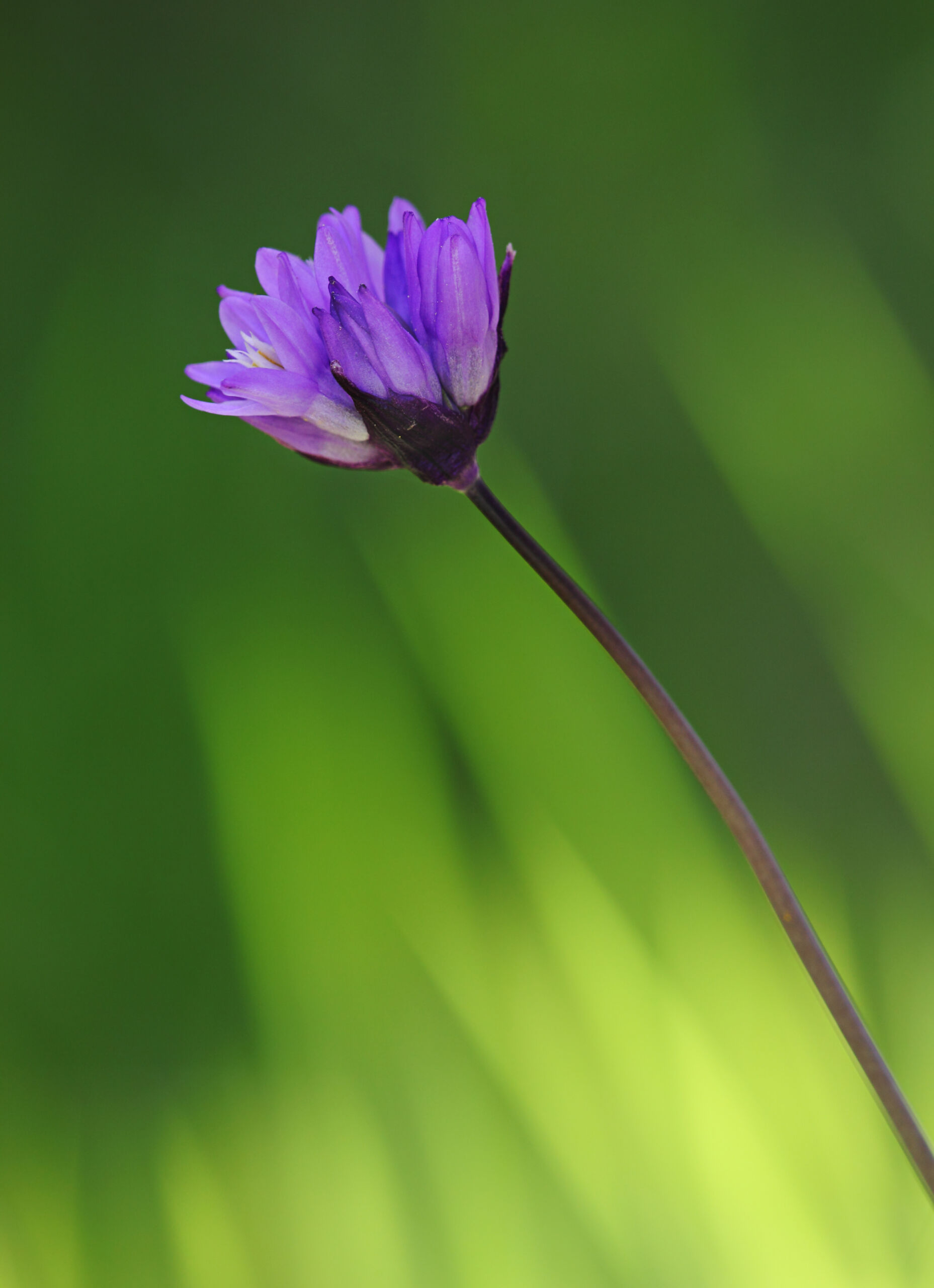
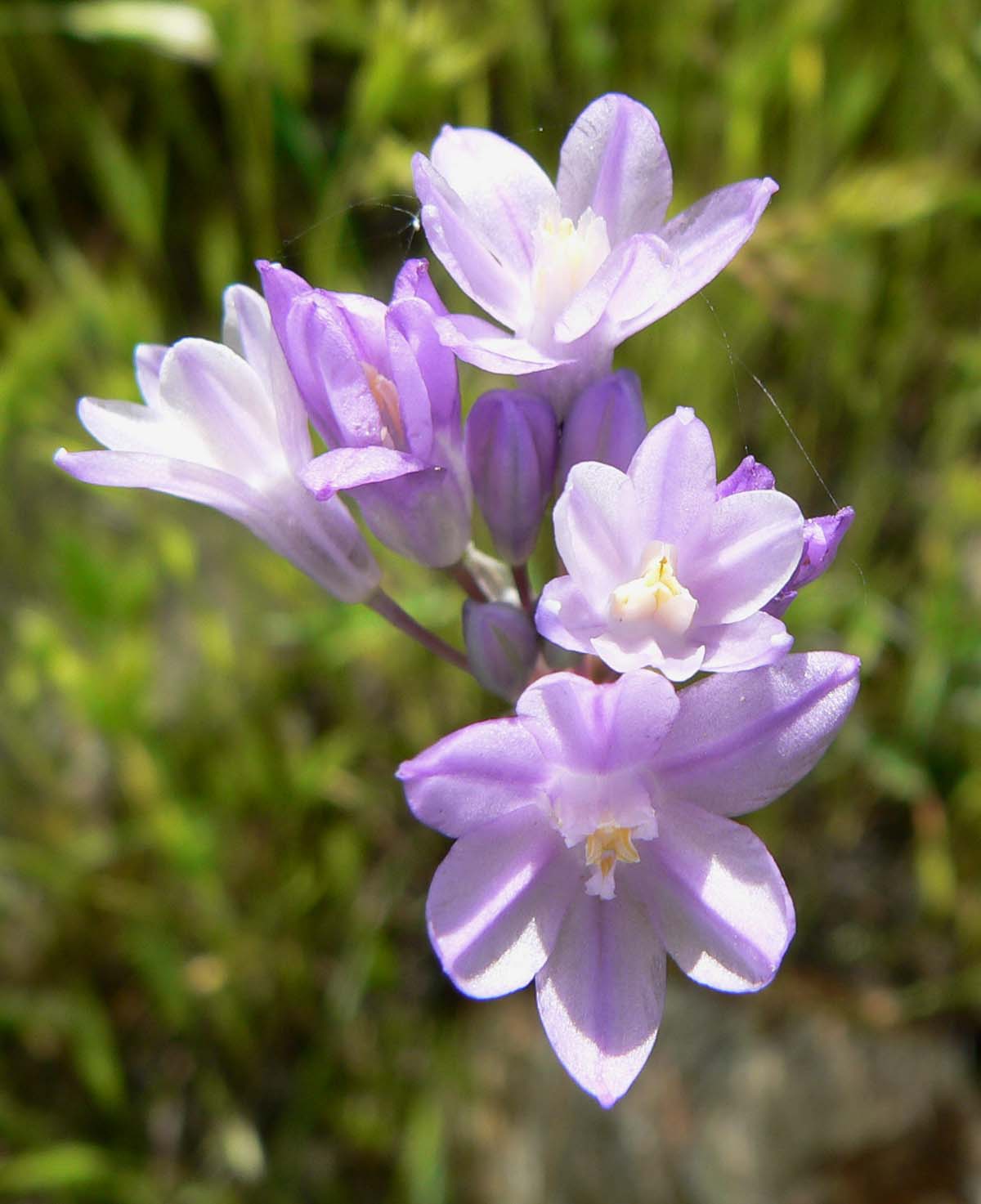
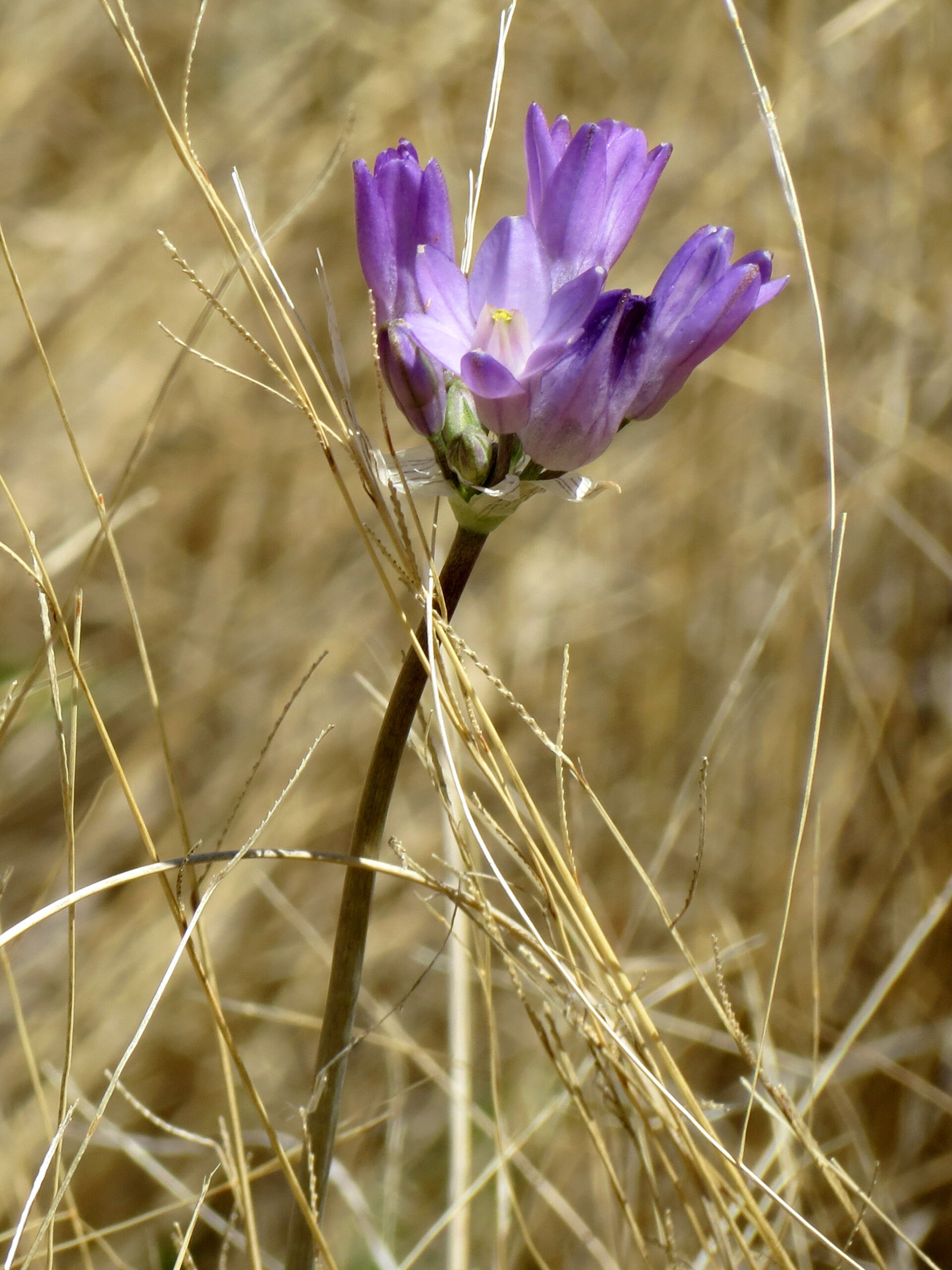
Blue dicks (Dipterostemon capitatus) is a cormous spring wildflower of the western United States, and it is one of the most reliable early-season flower shows in California’s grasslands and deserts. It grows from an underground corm — a squat, starchy stem base, not a true bulb — to a height of as much as 60 centimeters, about two feet. It has two or three slender, grasslike, basal leaves, ten to forty centimeters long, and then a leafless, wiry flower stalk topped by a tight, head-like cluster of two to fifteen funnel-shaped flowers in shades of blue-purple, pink-purple, or occasionally white. Each flower has a narrow tube and six spreading lobes, and inside it a feature that gives the plant its botanical biography: six fertile stamens, with white, deeply notched, lance-shaped appendages leaning inward to form a little crown around the anthers. Most of its relatives make do with three stamens. Blue dicks insisted on six, and that insistence is part of why botanists eventually gave it a genus of its own.
And now the name, because there is no polite way to garden around it and no reason to try. “Blue dicks” is short for the old genus name Dichelostemma — the “dicks” is the “dich” of Dichelostemma run through folk pronunciation, not anything anatomical — and the plant has been renamed so often that its common name is the most stable thing about it. It was first described by George Bentham in 1857 as Brodiaea capitata. In 1868 Alphonso Wood moved it to Dichelostemma as Dichelostemma capitatum. In 1912 Per Axel Rydberg moved it to Dipterostemon as Dipterostemon capitatus. Most sources kept using Wood’s Dichelostemma for a century, including the Flora of North America, which noted that the species was quite distinct from the rest of its genus and perhaps best treated as its own genus. In 2017, restoration of Dipterostemon as a monotypic genus — a genus with exactly one species — was formally proposed, and it has been accepted by Plants of the World Online and the Jepson Flora Project. This guide uses Dipterostemon capitatus as the current name and Dichelostemma capitatum as the synonym gardeners will meet on nursery labels, seed packets, and older field guides, because a gardener chasing either name is hunting the same corm. It is also sold as wild hyacinth, purplehead, and brodiaea, and the desert form, subspecies pauciflorus, answers to desert hyacinth.
The butterfly context for this guide is a nectar story, not a host story, and the distinction matters. The Propertius Duskywing guide lists, in its Nectar plants section, that adults visit many flowers, including vetches, blue dicks, phacelia, fiddleneck, yerba santa, and California buckwheat. That is the whole wiring target for this draft: one guide, one mention, in the Nectar plants section, in the exact form “blue dicks.” The duskywing’s caterpillars eat oaks, not blue dicks; the adults drink from blue dicks among other small, open flowers they can reach with a short proboscis. Blue dicks is therefore a spring nectar plant for a big Pacific-slope skipper, planted as part of a spread of blooming plants across the season, not as a single-species solution — which is exactly how a generalist skipper uses it, and exactly how this guide recommends planting it.
One plain-text disambiguation, because the brodiaea clan is a tangle of lookalikes. Blue dicks is not the whole Dichelostemma genus, and this guide does not claim it: firecracker flower (Dichelostemma ida-maia, bright red tubes) and twining brodiaea (Dichelostemma volubile, a scape that twines around shrubs) are different species with different flowers, and they are not covered here. Buy by Latin name, and check the flower head: a tight, dense, blue-purple pom-pom on a leafless stalk, in a western grassland in spring, is blue dicks. A red tubular flower is not.
How to grow
Grow blue dicks the way its home grows it: sun, lean and well-drained soil, winter rain, and a dry summer rest. Plant corms in fall, a few inches apart in drifts — this is a plant that looks best in numbers, scattered through grassland plantings, meadow edges, and native beds, especially against California poppies — and let winter moisture wake them. Flowering peaks in March in much of its range, running into June further north and higher up, and after bloom the plant does something eastern gardeners find alarming and western gardeners find normal: it disappears. The leaves yellow, the stalk dries, and the corm goes dormant underground for the summer, waiting out the dry season the way it has waited out dry seasons for millennia. Do not water it through dormancy, do not dig it up to check on it, and do not plant it in a bed that gets summer irrigation — a corm that never dries out rots, and a rotted corm is the one reliable way to kill this plant.
Propagation follows two speeds, and the honest advice is to use the fast one. Seeds sown in fall usually germinate readily and need no special treatment, but seedlings take several years to reach flowering size. Propagation by corms is much easier: mature corms produce cormlets, attached by stolons and produced in the axils of the old leaf bases, and dividing an overcrowded clump — digging, separating the cormlets, and replanting them — both multiplies your stock and restores vigor to a clump that has grown crowded and tired. Populations that become overcrowded show reduced vigor, and dividing them is the fix. In the wild, the same thinning is done by animals: bears, deer, pigs, rabbits, and pocket gophers eat some corms and scatter others, detaching cormlets, aerating the soil, and leaving some behind to grow.
Fire is part of this plant’s biography, and it is worth knowing even if you never set a match to your garden. Corms may sit for a decade or more and wait for fire or other favorable conditions before breaking ground; after a burn, plants are exposed to unshaded ground with less brush competition and increased soil nutrients, and they flower vigorously, so that grasslands that have been burned may exhibit thousands of plants where none have appeared in recent years. Blue dicks seems not to colonize after fire by seed, but by cormlets, which is a neat summary of its whole strategy: wait underground, then multiply when the light comes back. A garden version of that lesson is simpler: give it sun, give it a dry rest, and do not shade it out with thirsty neighbors.
Florida note, stated bluntly because the range map demands it. Blue dicks is a western plant — Arizona, California, Oregon, Utah, and New Mexico, and northwest Mexico, from sea level up to 2,300 meters — and it is not a Florida garden plant. Florida’s wet summers, with no dry dormancy and no winter chill in the southern peninsula, are the opposite of what its corm wants, and this guide does not recommend it for Florida beds. Its place in this project is as the nectar plant named in a Pacific-slope butterfly guide, grown where it belongs, and admired from Florida as a reminder that the butterfly guides cover the whole country, not just one peninsula.
Water & feeding
Water is a seasonal question with this plant, and the seasons are the whole answer. Water through the winter and spring growing season, when the leaves are up and the flowers are out, and then stop. Summer water is not kindness; it is rot. In a Mediterranean-climate garden with winter rain, established clumps largely water themselves, and in a drier winter a deep soak now and then keeps the growth going. Feeding is minimal: lean soil is the native condition, and a corm that evolved in grassland and chaparral does not want a rich, fertilized bed. A light topdressing of compost in fall, if anything, is plenty, and the plant’s real nutrition is sunlight and a dry rest. The soil science here is the corm story: the corm is a starch bank, built up during the spring growing season and spent on the next spring’s leaves and flowers, and the mycorrhizal fungi and soil microbes of a lean, well-drained soil cycle nutrients slowly in the dry season and fast in the wet one. A blue dicks corm is a battery that charges in spring, sleeps in summer, and fires in March — and the charger is winter rain, not fertilizer.
One more note on the corm, because it is the plant’s other career. Corms have been gathered by Native peoples in California, parts of the Great Basin, and the Southwest, and were an important starch source in their diet, dug before flowering, during flowering, or after seeding depending on the tribe and family, with traditional gathering sites visited annually and managed by breaking off cormlets and replanting them, sparing whole plants, harvesting after seeding and dumping seeds in the hole, burning, and irrigating. This guide records that history; it does not recommend digging wild corms, which belong to their landscapes and their peoples, and gardeners should buy nursery-grown corms instead.
Common problems
- Summer water. The main killer. A corm that never dries out rots. Plant it where summer irrigation does not reach, and let it go dormant.
- Shade and competition. Suppression of open conditions causes shade and plant competition to decrease populations. Give it sun and open ground, not a crowded, thirsty bed.
- Slow from seed. Seedlings take several years to flower. That is normal, not failure; buy corms if you want flowers next spring.
- Overcrowding. Crowded clumps lose vigor. Dig, divide the cormlets, and replant — the plant’s own multiplication system, done by hand.
- Disappearing in summer. That is dormancy, not death. Mark the spot so you do not plant over it, and wait for spring.
- Wrong name on the label. Nursery stock may say Dichelostemma capitatum, Dipterostemon capitatus, wild hyacinth, or brodiaea. Check the Latin and the flower head; all four labels can mean this plant.
- Florida beds. Wet summers and no dry rest make this a poor Florida choice. Admire it in its range, and plant a Florida native nectar plant at home instead.
Harvest
Blue dicks’ harvest is flowers, cormlets, and a spring show — in that order, and with one firm boundary. The flowers are the crop for the garden: cut a few for a vase in March and the clump will not mind, and leave most standing for the bees, butterflies, and skippers that drink from them, including the Propertius duskywing that named this guide’s butterfly context. The cormlets are the crop for multiplication: divide an overcrowded clump after dormancy, separate the cormlets, and replant them where they have sun and a dry summer. The historical food use of the corms is recorded in this guide as history, not as a recommendation to dig wild plants; buy nursery stock, and leave wild populations to their landscapes.
The simplest harvest is a March walk through a western grassland after a wet winter, or through your own native bed in a good year: a drift of blue-purple pom-poms on wiry stalks, each one a little crown of six stamens, each one visited by whatever is flying that week, and the knowledge that the corms under your feet may have waited a decade for the light to come back. Leave most plants standing through the season for the pollinators, let them go dormant in summer without apology, and let the clump come back bigger next spring. That is the crop, and it arrives without a single spray.
Browse all plant & pest guides
Saving seeds (and cormlets, the faster route)
Blue dicks keeps two savings accounts, and only one of them pays out quickly. After flowering, each flower head ripens into a small three-chambered capsule that splits open to release angular black seeds. If you want seed, let the capsules dry on the stalk until they start to split, then snip the heads into a paper bag before the seed scatters. A gentle shake over a tray does the rest — no fiddly cleaning required, since the seed is chunky and the chaff is minimal.
Here is the honest trade-off: seed sown in fall usually germinates readily with no special treatment, which is the plant’s way of saying it already knows what autumn is for. Seed sown at other times of year may need a month or so of cold, damp chilling first — nature’s “are we there yet” check. Either way, seedlings take several years to reach flowering size, because a seedling first has to build itself a corm worth blooming from. Saving seed is a lovely long game, not a shortcut.
The shortcut is cormlets. Every mature corm produces small offsets on short stolons around its base, and those cormlets are clones of the parent — same flower, no waiting for a seedling to grow up. Dig the clump during summer dormancy, when the tops have died back and the plant is asleep underground, pop the cormlets off, and replant them in fall in well-drained soil. Bigger corms go about 3 to 4 inches deep, smaller ones about 1 to 2 inches. Leave the parent corm in place or replant it too; either way, you have just done what digging animals and old wildflower gardens have done for centuries, only with less snuffling.
Two cautions. First, do not harvest corms from the wild — buy or trade garden-grown stock, and leave wild colonies to do their slow, stubborn work. Second, the Florida note: blue dicks is a western native built for dry summers and a real dormant rest, and Florida’s wet summers give it neither. If you are growing it here anyway, dry any saved seed thoroughly before it goes into storage — Florida humidity will happily mold seed that looks dry — and store it airtight with a desiccant packet, somewhere cool and dark. Think of the jar as a tiny desert: dry, dark, and unbothered.
Varieties
Blue dicks is grown as the straight species, Dipterostemon capitatus, and this section says so plainly rather than inventing a cultivar list. Three subspecies are accepted: subsp. capitatus, the widespread form; subsp. lacuna-vernalis; and subsp. pauciflorus, the few-flowered form known as desert hyacinth. No named garden cultivars were verified for this guide, and the plant is grown as the species, in drifts, by corms. If a label offers you a “blue dicks cultivar,” check whether it is simply the species under a fancy name, and buy the species by its Latin name either way.