
💜 Blue Spire Russian Sage
What it looks like
Why this variety
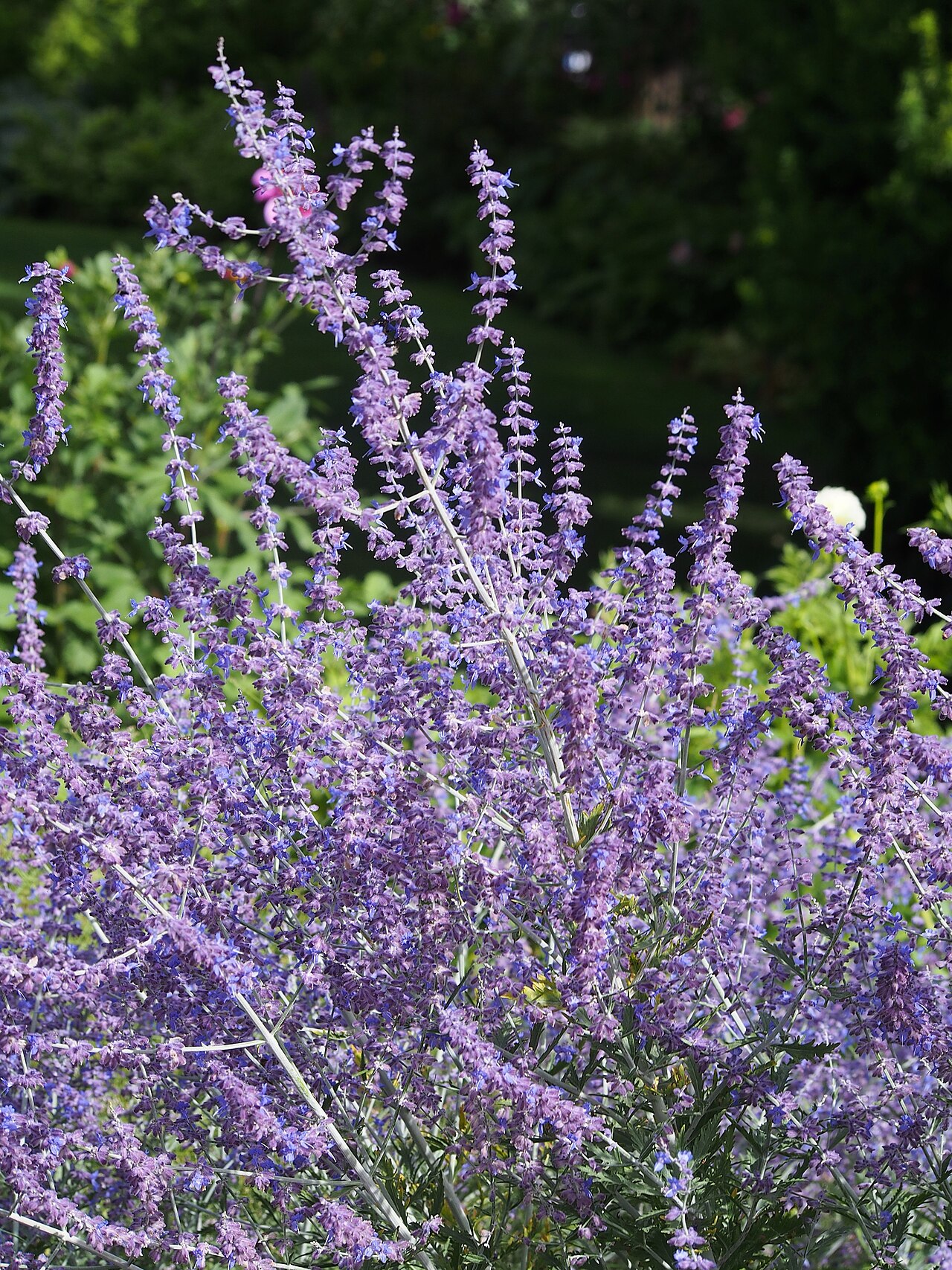
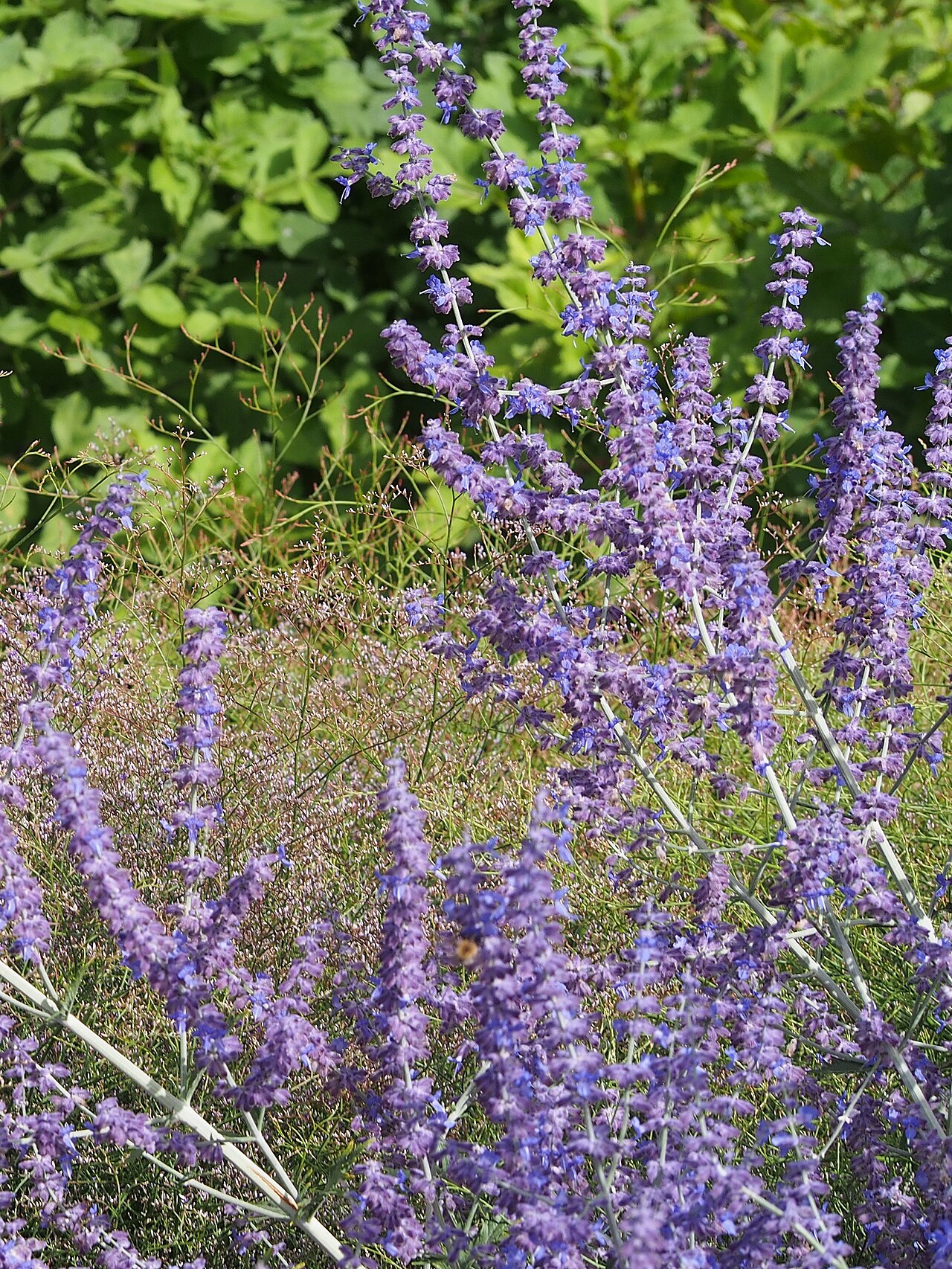
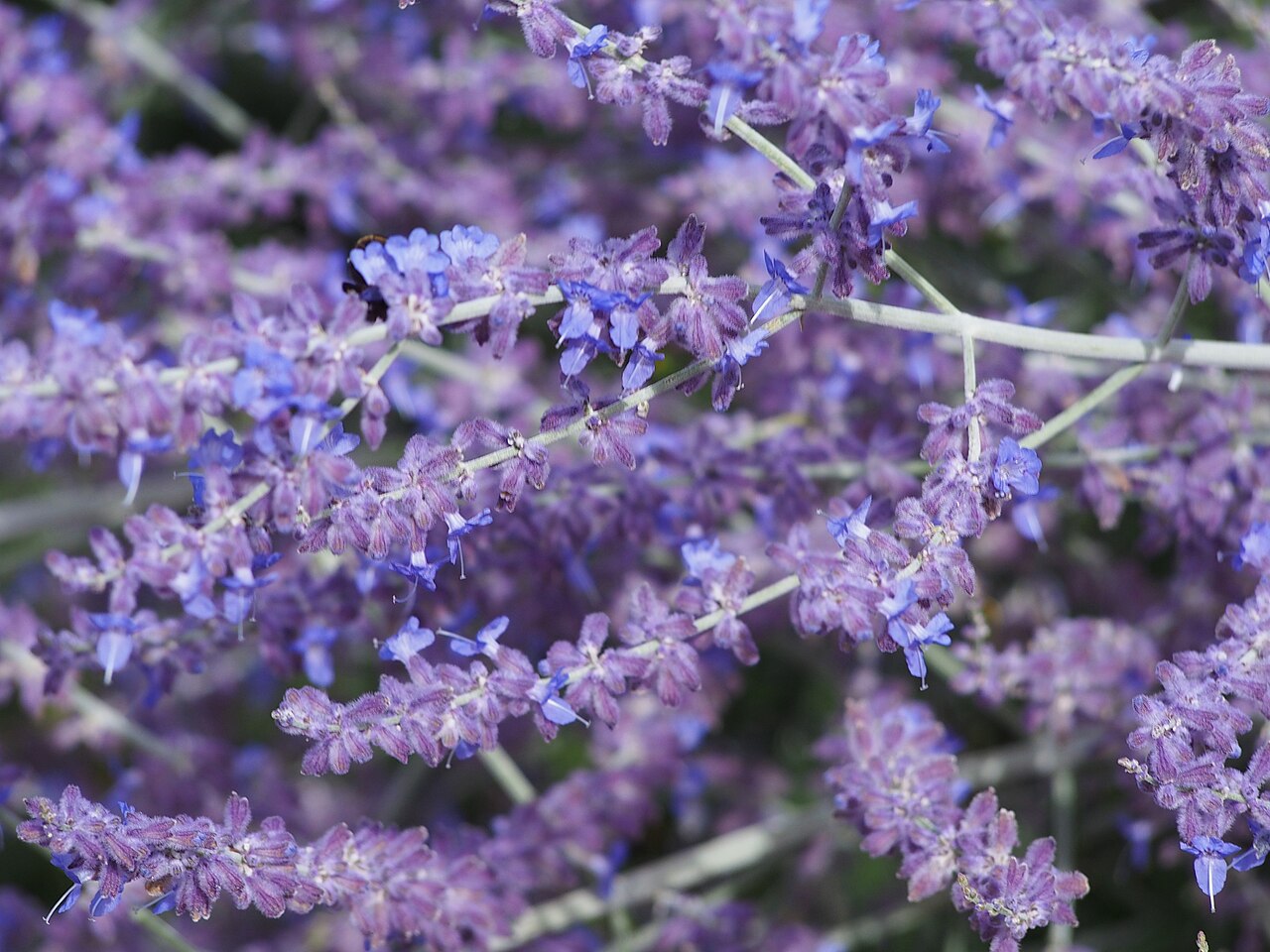
Blue Spire is the Russian sage that made Russian sage famous: a tall, airy, 4-foot subshrub with silver-white stems, finely cut silver-green foliage, and lavender-blue flower spikes from summer into fall, looking like a lavender haze that never needs deadheading. It was selected in the 1960s as a bluer, more vigorous form of the species, and it has stayed the standard because it does the simple thing supremely well — a cloud of blue over silver, beloved by bees and butterflies, that asks for sun, drainage, and almost nothing else.
The trade-off is that Russian sage is a sun-and-drainage plant that rots in rich, wet soil faster than it starves in poor soil, and it flops open in the middle if you feed it or shade it. Give it full sun, lean, sharply drained soil, and room, cut it back hard in spring (it blooms on new wood), and do not plant it in a low spot that ponds. In return you get a plant that thrives on neglect — the more you ignore it, the better it looks.
If you are new to choosing between cultivars, the Varieties Matter guide explains why the name after the plant matters as much as the plant itself. Blue Spire is a perfect example: it is not just a russian sage in the abstract, it is a russian sage with a specific job, a specific history, and specific strengths.
Florida honesty: Russian sage is a North and Central Florida trial, not a South Florida perennial — it wants sun, sharp drainage, and a cooler winter rest than South Florida offers, and Florida humidity plus wet summers can shorten its life. In North Florida it performs as a long-blooming subshrub; in Central Florida, give it a raised bed or sharp drainage, full sun, and lean soil, and treat it as a glorious warm-season perennial that may need replacing after a wet summer.
How to grow
Plant in spring in full sun and sharply drained, even lean soil — Russian sage is a sun-and-drainage plant that rots in rich, wet soil faster than it starves in poor soil. Work a little worm castings into the bed at planting, do not overfeed it, and space for air. Cut back hard in spring — it blooms on new wood — and it will regrow and bloom the same year.
Set plants 3-4 feet apart in soil with a pH around 6.0-7.5. Work worm castings into the bed at planting and mulch to hold moisture. A well-fed russian sage plant rewards that care directly: steadier growth, better bloom, and a show that actually shows up.
Water & feeding
Water to establish, then water sparingly — Russian sage is drought-tolerant once established and rots in wet soil, so the watering mistake is almost always overwatering. Water at the soil line, do not mulch heavily, and feed lightly: castings at planting is usually enough, because rich soil makes floppy Russian sage instead of upright Russian sage.
Common problems
- Flopping open in the middle — rich soil, shade, or no spring cutback causes sprawl; cut back hard in spring.
- Rot in wet soil — Russian sage’s killer in humid climates; plant in sharp drainage or raised beds and do not overwater.
- Powdery mildew in humid, crowded plantings — space for air, water at the soil line, and remove affected leaves.
- Short life in hot, wet summers — heat plus wet soil shortens Russian sage life; in warm zones, treat it as a trial in sharp drainage.
- Stem breakage in wind — tall types snap in storms; plant in a sheltered spot or stake in windy sites.
Harvest
Cut stems for bouquets from summer into fall, when spikes are fully colored — Russian sage lasts a few days in water and its lavender-blue suits loose, airy arrangements, though the stems are best admired in the garden. Shear or cut back hard in spring for compact, floriferous growth, and dry a few stems for winter arrangements — the silver stems hold their color well when dried.
Browse all plant & pest guides
Saving seeds
Blue Spire is a selected form, so seed saved from it won’t come true — buy a nursery plant instead. The Saving seeds section of the Russian Sage guide covers seed for the straight species.