
🌱 Bluegrass
What it looks like
Bluegrasses are the quiet overachievers of the grass world. Unmowed, Kentucky bluegrass grows 2 to 3 feet tall and throws up open, branching seed heads with a bluish-purple haze — that blue cast on the flower heads is where the “bluegrass” name comes from, not from the color of the lawn, which is a perfectly respectable green. Mowed, it becomes the dense, soft, dark-green carpet that has defined the American lawn for generations. The blades are narrow, with a distinctive boat-shaped leaf tip — the leaf folds like the prow of a little boat — and the plant spreads by underground rhizomes, knitting itself into a thick mat that repairs bare patches on its own. The genus Poa holds more than 500 species worldwide, mostly in temperate regions, so “bluegrass” is a whole family of grasses, not one plant.

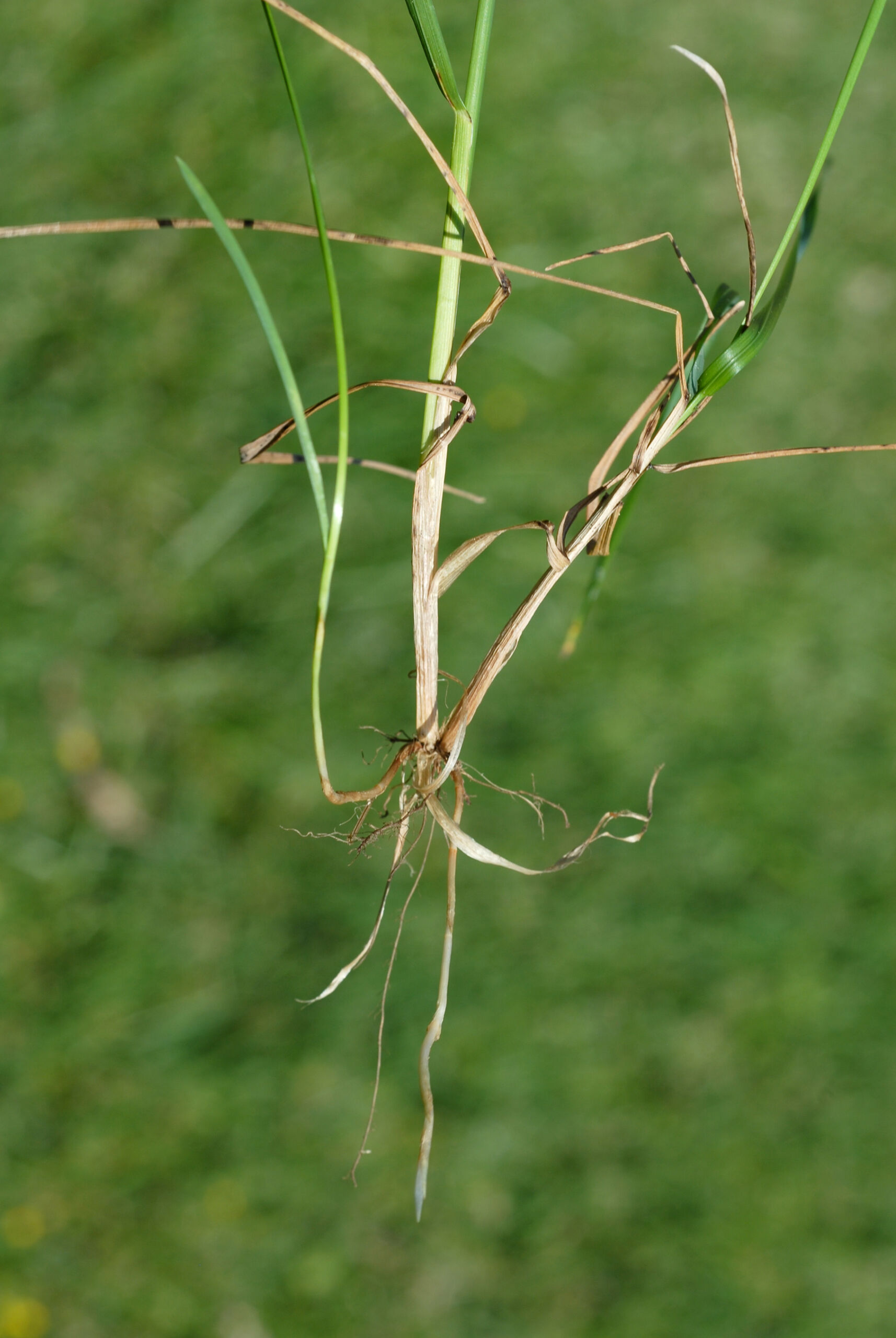
Butterflies care about bluegrass for a reason most lawn owners never notice: left to grow a little wild at the edges, bluegrasses are caterpillar host plants. Skipper caterpillars in particular feed on these grasses, which is why a meadow strip of Poa at the back of the yard does more for wildlife than a putting-green-perfect lawn ever will. The trick is balance — a mowed lawn for play, and an unmowed or lightly mowed patch where the grass can actually grow up, flower, and feed something.
Florida note: Be honest with yourself here: Kentucky bluegrass is a cool-season grass that wilts and struggles in hot southern summers, and it is not a sensible lawn choice for most of Florida. Warm-season grasses suit Florida lawns far better. Bluegrass earns its place in this guide as a meadow and host plant for cooler regions, not as a Florida recommendation.
How to grow
Bluegrass is a cool-season grass, which sets the whole calendar. It grows most vigorously in the cool of spring and fall, when soil temperatures are moderate, and it sulks — or goes dormant and brown — in summer heat. Sow seed in late summer to early fall for the best establishment; spring seeding works too but gives weeds a head start. Prepare a fine, firm seedbed by loosening the soil, removing debris, and raking it smooth. Broadcast seed at roughly 2 to 3 pounds per 1,000 square feet for a lawn, keep the seedbed consistently moist until germination, and be patient: Kentucky bluegrass is famously slow to germinate, taking up to three weeks to show, while annual bluegrass pops up much faster. That slowness is normal, not failure.
For a lawn, mow at about 3 to 3.5 inches — taller than most people expect, but the extra leaf feeds deeper roots and thicker rhizome growth, which is what makes the turf dense and self-repairing. For a meadow or butterfly patch, do the opposite: mow only once or twice a year, after the grass has flowered and set seed, and leave the clippings or rake them off depending on whether you want to feed the soil or keep fertility low for wildflowers. Bluegrass prefers fertile, well-drained soil and full sun, though it tolerates moderate shade. A soil test through your county extension service is worth its weight in seed — it tells you exactly what amendments, if any, your soil actually needs, instead of guessing.
Water & feeding
Established Kentucky bluegrass likes infrequent but deep watering — soak the root zone to a depth of 6 to 8 inches, then wait until the blades just begin to wilt before watering again. Shallow daily sprinkling trains shallow roots and invites disease. During summer heat and drought, bluegrass may go dormant and brown; this is a survival strategy, not death, and it usually greens up again when cool weather and rain return, provided the crowns were not baked to a crisp. If you cannot stand a brown lawn in August, bluegrass may not be your grass — and that is fine; knowing it now saves a lot of midsummer grief.
On feeding, a lawn may need around 3 to 4 pounds of nitrogen per 1,000 square feet per year, split across spring and fall feedings, with fall the most important. A meadow patch needs far less — in fact, starving a meadow slightly is a feature, because lean soil favors wildflowers and host-plant diversity over a grass monoculture. Never fertilize by guesswork: a soil test first, fertilizer second, and always sweep granules off paths and driveways so they do not wash into storm drains.
Common problems
- Summer dormancy and heat stress: The number one complaint about Kentucky bluegrass in warm regions. It is a cool-season grass; hot, dry summers brown it out. Choose a better-adapted species if your summers are long and hot.
- Summer patch disease: Caused by the fungus Magnaporthe poae, it thrives in humid weather with warm days and nights around 70°F. Choosing disease-resistant cultivars and avoiding overwatering in summer heat helps enormously.
- Annual bluegrass invasion: Annual bluegrass (Poa annua) is a weedy cousin that invades lawns, greens up early, seeds prolifically, and dies out in summer heat leaving bare patches. Dense, healthy turf and fall overseeding are the best defenses.
- Slow establishment: Kentucky bluegrass germinates slowly and establishes slowly. Do not panic at three weeks with no green; do keep the seedbed moist and keep foot traffic off until it fills in.
- Grubs and other lawn pests: Like any turf, bluegrass can suffer grub damage, showing as brown patches that peel back like carpet. Healthy, deep-rooted turf tolerates more grub pressure than stressed turf.
Harvest
Bluegrass is not harvested like a vegetable, but it does have a harvest rhythm. For hay or forage, cut when the grass is lush and before it goes fully to seed, and dry it promptly. For a lawn, the “harvest” is the mowing itself: mow regularly, never remove more than a third of the blade at once, and leave clippings on the lawn when you can — they return nitrogen and organic matter to the soil for free. For a butterfly meadow, harvest means waiting: let the grass flower, let the seed heads ripen, let the caterpillars eat, and mow only after the season’s wildlife work is done. Seed heads left standing into fall also feed birds. The same plant, three different harvests — it all depends on what you are growing it for.
Saving seeds
At genus level, because this guide covers the whole Poa clan rather than one lawn cultivar: saving bluegrass seed is straightforward, but it asks you to do the one thing a lawn keeper never does, which is to stop mowing. A mowed lawn almost never sets seed. You need a patch you deliberately let grow, flower, and go to seed, and that patch will look gloriously scruffy for a few weeks. That is the price of admission.
Let the seed heads mature until they turn tan to brown and dry, and test them the way every grass saver does: shake a head gently over your palm. If ripe seed falls easily, it is time; if it clings, give it more days. Cool-season bluegrasses generally reach this point in late spring to early summer in their home range, though the calendar shifts with your climate. Harvest on a dry morning after the dew has lifted, cut the stalks with scissors, and drop them straight into a paper bag, never plastic, so any lingering moisture can escape instead of turning to mold.
Cleaning is where the work lives, and it is honest, fiddly work. Spread the heads out and let them dry for a week or two in a well-ventilated spot, then rub or strip the seed free over a fine sieve, shaking the bag now and then as stubborn heads let go. Winnowing, pouring the seed gently in front of a fan on low or in a light breeze outdoors, blows away the chaff while the heavier seed drops. Do not expect commercial purity. Your home-cleaned seed will still carry some chaff, and that is fine: chaff is not the enemy, damp is. Dry the cleaned seed thoroughly, and in Florida humidity that means thoroughly, spread thin and stirred, until it feels truly dry, then store it in a labeled, airtight jar with a desiccant packet, cool and dark. Well-dried grass seed kept this way commonly stays viable for a few years.
Sowing needs no special pretreatment for most bluegrasses: no cold stratification ritual, just seed into a firm, moist seedbed when the soil is cool, in fall or early spring in bluegrass country. Press it into good soil contact and keep it damp until established, because grass seed that dries out mid-germination is finished.
Two honest caveats. First, saved seed will not reproduce a named lawn cultivar or a store-bought blend faithfully: what you harvest is a mix of whatever flowered in your patch, and the lawn it makes will be its own thing, likely coarser and less uniform than the turf you started from. If you want the same lawn, buy the same blend. Second, bluegrass is a cool-climate grass, happiest far north of Florida, so Florida gardeners should treat this as a project for a northern garden or a curiosity patch, not a plan for a St. Augustine summer lawn. And never let saved grass seed wander: sow it where you intend grass, not scattered into wild ground, because a vigorous grass out of place is a weed with good PR.
Species in this group
- Kentucky bluegrass — Poa pratensis: The lawn legend. A cool-season perennial spreading by rhizomes, hardy roughly in zones 2 through 7 depending on the source, with soft, dark-green blades and a boat-shaped leaf tip. The most widely grown turfgrass in the United States. Slow to germinate, worth the wait.
- Annual bluegrass — Poa annua: A weedy annual (sometimes short-lived perennial) that pops up in lawns, paths, and flower beds everywhere. It germinates fast, seeds young, and dies in summer heat — a lawn invader rather than a lawn choice.
- Rough bluegrass — Poa trivialis: A cool-season perennial that loves moist, shady ground where Kentucky bluegrass struggles. Often used in shade mixes; it can be aggressive in damp spots and goes dormant in heat.
- Canada bluegrass — Poa compressa: A tough, wiry perennial of dry, poor soils and roadsides, with flattened stems. Less lush than Kentucky bluegrass but far more tolerant of neglect and poor ground.
- Alpine bluegrass — Poa alpina: A mountain species of high elevations and cold climates, forming tufts in alpine meadows. A wild grass, not a lawn grass, and a reminder of how far this genus ranges.
- Wood bluegrass — Poa nemoralis: A shade-tolerant woodland species of forests and hedgerows, finer and more delicate than its lawn cousins. Useful where trees make turf a losing battle.