
🌾 Bluestem
What it looks like
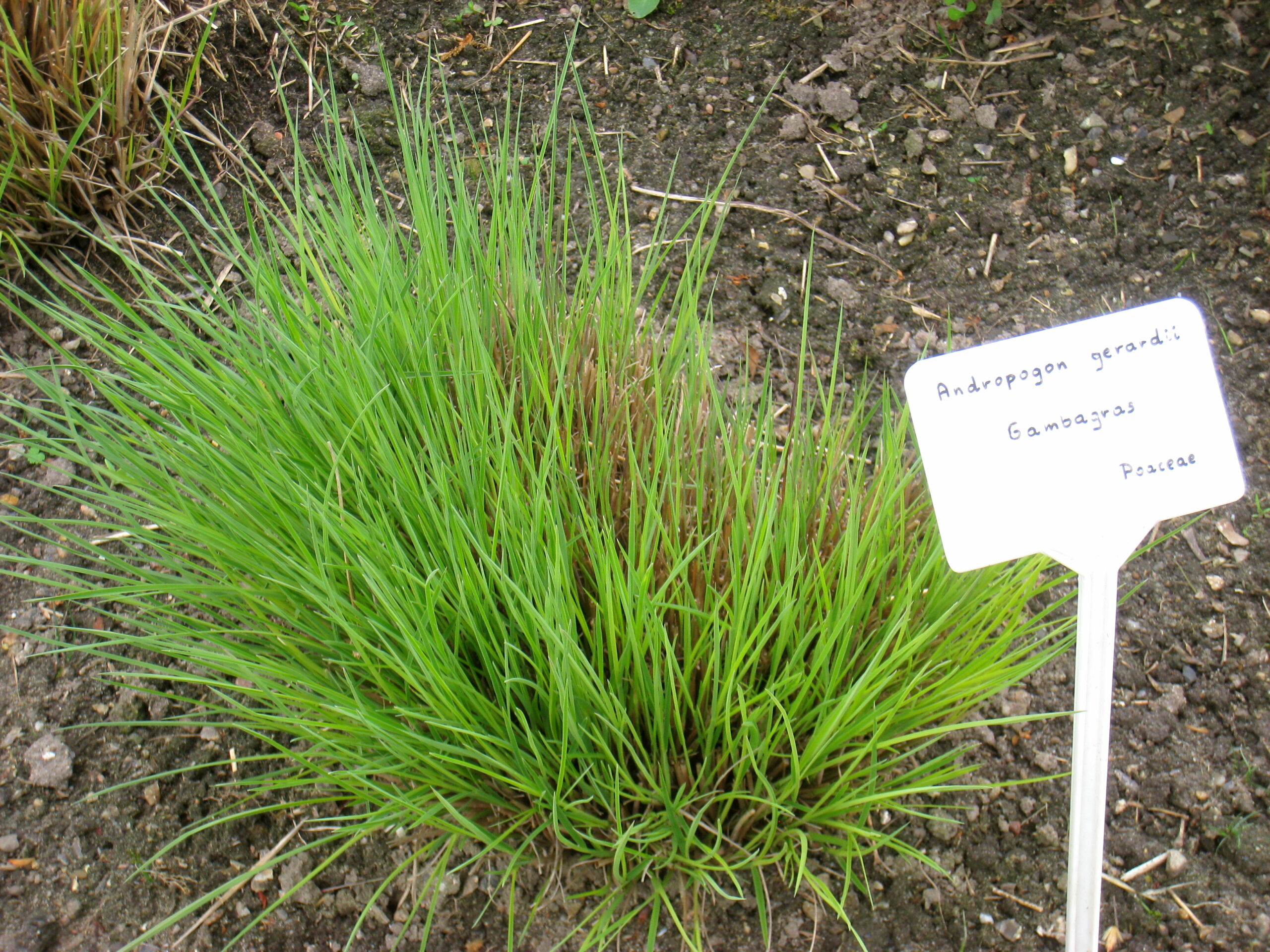
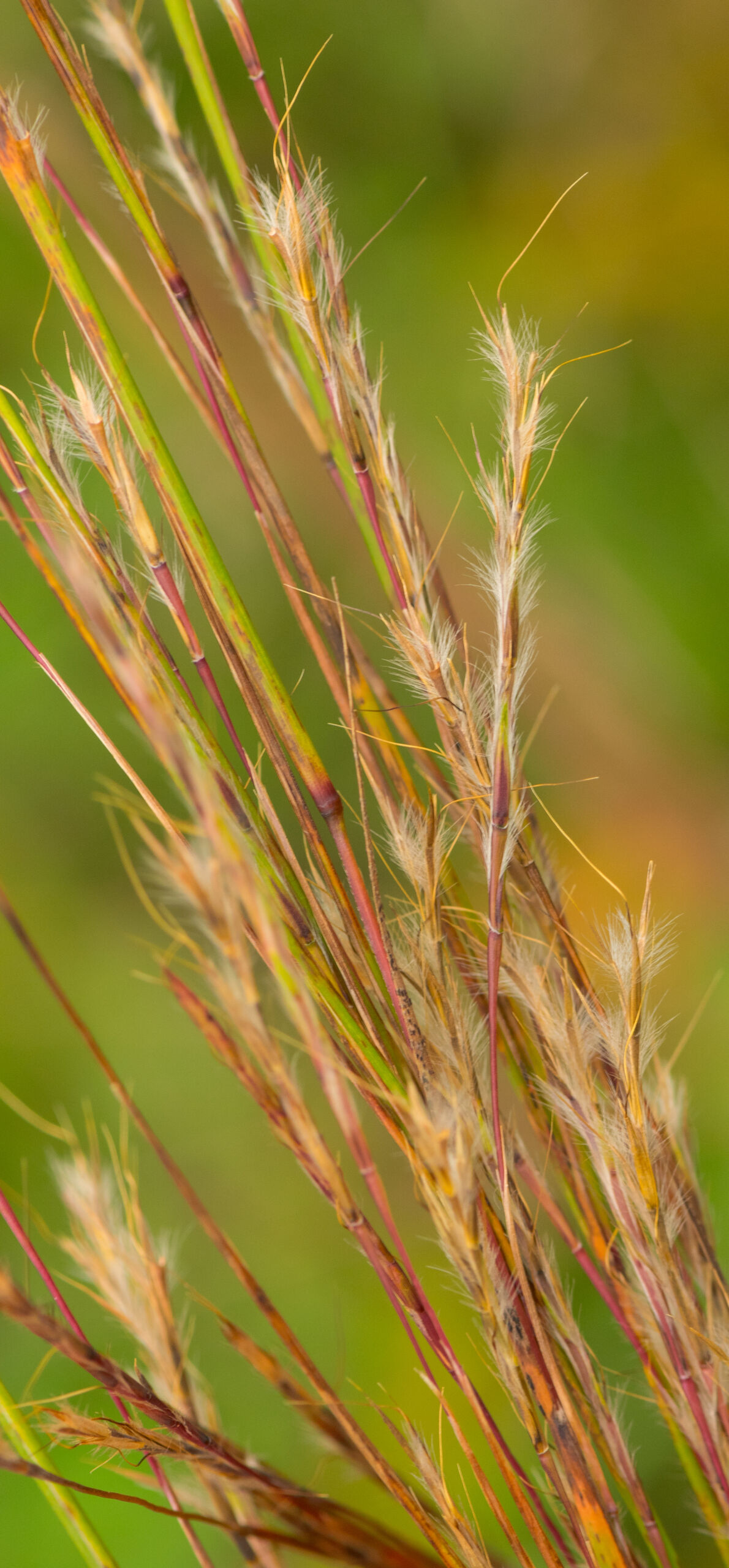
Bluestem is not one plant, and that is the first thing this guide has to say, because gardeners use the name as if it were. Bluestem is a common name shared by a group of warm-season prairie grasses in two genera, Andropogon and Schizachyrium, in the grass family, Poaceae. The two stars of the group are big bluestem, Andropogon gerardii, and little bluestem, Schizachyrium scoparium, and although they share a common name and a prairie, they are entirely distinct species in different genera, a split that reflects a long history of taxonomic revision: little bluestem was formerly classified as Andropogon scoparius, and several other bluestems have been moved between genera as botanists revised the group. When butterfly guides say caterpillars feed on bluestems, they mean this group, not a single species, which is why this is a group guide covering the named genera, not a guide to one grass pretending the others do not exist.
What the bluestems share is the look that gives them their name: blue-green summer foliage, from a waxy coating on the leaves, that turns copper, orange, red, and purple in autumn and holds through winter. Big bluestem is the tall one, 4 to 8 feet tall including its flower stalks, with blue-green to gray leaves about 2 feet long forming tall, upright clumps, and flower clusters in late summer that fork into two to seven spikelets like a turkey’s foot, which is why big bluestem is also called turkeyfoot. The flower parts are yellow or cream, and the seed heads persist into winter. Little bluestem is the smaller, tidier one, an upright, roundish mound of soft, bluish-green or grayish-green blades 2 to 3 feet high in May and June, sending up flowering stalks in July that reach 4 to 5 feet, with delicate, fluffy seed heads that catch the light and turn silvery, then golden-brown, in autumn. In fall, little bluestem displays a coppery or mostly orange color with tints of red or purple, redder in sandy soils, and in winter it fades to orangish-bronze and then tan, while its stems, unlike many grasses, stay conspicuously upright in snow.
Both are warm-season, perennial bunchgrasses, which means they grow actively in the heat of summer, flower toward the end of that growth, and reach their prime as landscape plants in late summer and fall. They are not lawn grasses and they do not form sod; they form clumps, and the garden skill with bluestems is placing those clumps where their height, their fall color, and their winter skeletons can be seen. A single clump is a specimen; a drift of them is a prairie in miniature, and a prairie in miniature is, for a butterfly gardener, a caterpillar nursery with very good autumn color.
How to grow
Plant bluestems in full sun, in well-drained soil, and do not pamper them. Full sun gives the bluest color in summer and the fiercest color in fall; shade makes the foliage greener, the plants taller and more open, and the fall show weaker. Both species tolerate a wide range of soil types, from sand to clay to loam, but they perform best in well-drained ground, and big bluestem tolerates heavier clay and periodic moisture better than little bluestem does. The critical rule is the opposite of most garden advice: very fertile soil makes bluestems flop over. They evolved on lean prairie soil, and rich ground produces tall, weak stems that fall in the first summer storm. Plant them in average to poor soil, skip the compost and the fertilizer, and let leanness do the staking for you.
Hardiness is zones 3 to 9 for both species together, according to Penn State Extension, which gives that range for big and little bluestem alike, and both are winter-hardy to zone 3. One careful note: little bluestem’s cultivation references sometimes stretch its range to zone 10, and garden sources vary on the top end, so the hero stat of 3 to 9 is the conservative, shared range, not the outer limit for every cultivar. Little bluestem is native to most of the contiguous United States except California, Nevada, and Oregon, plus a small area north of the Canadian border and northern Mexico, and it is most common in the Midwestern prairies. Big bluestem is native from southern Canada, Maine to Montana, south to Florida and New Mexico and into Mexico, and it is the characteristic plant of the North American tallgrass prairie. Florida gardeners: both species occur in Florida, but they are prairie plants, not humid garden plants, and they need the same full sun and sharp drainage in Florida as everywhere else, with little bluestem the easier Florida fit of the two.
Space little bluestem 18 to 24 inches apart for quick coverage, or 2 to 3 feet apart for a naturalistic look, and give big bluestem 2 to 3 feet of elbow room, more if you want it as a screen or backdrop rather than a clump in a border. Plant in spring from nursery plants, or sow seed in spring or fall, barely covering it, since grass seed needs light to germinate. Establishment is slow in year one while the root system builds: bluestem roots are famously deep, with fibrous systems reaching 5 feet or more into the ground, and a plant that looks unimpressive in its first summer is usually building the root system that will make it drought-proof later. Be patient in year one, and do not fertilize it into action, because that is how you get a flopping plant instead of a deep-rooted one.
Water & feeding
Water new plantings until established, then step back. Once their deep roots are down, both bluestems are strongly drought-tolerant, which is the whole point of a prairie grass, and overwatering is a greater risk than underwatering, especially in fertile soil, where wet plus rich equals flop. Little bluestem prefers mesic to dry conditions and full sun, and it tolerates dry, gravelly, and sandy soils that would starve a lawn. Big bluestem tolerates more moisture, including lowland prairies and overflow sites, but it still wants drainage, not a swamp. In a garden, the watering rule is simple: water deeply and infrequently in the first season, then water only in extended drought, and never on a schedule.
Feeding? Barely, and preferably never. Bluestems in average or poor soil need no fertilizer, and feeding can backfire by pushing soft, tall growth that falls over. If your soil is genuinely impoverished sand, a light top-dressing of compost in spring is plenty, and even that is optional. Cut back in late winter or early spring, before new growth begins, to 4 to 6 inches, and remove the old foliage and seed heads at that point, not in autumn, because the winter skeletons feed birds, shelter insects, and look magnificent in frost and snow. In a large prairie or meadow planting, the traditional management is prescribed burning in late winter or early spring, which stimulates new growth and prevents woody encroachment, and bluestems burn quickly and cleanly; in a home garden, a pair of shears does the same job without the fire department.
Common problems
- Flopping in rich, wet soil. The most common garden failure, and the most preventable. Fertile soil plus frequent water equals tall, weak stems. Lean soil, full sun, and deep, infrequent water keep bluestems upright.
- Slow first year. Year one looks unimpressive while roots build. This is normal, not failure. Resist the urge to fertilize it into action.
- Self-seeding. Bluestems seed freely, and little bluestem in particular can seed into nearby beds. Deadhead if you do not want volunteers, or let a few heads stand for the birds and pull seedlings where they are not wanted.
- Wrong grass, wrong place. Big bluestem at 8 feet tall beside a path or a low border blocks sightlines and swamps its neighbors. Match the species to the scale: little bluestem for edging and foreground, big bluestem for backdrop and screen.
- Shade. In shade, bluestems grow taller, greener, and weaker, with less fall color and more flop. Full sun is not a preference for this group; it is a requirement.
Harvest
Bluestems are not a food harvest, and this guide does not recommend eating them. What you harvest is ecological and ornamental: seed for sparrows, finches, and other small birds through winter, cover and nesting material for grassland birds, and a caterpillar host plant for a long list of skippers and satyrs, which is why bluestems appear in butterfly guides at all. The common wood-nymph, whose caterpillars feed on bluestems, is the butterfly most gardeners will actually see, and little bluestem alone is a documented host for the cobweb skipper, common wood nymph, crossline skipper, Dakota skipper, dusted skipper, Indian skipper, Leonard’s skipper, Ottoe skipper, and swarthy skipper. Leave the seed heads standing through fall and winter for the birds, cut the dead stems down in late winter before new growth wakes up, and the harvest takes care of itself.
For prairie restoration and meadow plantings, bluestems are foundation species, not accents: along with Indiangrass and switchgrass, they make up the classic tallgrass prairie quartet, and their deep roots build soil, hold slopes, and carry the fire ecology that keeps a prairie a prairie. In a home garden, that translates to erosion control on a sunny slope, a low-maintenance meadow edge, and a four-season grass that asks for sun, drainage, and neglect, and gives back color, structure, and caterpillars. It is a good trade, and it is the reason bluestems have moved from the prairie into the garden center without losing what made them prairie plants in the first place.
Saving seeds
At genus-group level, because “bluestem” covers two genera, big bluestem (Andropogon gerardii) and little bluestem (Schizachyrium scoparium), and the seed-saving story is nearly the same for both, with one fluffy difference. These are prairie grasses, and their seed heads announce themselves: when they mature, they turn brown and dry and go soft and feathery, the little bluestem heads lining up with a silvery-white fluff along the stalk. That fluff is your harvest signal.
Timing is fall, roughly September into November depending on species and climate, when the heads are fully dry and beginning to come apart in your hand. The simplest home method is also the least fiddly: clip the whole stalk with pruners and drop it head-down into a big paper bag, then let the bag sit in a cool, dry place while the seed finishes loosening. Stripping fluffy seed head by head straight off the standing plant works too, but it is slow, itchy work, and the bag method lets you process everything at once later. Harvest on a dry day, because wet heads mold in the bag, and Florida gardeners take note: our humidity is the enemy here, so dry heads thoroughly indoors with airflow before you even think about sealing a jar.
Cleaning is where bluestem earns its reputation for being a nuisance in the seed room. The seed wears a beard, a tuft of hairs and a twisted awn, and the beards tangle together into clumps that clog seeders and refuse to flow. For a home patch you can simply rub the heads over a screen to strip the seed, pick out the worst of the stems, and accept some fluff in the mix: it does not stop germination, it just makes sowing less tidy. If you want cleaner seed, rub it more firmly through a coarse sieve, which breaks off much of the beard, and winnow away the lightest chaff outdoors. Dry the cleaned seed completely, then store it labeled and airtight with a desiccant packet, cool and dark.
Bluestem seed usually germinates better after a cold spell, so either sow outdoors in fall and let winter do the work, or mix the seed with damp sand or vermiculite in a bag in the refrigerator for about a month or two before spring sowing. Sources disagree on the exact length, roughly a month for big bluestem and up to two months for little, but they agree on the principle: cold, damp, and patience. Sow shallowly, barely covered, into a firm seedbed after the last frost, and keep it moist until the seedlings are up; these are warm-season grasses, so they wait for warm soil and then move fast.
One more honest note: seed from a named ornamental cultivar will not reliably come true, and seedlings vary in height, color, and habit, which matters if you fell in love with one exact copper fall display. To keep a cultivar exact, divide the clump in spring instead. And keep bluestem seed where it belongs: these are big, vigorous natives, so sow your saved seed in your own garden, not tossed into a wild prairie remnant, where a non-local ecotype can muddy the local genetics. Your garden patch is the place; the wild prairie is not your seed bank’s dumping ground.
Species in this group
One scope note first, in plain text: this guide covers the bluestem group, the Andropogon and Schizachyrium species called bluestems in butterfly and prairie references, not a single species and not every grass in either genus. The species below are the ones worth knowing, in plain text.
- Big bluestem — Andropogon gerardii: The tallgrass prairie giant, 4 to 8 feet tall, turkeyfoot flower clusters, zones 3 to 9, native from Canada to Florida and Mexico. The spelling varies: most garden sources write gerardii, while taxonomic references note gerardi as the original spelling, and both spellings refer to the same plant.
- Little bluestem — Schizachyrium scoparium: The smaller, tidier prairie grass, 2 to 4 feet tall, 4 to 5 feet with flower stalks, blue-green summer foliage turning copper, orange, and purple in fall, zones 3 to 9, with some sources stretching to zone 10. Formerly Andropogon scoparius. Cultivars include ‘Carousel’, a compact form with especially good fall color, ‘The Blues’, selected for bluer foliage, and ‘Standing Ovation’, a tight, upright form with bluer and thicker blades and sturdier stems.
- Broomsedge bluestem — Andropogon virginicus: A coarse, eastern and southern bluestem of poor soils, also called broom sedge or yellow bluestem, and a common old-field grass rather than a garden centerpiece.
- Bushy bluestem — Andropogon glomeratus: A coarse, bushy bluestem of poor, wet to dry soils in eastern and southern North America, with dense, bushy seed heads.
- Splitbeard bluestem — Andropogon ternarius: A southeastern bluestem with split, feathery seed heads, found in open woods, sandhills, and old fields.
- Crimson bluestem — Schizachyrium sanguineum: A southern bluestem of the Schizachyrium side of the group, with reddish coloration, found in Florida and the Southeast.
- Sand bluestem — Andropogon gerardii subsp. hallii: A sandhills form of big bluestem, with yellowish spikelets, growing on sand hills in the central and western United States.