
🌾 Brome Grasses
What it looks like
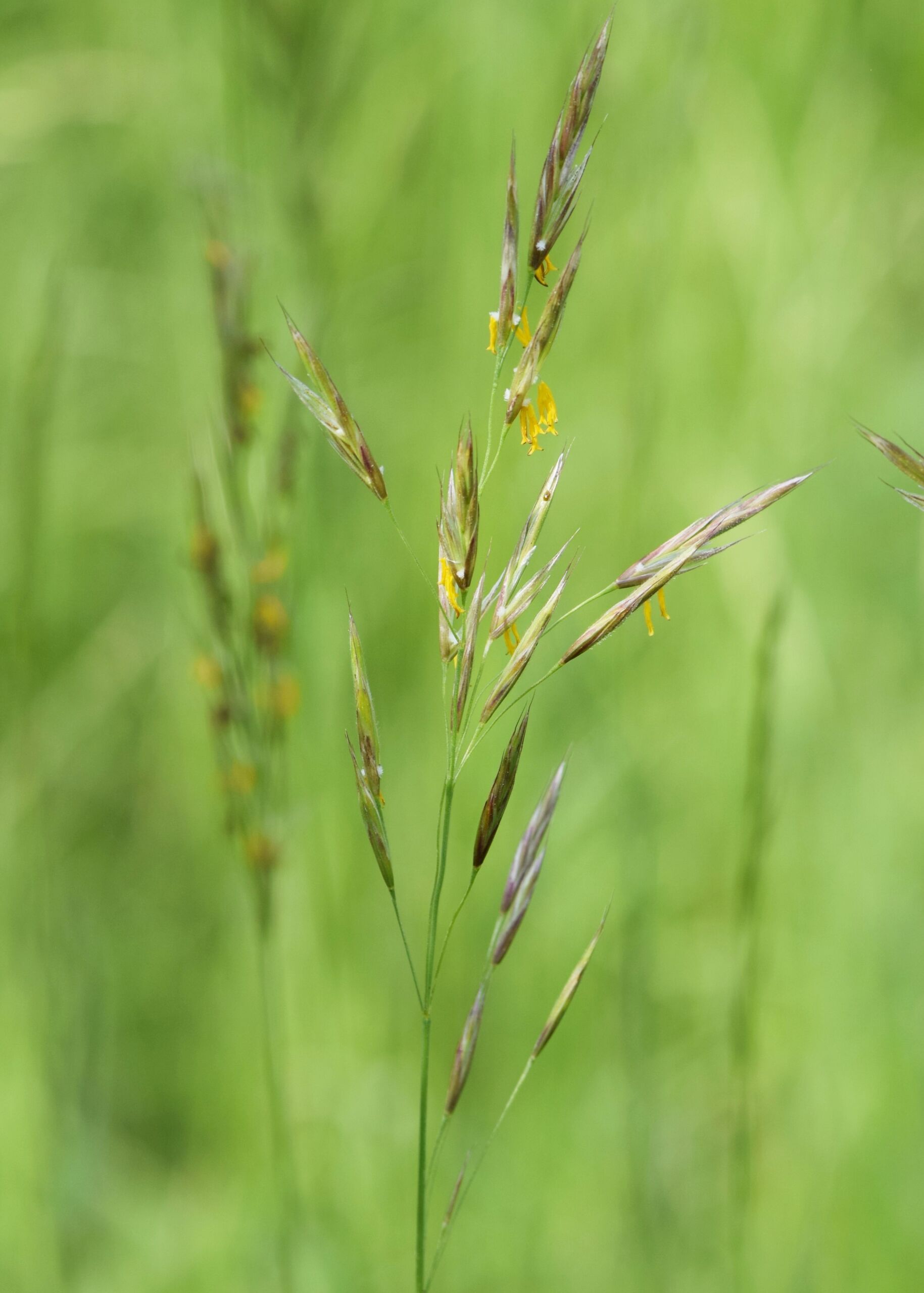

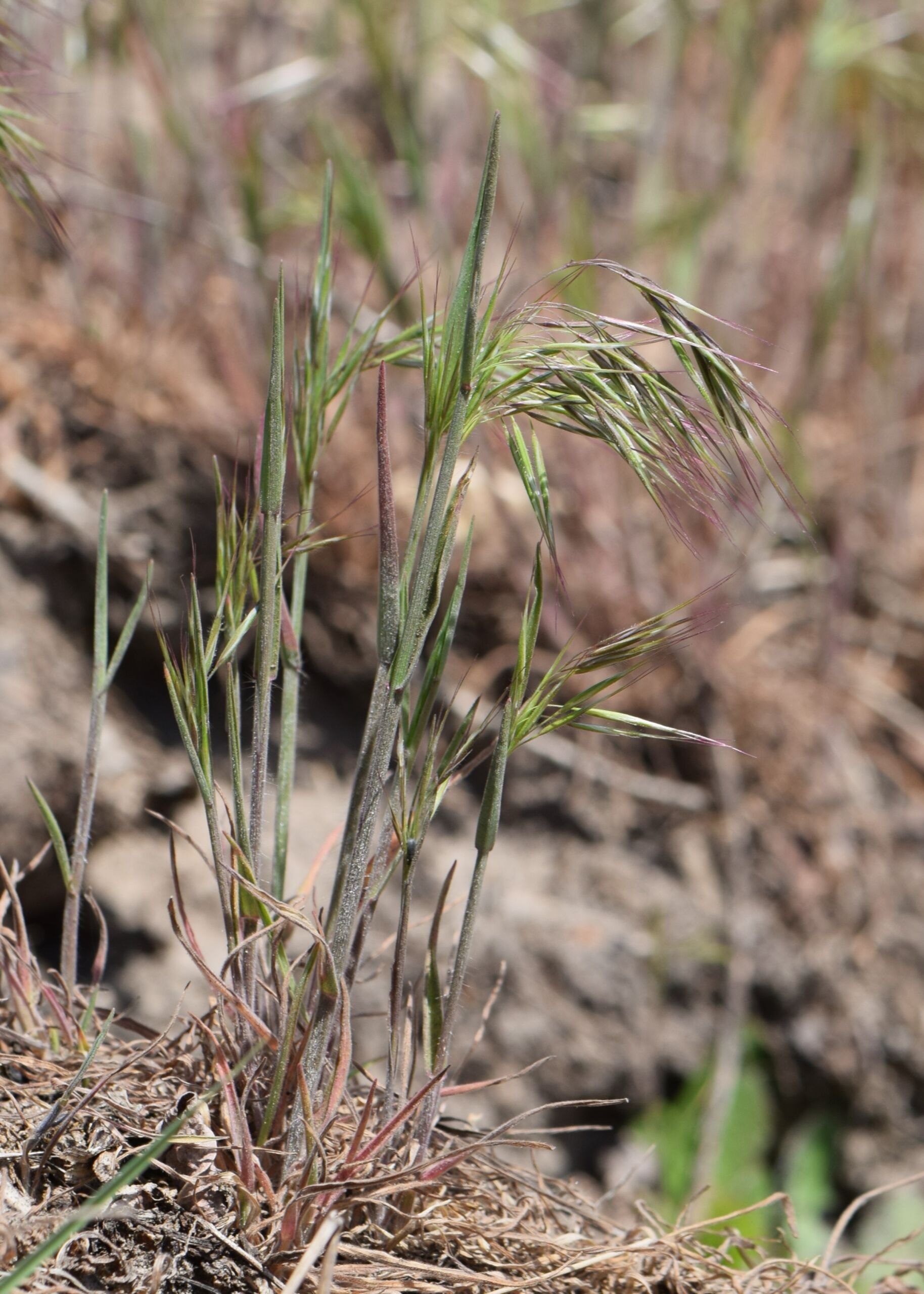
Brome grasses are the grasses you have walked through without ever learning their name, and that is exactly why they need a genus guide. Bromus is a large genus of cool-season grasses in the grass family (Poaceae), found across temperate regions worldwide, and its members share a recognizable look: upright or arching stems, flat leaves, and open or nodding panicles of flattened spikelets, each floret often tipped with a straight awn — the bristle that gives a brome seed head its slightly tousled, windswept silhouette. Some bromes are annuals that live fast and die in one season; some are perennials that come back from the same crowns for years; some are native prairie and woodland grasses, and some are introduced forage grasses and weeds that now cover millions of acres they were never invited to. The genus is the unit here because the butterfly guide that names it names it at genus level, and because no single brome species is “the” brome.
The butterfly context is one guide, one section, and a whole grass menu. The Common Roadside-Skipper guide lists “brome grasses” with the Latin Bromus in its Host plants section, alongside bentgrasses (Agrostis), bluegrasses (Poa), wheatgrasses (Elymus), and Bermuda grass (Cynodon) — a grass-feeding skipper whose caterpillars eat a range of cool- and warm-season grasses, not one species. That is the mention this draft covers: Host plants section, exact forms “brome grasses” and “Bromus”. Note what the listing does not do: it does not name a brome species. A skipper caterpillar eating “brome grasses” might be eating smooth brome, or cheatgrass, or a native woodland brome, depending on what is growing where the female laid her eggs — and a guide that picked one species and called it the host would be inventing a precision the butterfly guide never claimed. This genus guide is the honest unit, and species mentions, if any future guide names one, belong in that species’ own guide.
The duplicate check for this draft is clean, and it is worth stating plainly because grass names are a tangle. No brome guide exists on the site: the site search for “brome” returns only butterfly guides (including the Common Roadside-Skipper itself), the plant-guides gallery has no brome card, and the resolved-plants map has no brome entry. There is also no existing brome species guide on the site that species mentions could be misassigned to — no smooth brome guide, no cheatgrass guide, no rescue grass guide — so this genus guide starts with a clean field. It also does not duplicate the other grass guides in the skipper’s menu: bentgrass, bluegrass, wheatgrass, and Bermuda grass are separate genera with their own units, and none of them is a brome, whatever a lawn-care label might imply.
One warning belongs in the introduction, not buried in the problems section, because it changes what a gardener should do with this guide. The most famous brome in North America is also the worst one: cheatgrass (Bromus tectorum), an introduced annual that invades rangeland, dries to tinder by early summer, and carries wildfire across landscapes that never evolved with it. Nothing in this guide recommends planting cheatgrass, and a gardener who wants “brome grasses” for a skipper should plant a native or non-invasive brome suited to their region, never cheatgrass, and never a brome they cannot identify to species. The genus contains both good meadow grasses and a genuine ecological disaster, and the Latin name is the only thing separating them.
How to grow
Growing brome grasses starts with the only decision that matters: which brome, for which place, and the answer is never just “brome.” The genus spans temperate grasses worldwide, and the growing advice for a native woodland brome and an introduced forage brome are not interchangeable, so this section gives the genus pattern and names the species differences where they change the plan. The pattern is: full sun to part shade, average, well-drained soil, and a cool-season growth rhythm — strong growth in spring and fall, a summer slowdown or dormancy in heat, and green-up again when temperatures fall. Sow seed in fall or early spring, as a meadow, drift, or lawn component rather than as single specimens — grasses are social plants, and a lone brome in a bed looks like a weed that escaped, which, to be fair, some bromes are. Water to establish, then follow the species: native meadow bromes largely take care of themselves on rainfall, while forage bromes planted for hay or pasture expect the water and fertility of a working field.
Species choice is where this guide earns its keep. For a native meadow or restoration planting, choose a brome native to your region, by Latin name, from a native-seed supplier — the species that belong in your county’s prairie, woodland edge, or mountain meadow, not the first brome on a generic seed rack. For forage or erosion control, smooth brome (Bromus inermis) is the classic planted species: a vigorous, rhizomatous perennial that makes excellent hay and holds soil, and that also escapes into roadsides and meadows with enthusiasm, so plant it where its spreading habit is an asset, not a liability. Upright brome (Bromus erectus) is a perennial of European grasslands, planted and naturalized in places, with the same cool-season rhythm. Rescue grass (Bromus catharticus) is a South American annual-to-short-lived perennial used as a winter forage grass in mild climates. And cheatgrass (Bromus tectorum) is the one to pull, not plant: an annual that germinates in fall, grows through winter, seeds by early summer, and then becomes fuel. If you cannot tell your brome to species, do not plant it for butterflies — plant a grass you can identify, from a supplier who can tell you its Latin name.
Management follows the grass pattern: mow or graze meadow bromes after seed set if you want them to persist, leave a patch unmown through the skipper season if you are growing them for caterpillars, and never mow a brome meadow flat in midsummer and expect the skipper caterpillars to thank you. Cut seed heads before they shatter if you are growing a brome near a natural area and do not want it to wander. And keep the mower out of the cheatgrass patch entirely — mowing cheatgrass after seed set just spreads the seed, and the correct management for cheatgrass is removal before it seeds, repeated until the seed bank is exhausted, which is a multi-year commitment, not a weekend job.
Florida note, stated by genus pattern rather than by species, because a genus-level Florida promise would be a lie. Most bromes are cool-season temperate grasses, and Florida’s hot, humid summers and warm-season grass country are a poor match for the genus as a whole — the skipper’s other menu items, like Bermuda grass, are the warm-season grasses that actually thrive in Florida. A Florida gardener who wants grass-feeding skippers should plant the warm-season native grasses of their region, not a cool-season brome, and should treat any brome seed sold for Florida lawns with deep suspicion. This guide exists because a butterfly guide names the genus, not because the genus belongs in a Florida lawn.
Water & feeding
Water, for meadow and native bromes, is a question of rainfall plus establishment watering, not irrigation. Sow in fall so winter rain does the establishing, water through the first dry spell, and then let the cool-season rhythm run: growth in the cool months, rest in the heat. Forage bromes under hay management want more — regular water and fertility, because a hay crop is a crop, and a crop that is cut several times a season needs feeding to regrow. The distinction matters: a meadow brome fed like a hay field grows rank, lodges (falls over), and shades out the wildflowers a butterfly meadow needs, while a hay brome starved like a meadow grass yields poorly and thins out. Match the feeding to the job, and when the job is butterflies, feed lightly or not at all.
Feeding: modest, across the genus, and mostly unnecessary for native plantings. Meadow and restoration bromes in average soil need no fertilizer — a spring topdressing of compost in a genuinely poor soil is the most they should get, and nitrogen-heavy feeding mostly produces tall, weak stems that lodge and invite disease. Forage plantings are the exception, and even there the feeding follows soil tests and hay-cutting schedules, not a calendar. The soil science is the grassland story: grasses build soil with their roots, and a perennial brome’s fibrous root system — dense, deep, and constantly turning over — is a carbon pump, feeding soil microbes and building the dark, crumbly topsoil that prairies are famous for. A brome meadow left unmown through the season is not just skipper habitat; it is a soil-building machine that happens to look like a field.
Common problems
- Planting cheatgrass, or letting it in. The most consequential problem in the genus. Cheatgrass (Bromus tectorum) is an invasive annual and a fire hazard. Never plant it; pull it before it seeds, and expect a multi-year seed bank.
- Planting a brome you cannot identify. “Brome” on a seed packet without a Latin name is not a planting plan. Buy by species, from a supplier who names it, or plant a grass you can identify.
- Smooth brome escaping. Bromus inermis spreads by rhizomes into meadows and roadsides. Plant it where spreading is wanted, and contain it where it is not.
- Summer dormancy mistaken for death. Cool-season bromes brown out in heat and green up in fall. Wait for fall growth before declaring a meadow dead.
- Mowing at the wrong time. Mowing a skipper meadow flat in the caterpillar season removes the food. Leave a patch unmown through the season if the goal is caterpillars.
- Overfeeding a meadow. Nitrogen-heavy feeding makes tall, weak, lodging stems and shades out wildflowers. Feed lightly or not at all for butterfly habitat.
- Florida heat. Cool-season bromes are a poor match for Florida summers. Plant warm-season native grasses for Florida skipper habitat instead.
Harvest
The harvest for brome grasses is seed, hay, and skipper-watching — and the proportions depend entirely on which brome you planted. For meadow and restoration bromes, the harvest is seed collected after it ripens and before it shatters, and the quieter harvest of a meadow left standing: grass skippers drifting low over the stems, caterpillars hidden in the leaf sheaths, and a field that builds soil while you watch. For forage bromes, the harvest is hay, cut at the right stage — before the seed heads fully mature, when the forage is leafy and nutritious — and baled for livestock that have eaten brome hay for generations. For cheatgrass, the harvest is removal: pull it, bag it, and do it again next year, because a cheatgrass patch left to seed is a fire waiting for a spark. Leave a patch of your good bromes standing through the skipper season, cut the rest after seed set, and let the genus do what grasses do best: hold soil, feed caterpillars, and come back next spring without being asked.
Browse all plant & pest guides
Saving seeds
A warning before the method, because this is a genus guide and the genus contains both saints and troublemakers: the method below is genus-level, and it does not bless every brome. Smooth brome (Bromus inermis) is a widely planted introduced forage grass that can be aggressive outside its planting, and cheatgrass (Bromus tectorum) is an invasive annual of western rangelands and a serious fire hazard that must never be planted or deliberately spread. Do not save, sow, or share seed from cheatgrass, and do not sow a generic packet labelled only “brome” and hope for the best. For a real meadow, pick a named native species by its Latin name, from a native-seed supplier for your region, and save seed from that species. Everything that follows assumes you have done that.
Seed is the main route for bromes, and the plant makes it easy: it is a grass, and making seed is its entire personality. Let the panicles ripen on the plant until the spikelets turn tan to brown and the seed feels dry and firm, then cut whole heads before they shatter completely. Because brome florets carry awns, those bristly tails that give a seed head its windswept look, wear gloves and handle dried heads over a tray or bag, and keep awned seed away from pets’ ears and paws, where awns can work their way in and cause trouble. Dry the heads fully indoors in an airy spot, then rub or thresh them gently to free the grain-like seed, called caryopses by botanists, and sieve or winnow away the chaff. No soaking, scarification, or fancy pretreatment is generally needed for a straightforward sowing; sow shallowly, barely covered, in fall or early spring in a prepared seedbed, when cool-season grasses want to get going.
Perennial, clump-forming bromes can also be divided, which is the route to take when you want an exact copy of a good clump rather than a genetically mixed batch of seedlings. In early spring or fall, when the plant is not in active flowering growth, dig the clump, tease or cut it into sections each with roots and shoots, and replant at once into moist, well-prepared soil, watering well until established. Division will not help you with an annual brome, which lives, seeds, and dies in one season, so match the method to the life cycle: annuals by seed, perennials by seed or division.
Two honesty notes for the home seed saver. First, grasses are wind-pollinated, so a brome flowering next to a different brome species can produce mixed seed, and a genus-level packet is no guarantee of a single species; if purity matters, save from an isolated, single-species stand. Second, Florida is a poor fit for most bromes, which are cool-season temperate grasses: heat and humidity will test both the plants and your stored seed. Dry saved seed thoroughly, store it labelled by species and year in an airtight container with a desiccant packet, cool and dark, and sow it the next suitable cool season rather than letting a Florida summer turn it to mould in the jar.
Species
Bromus is a large genus, and no guide can list every species, so this section names the species a North American gardener or butterfly-watcher is most likely to meet, in plain text, and states plainly which ones to plant and which ones to pull. Smooth brome (Bromus inermis) is the widely planted rhizomatous forage perennial, vigorous and spreading. Upright brome (Bromus erectus) is the perennial of European grasslands, planted and naturalized in places. Rescue grass (Bromus catharticus) is the South American annual-to-short-lived perennial used as winter forage in mild climates. Cheatgrass (Bromus tectorum) is the invasive annual of western rangelands, a fire hazard, and the one species in this section that must never be planted. Native woodland and prairie bromes vary by region and should be chosen by Latin name from a native-seed supplier for your county, not from a generic “brome” packet. Grow the genus for the Common Roadside-Skipper host listing at genus level; grow a named native species for a real meadow; and never let a bare “brome” tag decide which one you planted.