
💙 Brunnera
What it looks like
How to grow
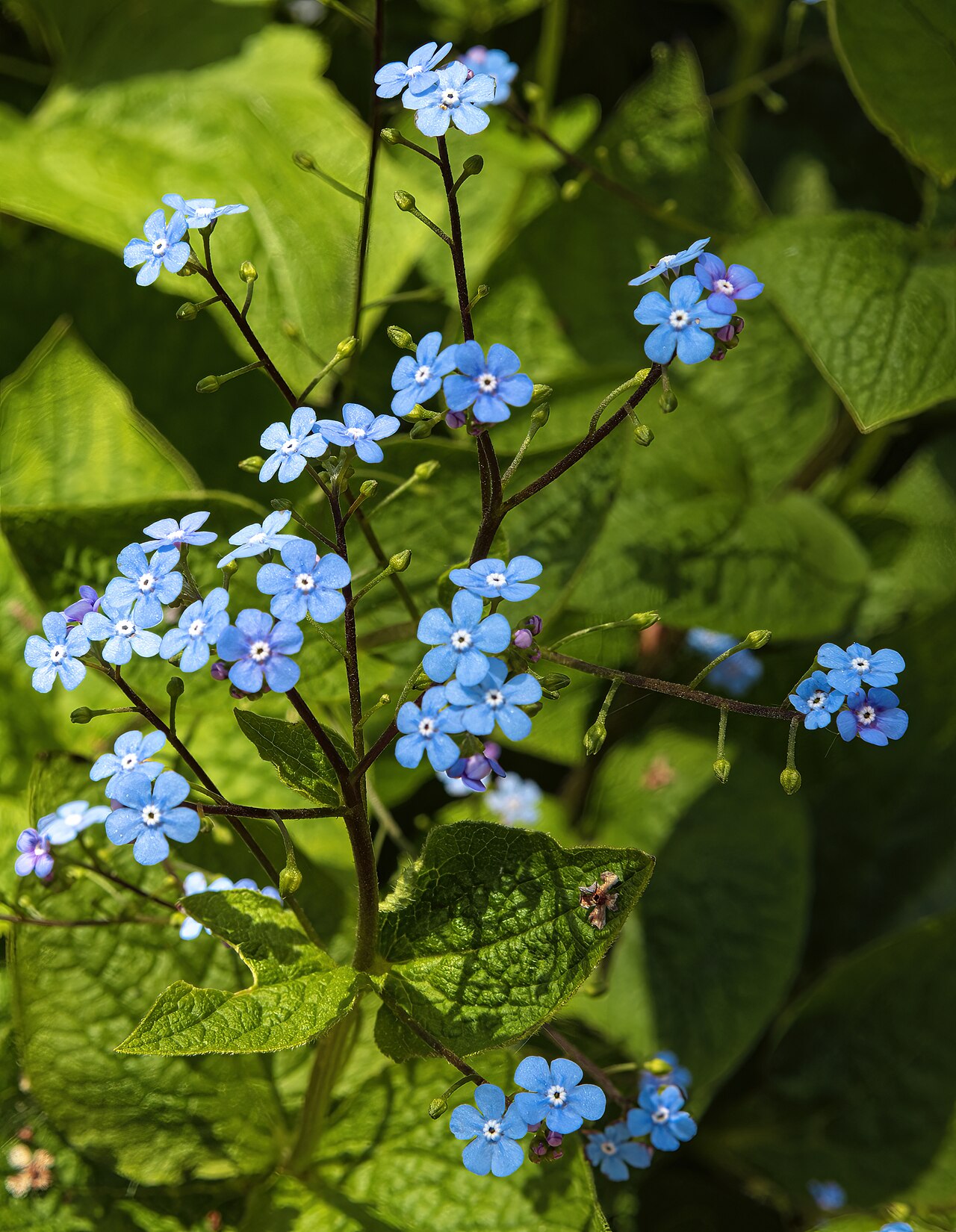
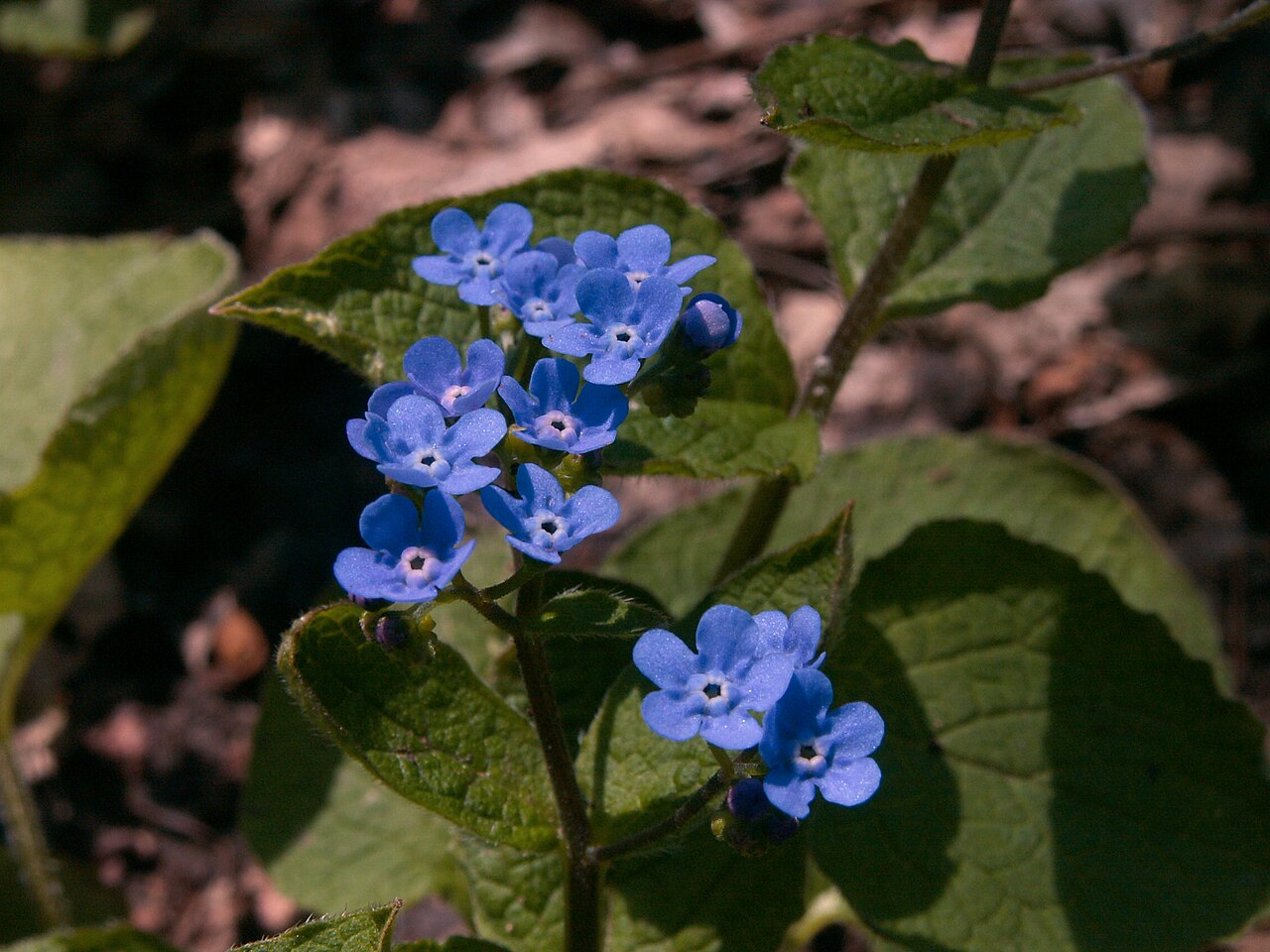
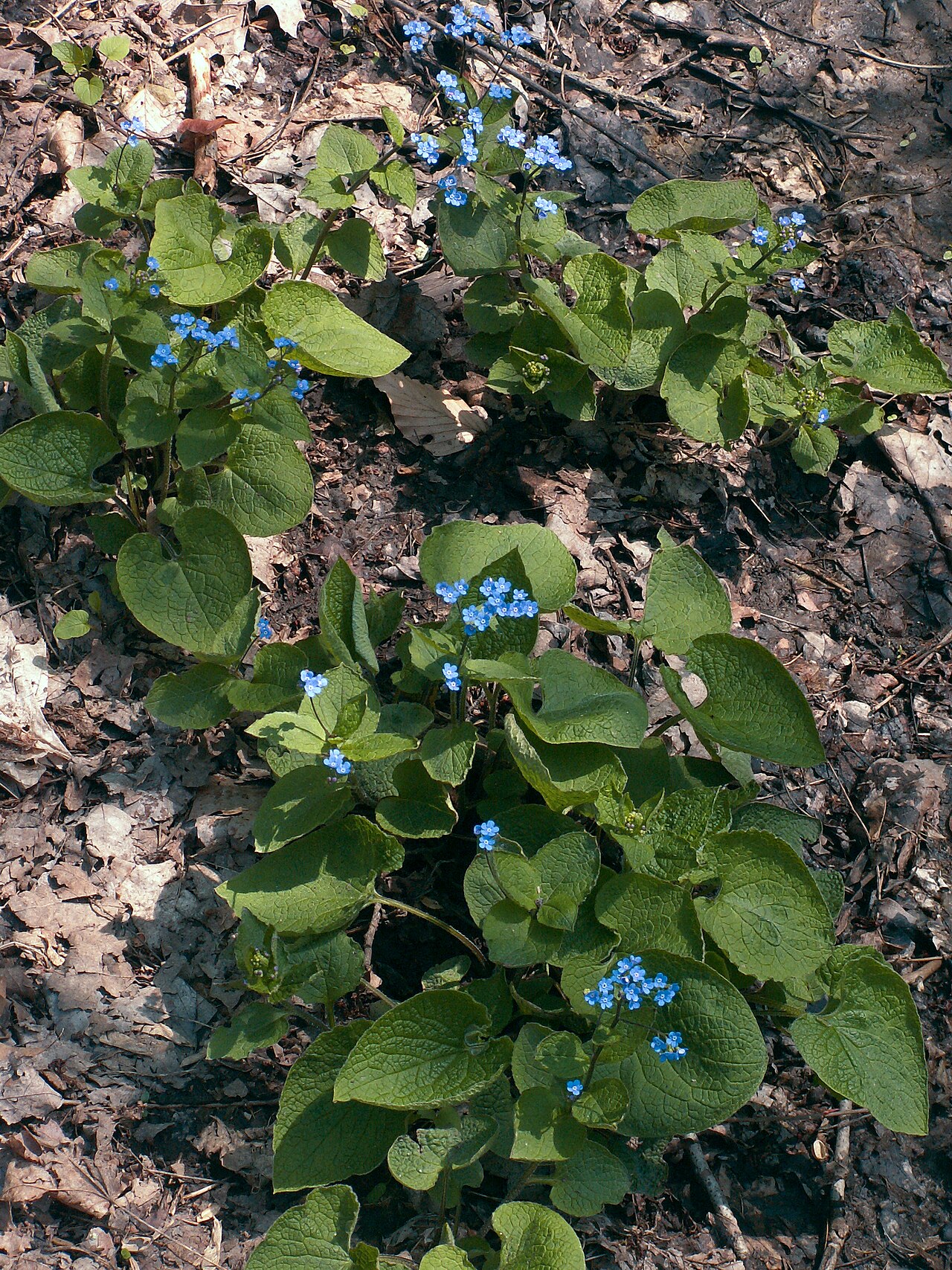
Brunnera, or Siberian bugloss, is a shade perennial grown for two shows: sprays of small true-blue forget-me-not flowers in mid to late spring, and then large heart-shaped leaves — green in the species, increasingly silver in modern cultivars like ‘Jack Frost’ — that carry the garden through summer. Plants grow 12–18 inches tall and spread wider. Plant in spring or fall in part to full shade in rich, moist, well-drained soil with plenty of organic matter; brunnera scorches in hot sun and sulks in dry soil, so the shady, moist spot that defeats sun-lovers is exactly where it shines. Space 12–18 inches apart, mulch to hold moisture, and site it where its silver leaves can lighten a dark corner.
Water & feeding
Keep soil consistently moist, especially in the first year and through dry spells — brunnera is not a drought plant, and dry soil brings scorched leaf edges. Mulch with leaf mold or compost to hold moisture and feed gently. A spring compost top-dressing is the main feeding it needs.
Common problems
- Leaf scorch — too much sun or too dry; move to shade, mulch, water deeply.
- Dry soil — the commonest complaint; brunnera wants moist, not wet, soil.
- Slug damage — like hostas, silver leaves attract slugs; use traps or barriers.
- Self-seeding — seedlings appear; weed out unwanted ones or let a drift form.
Notes
Cut back tattered foliage in late winter or early spring before new growth, and remove spent flower stems after bloom to keep the plant tidy. Divide in fall in cool areas or early spring in warm ones every few years to renew clumps. Brunnera pairs beautifully with hostas, ferns, and astilbe — the classic shade trio, with brunnera supplying the silver.
Browse all plant & pest guides
Saving seeds
Brunnera gives you two honest routes to more plants, and they are not interchangeable, so pick the one that matches what you actually want. If you want more of a named silver cultivar, such as ‘Jack Frost’ with its frosted leaves, divide. If you want a surprise, or you simply want more brunnera and do not mind what colour the leaves turn out, let it seed. Seedlings from a silver cultivar very often revert to plain green leaves, which is not a defect in the seed, it is genetics doing its job: the silver pattern is a cultivar trait that seed does not reliably copy. Division copies it exactly.
Division is the reliable workhorse. In early spring, just as new growth emerges, or in early fall in cool, moist weather, lift an established clump with a fork or spade, keeping as much root as you can, and divide it into sections each with a healthy crown and a good mass of roots. Replant at once at the same depth, in the moist, shady, organic-rich soil brunnera loves, and water deeply until established. Dividing every few years also rejuvenates a clump that has grown congested, though brunnera does not demand division on a strict schedule the way some perennials do. Root cuttings taken in winter are another vegetative option, but division is simpler and more forgiving, and it is the method to use for any cultivar you want to keep true.
Seed, meanwhile, mostly takes care of itself. Left alone in a moist, shady spot, brunnera self-sows freely, and seedlings can be lifted in early spring and moved to where you want them, giving them a full season to settle. If you want to collect deliberately, let some flower sprays fade rather than deadheading everything, then snip the nearly dry flower stems into a paper bag and let them dry completely indoors; the small seeds will drop as the flowers dry. Sow in moist mix and be patient: brunnera seed generally benefits from a cold, moist chilling period of a few weeks before germination, and germination itself can take a month to three months, which feels glacial until you remember this is a woodland plant, not a radish. Do not be tempted to sow thickly and hope: thin, steady moisture and shade suit it better than a baked seed tray.
Two practical cautions. Deadheading after flowering is how you stop self-seeding from taking over a small shade bed, and it also stops green seedlings from muscling in around a silver cultivar and quietly replacing the plant you paid for. And a Florida note: brunnera is a zones 3 to 8 shade plant that scorches in hot sun and sulks in dry soil, so in most of Florida it is a marginal, pampered plant at best, and seed saving there is an uphill project rather than a reliable one. Wherever you grow it, dry collected seed thoroughly, store it labelled in an airtight container with a desiccant packet, cool and dark, and check before sharing a named cultivar vegetatively whether it is a patented introduction, since some modern cultivars restrict propagation.
Varieties
Every named variety of Brunnera with its own growing guide:
- Alexander’s Great Brunnera — The big silver: enormous, heavily silvered leaves on a vigorous plant that outgrows Jack Frost in size and presence.
- Jack Frost Brunnera — The silver shade star: frosted silver leaves with green veining and sky-blue forget-me-not flowers — the brunnera that redefined the genus.
- Looking Glass Brunnera — The mirror leaf: almost entirely silver foliage with just a whisper of green, the brightest brunnera of all.
- Sea Heart Brunnera — The sturdy silver: thick, heart-shaped silver leaves with green veins, bred tougher and more heat-tolerant than its silver cousins.
- Silver Heart Brunnera — The most silver: leaves so thoroughly frosted they look dipped in mercury, with green veins tracing every heart.