
🍓 Bunchberry
What it looks like
How to grow
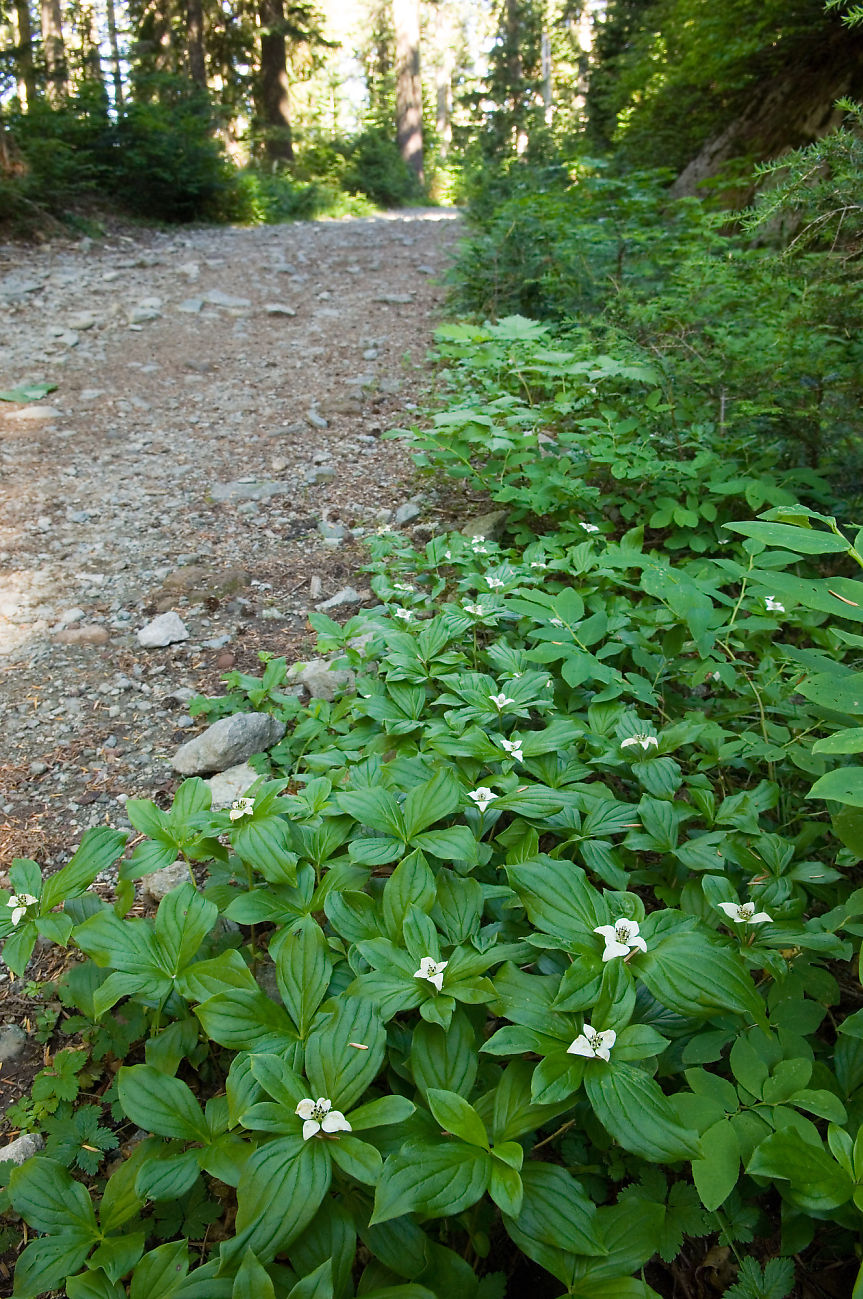
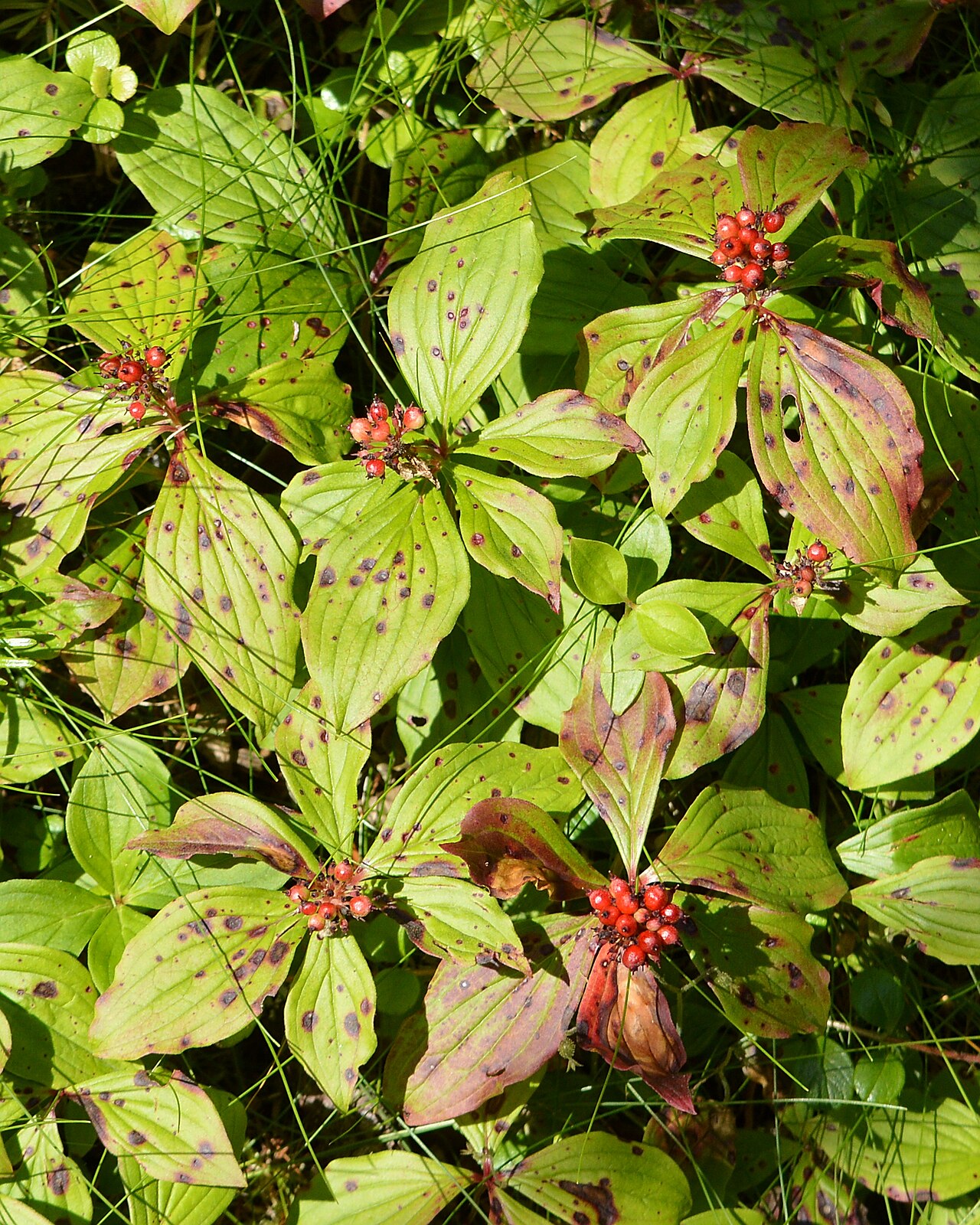
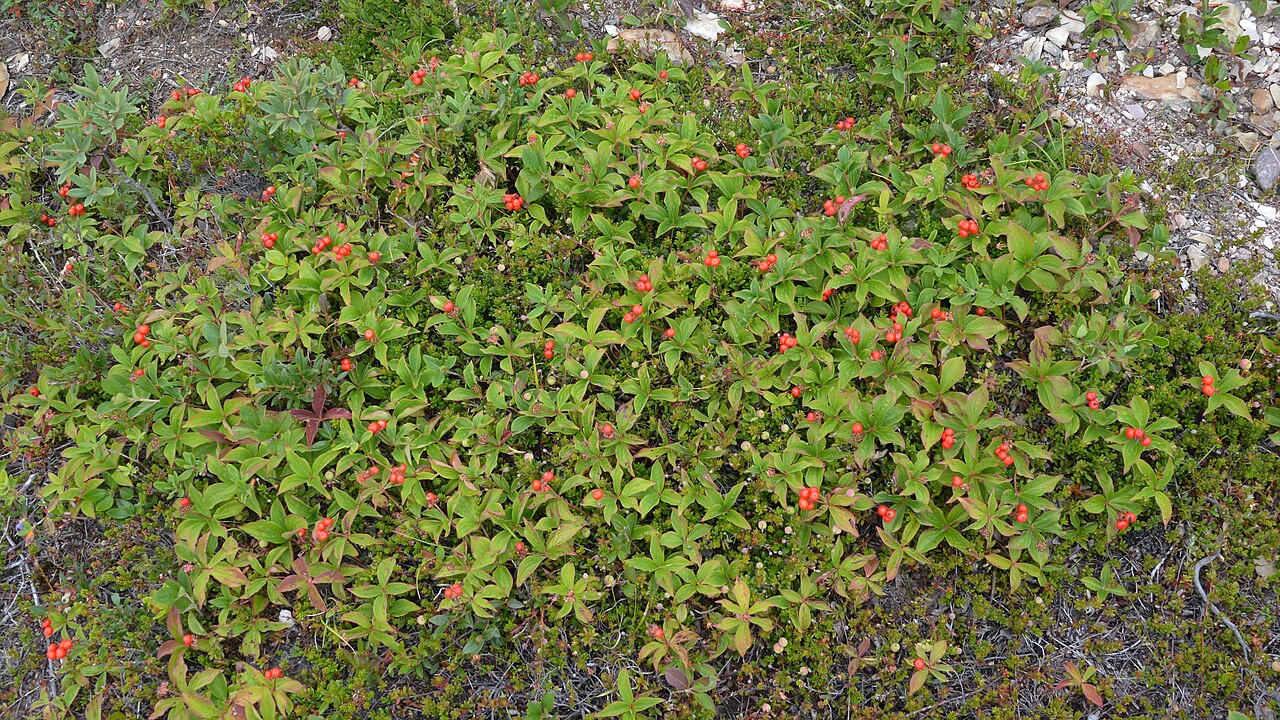
Bunchberry is the groundcover member of the dogwood family: a low, spreading perennial only 4–9 inches tall, with whorled leaves, white four-petaled flowers in late spring, tight clusters of bright red berries in summer, and foliage that turns burgundy-red in fall. It is a woodland plant through and through, so success means copying a forest floor: plant in spring or fall in cool, moist, humus-rich, well-drained acidic soil under trees or on the north side of a building, and mulch with pine needles or leaf litter. It will not tolerate alkaline soil, hot sun, or soil that dries out completely — and it sulks badly if soil temperatures climb too high. In the right cool, shady spot it forms a weed-smothering carpet; in a hot, dry garden it simply will not thrive, and no amount of watering fixes a climate mismatch.
Water & feeding
Keep soil consistently moist, watering in dry spells without waterlogging it. Mulch 2–3 inches with pine needles or shredded bark to hold moisture and keep roots cool. Feed almost nothing: compost or leaf litter worked in at planting, plus a thin top-dressing of organic matter after foliage dies back in early winter, is all it needs.
Common problems
- Leaf scorch and wilting — too much sun or heat; move to deeper shade and mulch heavily.
- Poor flowering — usually too much shade is not the problem; dry soil or alkaline soil is. Check moisture and pH first.
- Root rot and fungal disease — stressed, hot, or soggy plants are vulnerable; give drainage, airflow, and cool mulch.
- Slow spread — normal. Bunchberry creeps, it does not sprint; divide established patches every few years to fill gaps faster.
Harvest
Berries are edible but often bland or slightly bitter, so they are mostly a wildlife crop — birds love them. If you do pick them, take them when fully red and soft in summer, and leave plenty behind for the robins and thrushes that planted the idea in the first place.
Browse all plant & pest guides
Saving seeds
Bunchberry rewards the patient gardener and punishes the hurried one, so let us be honest up front: division is the sensible way to get more plants, and seed is the long, nerdy way. Both work. Only one of them tests your character.
Division first, because it is what most gardeners should actually do. Bunchberry spreads by underground rhizomes, and an established clump can be teased apart in spring or in the cool season without digging up the whole plant — slip small divisions off the sides, making sure each piece already has some roots of its own. Pot them in an acidic, humus-rich mix, keep them in light shade, and never let them dry out; bunchberry divisions sulk dramatically about drought and may take a year to settle in properly. Plant out once they are growing strongly. You get an exact copy of the parent, and you skip the years of waiting that seed demands.
Seed, for the romantics: collect the berries when they are fully red in late summer, and separate the seed from the pulp, which contains germination inhibitors that will sabotage you if left in place. A mash-and-rinse in water works — pulp floats, seed sinks. Then comes the stratification saga. Fresh seed sown in autumn outdoors gets winter naturally, which is the easiest route. Stored seed needs help: scarify lightly, then give it a long cold, moist stratification — roughly three to four months in the refrigerator in damp mix is the commonly cited range, and some growers add a warm period before the cold. Sow early in the year, keep the mix moist and shaded, and brace yourself: germination of stored seed can be very slow, sometimes taking eighteen months or more, and a few growers report seedlings appearing two or three years after sowing. Do not discard the pot. Label it, water it, and forget about it with intent.
There is one more quirk worth knowing. Bunchberry needs cross-pollination from an unrelated plant for good fruiting — it is an obligate outcrosser, and its flowers famously catapult their pollen explosively when a pollinator lands, one of the fastest plant movements known. A lone plant, or a patch of genetically identical divisions, will fruit poorly. If berries are scarce, the answer is usually more genetic diversity, not more fertiliser. And seedlings will not flower until around their third year, so a seed project is a multi-year relationship.
Softwood cuttings offer a middle path: taken in July or August from below ground level and stuck in a sand-and-peat mix, they root reasonably well with humidity and shade. But cuttings, divisions, and seedlings all share one non-negotiable: cool, moist, acidic conditions. Which brings the Florida reality check. Bunchberry is a cool-climate woodlander that dislikes heat and anything but strongly acidic soil, and most of Florida is simply too hot for it. Save its seed if you garden in its proper northern range; in Florida, treat this section as knowledge for cooler-climate friends, and put your ground-cover energy into a native that actually wants your summers.