
🌿 Bur Clover
What it looks like
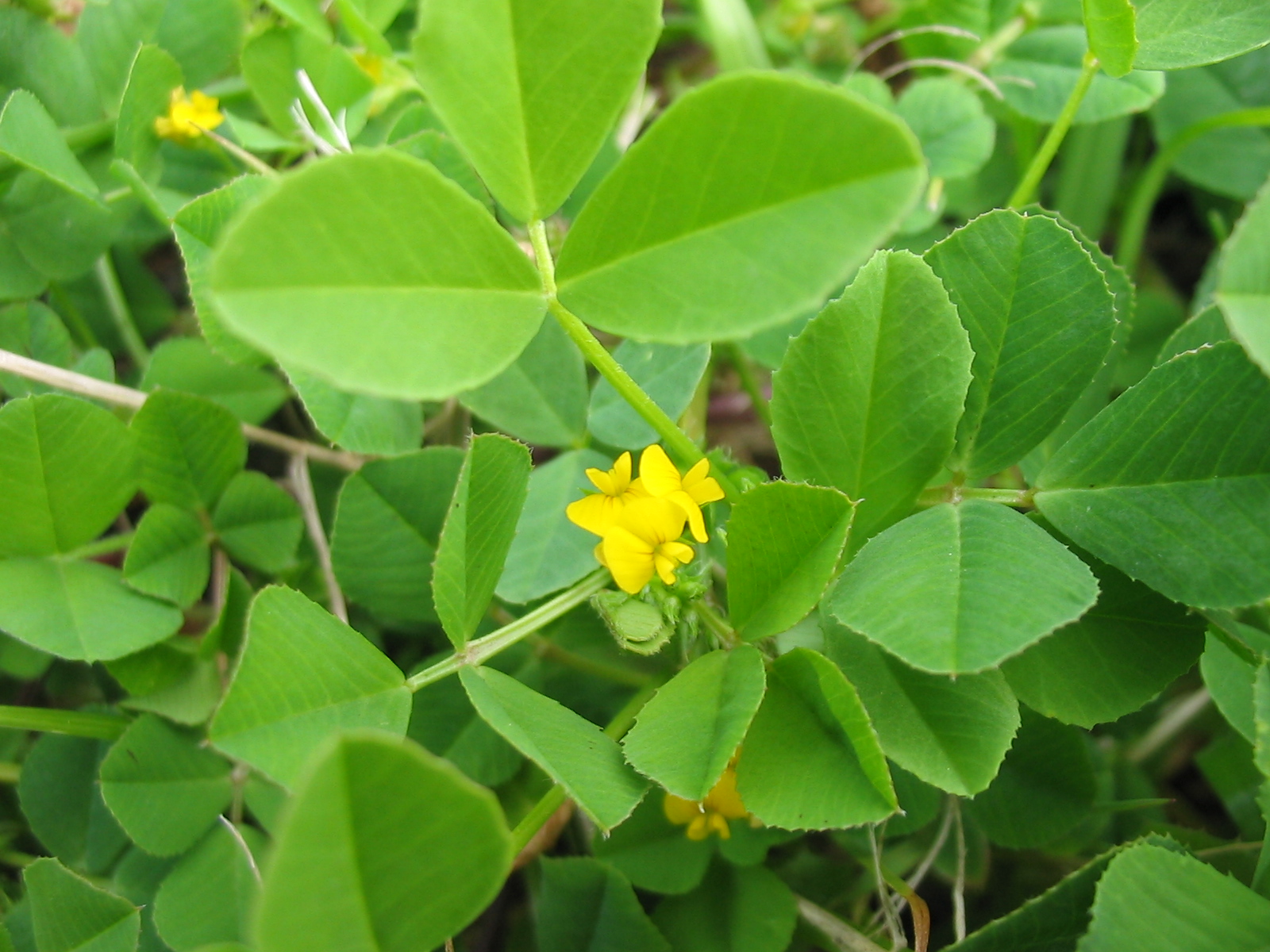
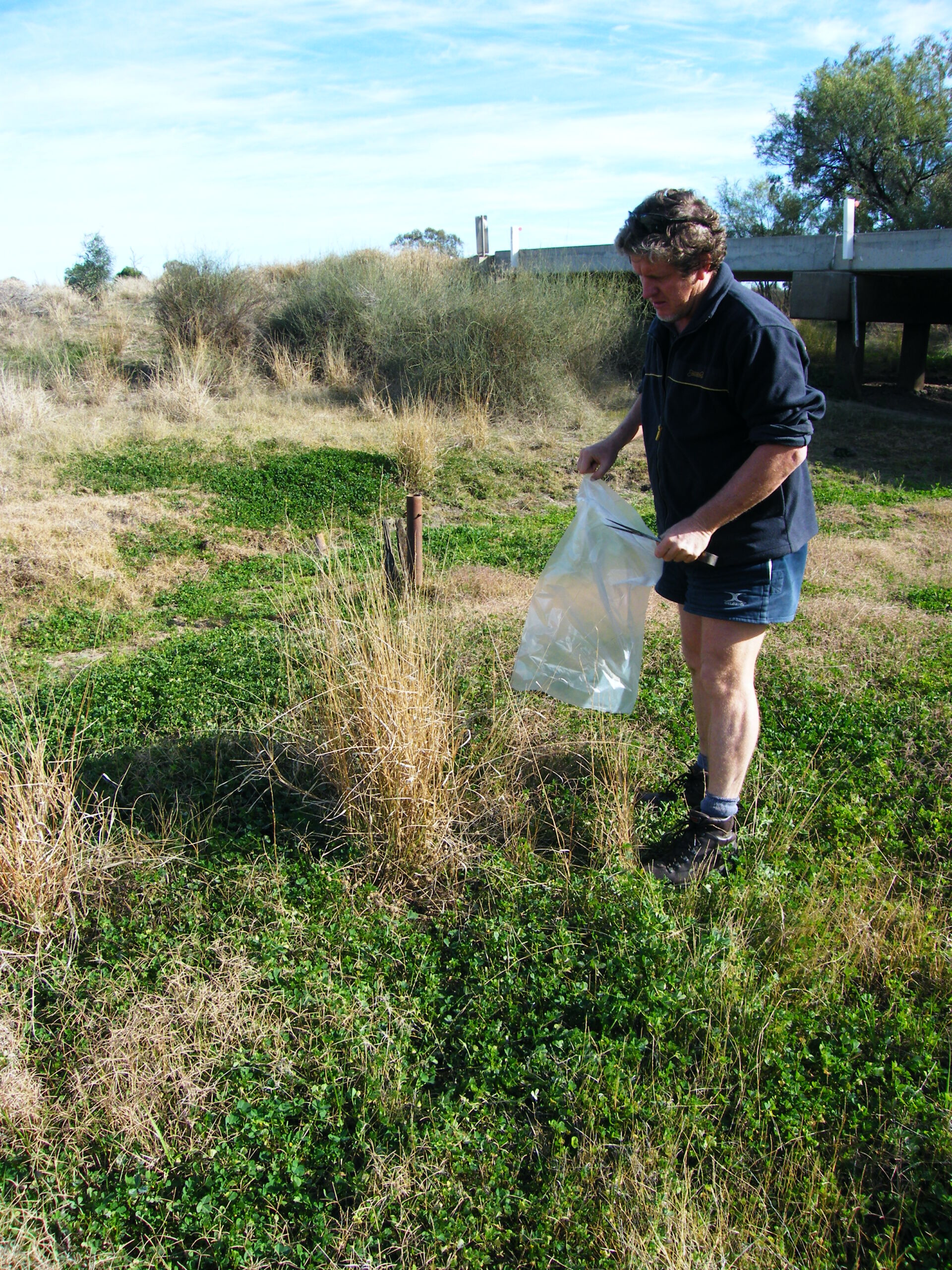
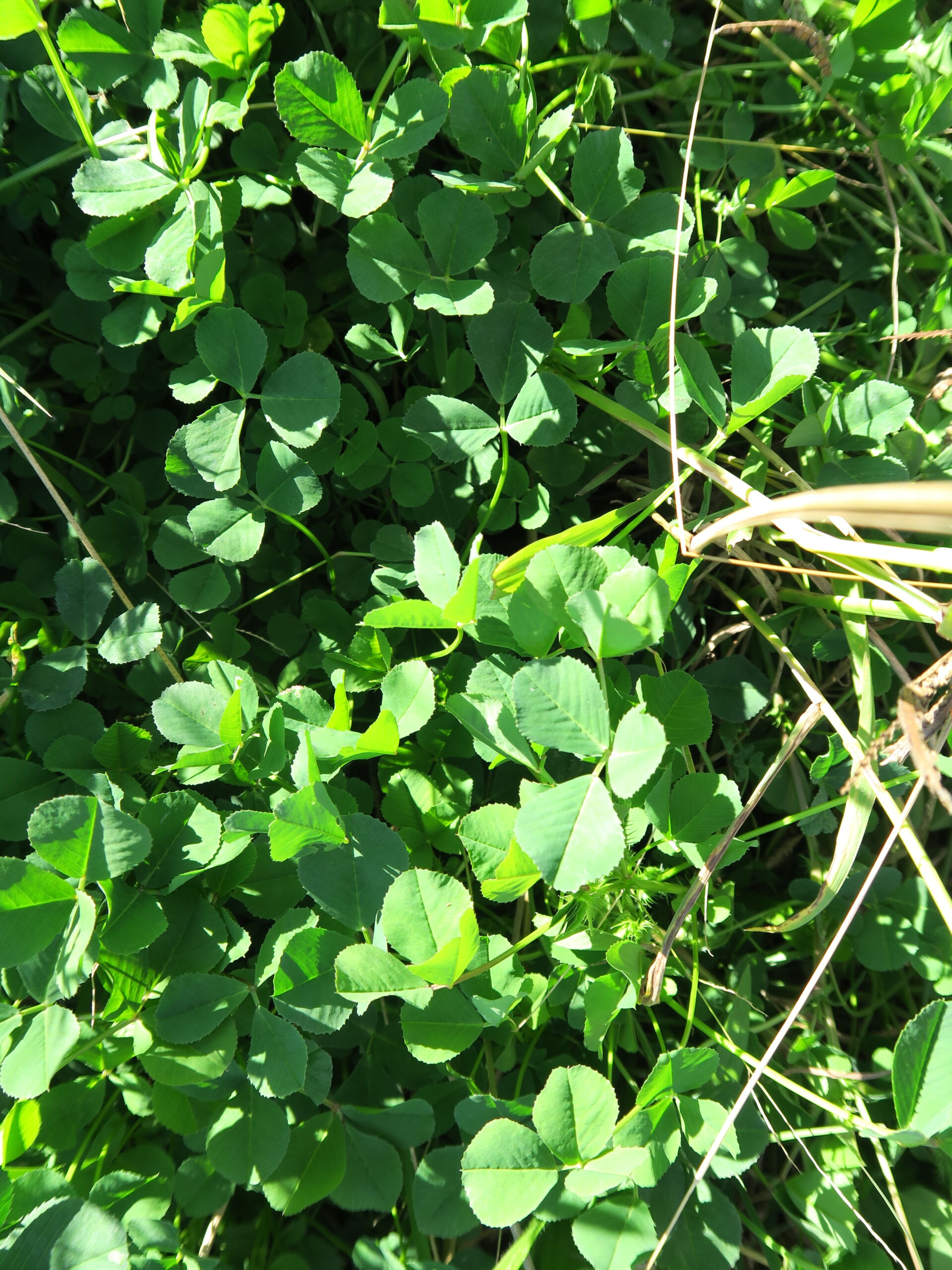
Bur clover is a plant you meet at ankle height, usually because its seed pods have just attached themselves to your socks. It is a low, sprawling annual legume in the pea family (Fabaceae), and its whole life strategy fits in one sentence: grow fast in the cool season, flower small and yellow, and make coiled pods with hooked spines that hitch a ride on anything furry, woolly, or shoelaced. The stems are prostrate to ascending, 10 to 50 centimetres long, branching from the base and lying flat or rising only a little, so a patch reads as a green mat rather than a plant with a shape. The leaves are the classic legume trio: three oval to heart-shaped leaflets, each about 10 to 20 millimetres long, hairless or nearly so, serrated toward the tip, with the central leaflet sitting on a longer little stalk than the two side leaflets — the same tell that marks its cousin black medick, and the first thing to check when sorting lawn legumes.
The flowers are small and easy to walk past: clusters of 1 to 5 (in some floras up to 10) yellow pea flowers in the leaf axils, each corolla only 3 to 5 millimetres long, blooming in late winter and spring in its cool-season rhythm. They are not showy, and they are not trying to be; the plant’s real showpiece is the pod. After flowering, each flower makes a pod coiled 2 to 3 times into a tight spiral, 4 to 6 millimetres across, carrying 2 to 3 rows of hooked spines along a raised ridge — or, in spineless forms, no spines at all, which is part of why the current species name is polymorpha, meaning many-formed. The pods start green and harden to brown, and the hooked ones cling to fur, wool, and clothing with velcro determination. That is the dispersal system, and it works: a dog walk, a sheep flock, or a pair of trousers can plant next year’s patch a field away.
Bur clover is native to the Mediterranean basin and is now naturalized in warm-temperate regions around the world, including much of the southern and western United States, where it is best known as California burclover — it was introduced into California during the Mission period and is now the most common bur clover there, common in grassy places, lawns, pastures, roadsides, and disturbed ground. It is a cool-season plant: it grows through the mild, wet months, flowers in late winter and spring, sets its burrs, and dies back as the heat arrives. On floodplains and in disturbed areas it favors heavier soils, slightly acid to alkaline, and it is rarely abundant on the coast but can be a valuable legume inland in low to medium rainfall country. Like other legumes, its roots host nitrogen-fixing bacteria, so a patch of bur clover is quietly enriching the soil it sprawls over — which is one reason it is sometimes grown on purpose as forage and cover, and another reason it is tolerated in pastures long after its burrs have annoyed everyone.
The butterfly context is specific, and this guide claims exactly it. The Funereal Duskywing guide lists, among its caterpillar hosts, bur clover (Medicago hispida), alongside New Mexican locust, deerweed, desert ironwood, and vetch. That is the one butterfly-guide mention this species unit covers: the common form “bur clover” and the Latin form “Medicago hispida” in the Host plants section of the Funereal Duskywing guide. Nothing more is claimed for it, and no other butterfly guide is wired to it on that basis.
A naming note that this guide states openly rather than smoothing over, because the two names will confuse anyone who looks this plant up. The butterfly guide calls it Medicago hispida, and that name is still found in older floras. Modern taxonomy treats Medicago hispida as a synonym of Medicago polymorpha, the currently accepted name, and this guide is filed under the butterfly guide’s common name, bur clover, with both Latin names given in the hero so that a reader searching either one lands on the right plant. This is not a renaming and not a second plant: one species, two names in print, and the guide follows the butterfly guide for the common name while giving the current accepted Latin name alongside the older one.
One plain-text disambiguation, because the small yellow lawn legumes are a tangle and bur clover is only one strand of it. Bur clover is not black medick (Medicago lupulina), its close cousin with smooth, single-seeded, kidney-shaped pods that turn black — bur clover’s pods are coiled spirals with hooked spines, and that pod is the whole difference. Bur clover is not alfalfa (Medicago sativa), the tall perennial forage legume with violet, pink, or white flowers. And bur clover is not a true clover at all: true clovers are Trifolium species, whose pods stay hidden inside the withered flower head, while bur clover’s coiled burrs sit out in the open, waiting for a sock. Identify by the pod, and the lawn legumes sort themselves out.
How to grow
Here is the honest framing for this guide: almost nobody plants bur clover as a garden ornamental, and this guide does not pretend otherwise. It is a wild legume, a pasture plant, a cool-season cover, and a lawn weed, all at once, and the growing advice below is for the gardener or land manager who wants to understand it, use it deliberately as forage or cover, or keep it out of the flower beds — not for anyone expecting a vegetable-bed star. If you want it, the recipe is simple, because the plant is not fussy. Give it full sun to light shade and a cool season to grow in: sow in fall in mild-winter climates, let it sprawl through winter and spring, and expect it to set burrs and die back as summer heat arrives. It grows in sand, loam, or clay, slightly acid to alkaline, and it does best where the soil is not waterlogged and the competition is not too tall — a thin lawn, a pasture edge, an orchard floor, or a cover-crop strip are all fair game.
For deliberate use as forage or cover, bur clover has real virtues that explain why it was carried around the world in the first place: it is palatable and nutritious for livestock, it fixes nitrogen, it covers bare cool-season ground, and it reseeds itself freely from its own burrs, so a patch that is allowed to set seed comes back next year without re-sowing. That last virtue is also its vice, and the management rule follows from it: if you want bur clover, let some plants go to burr; if you do not want it everywhere, mow or graze before the pods harden, and expect the burrs that already exist in the soil to keep appearing for seasons afterward. As a lawn plant it is a mixed blessing — low, green, nitrogen-fixing, and pollinator-visited in flower, but burr-producing in spring, which is a poor trade for a barefoot lawn. Choose the site for the job: pasture and cover-crop strip, yes; children’s play lawn, no.
Florida note, stated plainly. Bur clover is not a Florida native and not a plant this guide recommends Florida gardeners go out of their way to establish. The Funereal Duskywing that eats it is a rare, local butterfly in Florida, at the edge of its wanderings, not a widespread Florida species, so there is no Florida butterfly reason to sow a Mediterranean annual that makes burrs. Florida gardeners who want the same nitrogen-fixing, cool-season groundcover job done by a native should look at the native legumes in this library rather than importing a burr-maker on purpose. If bur clover shows up on its own in a Florida lawn or bed, the useful response is identification first — coiled, hooked pods, not black medick’s smooth black pods — and then a decision about whether a cool-season legume that fixes nitrogen is a guest or a weed in that particular spot.
Water & feeding
Water: cool-season rainfall, and little else. Bur clover is a plant of the mild, wet months, and it grows on whatever rain the cool season brings, in soils that are moist but not waterlogged. It does not want summer irrigation — by summer it is supposed to be dead, its burrs already made — and watering it through the heat mostly invites the warm-season weeds that outcompete it. In a deliberately sown cool-season patch, water to establish in fall if the rains are late, and then leave it alone; a bur clover patch that is yellowing in late spring is not thirsty, it is finishing, which is the plan.
Feeding: none needed, and that is the point. Bur clover fixes its own nitrogen through root nodules, trading plant sugars for bacterial nitrogen, and it improves poor soil simply by growing in it. Heavy fertilizer mostly feeds its competitors — grasses and taller weeds that shade it out — and hides the very signal, low nitrogen, that a legume patch is indicating. The soil science here is the cool-season legume story: a thin, hungry patch invites legumes, legumes fix nitrogen, nitrogen levels rise, grasses thicken, and the legumes fade back until the next gap opens. That cycle is not a failure; it is succession doing its job, and a gardener who understands it stops fighting the bur clover and starts reading it.
Common problems
- The burrs. The classic problem, and it is not subtle. Hooked, coiled pods cling to socks, shoelaces, pet fur, and sheep’s wool, and they are miserable in a barefoot lawn or a wool flock. Site bur clover away from play areas and footpaths, and mow before pods harden if burrs are not wanted.
- Livestock caveats. Bur clover is palatable and nutritious forage, but sources note that eating it in excessive quantities can cause bloat and photosensitization in livestock, and burrs lodged in wool reduce fleece value. Graze it as part of a mixed pasture, not as a single-species stand, and watch wool sheep in burr season.
- Mistaken identity. Black medick, true clovers, and yellow woodsorrel all share the lawn with bur clover. Check the pod: coiled with hooked spines means bur clover; smooth and black means black medick; hidden in the flower head means a true clover; and woodsorrel is not a legume at all.
- Self-seeding enthusiasm. A patch allowed to set burrs will reseed freely, and burrs persist in soil and on clothing. If you want it contained, cut before the pods harden and clean boots, tools, and pet fur after walking a burr patch.
- Cool-season timing. Bur clover will not perform as a warm-season groundcover. A patch that vanishes in summer heat is not diseased; it is an annual finishing its year. Plan for a warm-season successor rather than watering a cool-season plant through August.
Harvest
Bur clover’s harvest is forage, soil, and butterflies — in that order, and none of them requires a basket. The forage harvest is grazing or cutting in late winter and spring, while the plants are leafy and before the burrs harden; cut or grazed at that stage, it is nutritious feed, and the nitrogen it fixed stays in the system. The soil harvest is what happens if you do nothing at all except let the plants grow, flower, and die back: the nitrogen fixed in their root nodules stays in the soil food web, and the organic matter of their stems feeds it further. And the butterfly harvest is a duskywing caterpillar on a low legume in the cool season, which is the reason this guide exists in a butterfly library at all — a small, unshowy plant doing three jobs at once, and then sticking its burrs to your socks as a parting gift. Take the harvest, watch the burrs, and plant the next cool season’s patch where the socks do not go.
Browse all plant & pest guides
Saving seeds
Bur clover is the rare plant whose seed-saving instructions can mostly be summarised as: leave it alone, and it will save itself. Your job is to harvest deliberately, before the plant’s own enthusiasm makes your decisions for you.
Bur clover (Medicago polymorpha) is a self-fertile annual legume — it pollinates itself without bees, insects, or your intervention — so saved seed comes true to type in a way cross-pollinated crops never do. There are no isolation distances to worry about and no neighbour’s variety to contaminate yours. What you grow is what you get back, which makes it a forgiving first seed-saving project for anyone nervous about crossing.
The seed lives inside the plant’s signature burrs: small, tightly coiled pods ringed with hooked prickles, green and soft at first, then brown and hard as they mature. Wait until the burrs are fully brown and dry on the plant — green burrs hold immature seed that will disappoint you — then strip them wearing gloves, because the hooks that evolved to hitch rides on passing animals will happily hitch a ride on your hands. Each burr holds several seeds. Crush or rub the dry burrs to free them; winnowing out the pod fragments is satisfying but optional if you are sowing rather than storing.
Then comes the hard-seed problem, which is the one real skill in this section. Bur clover seed wears a tough coat that can keep it dormant in the soil for years — the same trait that makes it a legendary self-reseeding pasture plant. For prompt, even germination, scarify lightly before sowing: rub the seed gently between sheets of sandpaper, just enough to dull the coat without crushing the seed, or soak it in warm water for a few hours. Sow shallowly in autumn or early spring, keep the seedbed moist, and expect sprouting within days to a couple of weeks once the coat is breached. Unscarified seed will still come up, just later and more erratically, which is fine if you are establishing a self-sowing patch and annoying if you wanted a tidy row.
One legume note: like other medics, bur clover fixes nitrogen through rhizobia bacteria in its root nodules. On ground where bur clover or its relatives have grown before, the right bacteria are usually already present. On brand-new ground, a medic inoculant at sowing helps the partnership establish — a small purchase that pays for itself in growth.
For storage, dry the seed thoroughly and keep it airtight, cool, and dark, with a desiccant packet if Florida humidity is doing its usual work on your storage jars. Hard seed stores well for a few years under those conditions, and a germination test before sowing an old jar is always cheaper than a failed patch. And the caution that balances all this ease: those burrs travel. They cling to clothes, pets, and shoes, and a patch allowed to set seed everywhere will volunteer in beds where you did not invite it. Harvest before burrs scatter if you want bur clover on your terms, mow or pull volunteers before they seed if you do not, and never toss burrs over the fence as a favour to the neighbourhood. Self-sowing is a feature until it is a weed problem, and the line between the two is entirely about where you let it seed.
Species
Bur clover is a single species, filed here under its butterfly-guide name and given in plain text with both of its Latin names: Medicago hispida, the name used in the Funereal Duskywing guide, now treated as a synonym of Medicago polymorpha, the currently accepted name. This guide covers that species only. It is not black medick (Medicago lupulina), with smooth black pods; not alfalfa (Medicago sativa), the tall perennial forage legume; and not any true clover (Trifolium species); those relatives are named here so a reader can tell them apart, not claimed by this guide. No named garden varieties of bur clover were verified for this guide; spineless forms exist in forage breeding, but no catalog variety is pinned here, and most plants a gardener meets will be wild or naturalized volunteers rather than named selections. Grow or tolerate the species, identify it by its coiled, hooked pods, and let the other legume guides cover their own plants.