
🌸 Burkwood Daphne
Daphne × burkwoodii
Some shrubs are planted for foliage. Some for fall color. Burkwood daphne is planted because, for a few weeks in late spring, it makes an entire garden smell like it is wearing perfume. It is a hybrid daphne — tougher and more forgiving than most of its famously fussy relatives — with clusters of intensely fragrant pale pink to white flowers, and it has earned its place as the daphne most gardeners actually succeed with.
Quick facts
- Sun: Full sun to part shade; afternoon shade in hot summers
- Soil: Moist, humus-rich, well-drained soil; hates wet feet and hates drought
- Size: Roughly 3–5 feet tall and wide, dense and mounded
- Life cycle: Semi-evergreen to deciduous shrub, depending on climate and cultivar
- Bloom: Late spring, with a possible lighter repeat bloom in fall
- Zones: USDA zones 4–8
- Warning: All parts are toxic if eaten; wear gloves when handling
What it is
Burkwood daphne (Daphne × burkwoodii) is a hybrid in the Thymelaeaceae family, a cross between Daphne cneorum (garland flower) and Daphne caucasica, raised in the 1920s by English nurserymen Albert and Arthur Burkwood. The little × in the name is doing real work: it tells you this plant does not exist in the wild, it was deliberately made, and it inherited something useful from both parents — the fragrance and flower power of the genus, plus a sturdier constitution than most daphnes manage.
The flowers are the point. Small, tubular, four-lobed blossoms cluster at the branch tips in late spring, pale pink in bud opening to white or soft pink, and their fragrance carries across a garden in a way few shrubs can match. The foliage is neat and lance-shaped, dark green, and the plant forms a dense, rounded mound. The best-known cultivar, ‘Carol Mackie’, adds a cream edge to each leaf, which makes the shrub handsome even when it is not in bloom — and it reportedly survived temperatures far below zero in trial gardens, which is part of why this hybrid has its reputation for toughness.
The honest climate note
Let us be plain about this one: Burkwood daphne is not a plant for hot, humid, subtropical gardens. It is hardy to zone 8 on the warm end, which sounds close, but daphnes in general struggle with the combination of summer heat, humidity, and wet soils, and they resent root disturbance and transplanting on top of that. This guide is here because the plant belongs in a complete reference — it is a reference plant for gardeners in cooler climates, and a cautionary tale about matching the plant to the climate rather than forcing it. If your summers are long, hot, and humid, admire this one in other people’s gardens and plant something that actually wants your weather.
How to grow it (where the climate fits)
Site. This is the whole game with daphnes. Choose a sheltered spot with morning sun and afternoon shade, out of desiccating winter wind, in soil that drains freely but never dries out completely. Then leave it alone — daphnes resent being moved, and a daphne that was happy yesterday can sulk for a season after a transplant. Plant it once, plant it well, and do not keep rearranging it.
Soil. Moist, rich, humus-heavy, well-drained soil is the target. Heavy clay that stays wet will rot the roots; pure sand that dries out will stress the plant into decline. Amending the planting area generously with compost gives the soil the structure and biology that keeps moisture even — the same living-soil approach that makes everything else in the garden work better, applied here with extra urgency, because daphnes punish bad drainage faster than most shrubs.
Care. Water steadily through dry spells, mulch to keep roots cool and moist, and prune lightly if at all, right after flowering — daphnes bloom on older wood, and hard pruning is rarely rewarded. Do not fertilize heavily; a light spring feeding of balanced organic fertilizer is plenty. Propagate by semi-ripe cuttings or layering if you want more, and accept that daphnes are not the fastest plants to multiply.
Trouble spots
Root rot in wet soil is the number-one killer, followed by drought stress and sudden decline that daphne growers know all too well and nobody fully enjoys discussing. All parts of the plant are toxic if eaten, and the sap can irritate skin, so wear gloves and site it away from where children or pets graze on garden plants. Pests are rarely the problem; the site is almost always the problem. Get the site right and Burkwood daphne is the easiest daphne you will ever grow. Get it wrong and it will teach you the same lesson daphnes have taught gardeners for centuries.
For the whole fragrant, fussy, wonderful family, see the Daphne guide.
What it looks like
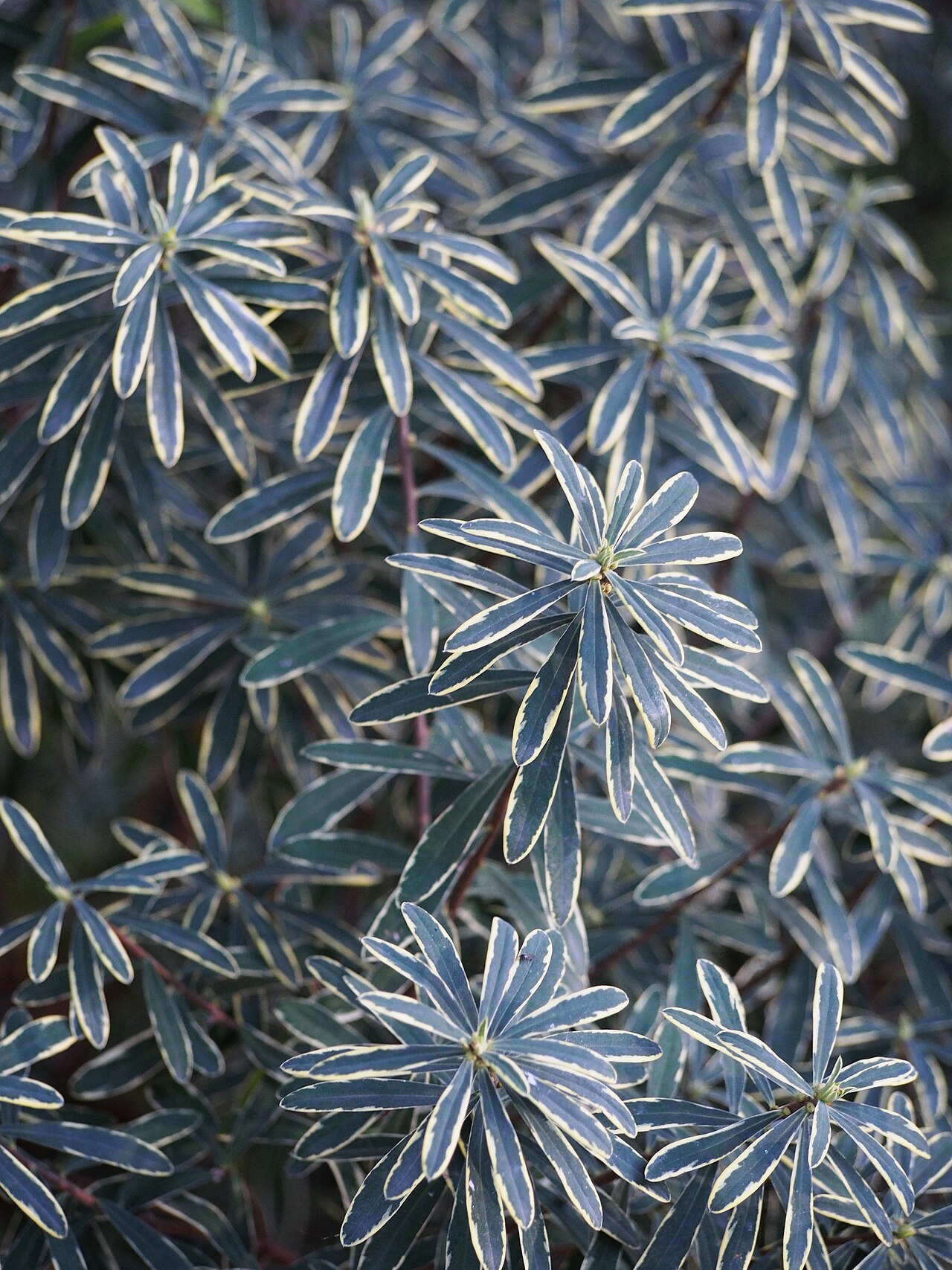
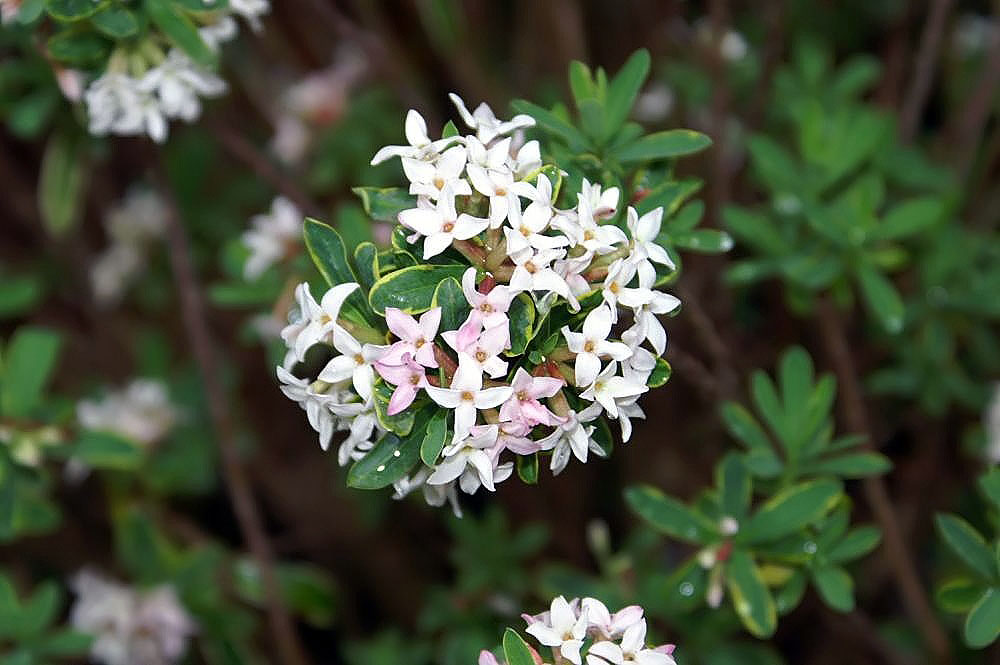
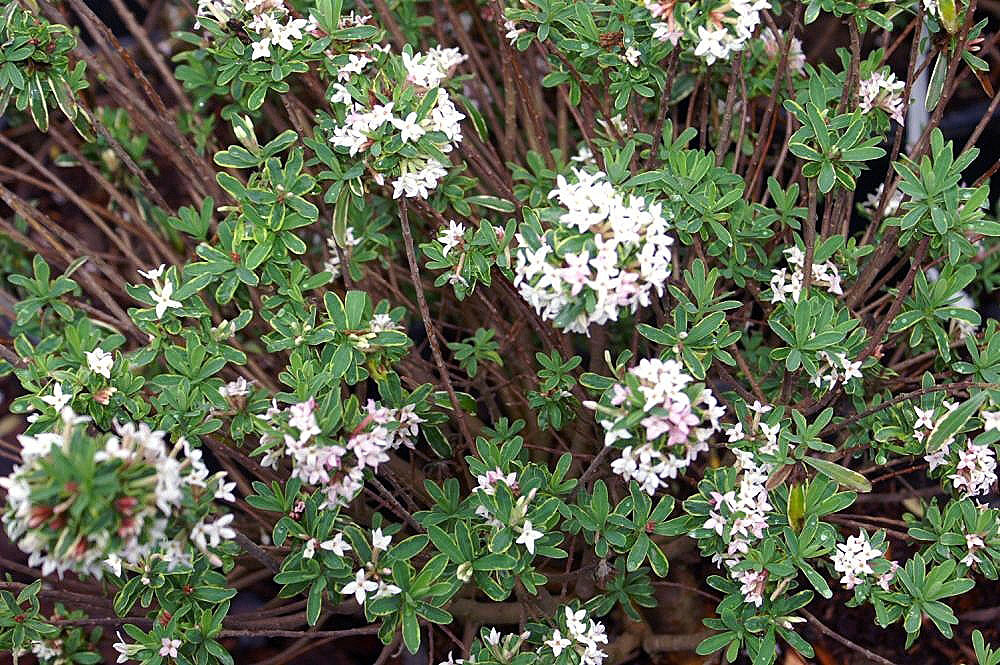
Propagation
Here is the short version, and it is the whole story: named Burkwood daphnes are propagated from cuttings, not from seed. Burkwood daphne is a hybrid, Daphne × burkwoodii, a cross of D. caucasica and D. cneorum, and every named variety on this guide’s Varieties list — ‘Carol Mackie’, ‘Briggs Moonlight’, and the rest — is a clone. Seedlings will not come true to form, and daphne seed in any case carries deep dormancy that demands months of alternating warm and cold stratification before it even thinks about germinating. If you want another ‘Carol Mackie’, you take a cutting. If you sow seed, you are running a lottery with a very slow draw.
Take semi-ripe cuttings in summer, when the current season’s growth has started to firm up but has not turned fully woody — usually mid-summer into early autumn. Cut 8–12 cm stem tips in the morning while the plant is hydrated, strip the lower leaves, wound the base lightly with a clean blade to expose cambium, and dip in rooting hormone. Set them in a free-draining mix, keep them moist but never soggy, and give bottom heat around 15 °C if you can; daphnes are famously fickle rooters, and warmth plus patience are the two things that tip the odds. Layering a low shoot for a year is the patient gardener’s alternative, and grafting in winter is the nurseryman’s route, but cuttings are the home method.
Three daphne truths to respect. First, all parts of the plant are poisonous — wash your hands after handling cuttings and keep trimmings away from children and pets. Second, daphnes hate root disturbance and hate drying out, so pot rooted cuttings on gently, keep them moist, and plant them where they will stay, in humus-rich, well-drained soil with cool roots. Third, Florida honesty: Burkwood daphne is a cool-climate shrub, usually listed hardy only to around zone 8, and Florida heat and humidity are against it. In most of Florida this is a plant to admire in other people’s gardens; if you are in the coolest corner of the Panhandle and determined to try, give it afternoon shade, perfect drainage, and no illusions.
Varieties
Every named variety of Burkwood Daphne with its own growing guide:
- Briggs Moonlight — The reverse: luminous cream-centered leaves edged in green — Carol Mackie’s photographic negative, and twice as dramatic in shade.
- Carol Mackie — The famous one: cream-edged variegated leaves, shell-pink fragrant flowers, and the most popular daphne in the country.
- Somerset — The parent plant: the vigorous, large-flowered original behind Carol Mackie, with the biggest fragrance payoff of the family.