
🌿 Burr Marigold
What it looks like
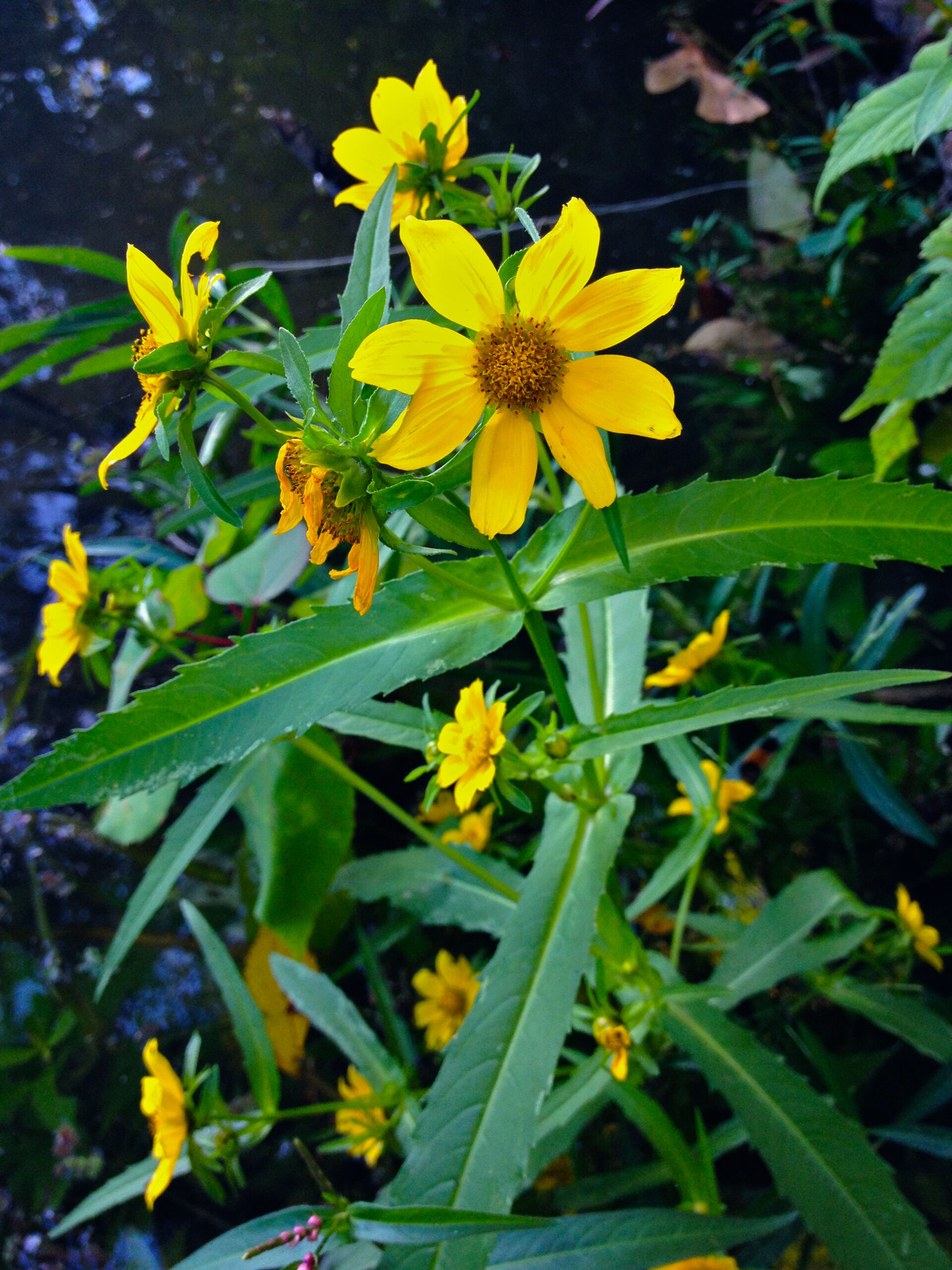
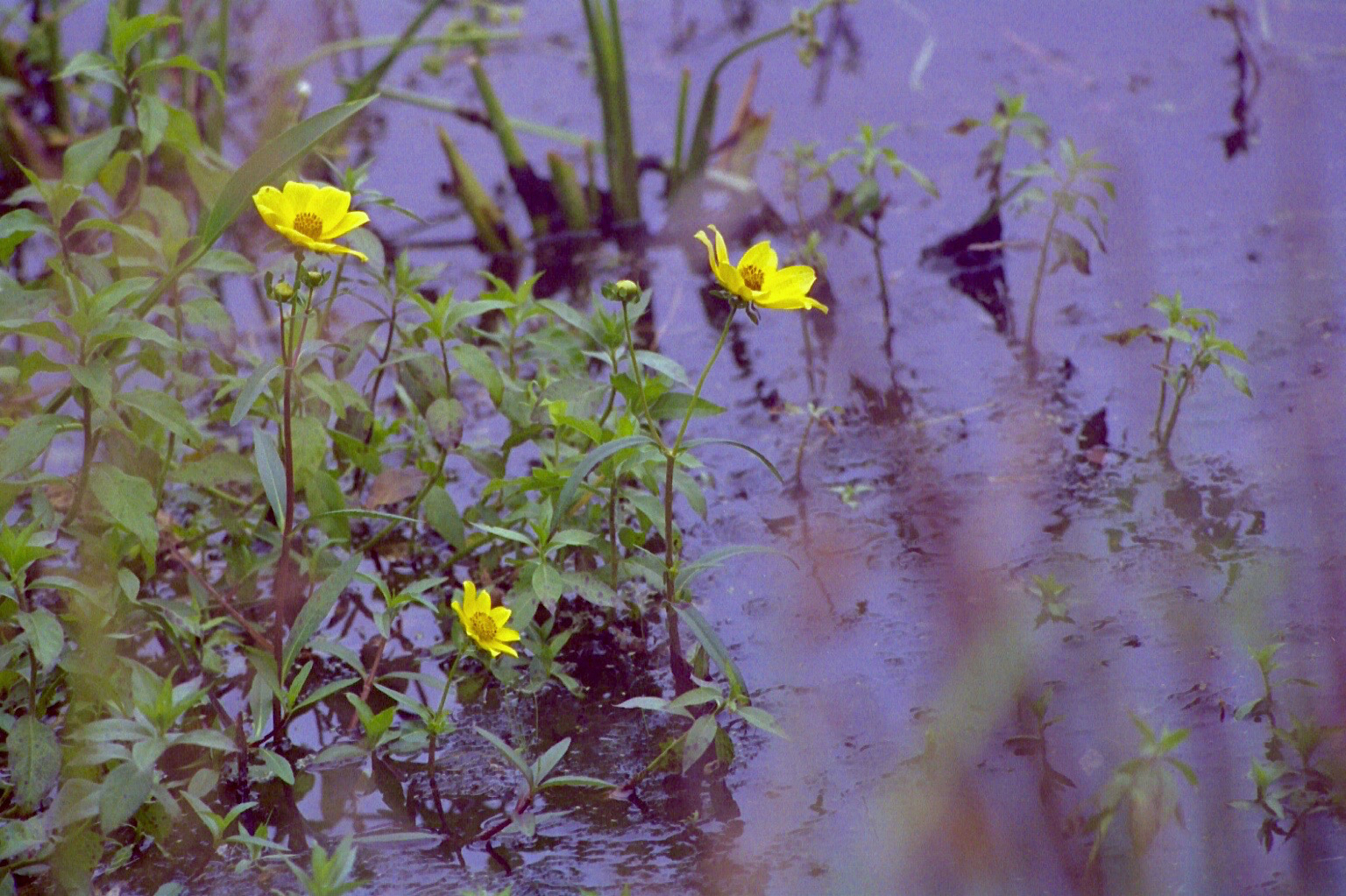
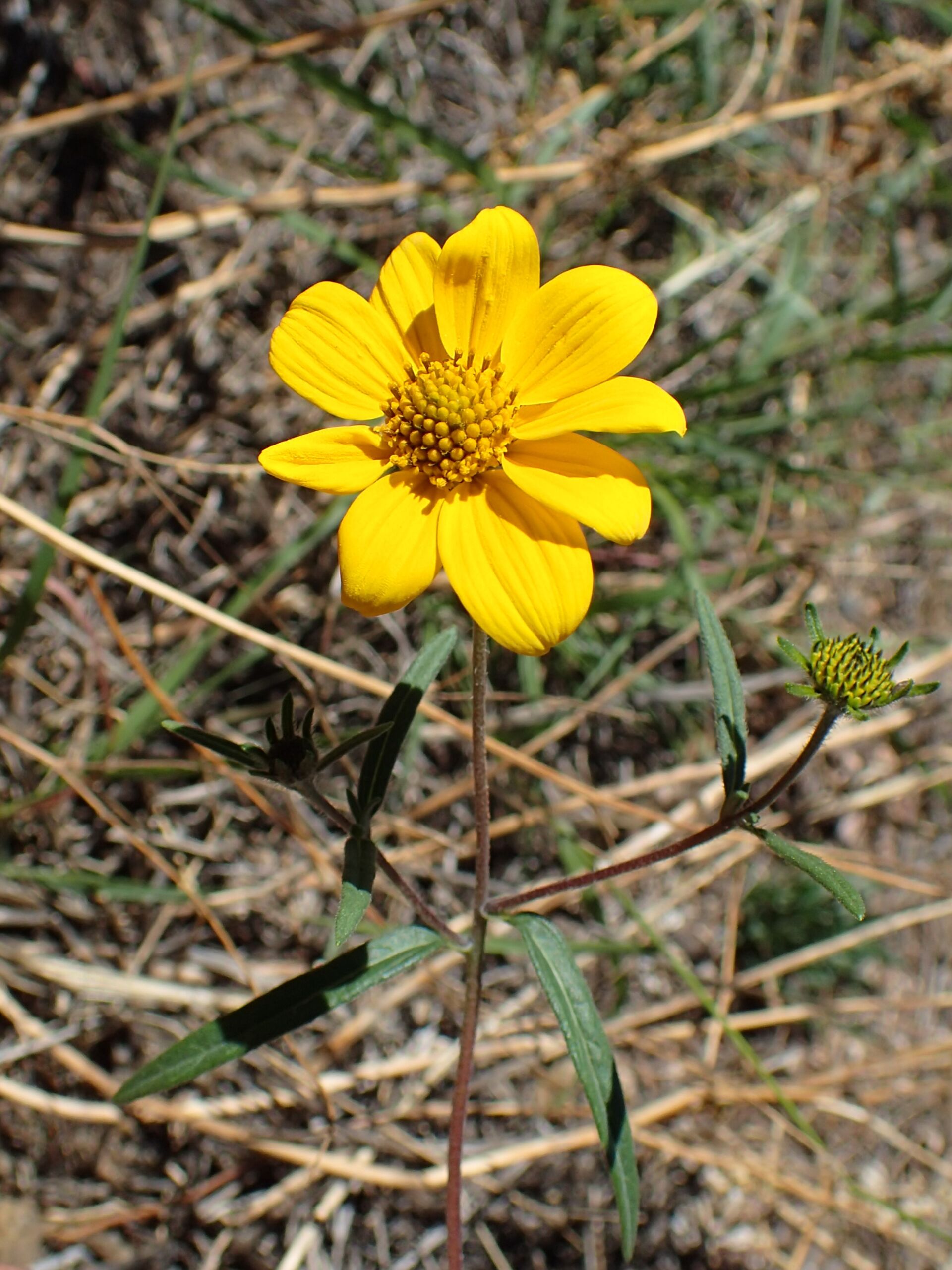
Burr marigold is the beggarticks that decided to be beautiful. It is a member of the aster family (Asteraceae), in the genus Bidens — the genus of the beggarticks, Spanish needles, and burr marigolds, roughly 200 to 230 species worldwide, all of them united by one trait: fruits with barbs. Burr marigold, also called smooth beggarticks, smooth bur-marigold, or larger bur-marigold, is an annual or short-lived perennial herb of wetlands, and it grows the way wetland plants grow when they are happy: tall, lush, and in crowds. Stems are erect, sometimes reddish to purple, and can reach 1 to 3 feet in an ordinary season and up to about 6 feet in a rich, wet site, occasionally forming floating mats that stretch out from a shoreline. It grows en masse in wetlands and along river and marsh edges, so a burr marigold patch is rarely one plant politely minding its own business; it is a stand, gold in flower, at the water’s edge.
The leaves are the field mark that separates burr marigold from its beggarticks cousins at a glance: opposite, sessile — sitting directly on the stem with no stalk — narrow and lance-shaped, 5 to 15 centimetres long, with finely toothed edges and pointed tips, and usually smooth, which is where the “smooth” in smooth beggarticks comes from. Compare that with shepherd’s needle, whose leaves are divided into leaflets, or Spanish needles, whose leaves are compound, and the smooth, simple, lance-shaped leaf is the giveaway. The flowers are the reason gardeners notice it at all: bright yellow heads, each with a center of yellow to brownish disk florets and a fringe of usually 7 or 8 yellow ray florets, each ray up to about 3 centimetres long, like a small cosmos or a golden daisy with a dark heart. They bloom from summer into fall — June through October in North Carolina references, July through November in Louisiana references — and they bloom until frost, which makes burr marigold one of the last bright flowers at the pond edge in a season when most wetland plants have already gone to seed.
The fruit is the plant’s namesake and its dispersal system, and it is worth a paragraph because it explains the whole genus. Each flower head ripens into dry achenes — single-seeded fruits — each tipped with sharp barbs that adhere to fur and clothing, helping the plant spread by hitchhiking. Walk a burr marigold patch in seed, and you will carry its next generation home on your trousers; a dog, a deer, or a duck does the same job more elegantly. That is why the genus is called beggarticks, burr marigolds, stickseeds, and Spanish needles all at once: different species, same barbed strategy, different common names for the same annoyance. Burr marigold is native to South America, Mexico, and the southern and eastern United States, and it grows in wetlands including estuaries and riverbanks, pond edges, marshes, and wet ditches — anywhere the soil stays wet and the sun reaches the water’s edge.
The butterfly context is specific, and this guide claims exactly it. The Dainty Sulphur guide lists, in its Host plants section, burr marigold (Bidens laevis) among the wider documented caterpillar hosts of that little yellow butterfly, alongside smallfruit beggarticks, beggarticks, sneezeweeds, and others, with Spanish needles and carpetweed as the documented Florida hosts. That is the one butterfly-guide mention this species unit covers: the common form “burr marigold” and the Latin form “Bidens laevis” in the Host plants section of the Dainty Sulphur guide. Nothing more is claimed for it, and no other butterfly guide is wired to it on that basis.
One plain-text disambiguation, because the Bidens genus is a tangle of similar yellow daisies and the names overlap on purpose. Burr marigold (Bidens laevis) is not shepherd’s needle (Bidens pilosa), the hairy beggarticks with divided leaves and usually disk-only or short-rayed heads, which has its own guide. Burr marigold is not Spanish needles (Bidens alba), the white-rayed beggarticks with compound leaves, which has its own profile. Burr marigold is not nodding beggarticks (Bidens cernua), its closest lookalike, whose heads nod with age and whose leaves and habit differ in detail — the two are sometimes confused, and this guide names that confusion plainly rather than pretending it away. And burr marigold is not garden marigold, which is a Tagetes, a different genus entirely, despite the shared common name; “marigold” in this guide means a Bidens, and the Latin name is the proof. Buy and identify by Latin name and by the smooth, simple, lance-shaped leaf, and the beggarticks sort themselves out.
How to grow
Growing burr marigold starts with the only decision that matters: do you have wet ground? If the answer is yes — a pond edge, a marsh margin, a rain garden that actually holds water, a ditch that stays damp, a low spot that floods in summer storms — then burr marigold is almost embarrassingly easy. Give it full sun to part shade and wet, even saturated soil, and sow seed in spring after the last frost, or let an existing patch reseed itself, which it will do with enthusiasm. Plants reach 1 to 3 feet in an ordinary site and taller in rich, wet ground, so space them 2 to 3 feet apart at a pond edge and let them fill in as a stand; a single plant in a dry perennial bed, by contrast, will sulk, thin out, and die early, because this is a wetland plant and dry soil is not a challenge it is built to meet.
Once established, burr marigold largely grows itself, and the management is about containment rather than encouragement. It self-seeds freely — those barbed achenes again — so a pond-edge patch will expand along the shoreline and into any damp ground nearby, and deadheading before seed set is the way to keep it where you put it. Cut back spent stems in late fall or winter, and leave some seed heads standing through fall for the birds, which pick at beggarticks seeds, and for the pollinators, which work the late flowers until frost. It is an annual or short-lived perennial, so a patch persists by reseeding rather than by a single plant living for years; that is a feature at a pond edge, where the waterline moves and plants come and go, and a nuisance in a formal bed, where volunteers in the path are weeds by definition. Grow it where volunteers are welcome, and it will reward you with gold flowers in the season when the garden most needs them.
Florida note, stated plainly and happily, because this is one of the few guides in this project where the Florida answer is an unqualified yes. Burr marigold is a Florida native wildflower that grows en masse in wetlands and along river and marsh edges throughout Florida, and it is a genuine Florida butterfly plant: the Dainty Sulphur guide’s wider host list includes it, and Florida wildflower references list it as a fall flower of wet places statewide. For a Florida gardener with a pond, a rain garden, a wet ditch, or a low spot that holds water, burr marigold is a native to plant on purpose — showy, pollinator-visited, caterpillar-hosting, and adapted to exactly the wet ground that defeats most garden plants. Plant it at the water’s edge, not in the dry bed, give it sun, and let it seed along the shoreline; it will do the rest, and the sulphurs will find it.
Water & feeding
Water: lots, and then more. Burr marigold is a wetland plant, and its water requirement is not “moist soil” in the polite garden sense but wet soil, saturated soil, pond-edge soil, soil that floods. In a pond margin or marsh edge with normal rainfall it waters itself; in a rain garden, it wants the wettest zone, the bottom of the basin, not the dry berm. A burr marigold in dry soil is a plant out of place, and no amount of mulching will make a dry bed into a marsh. If a patch is thinning and yellowing in summer, the usual cause is not disease but drought — the waterline dropped, the ditch dried, the rain garden drained too fast — and the fix is wetter ground, not fertilizer.
Feeding: none needed, and in a wetland it is mostly beside the point. Burr marigold grows in rich, silty, wet soils that arrive with their own nutrients on every flood, and a plant that builds 6-foot stems out of pond mud is not a plant waiting for a fertilizer program. A compost topdressing at planting will not hurt it, but heavy feeding mostly produces taller, floppier stems that fall into the water, which defeats the purpose of planting it upright at the edge. The soil science here is the wetland story: saturated soil is low in oxygen, rich in organic matter, and full of microbes that cycle nutrients slowly in the absence of air, and wetland plants like burr marigold are built for exactly that chemistry — roots that tolerate saturation, stems that rise above it, and seeds that float, stick, and wait for the next wet edge. Plant it in the wet, and let the water do the feeding.
Common problems
- Dry soil. The most common problem, and it is a siting problem, not a disease. Burr marigold in a dry bed thins, yellows, and dies early. Move it to the wettest ground you have, or pick a different daisy for the dry bed.
- Self-seeding enthusiasm. Barbed achenes stick to fur, clothing, and waterfowl, and a pond-edge patch will colonize every damp spot nearby. Deadhead before seed set to contain it, and expect volunteers along the shoreline regardless.
- Mistaken identity. Nodding beggarticks (Bidens cernua) is the closest lookalike, and shepherd’s needle and Spanish needles share the genus and the barbed seeds. Check the smooth, simple, lance-shaped, sessile leaves and the showy 7-or-8-rayed heads before naming a plant.
- Floppy stems in rich, wet ground. Plants that reach 6 feet in a rich site can lean and fall, especially after a storm. Space for air, cut back in winter, and accept that a wetland stand is a loose, naturalistic planting, not a formal hedge.
- Not a dry-garden marigold. Gardeners who buy “marigold” expecting a Tagetes for a sunny, dry bed will be disappointed twice: this is a Bidens, and it wants wet feet. Check the Latin name before you buy, and plant the right marigold for the site.
Harvest
Burr marigold’s harvest is flowers, seed, and butterflies — in that order, and the last one is the reason this guide exists. The flower harvest is a pond edge in gold from summer until frost, with pollinators working the heads late in the season when few other flowers are still going; cut a few stems for a vase if you like, but leave most standing, because the flowers are feeding something. The seed harvest, if you want it, is late fall: strip the barbed achenes from the heads — with gloves, because the barbs are the point — and sow them at another wet edge in spring, or let the patch reseed itself, which it will do whether you harvest or not. And the butterfly harvest is a dainty sulphur caterpillar on a wetland daisy, followed by a small yellow butterfly over the pond edge in fall, which is a pretty good return on a plant that asked for nothing but wet ground and sun. Leave a wet edge unsprayed, let the burr marigold stand, and the sulphurs will do the rest.
Browse all plant & pest guides
Saving seeds
Burr marigold is the rare plant whose seed-saving instructions begin with a warning about your laundry. Bidens laevis is a wetland native of the aster family, showy yellow daisies on a plant that wants its feet wet, and its seeds carry two barb-like bristles that stick to clothing, hair, and animal fur with the determination of a toddler in a gift shop. That is the dispersal strategy, and it works beautifully. Collect accordingly: gloves on, bag open, and do not wear your favorite fleece to the pond edge unless you enjoy picking seeds out of it for a week.
Let the flower heads ripen fully on the plant until the seeds are dark and the heads start to dry down, then snip whole heads into a paper bag and dry them indoors for a week or two. Rub the heads to free the seeds, winnow out the chaff, and store them cool, dark, and dry — in Florida, that means airtight with a desiccant packet, because humidity is the enemy of every stored seed in this state. Sow in spring after the last frost, barely covered — about 6 mm deep — into soil that stays moist to wet, and keep it wet until seedlings are up, usually within a week or two. Fall sowing works too: scattered where you want them, the seeds take their winter chill in place and wake up in spring.
One taxonomic footnote, because gardeners argue about it: some sources call burr marigold an annual and some a perennial. For your purposes it hardly matters — it behaves as a self-sowing annual in most gardens, and a patch left to itself will reseed generously. That generosity is the real management question. A mass of burr marigold at a pond edge is gorgeous and beloved by bees and butterflies; the same plant in a small formal bed is a weed with excellent PR. Give it a wet corner with room to be enthusiastic, deadhead what you do not want spreading, and never compost seed heads you are trying to contain. Saved seed from your own plants will come true, since you are saving the species, not a named cultivar — though if several Bidens species grow cheek by jowl at your water’s edge, expect the occasional mongrel, and enjoy it.
Species
Burr marigold is a single species, Bidens laevis, and this guide covers that species only, in plain text. It is not shepherd’s needle (Bidens pilosa), not Spanish needles (Bidens alba), not nodding beggarticks (Bidens cernua), and not smallfruit beggarticks (Bidens mitis), all of which are named in the Dainty Sulphur guide’s wider host list or in this genus’s neighborhood and are named here so a reader can tell them apart, not claimed by this guide. The genus guide for Bidens covers the bare genus form only and does not cover this species, and this species guide does not replace it. No named garden varieties of burr marigold were verified for this guide; it is grown, where it is grown deliberately at all, as the straight wild species at a wet edge, and most plants a gardener meets will be wild or naturalized volunteers rather than catalog selections. Grow the species at a pond edge, identify it by its smooth lance-shaped leaves and showy yellow heads, and let the genus guide cover the genus.