
🌿 Buttercup
What it looks like
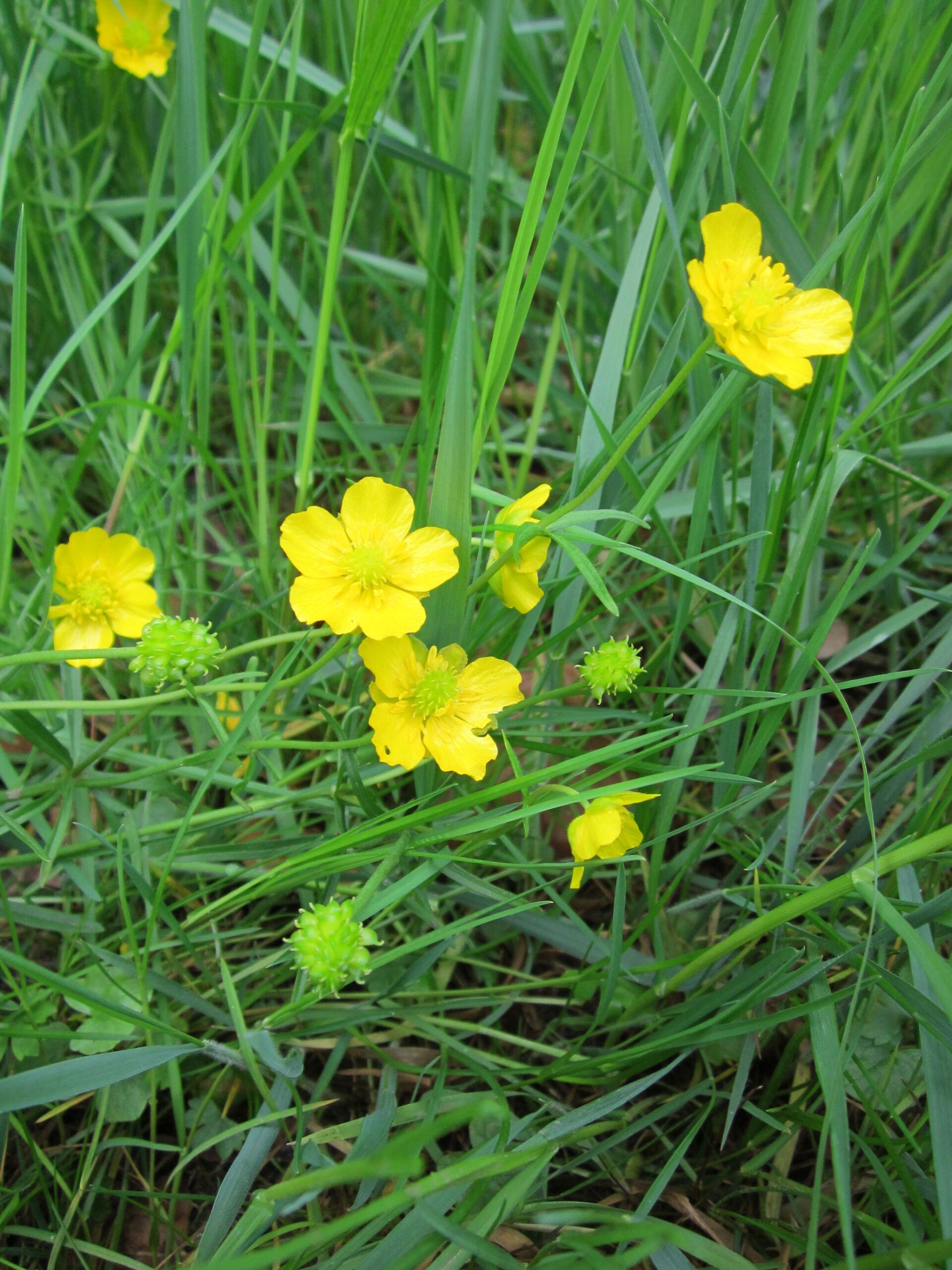
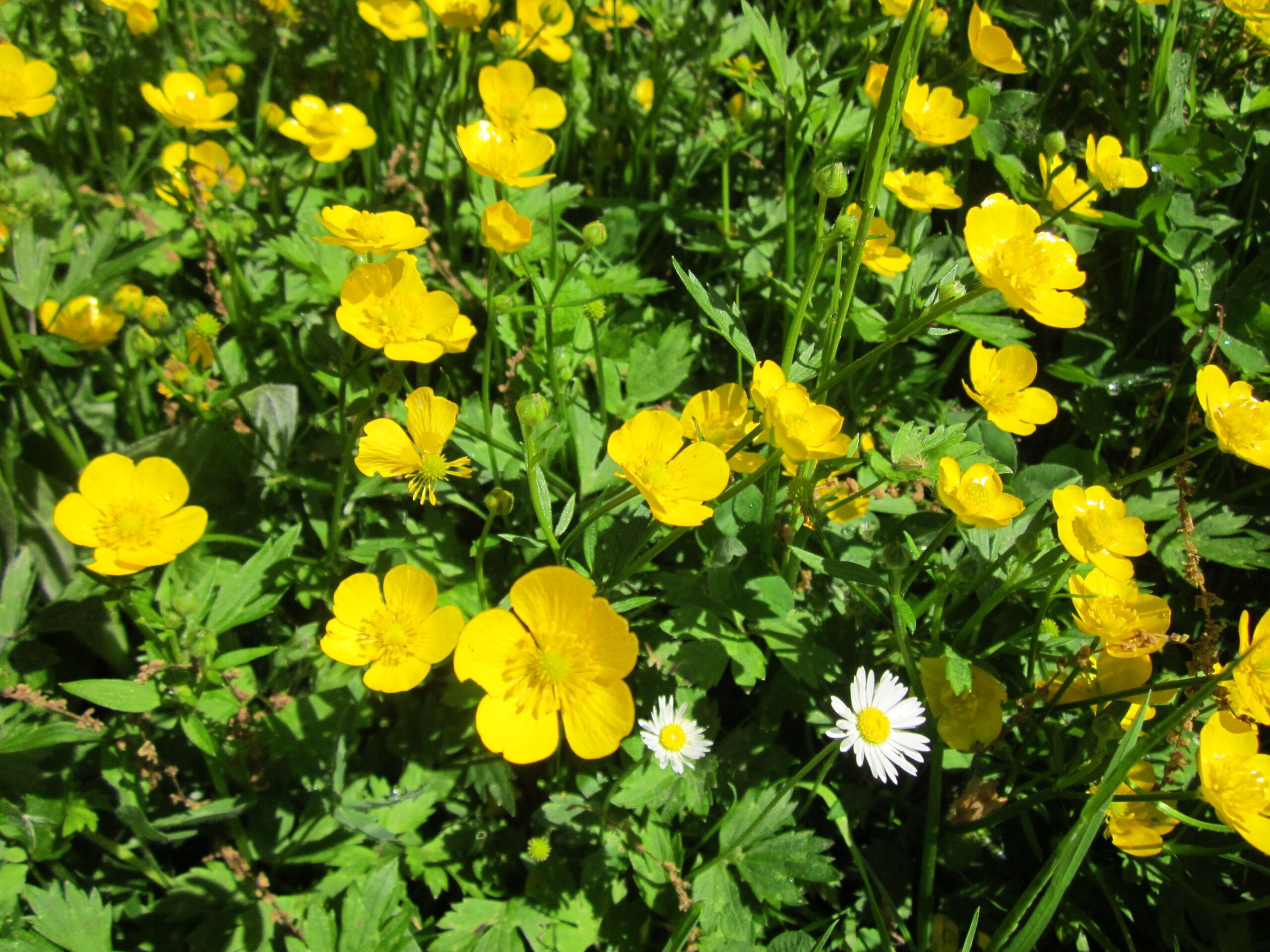
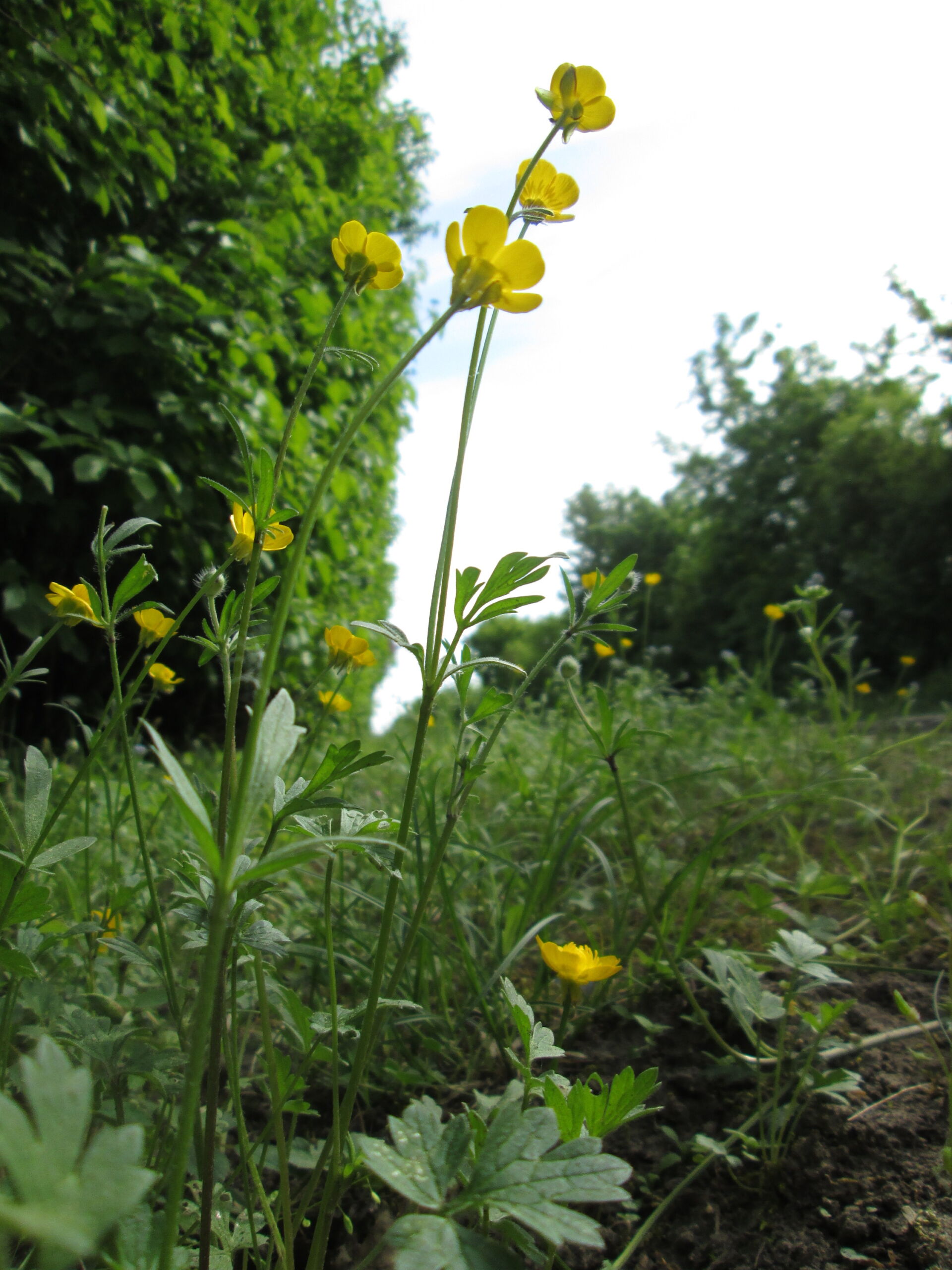
Buttercup is the common name for the wild members of Ranunculus, and Ranunculus is one of the great genera of the temperate world. It is a genus of about 1,700 species in the buttercup family (Ranunculaceae), distributed worldwide but concentrated in temperate and montane regions, and its members are known as buttercups, spearworts, and water crowfoots. The genus name is Late Latin for “little frog,” a diminutive of rana, frog — because the wild species grow in the damp meadows, marshes, and stream edges where frogs live, and the name has stuck for centuries. The familiar buttercup of a northern meadow is not a florist flower: it is a low to medium herb with deeply divided leaves, slender stems, and a flower that looks varnished, as if someone had dipped five yellow petals in butter and set them in the grass.
The flower deserves a close look, because it is the whole identification in miniature. A wild buttercup flower has five sepals, usually green and held against or reflexed away from the petals, five glossy yellow petals — sometimes more in double garden forms, but five in the wild species — numerous stamens arranged in a spiral, and numerous separate carpels in the middle that ripen into a cluster of small, dry, one-seeded fruits called achenes. Each petal carries a tiny nectar pit at its base, a little honey gland that is the flower’s bargain with pollinators: nectar in exchange for a visit, and the glossy petal surface, which reflects light in a way that makes the flower glow, is part of the advertisement. The leaves are just as distinctive: deeply lobed or divided, often palmate, hairy in many species, and arranged alternately up the stem, with the basal leaves usually larger and longer-stalked than the stem leaves. Meadow buttercup (Ranunculus acris) is the tall one, 30 to 100 cm, upright, with ungrooved stems and flowers about 25 mm across. Creeping buttercup (Ranunculus repens) is the spreader, sending out prostrate stolons that root at the nodes and make new plantlets, which is why it colonizes lawns so thoroughly. Bulbous buttercup (Ranunculus bulbosus) is the drier-ground one, with a swollen, bulb-like stem base and sepals that bend sharply back against the flower stalk.
And then there is the chemistry, which is the reason this guide carries a warning and the reason grazing animals leave buttercups alone. All wild Ranunculus species are poisonous when eaten fresh. Their sap contains ranunculin, a glycoside that breaks down into protoanemonin, an acrid, blistering compound that causes mouth blistering, salivation, colic, and intestinal distress in livestock and people who eat the fresh plant. Cattle, famously, will graze a pasture down to the ground and leave the buttercups standing — which is why a heavily grazed pasture can turn yellow with them: the poison is the plant’s defense, and the grazers have learned it. The poison is lost when the plant is dried with hay, which is why buttercup in hay is not the hazard that fresh buttercup is, and the old folk belief that buttercups give butter its yellow colour is exactly backwards: the plants are poisonous to cows, not the source of their butter’s gold. Do not eat any wild buttercup, do not brew it, and do not let children pick and chew it — the acrid taste usually stops them, but the warning belongs in the guide anyway.
The butterfly context for this genus guide is the Arctic Skipper, and it is a nectar context, not a host context, which matters and must not be blurred. The Arctic Skipper guide says, in its Nectar plants section, that adults visit small flowers of damp northern meadows and woodland edges, including buttercups, cinquefoils, and other low northern blooms. The caterpillars do not eat buttercups at all — they eat grasses, living in folded grass-blade shelters — and the adults stop at buttercups only for nectar, as generalists at small, open flowers they can reach with a short proboscis. That is exactly why a genus guide is the honest unit here: the butterfly’s nectar list is written at the level of “buttercups,” plural, with no Latin and no single species named, in a northern meadow where several wild Ranunculus species could be blooming at once. A guide that covered only one buttercup species would pretend the skipper had made a choice it did not make.
One plain-text disambiguation, because the site already has a Ranunculus guide and this genus guide must not swallow it. This guide claims wild Ranunculus species as a genus only. Persian buttercup (Ranunculus asiaticus) has its own plant-guides growing guide, with its Tecolote variety guides, and it is a different plant — a cultivated, corm-grown, cool-season cut flower, bred for layered, peony-like blooms, not a wild meadow buttercup. The live Ranunculus guide is that Persian buttercup guide, species-level, and it does not cover the wild buttercups of this guide, just as this guide does not cover the Persian buttercup. The two coexist the way a genus map and a single-species portrait coexist: this guide is the map of the wild buttercups, and the Persian buttercup guide is the portrait of one cultivated cousin. Buy and plant by Latin name, species by species, and never let the shared genus name blur a wild weed into a florist flower or the other way round.
How to grow
Growing wild buttercups starts with a question most garden guides never ask, because the answer is usually “don’t.” The wild buttercups are, in most gardens, weeds — cheerful, glossy, nectar-rich weeds, but weeds — and the growing advice for the genus is therefore mostly advice about recognition, tolerance, and removal, not about planting. The genus pattern, where a species is welcome, is: a damp meadow, a woodland edge, a stream bank, or a wildflower lawn in a cool, temperate climate, in full sun to part shade, in moist, humus-rich soil that stays damp but not waterlogged. Meadow buttercup wants the middle ground of a meadow — drainage intermediate between the drier soil its bulbous cousin prefers and the wetter ground its creeping cousin colonizes. Creeping buttercup wants damp ground and will take a lawn, a ditch, a shaded forest floor, or a marsh edge. Bulbous buttercup wants drier, less disturbed, more species-rich grassland. Give any of them sun, moisture, and a cool season, and they largely grow themselves; the challenge is never getting them to grow, it is deciding whether you want them to.
Where wild buttercups do belong in a garden plan, they belong as meadow plants, not as bedding plants. A northern wildflower meadow, sown with a mix of grasses and forbs and mown once or twice a year, is the honest home for meadow buttercup: it flowers in spring and early summer, feeds pollinators and nectaring skippers, sets its achenes, and comes back next year without any help. A damp woodland edge suits the smaller, shade-tolerant species. A lawn does not suit any of them, in the sense that a lawn owner will regret them — creeping buttercup in particular spreads by rooting stolons, resists removal with a deeply anchored, filamentous root ball, and is considered invasive in many parts of the world, having been sold as an ornamental and then escaped. Do not plant creeping buttercup deliberately, anywhere, ever: if it arrives on its own, that is a decision to manage, not a planting to celebrate. Meadow and bulbous buttercups are less aggressive, but they are still self-seeding meadow plants, not border plants, and a gardener who sows them into a perennial bed should expect them to behave like the meadow plants they are.
Propagation follows the meadow pattern: seed, sown in autumn or early spring onto bare, moist ground, or division of the creeping species — which, given its stolons, is less propagation than damage control. The achenes ripen in clusters in summer and seed freely, which is why a buttercup patch expands without any help from you and why a gardener who tolerates one patch should expect a larger patch next year. There is no cutting regime worth describing for wild buttercups, and no pruning program either: mow a meadow patch after seed set if you want to keep it tidy, leave the foliage through the season for the pollinators, and pull creeping buttercup by the root ball, stolons and all, if it invades a bed you care about. A buttercup that looks unimpressive in its first year is often just building roots; a buttercup in its third year in a damp meadow is a yellow drift with skippers in it.
Florida note, stated plainly, because the genus-level answer would be a lie. In Florida, wild buttercups are not a garden story. They are northern, cool-temperate meadow plants, and the Florida gardener’s Ranunculus is the Persian buttercup of the site’s existing guide — a North Florida cool-season trial, grown from corms for a spring cut-flower show, not a statewide promise and not a wild meadow plant. The Arctic Skipper that nectars on buttercups is itself a northern butterfly, not a Florida garden butterfly, and its buttercup nectar list describes damp northern meadows, not Florida beds. Do not plant wild buttercups in Florida expecting a meadow: the heat ends the performance, the species are not native to the state’s meadows in the way the guide’s northern context implies, and the Persian buttercup guide is the honest Florida Ranunculus story. Enjoy wild buttercups where they belong — in northern meadows, on a walk, with a skipper overhead — and leave Florida Ranunculus to the corms.
Water & feeding
Water, for wild buttercups, is a question of dampness without drowning. The genus pattern is moist soil, consistently damp through the growing season, with the species sorting themselves along a moisture gradient: creeping buttercup in the wettest ground, meadow buttercup in the middle, bulbous buttercup in the driest of the three. In a genuinely damp meadow with normal rainfall, wild buttercups largely water themselves once established, while in a dry spell they thin out and stop flowering, which is the plant telling you the site is wrong, not asking for a hose. A mulch of leaf litter helps a woodland-edge species hold moisture, but a thick, wet mulch piled against the stems in a sunny bed is the wrong kind of kindness. If you are watering a wild buttercup daily to keep it alive, you are growing a northern meadow plant in the wrong climate.
Feeding: modest to none, across the wild genus. Buttercups colonize meadows, pastures, and disturbed ground that is rarely rich, and a spring topdressing of compost is the ceiling of what they need, not a program to follow. Heavy fertilizer mostly produces soft, leggy growth that flops and invites aphids, which is the opposite of the wiry, sun-hardened meadow plant that feeds pollinators well. The soil science here is the meadow story: moist, humus-rich soil, regularly replenished with leaf litter and grass roots, cycles nutrients fast in cool, damp conditions, and a buttercup’s roots live in that community, storing energy and sending up new growth through it. A buttercup in a lean, damp meadow is doing soil-building work of a humble kind — covering ground, feeding pollinators, and holding a place in the sward — and it does that work best when you leave its soil alone.
Common problems
- Planting creeping buttercup on purpose. The most consequential problem in the genus. Creeping buttercup spreads by rooting stolons, resists removal, and is invasive in many regions. Enjoy it in a meadow; never sow it into a garden.
- Poison. All wild Ranunculus species are poisonous when eaten fresh, through ranunculin breaking down to protoanemonin. Do not eat, brew, or let children chew any wild buttercup, and do not feed fresh buttercup to livestock.
- Mistaking the Persian buttercup for a wild one. Ranunculus asiaticus is a cultivated corm flower with its own guide, not a wild meadow buttercup. Buy by Latin name.
- Drying out. Wild buttercups want moist soil. Thinning growth and a meadow patch that stops flowering usually mean the ground dried. Site it damp, or pick a different meadow plant.
- Wrong species, wrong region. A northern meadow buttercup in a hot climate, or a wet-ground creeper in a dry bed, is a plant out of place. Check the species’ habitat before encouraging it.
- Lawn invasion. Creeping buttercup in a lawn spreads by stolons and is hard to remove by mowing alone. Pull by the root ball, stolons and all, or accept the yellow drift and mow around it.
- Aphids on soft growth. Overfed, overwatered buttercups grow soft and draw aphids. The cure is less water and less fertilizer, not a spray program.
Harvest
Wild buttercup’s harvest is seed, nectar-watching, and the satisfaction of naming a meadow flower correctly — in that order, and with one firm boundary that this guide states twice because it matters. This is not a food or medicine plant, and no part of this guide recommends eating, brewing, or otherwise ingesting it: ranunculin and protoanemonin are acrid and blistering, and the traditional medicinal uses of buttercup relatives are history, not a reason to experiment. If you want seed, let the achene clusters ripen in summer, collect them when they dry, and sow them in a northern meadow where the species is native and welcome — never into a lawn, a bed, or a region where the species is invasive.
The simplest harvest is a late-spring morning in a damp northern meadow, with buttercups glowing in the grass and a small skipper working the low flowers for nectar, and the knowledge that the flower under it is both a weed and a nectar bar, and that its poison is what keeps it standing in a grazed pasture. Leave most plants standing through the season for the pollinators, mow after seed set if you want to keep the meadow tidy, and pull the creepers out of the beds. That is the crop, and it arrives without a single spray — because spraying it would kill the very pollinators the meadow is for, and because a genus that has colonized temperate meadows on every continent except Antarctica does not need your intervention, only your willingness to leave it where it belongs and call it by its right name.
Browse all plant & pest guides
Saving seeds
Read this first, because it is the most important paragraph in the section: all buttercups are poisonous. Every Ranunculus contains ranunculin, which breaks down when leaves are crushed or chewed into protoanemonin, an acrid oil that blisters skin and mouths and is toxic to people, pets, and livestock. Wear gloves when you collect seed heads, do not chew stems to test anything, and keep buttercup material away from grazing animals and curious children. With that said, buttercups are easy to propagate — the genus wants to live, sometimes more than you want it to.
Seed is the straightforward route. After flowering, the heads dry into little clusters of achenes that split open when ripe; snip them into a paper bag before they scatter. Buttercup seed benefits from a cold spell — a week or two of chilling around 5–7 °C, in the refrigerator in a bag of moist mix, is the commonly given nudge — then sow barely covered, since these are light germinators that sulk under a deep blanket of soil. Keep them moist at around 15 °C and expect sprouts in roughly ten to twenty days, though wild-collected seed germinates unevenly and some of it will simply take its time. Pot seedlings on once they have a few true leaves, and expect flowers the following year rather than this one.
Division is the faster and truer route, and for the spreaders it is barely even work: creeping buttercup (R. repens) roots at its stolon nodes wherever it touches soil, so a rooted node lifted in spring or fall is a new plant, and bulbous buttercup (R. bulbosus) and its tuberous cousins divide by their offsets. Use division for any plant whose exact character you want to keep, since seed-grown buttercups vary. And the caution that writes itself: creeping buttercup is considered an invasive weed in many parts of the world, including damp lawns and pastures where it runs. Save seed and divide with intent, in beds where you control it, and deadhead before seed set anywhere you do not want a buttercup colony. In Florida, dry stored seed thoroughly and keep it airtight with desiccant — humidity is the enemy — and sow fresh seed for the best germination.
Species
Ranunculus is a genus of about 1,700 species, and no guide can list them all, so this section names the species a North American gardener or butterfly-watcher is most likely to meet, in plain text, and states plainly which one has its own guide. Meadow buttercup (Ranunculus acris) is the tall, upright buttercup of meadows and pastures. Creeping buttercup (Ranunculus repens) is the stoloniferous spreader of lawns and damp ground, invasive in many regions, never to be planted deliberately. Bulbous buttercup (Ranunculus bulbosus) is the drier-ground buttercup with a swollen stem base and reflexed sepals. Smallflower buttercup (Ranunculus abortivus) is the small-flowered North American woodland and meadow species. Sagebrush buttercup (Ranunculus glaberrimus) is the early western species of sagebrush country. Water crowfoot (Ranunculus aquatilis) is the aquatic member of the genus, with floating and submerged leaves. Persian buttercup (Ranunculus asiaticus) is the cultivated corm flower, with its own plant-guides growing guide, and it is listed here for completeness, not claimed by this genus guide. Grow the wild species only where they are native and welcome, by Latin name, and let the genus guide be the map, not a substitute for any species on it.