
🔘 Buttonbush
What it looks like
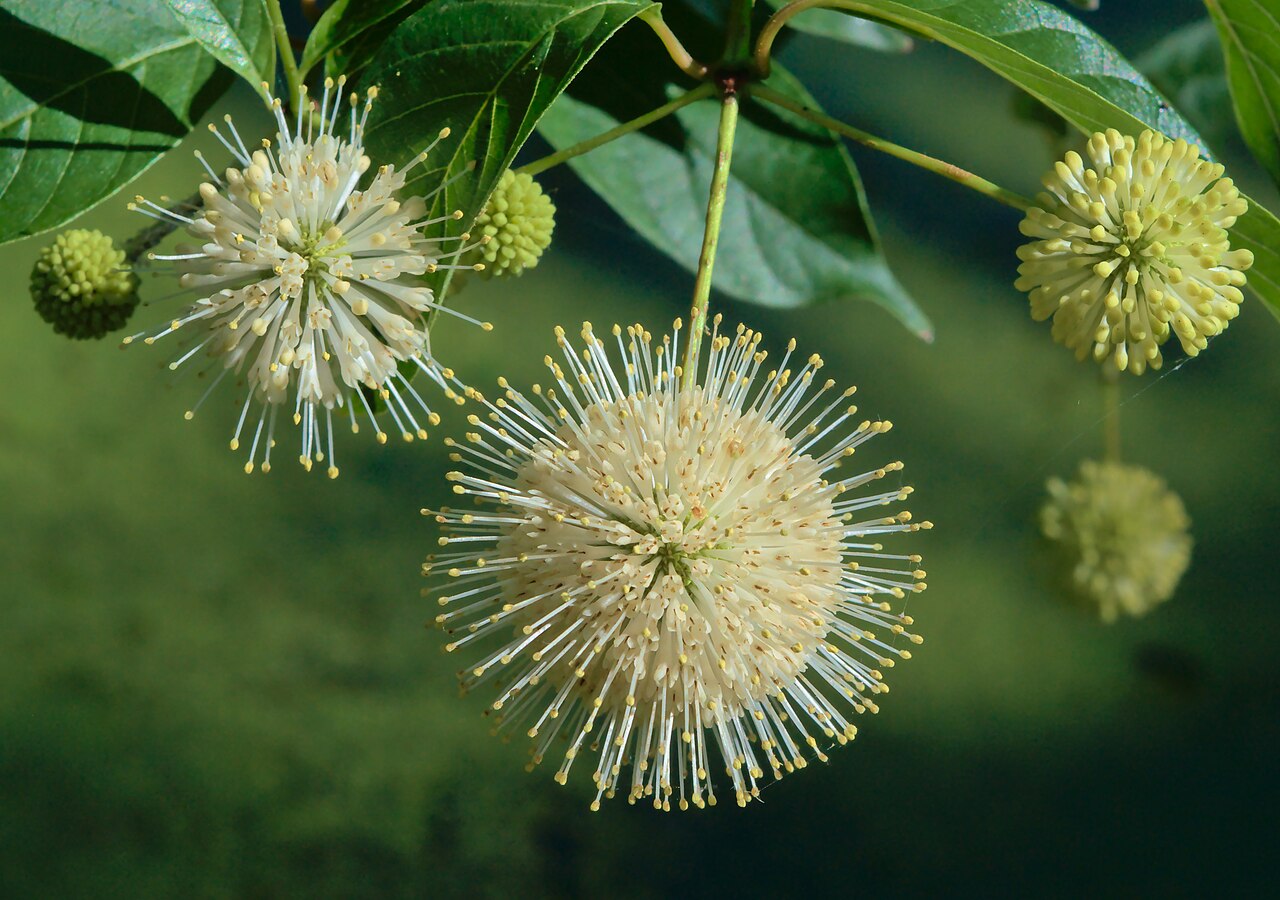
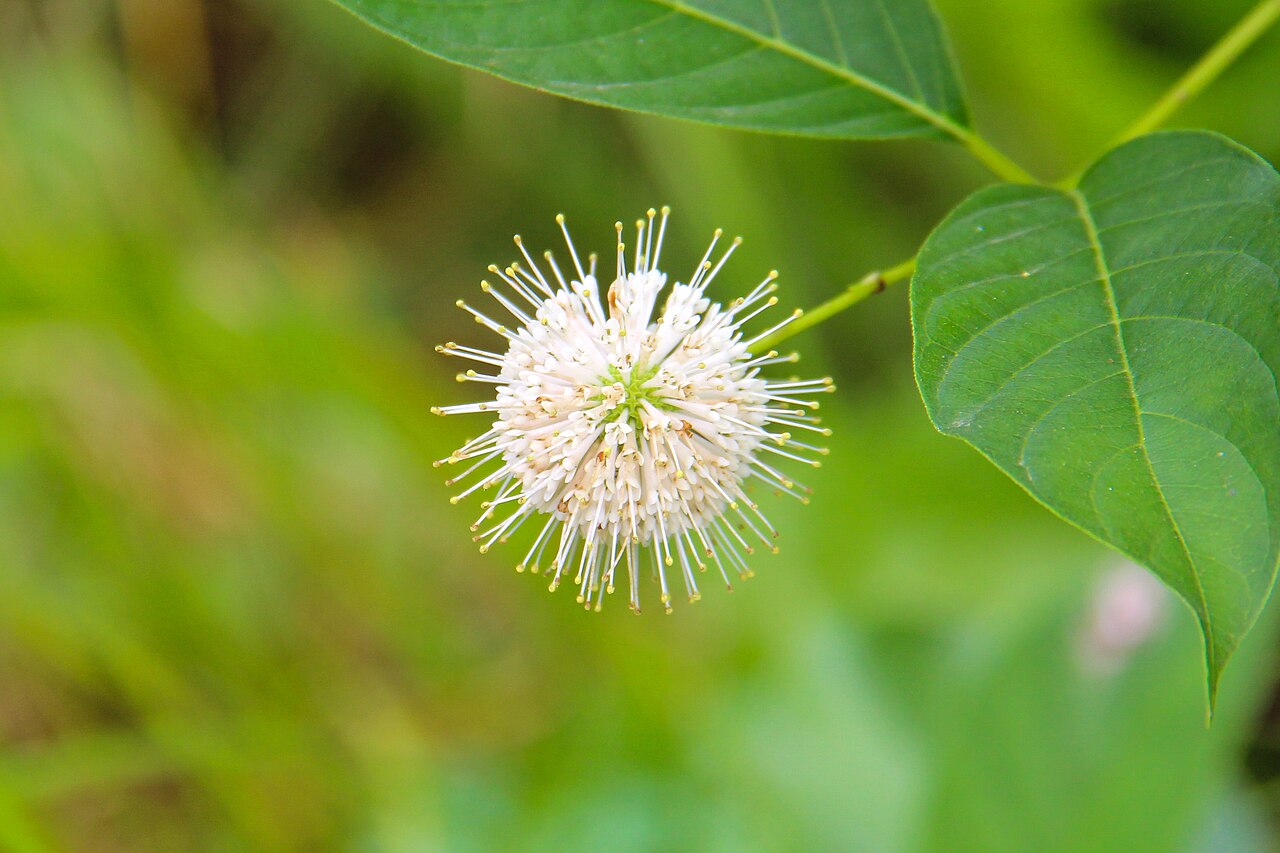
Buttonbush is a large, multi-stemmed, deciduous shrub, 6 to 12 feet tall and wide, in the coffee family, and its flowers are unlike anything else in the garden: dense, spherical heads about an inch across, made of tiny tubular white flowers with long styles sticking out like pins, so each head looks like a pincushion. The flowers are sweetly fragrant, they bloom in summer when few other shrubs are flowering, and they are followed by hard, spherical clusters of nutlets that look like old-fashioned dress buttons, which is where the common name comes from, and that persist into winter.
The leaves are opposite or whorled, ovate and glossy green, and the bark and branching give winter structure even after the leaves fall. In the wild, buttonbush grows in swamps, pond edges, stream banks, and wet ditches across eastern North America, from Nova Scotia to Mexico, and it is a Florida native of wet places statewide. It is the shrub for the spot where other shrubs fail: the pond edge, the rain garden, the bioswale, and the low corner that stays wet after rain.
Why this variety
Choose buttonbush when the site is wet and you want summer flowers, wildlife, and structure in one plant. Most flowering shrubs want well-drained soil and sulk in a rain garden; buttonbush wants the rain garden. Its summer pincushion blooms draw bees, butterflies, hummingbirds, and even ants to their nectar, its woody seed balls feed ducks and other waterfowl through fall and winter, and its dense branching shelters nesting songbirds. A pond edge planted with buttonbush is not just pretty; it is a restaurant, a nursery, and a shelter in one shrub.
It is also a plant with a history worth knowing and a warning worth heeding. Early settlers chewed its bitter bark to ease toothaches, but the plant is toxic if eaten, so site it away from livestock and curious pets, and do not try the folk remedy; modern dentistry is a better plan. The named cultivars in this group, Sugar Shack, Fiber Optics, and Magical Moonlight, are compact forms of this species for smaller gardens.
How to grow
Plant year-round in Florida in full sun to part shade, spacing 3 to 5 feet apart, in soil that stays consistently moist. Give it room as a background specimen, 6 to 12 feet tall and wide at maturity, since it will not suit a formal hedge at full size. It can be trained tree-like with pruning, and it responds well to pruning after flowering to shape it. Plant it at a pond edge, in a rain garden, in a bioswale, or in any low, soggy spot, and do not worry about standing water: buttonbush tolerates it, and in fact blooms best with wet feet.
Florida note: buttonbush is a Florida native that belongs in Florida’s wet landscapes, from pond edges to ditches to rain gardens, statewide. Drought causes dieback, especially in South Florida, so in a dry spell water it; in a wet spell, leave it alone. It is one of the few native shrubs where the advice is genuinely to plant it in the water, not near it.
Water & feeding
Keep roots consistently moist; drought is the enemy. Water twice a week through the first growing season, and water in dry spells thereafter, especially in South Florida. Once established in a naturally wet site it needs almost no supplemental water, because the site provides it. Do not fertilize heavily; compost at planting is enough, and rich soil is not what this plant is asking for.
Common problems
Drought dieback: the most common problem, especially in South Florida. Leaves wilt, branch tips die back, and the plant looks stressed. The fix is water, not fertilizer, and a wetter site next time.
Too big for the spot: the species reaches 6 to 12 feet. If the site is small, plant Sugar Shack instead, which stays 3 to 4 feet, rather than shearing the species into submission every year.
Poor flowering in shade or dry soil: buttonbush flowers best in sun with wet feet. Shade or drought both reduce bloom.
Toxicity: leaves are toxic if eaten. Site away from livestock and pets that chew plants, and do not use it as a medicinal plant.
Harvest
There is no food harvest, and the plant’s toxicity means there should not be one. The harvest is the summer bloom, the fall seed balls that feed waterfowl, and the winter structure of the button clusters on bare branches. For propagation, the harvest is cuttings and seed: start from seed sown in moist soil with no pretreatment needed, though seeds can take a season to germinate, or take tip cuttings in spring and hardwood cuttings in winter, which are the faster route.
Saving seeds
Buttonbush seed is refreshingly undramatic, which is a pleasant change after a genus full of dormancy puzzles. The flowers are those unmistakable white pincushion balls, and by fall they have ripened into reddish-brown spheres that crumble in your hand into dozens of tiny nutlets. Collect the balls when they are brown and dry, break them apart over a tray, and you have your seed — no scarification, no chemistry, no ritual. Sources disagree politely about whether a short cold spell helps: many say no pretreatment is needed at all, while nursery references note that 30–60 days of cold, moist chilling can improve uniformity. Either way works; if you want the most even germination, give them a month in the refrigerator in moist sand and call it insurance.
Sow on the surface or barely covered — buttonbush seed wants light and constant moisture, not burial — in pots of moist, humus-rich mix, and keep them damp the way the plant itself likes its feet. Seedlings are slow to become shrubs: expect flowers in the third or fourth year from seed, which is normal, not failure. Give young plants a weed-free start and space them a couple of feet apart at minimum, wider if they are going into a wetland planting where they will spread into the multi-stemmed shrubs they want to be.
Cuttings are the faster route and the one for named varieties, since seedlings of a cultivar may not repeat it. Take softwood cuttings in late spring through midsummer, 10–15 cm long, strip the lower leaves, dip in rooting hormone, and root them in a moist, airy mix under humidity; they root readily, often within a few weeks. Suckers dug in early spring are simpler still, and along a streambank you can even push unrooted cuttings into moist soil as live stakes and let them establish on their own. In Florida this plant is at home — it is a native wetland shrub across the state — so the only storage note is the usual one: dry seed thoroughly and keep it airtight with a desiccant packet if you are holding it to spring, because Florida humidity will not wait politely.
Varieties
Named varieties of buttonbush with their own growing guides: Sugar Shack Buttonbush, a dwarf form staying 3 to 4 feet tall; Fiber Optics Buttonbush, a compact form 5 to 6 feet tall with reddish new growth; and Magical Moonlight Buttonbush, a compact form 5 to 8 feet tall with large creamy-white flower globes. Each has its own guide in this group.