
🌿 California Pipevine
What it looks like
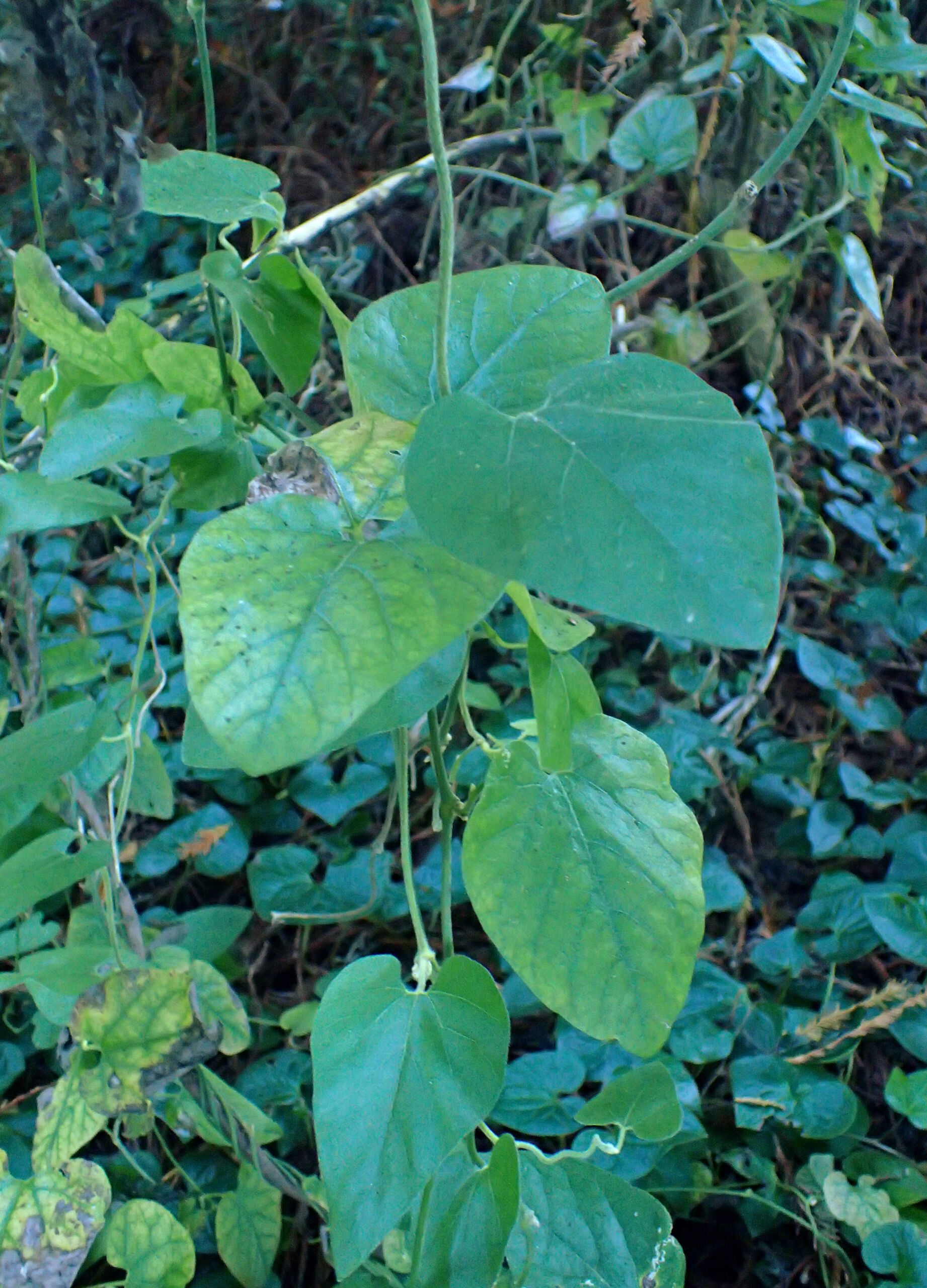
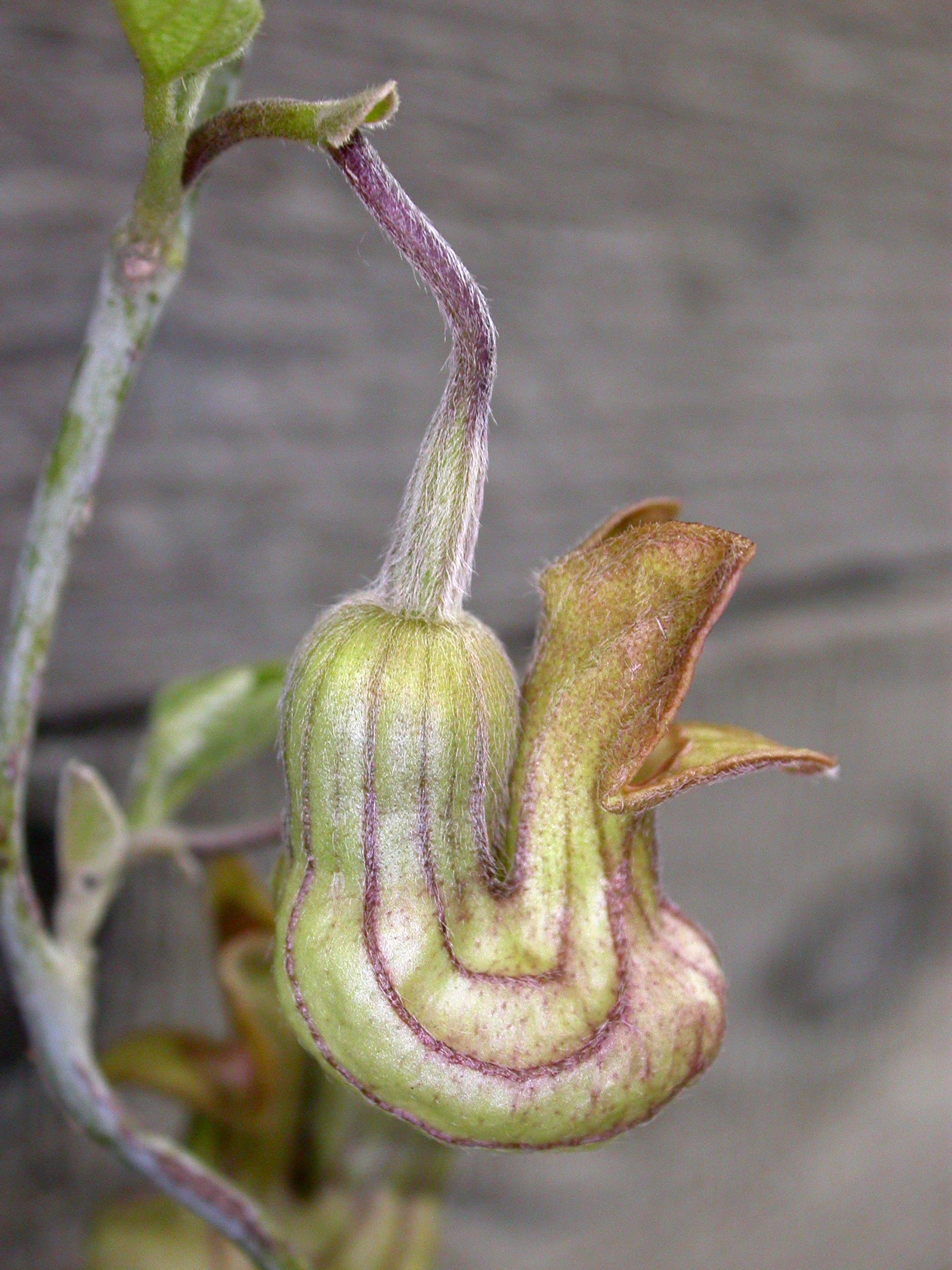
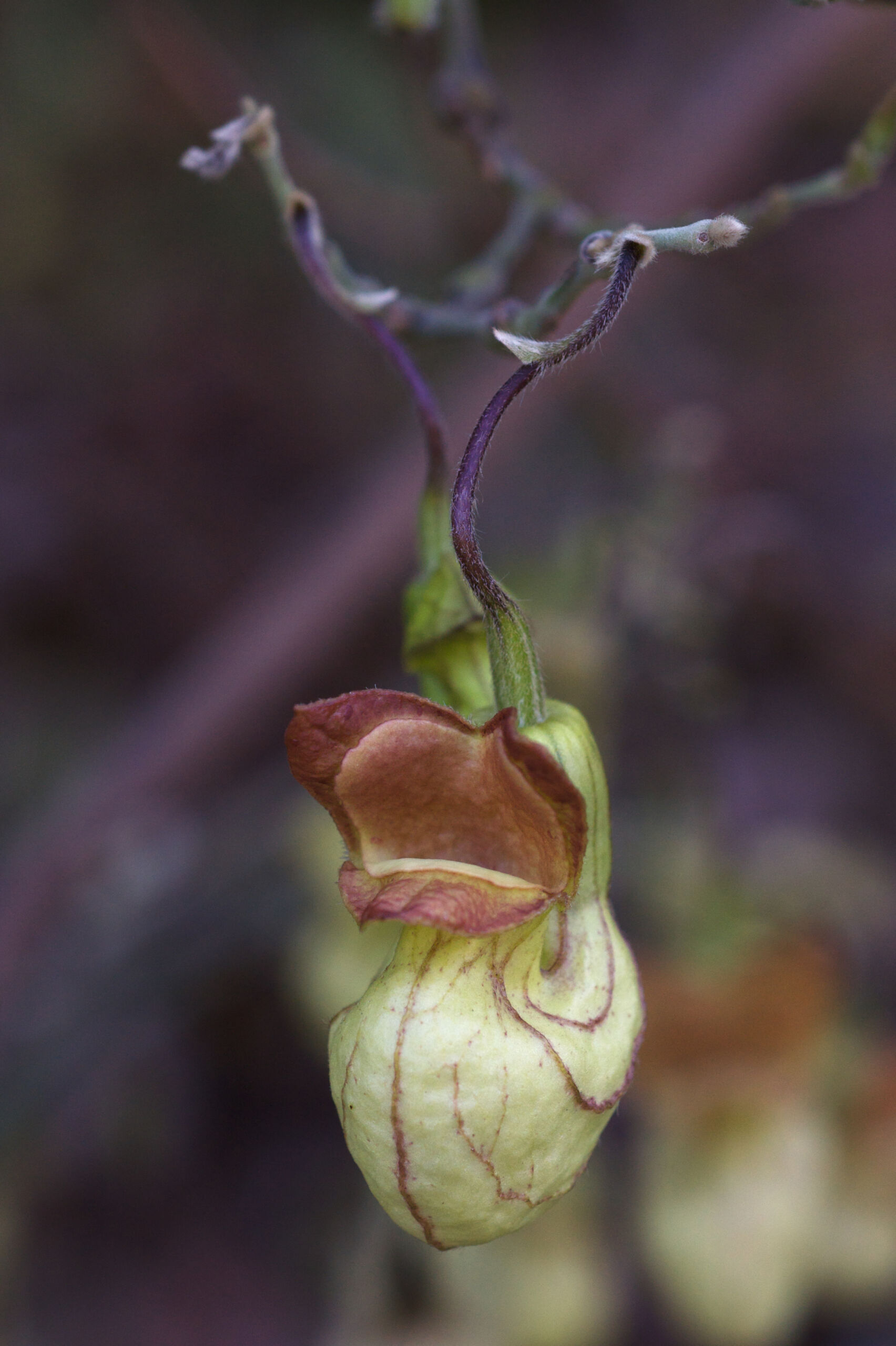
California pipevine is the western pipevine, and it does everything in the wrong order, which is part of its charm. It is Aristolochia californica, a deciduous woody vine in the birthwort family (Aristolochiaceae), endemic to northern California — the Sacramento Valley, the northern Sierra Nevada foothills, the San Francisco Bay Area, the northern Inner Coast Ranges, and the southeastern Klamath Mountains — where it grows along riparian streambanks, in chaparral, in oak woodland, and in mixed evergreen forest, below about 700 metres elevation. It grows from rhizomes, sending out twining stems that usually run about 5 feet but can reach over 20 feet, with a trunk that thickens considerably at maturity, and it can cover an 8-by-10-foot screen or fence with a little training, send climbers 10 to 15 feet out onto nearby shrubs or trees without harming them, or sprawl as a small-scale groundcover. It is a vine that offers you options, and then quietly does what it wants anyway.
The flowers come first, and that is the wrong order worth watching for. California pipevine blooms from January through April, before the leaves appear, producing large, curving, pipe-shaped flowers — green to pale brown, with purple veins and a yellow-to-red lining, U-shaped, musty-smelling — that hang from the bare stems like a row of small, bent pipes left out in the rain. Only after the bloom does the vine send out its new leaves: large, bright green, heart-shaped, silky when young, forming the lush backdrop the flowers never had. The flowers’ musty, unpleasant scent is not a flaw; it is the pollination system at work. Small fungus gnats and other tiny carrion-feeding insects, drawn by the scent and the dull coloring, crawl into the convoluted flowers, wander around disoriented for a time picking up pollen, and eventually escape to visit another flower. The plant is not insectivorous, whatever old stories say — it is a fly trap with manners, a temporary detention that ends in pollination, not a meal. The fruits that follow are winged, green capsules, U-shaped like the flowers that made them.
The butterfly context for this guide is the Pipevine Swallowtail guide, which lists “California pipevine” with the Latin Aristolochia californica in its Host plants section, alongside woolly pipevine, Dutchman’s pipe, and calico flower. That listing understates the vine’s real butterfly claim, and this guide states it plainly: California pipevine is the only larval food source of the endemic California pipevine swallowtail (Battus philenor hirsuta), the northern California subspecies whose red-spotted black caterpillars eat the leaves and then use the flowers as a secure, enclosed place to undergo metamorphosis. The plant contains aristolochic acids, the toxins that make the caterpillars — and then the adults — unpalatable to predators, so the vine is not just food but armor, and the butterfly is not just a visitor but a dependent: no California pipevine, no California pipevine swallowtail. That is the whole conservation story in one vine, and it is why this species guide exists rather than a footnote under the genus.
One plain-text disambiguation, because the pipevine names tangle badly and buying the wrong vine is exactly how a butterfly garden fails. This guide covers California pipevine (Aristolochia californica) only. It is not woolly pipevine (Aristolochia tomentosa), the fuzzy-leaved central and southern vine with its own species guide in this project. It is not Dutchman’s pipe (Aristolochia macrophylla), the bigleaf eastern vine with its own growing guide. It is not Marsh’s pipevine (Aristolochia pentandra), the small south Florida pipevine, and it is emphatically not calico flower (Aristolochia elegans), the tropical vine with its own species guide in this project that acts as a trap for pipevine swallowtail caterpillars. The site’s Aristolochia genus guide names California pipevine among the genus’s members, and this species guide is the fuller version for the western gardener. Some current references place this species in the genus Isotrema, as Isotrema californica, so a gardener chasing the new name and a gardener chasing the old one are hunting the same wiry vine — it just changed its surname along the way, and this guide keeps the long-used Aristolochia californica, matching the butterfly guide. Buy and plant by Latin name, species by species.
How to grow
Growing California pipevine starts with the only decision that matters: a support, a shady edge, and a little patience. This is a vine of streambanks and woodland edges, and in the garden it wants filtered sun or part shade — full sun only in a coastal garden, where the fog and the cool air forgive what inland sun would scorch — with well-drained soil and moderate to regular water. Give one vine one arbor, trellis, fence, or sturdy post, plant it about a foot and a half from the support and angled toward it so the twining stems find their way naturally, and train the stems onto the support as they grow, because this vine climbs by twining and needs something to wrap around. It can also be allowed to spread as a groundcover, which the butterfly people recommend: caterpillars survive better on groundcover plantings, where the flowers sit low and enclosed and the pupae are sheltered, than on a tall, exposed arbor. Either way, give it a full season to establish before you judge it — a pipevine that looks unimpressive in its first year is often just building rhizomes, and a pipevine in its third year on a good fence is a green wall with caterpillars in it.
Propagation follows the temperate-vine pattern: seed, sown after cold stratification, or cuttings, and transplanting while dormant where the vine has fleshy roots, because fleshy roots resent disturbance in full leaf. The vine is root-hardy into the teens Fahrenheit even where its top growth is damaged in the low twenties, so a cold snap that browns the top is not the end of the plant — cut back the damaged growth in late winter and let the rhizomes send up new stems. Prune in winter after dormancy to keep the vine off the roof, the gutters, and the neighbor’s shrubs, and to keep the groundcover plantings from wandering further than you want them to. In a northern California garden it pairs naturally with the plants of its home communities — oaks, riparian shrubs, and woodland wildflowers — and it earns its place not as a specimen to stare at but as a working vine: shade for the fence, flowers for the gnats, leaves for the caterpillars, and a butterfly that exists nowhere else without it.
Florida note, stated by range rather than by wishful thinking, because a Florida gardener meeting this vine in a butterfly guide needs the honest version. California pipevine is a northern California endemic, and it is not a Florida plant and not a Florida butterfly-garden plant. Its butterfly, the California pipevine swallowtail, is a northern California subspecies, and the pipevine swallowtails that fly in Florida eat Florida’s native pipevines, not this one. Florida gardeners should admire it from this guide and plant their own region’s pipevine for their own swallowtails — woolly pipevine in the Panhandle from nursery-grown stock, Marsh’s pipevine in south Florida — rather than importing a California endemic into humid Florida soil where it does not belong. A plant out of its range is a plant out of its luck, and this guide would rather you plant a Florida native well than a California native badly.
Water & feeding
Water, for California pipevine, is a question of moisture without sogginess. The vine wants moderate to regular water with good drainage — streamside moist, woodland-edge moist, rain-garden-margin moist — and in a genuinely moist site with normal rainfall it largely waters itself once established, while in a dry spell it wants deep watering and a root zone that does not dry out, because a thirsty pipevine thins out and stops covering its support, which defeats the purpose of planting it. A thick mulch of wood chips or leaf litter helps enormously, holding moisture and cooling the roots in summer, and it doubles as habitat for the soil life that keeps moist soil healthy rather than sour. The vine is not picky about soil type, so long as it drains well — the drainage matters more than the recipe — and a groundcover planting wants the same moisture as a climbing one, with the added benefit that low, dense growth shades its own root zone.
Feeding: modest, as with most native vines. California pipevine prefers average, humus-rich soil, and a spring topdressing of compost is the right scale of feeding — not a heavy fertilizer program, which mostly produces soft, leggy growth that flops off the trellis. In a woodland or streamside site, the nutrients arriving with leaf litter are often plenty on their own. The plant’s real fertilizer is water and a good root run: give it the moisture it wants and a support it can climb, and it will do the rest, growing steadily, leafing out big, and feeding the caterpillars that show up for the leaves while the flowers hide on bare stems for the gnats. The soil science here is the woodland story: moist, humus-rich soil is a nutrient highway, regularly replenished with leaf litter and organic matter, and the microbes, fungi, and invertebrates of that soil cycle nutrients fast in warm, damp conditions. A pipevine’s roots live in that community, storing energy in rhizomes and sending up new growth through it, and its yearly leaf fall returns a large crop of leaves to the soil as organic matter, feeding the next cycle. Planting a California pipevine on a fence at a moist garden edge is therefore not just decorating a fence — it is installing a butterfly nursery on top of a soil-building machine, and the poison in the leaves is the nursery’s security system.
Common problems
- Wrong pipevine, wrong region. A California endemic in Florida, or a tropical trap vine in swallowtail country, is a plant out of place. Check the species’ native range before you buy, and buy by Latin name: this guide’s plant is Aristolochia californica.
- Too much sun inland. Part shade to filtered sun is the rule; full sun scorches leaves except in coastal gardens. Site it under high shade or on a north or east fence inland.
- Drying out. The vine wants moist soil with good drainage. Thinning growth and a vine that stops covering its support usually mean the soil dried. Mulch deeply, site it moist, and water in dry spells — or pick a different vine.
- Toxicity. All parts contain aristolochic acids and are toxic to people and pets. Plant where children and grazing animals will not sample the plant, and never eat, brew, or use any part medicinally.
- Weak support. A woody vine that reaches 10 to 20 feet or more needs a sturdy arbor, fence, or post. A flimsy trellis will bend or collapse under a mature vine.
- Cold damage to top growth. Tops are damaged in the low twenties Fahrenheit, but the vine is root-hardy into the teens. Cut back damaged growth in late winter and let the rhizomes regrow — do not dig it out after one cold snap.
- Caterpillar defoliation. Pipevine swallowtail caterpillars may devour leaves in season, and that is the point of planting it. A healthy vine recovers quickly, so do not spray the caterpillars — they are the crop.
- Flowers before leaves confusing the gardener. Blooming on bare stems in winter is normal for this species, not a sign of disease. The leaves follow the flowers, every year, in that order.
Harvest
California pipevine’s harvest is seed, cuttings, and butterfly-watching — in that order, and with one firm boundary that this guide states twice because it matters. This is not a food or medicine plant, and no part of this guide recommends eating, brewing, or otherwise ingesting it: aristolochic acids are toxic, and the traditional medicinal uses of pipevine relatives are history, not a reason to experiment. If you want seed, collect the winged capsules when they ripen, and grow from seed with the cold stratification the temperate vine expects, then sow and wait, because these are plants that expect a winter before they wake up. If you want more plants, take cuttings, and transplant while dormant, because vine roots resent disturbance in full leaf.
The simplest harvest, though, is a winter morning beside a California pipevine fence with no agenda at all: bare stems hung with curved, purple-veined pipes, gnats wandering the flowers, and the knowledge that in a few weeks those stems will leaf out into a green wall and the red-spotted caterpillars will arrive for the leaves. Leave most plants standing through the season for the caterpillars, prune in winter after dormancy, and let the vine come back bigger next spring. That is the crop, and it arrives without a single spray — because spraying it would kill the very thing you planted it for, and because a vine that has run its gnat-pollination and caterpillar-defense system for a very long time does not need your intervention, only your willingness to plant the right species and then get out of its way.
Browse all plant & pest guides
Saving seeds
California pipevine is the right pipevine for California, and that sentence is the reason this section exists. It is the native host of the pipevine swallowtail in its home range — the caterpillars eat its leaves, absorb its defensive chemistry, and become butterflies that taste terrible to predators. Plant the wrong pipevine — a tropical species like calico flower — and the caterpillars die. Plant this one, and the system works. That is worth propagating, and worth propagating patiently, because pipevine is not in a hurry about anything.
Seed is possible and famously fussy, so hear the honest version: collectors report poor and erratic germination, and even experienced growers have had batches simply refuse. Collect the long capsules when they dry and split, and sow fresh if you can — pipevine seed does not tolerate long, dry storage. If the seed must wait, give it a cold, moist stratification of about three months at around 4 °C, soak it overnight before sowing, and sow about 1.5 cm deep in a moist mix of sand, peat, and perlite, kept damp. Some seed may sprout in two to six weeks; some will take far longer; some will never come up at all. Sow generously, keep the pots moist, and do not throw a flat away in disgust after a month — pipevine keeps its own calendar.
Cuttings are the more reliable route, and they are gloriously low-tech: take long cuttings, three to four feet if you can get them, coil them up, bury them a few centimetres deep in potting soil in a container, keep them watered, and wait. Rooting is slow — experienced growers report only a handful taking from a batch of twenty — so take many, keep them as moist as a streamside, and be patient. Rhizome division works too, since the vine spreads underground. Two cautions: the plant is toxic to people if ingested — aristolochic acids are linked to kidney damage and cancer — so wear gloves and keep it away from children and pets; and mature seed pods attract yellowjackets, so site the vine where that is a curiosity, not a hazard. Expect a few years before a new vine is big enough to support caterpillars in numbers — pipevine rewards the gardener who plants it and then gets out of the way.
Varieties
No named garden varieties or cultivars of California pipevine were verified for this guide. The plant is grown as the straight species, Aristolochia californica (also placed by some references in Isotrema as Isotrema californica), from nursery stock, seed, or cuttings, and its variation in vine length — usually about 5 feet, sometimes over 20 feet — is a response to support, moisture, and site, not a catalog of cultivars. Its relatives are not varieties either: woolly pipevine (Aristolochia tomentosa) is a different, fuzzy-leaved species; Dutchman’s pipe (Aristolochia macrophylla) is a different, bigleaf eastern species; Marsh’s pipevine (Aristolochia pentandra) is a different, small south Florida species; and calico flower (Aristolochia elegans) is a different, tropical species that traps pipevine swallowtail caterpillars. Plant the species by its Latin name, give it a sturdy support and a shady, moist edge, and let it climb.