
🧡 California Poppy
What it looks like
How to grow
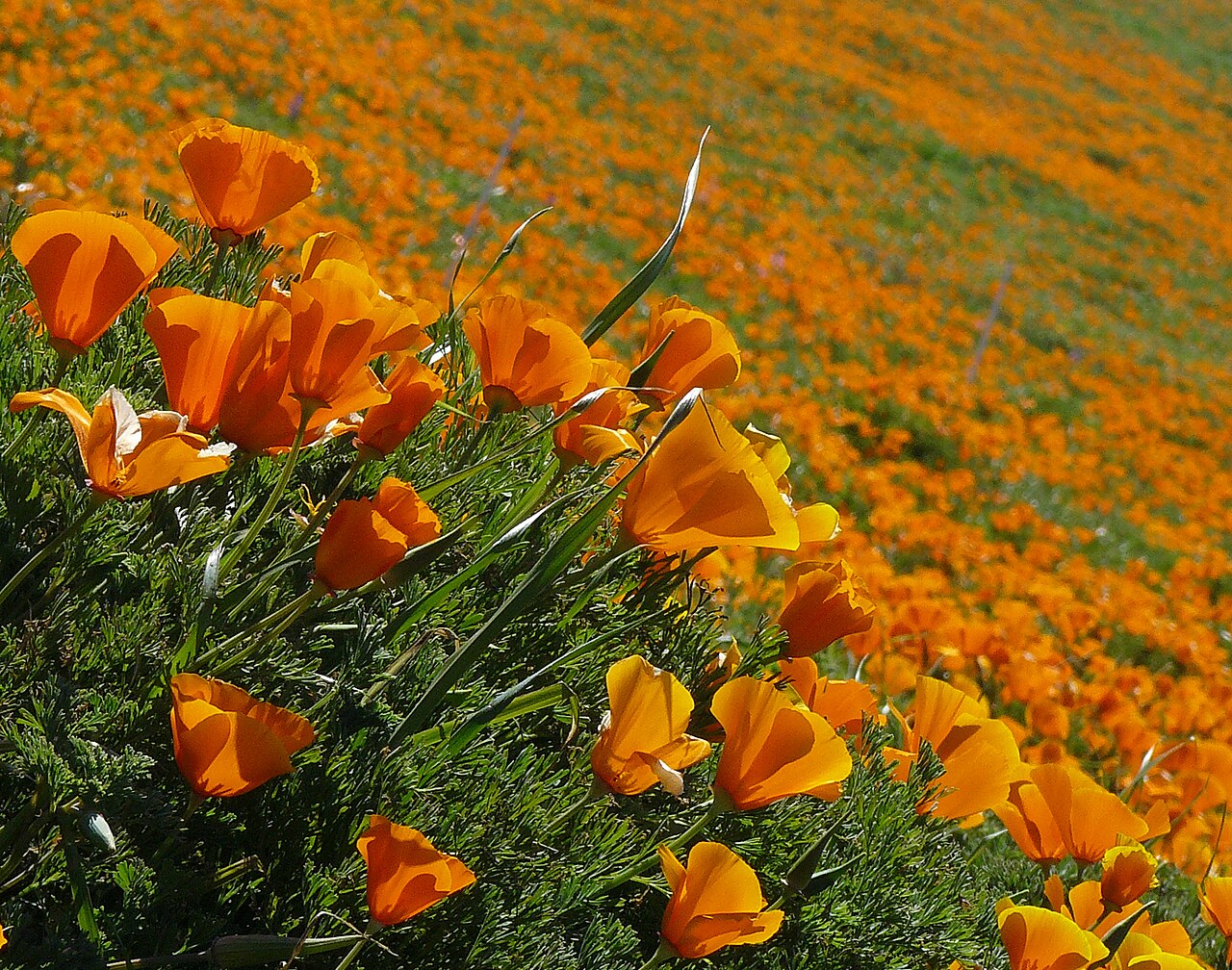
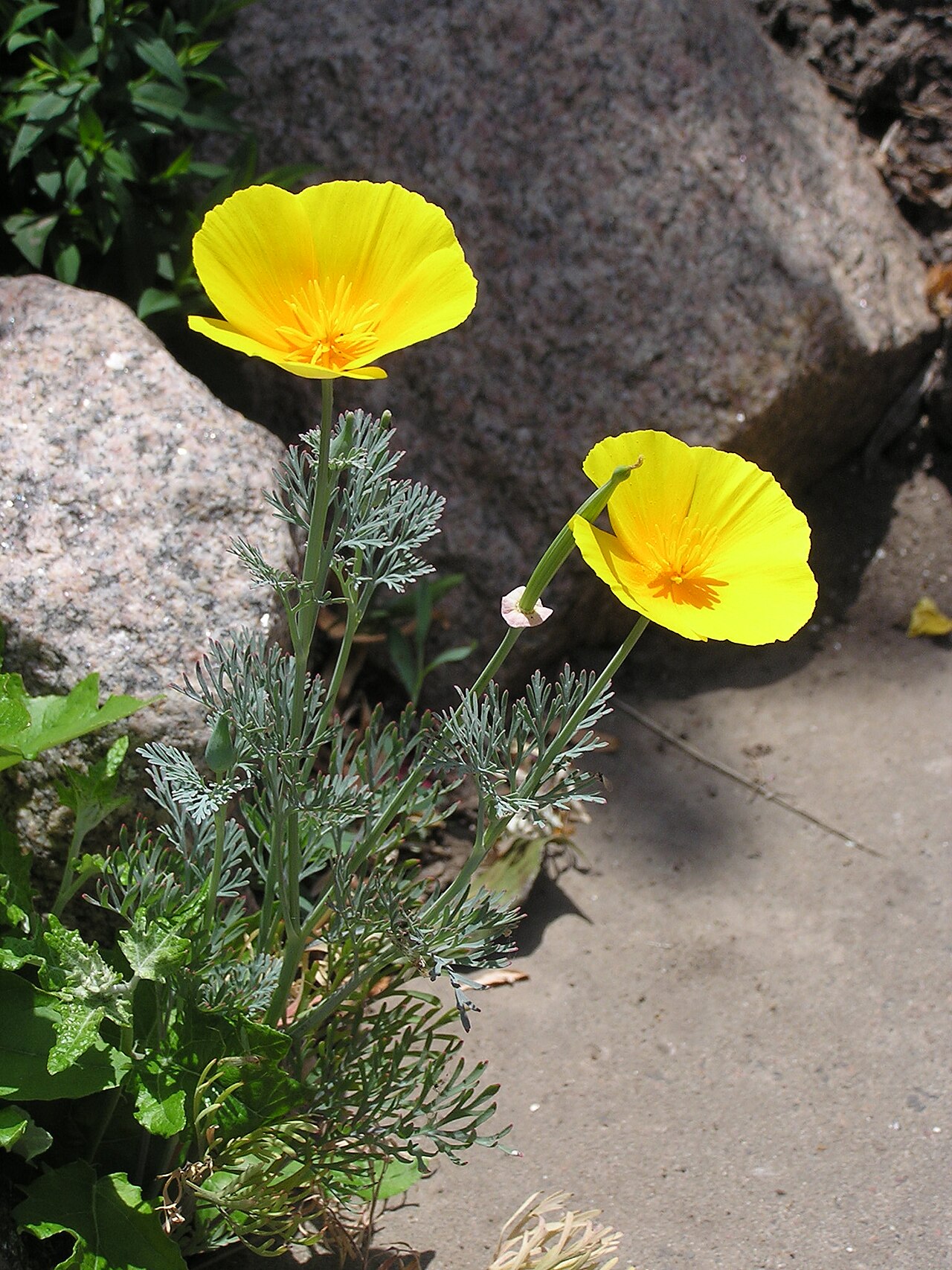
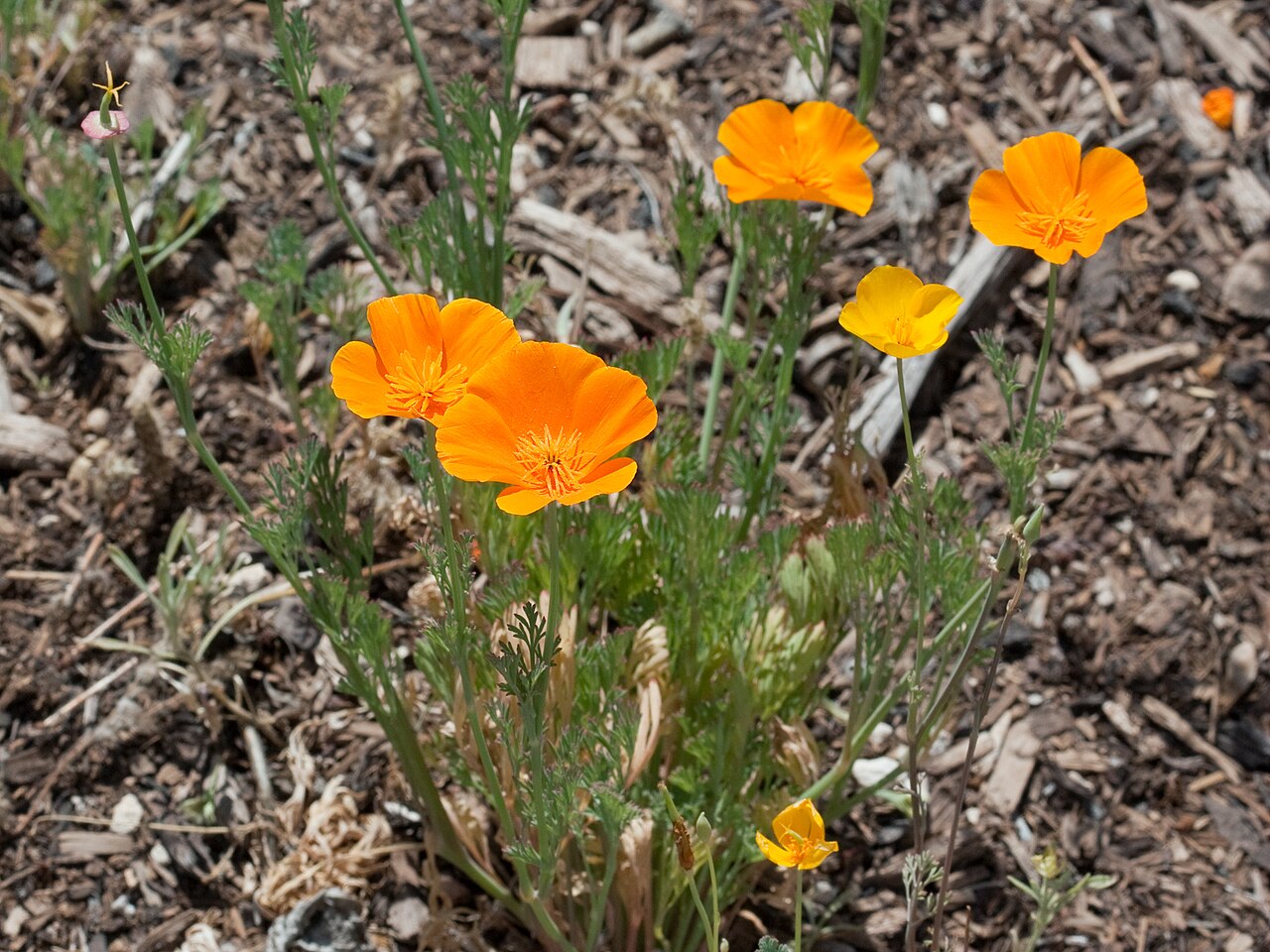
California poppy is a low, feathery perennial, 8-12 inches tall, with blue-green, finely divided leaves and silky, cup-shaped flowers in gold, orange, and cream that open in sun and close at night and on cloudy days. Sow seed directly outdoors in fall or early spring — it has a taproot and resents transplanting — scattering seed on the surface and pressing it in lightly, in full sun and well-drained, even poor, sandy or gravelly soil. It wants sun and drainage above all else, and rich, wet soil makes it leggy and short-lived. In zones 6-10 it is perennial, dying back and returning; everywhere else, grow it as a self-sowing annual, letting some flowers go to seed so next year’s patch plants itself. It is drought-tolerant once established, deer-resistant, and a classic plant for sunny banks, meadows, and hellstrips where nothing else thrives.
Water & feeding
Water until established, then water sparingly — California poppy is a dry-climate plant and overwatering kills it faster than drought does. It needs no fertilizer; compost at planting is more than enough, and rich soil makes floppy plants. Mulch lightly with gravel in wet climates to keep the crown dry, and deadhead for prolonged bloom or let seed ripen for volunteers.
Common problems
- Poor germination from transplanting — direct-sow where it will grow, and do not move seedlings unless they are very small.
- Leggy growth in rich soil or shade — grow in full sun and lean soil, and shear back by a third after the first flush for a second bloom.
- Root rot in wet soil — plant in raised beds or gritty soil, especially where winters are wet.
- Aphids on buds — usually minor; blast with water and the plant outgrows it.
Harvest
Pick flowers as they open for fresh bouquets — they close at night, so cut in the morning and use promptly, since poppy flowers do not last long in a vase. Let some flowers go to seed and collect the small, dark seeds from the slender pods before they split, or simply let the patch self-sow for next year. This guide is about growing only: California poppy has traditional herbal uses, but it is not an opium poppy and it is not a plant to dose from a garden blog — enjoy it as a sunny, self-sowing, pollinator-friendly flower, and leave its medicinal history alone. Shear the patch back after the first flush for a second round of gold.
Browse all plant & pest guides
Saving seeds
California poppy is the easiest seed you will ever save, and the plant does most of the work while actively trying to give itself away. After flowering, each bloom leaves a slender upright capsule, and as it dries it splits explosively along two seams, flinging tiny dark seeds several feet in every direction. That is the dispersal strategy, and it is why a single planting becomes a returning patch: the poppy sows itself. Your job is to intercept a few pods before they fire. Wait until the pods are dry and brown and beginning to rattle, then snip them into a paper bag — they will pop open in the bag within days, which is exactly what you want, contained — and shake out the small dark seeds.
Sow where the plant will flower, because California poppy grows a deep taproot and hates transplanting with a passion: direct-sow only, no pots, no pricking out. Scatter the seed on bare, lightly raked soil and press it in — do not bury it, since the seed needs light to germinate. In mild-winter areas, sow in fall so the seed takes its winter chill naturally and wakes with the rains; in colder places, sow in early spring as soon as the soil can be worked. Deadhead through the season for more flowers, but leave some pods late in the season to mature, or the patch will not return. Well-stored seed lasts for years — one seed house claims up to a decade — kept cool, dark, and dry, and in Florida that means airtight with a desiccant packet.
Saved seed of the species comes true in color only loosely: gold, orange, and cream will all appear, and named varieties will drift, so if you are devoted to one exact shade, buy fresh seed of that variety and let the species plants do their cheerful mongrel thing. Self-sown volunteers are a gift, not a weed, in most gardens — though a poppy that likes your beds will happily colonize the cracks in your paths too, so weed out the ones you do not want while they are small. In Florida, sow in the cool season and enjoy the winter-spring show; this is not a summer plant for the subtropics, and it knows it.
Varieties
Every named variety of California Poppy with its own growing guide:
- Mission Bells California Poppy — The semi-double mix: ruffled, silky cups in gold, orange, rose, and cream, the California poppy dressed for a party.
- Orange King California Poppy — The classic orange, turned up: big, single, blazing-orange cups on a compact plant, the California poppy at its most itself.