
🌿 Callichlamys
What it looks like
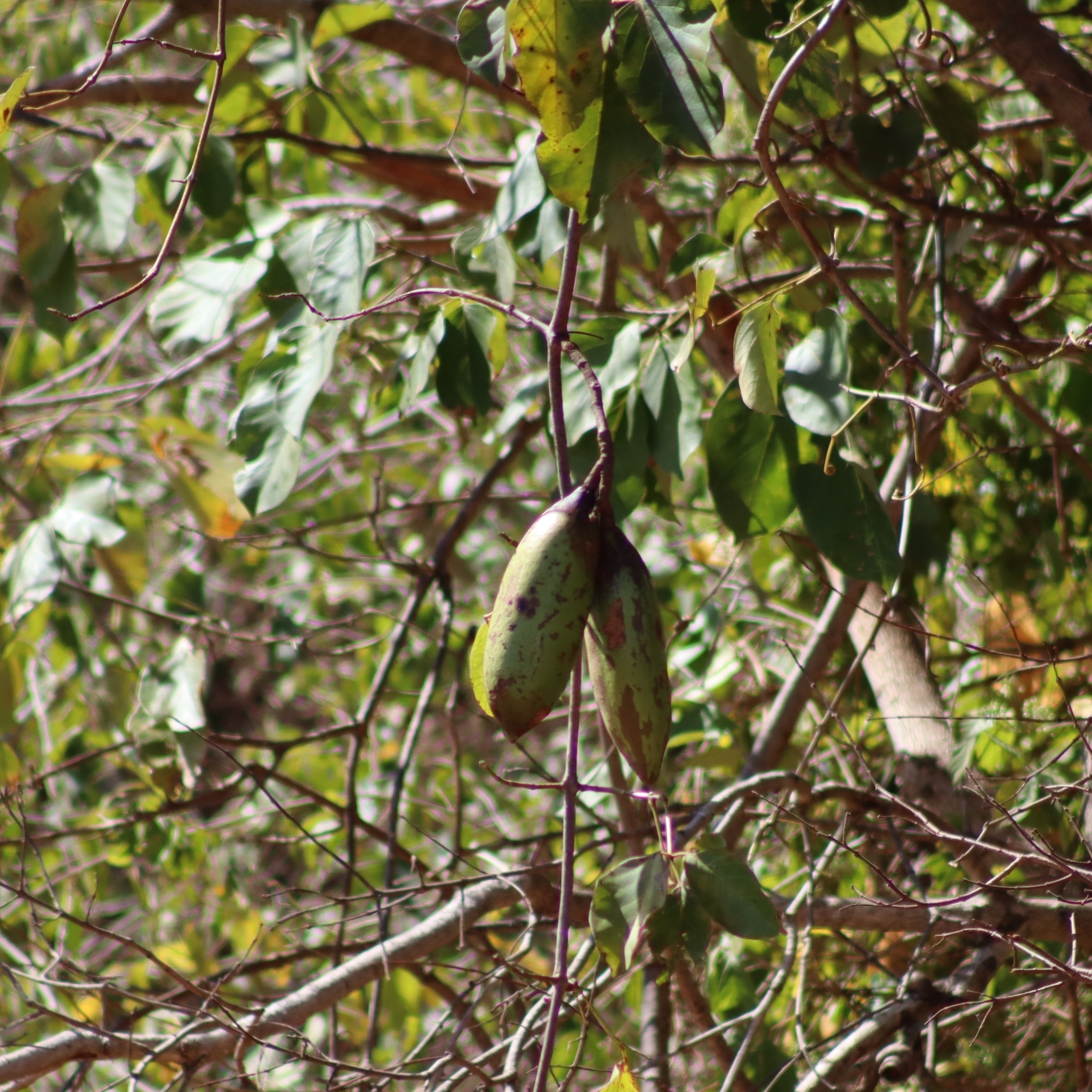
First, the spelling, because this guide’s whole reason for existing comes with a typo attached. The butterfly guides spell this genus “Callichamys”, with one “l”. The accepted botanical spelling is Callichlamys, with two — Callichlamys Miq., in the trumpet-vine family (Bignoniaceae), order Lamiales. The same one-“l” spelling turns up in older butterfly-plant lists, so it is a copying error with a long paper trail, not a different plant. This guide uses the correct spelling throughout, and the file keeps the butterfly-guide slug so the link still lands in the right place. If you go looking for seed, plants, or photographs under the one-“l” spelling, you will mostly find butterfly lists; under the two-“l” spelling, you will find the actual vine.
Callichlamys is a monotypic genus: it holds exactly one species, Callichlamys latifolia (Rich.) K.Schum., originally described as Bignonia latifolia. A genus with one species is a strange thing to write a “genus guide” about, but it is also the honest unit here, because the butterfly guide names the genus and nothing finer, and the genus and the species are, for practical purposes, the same plant wearing two labels. The vine is a liana — a woody climber of tropical forest — native from southern Mexico through Central America into southern tropical America, including Colombia, Guyana, Suriname, French Guiana, Ecuador, Peru, Brazil, and Bolivia. In the Venezuelan Guayana flora it is recorded from evergreen lowland to lower montane forests at 50 to 900 metres, which is a useful picture of the plant’s home: warm, humid, forested, and never temperate.
The botanical description reads like a field key, and it is worth quoting in plain language because it is nearly everything solid that is published about how this plant looks. The liana lacks the interpetiolar glandular fields and false stipules that mark some of its relatives. Its leaves are 3-foliolate — three leaflets to a leaf — and the terminal leaflet is sometimes replaced by a simple tendril, the plant’s climbing hand. The undersides of the leaves carry dendroid, tree-shaped hairs in the axils of the lateral veins, a small detail that separates it from lookalikes under a hand lens. The flowers come in short axillary racemes of 1 to 12 flowers, and they are the show: a thick, spongy, inflated cup-shaped calyx, irregularly lobed, holding a large yellow corolla shaped like a funnel or a bell, its tube contracted above the ovary. The fruit is an oblong-elliptic capsule, compressed, woody, and smooth, with large, thin, winged seeds whose wings are not clearly demarcated from the seed body — seeds built to ride the wind out of a forest canopy.
What this guide does not claim is almost as important as what it does. No widely used common name for Callichlamys latifolia was verified, so this guide does not invent one; it is a plant known by its Latin name, which is fitting for a vine most gardeners will never meet in a nursery. No garden hardiness zone, mature height, or container advice is pinned here, because the published record for this species is a flora description and a distribution map, not a horticultural trial. A liana of lowland tropical forest is not a plant to order on a whim, and this guide refuses to dress one up as a garden recommendation. Its value on this site is as the butterfly’s host, explained properly, and as a warning against trusting a misspelled genus name.
The butterfly context is one guide, named at genus level. The Statira Sulphur guide, in its Host plants section, lists the butterfly’s hosts as coinvine (Dalbergia ecastophyllum) and powder-puff (Calliandra) in the pea family, Cassia and Senna species including candlestick senna (Senna alata), and then, for the rest of its range, Entada, Callichamys, Pithecellobium, and other legumes, plus the woody vine Xylophragma seemannianum in Costa Rica. Note the company it keeps: the guide groups Callichlamys with legumes in that sentence, but Callichlamys is not a legume at all — it is a Bignoniaceae liana, and the sentence is a host list, not a family claim. The guide itself says the host list has been growing as observers look harder, “a sign of a butterfly still being learned, not of a settled list.” This draft covers only the genus-level form in that list. It does not cover coinvine, powder-puff, Senna, Entada, Pithecellobium, or Xylophragma, each of which is its own unit or its own genus.
How to grow
Growing Callichlamys honestly means starting with where it grows wild and admitting how far that is from a garden bed. This is a liana of evergreen lowland to lower montane tropical forest, from southern Mexico to southern tropical America, at 50 to 900 metres in the Venezuelan Guayana records. A plant from that world wants warmth without frost, humidity without a dry season that bites, dappled forest light rather than open sun, and something big and permanent to climb — a tree, in the wild, not a garden trellis. The tendril that sometimes replaces the terminal leaflet is the climbing mechanism, and a liana climbs by reaching for a canopy, so the support question is not “which trellis” but “which tree, and is there a forest around it.” For nearly every reader of this site, the honest growing advice is: do not try to grow this as a garden plant. It is not a Florida native, it is not a temperate plant, and no nursery trade in it was verified. The place to meet Callichlamys is a tropical forest or a botanical collection, not a shopping cart.
If you are one of the few readers gardening inside its native tropical range, the genus pattern still applies rather than a species recipe, because no species-specific cultivation trial was found to quote. Site it where a large woody climber can run without strangling a specimen tree you care about, in moist, humus-rich soil under high canopy light, and expect a forest plant’s pace: establishment first, flowering later, with the short racemes of yellow trumpet flowers appearing in the leaf axils when the vine is mature enough to bother. Never collect it from the wild. A monotypic genus has no spare species to absorb collection pressure, and a liana taken from a forest edge is a hole in a canopy community, not a garden win. Plants, where they exist in cultivation at all, should come from legitimate botanical or nursery propagation, with the Latin name on the label spelled with two l’s.
Florida note, stated flatly: this is not a Florida plant and this guide makes no Florida recommendation for it. The Statira Sulphur’s confirmed Florida host in its guide is candlestick senna, a different plant in a different family; Callichlamys enters the butterfly’s story elsewhere in its range, in Mexico, Central America, and South America. A Florida gardener planting for Statira Sulphurs should plant the Florida hosts, not chase a tropical liana across a spelling error. The value of this guide to a Florida reader is identification and honesty: when you see “Callichamys” in a host list, you now know it means Callichlamys latifolia, a tropical Bignoniaceae vine, and you know not to go looking for it in a Florida nursery under either spelling.
Water & feeding
Water and feeding for a lowland tropical forest liana follow the forest, not a fertilizer schedule. In evergreen forest at 50 to 900 metres, the soil stays moist, the air stays humid, and nutrients arrive the way they arrive in a forest: leaf litter falling, rotting, and cycling back through fungi, microbes, and invertebrates, year after year, without a bagged product in sight. A liana’s roots live in that community, and its yearly leaf fall returns its own foliage to the same cycle. That is the whole feeding program, and it is the reason this section is short: inventing a fertilizer rate or a watering calendar for a species with no published horticultural trial would be fiction dressed as advice. In a botanical collection, the honest translation is moist, humus-rich soil that never dries hard, humidity to match a tropical forest, and compost or leaf litter as the feed — the woodland story, turned up to tropical.
The soil science here is the same story the site tells everywhere else, just without a temperate winter to punctuate it. Moist, humus-rich soil is a nutrient highway, and in warm, damp conditions the microbes, fungi, and invertebrates of that soil cycle nutrients fast. A liana is a big, long-lived investment in that highway: it spends years building woody stems to reach a canopy, and it pays the soil back in leaf litter for decades. That is also why the plant is a poor candidate for a pot on a patio. A forest climber’s root run and its canopy ambition do not fit in a container, and a container’s wet-dry swings are the opposite of the steady moisture its home forest provides.
Common problems
- The misspelled name. The butterfly guides and older butterfly-plant lists spell it “Callichamys”. The accepted genus is Callichlamys. Search, buy, and label by the two-“l” spelling, and treat the one-“l” form as a pointer to this guide, not as a separate plant.
- Mistaking it for a legume. The Statira Sulphur host list groups it with legumes in one sentence, but Callichlamys is Bignoniaceae, the trumpet-vine family. Family matters for identification: a Bignoniaceae liana and a pea-family vine do not share flowers, fruits, or care.
- Trying to grow a tropical forest liana in a temperate garden. Frost, dry air, and a small trellis are three separate ways to kill it. This is a tropical collection plant, not a garden vine, and this guide does not recommend it for Florida or any temperate garden.
- Wild collection. A monotypic genus has one species and no backup. Never take it from the wild; use only legitimately propagated material, and expect that material to be rare or unavailable.
- Assuming the genus guide is a species guide, or vice versa. Here they coincide — one genus, one species — but the wiring matters: only the genus-level form in the Statira Sulphur guide points here. Named species hosts in that guide belong to their own guides.
- Expecting a common name. None was verified. A plant known only by Latin is not a plant with a missing label; it is a plant the nursery trade never adopted, and inventing a cute common name would only create a second misnaming problem.
Harvest
There is no harvest here in the garden sense, and this guide says so rather than padding the section. Callichlamys latifolia is not a food plant, not a medicine plant in any verified modern use, and not a cut-flower crop; its fruit is a woody capsule with large winged seeds, built for wind dispersal from a canopy, not for a kitchen or a vase. The “harvest” a reader can honestly take from this plant is knowledge: the correction of a misspelled genus, the picture of a yellow trumpet flower with a spongy inflated calyx on a forest liana, and the understanding that a butterfly’s host list can wander across families — from pea-family coinvine and senna to a trumpet-vine liana — because a caterpillar’s menu is written by chemistry and opportunity, not by plant taxonomy textbooks. If you ever see it flowering in a botanical collection, stand under it, look for the three-leaflet leaves and the tendril where a leaflet should be, and enjoy a plant that most of the world, including most gardeners, has never heard of — under either spelling.
Browse all plant & pest guides
Saving seeds
Callichlamys plays hard to get, and that is half the charm. This is a tropical forest liana, not a backyard annual that throws seed at anyone who walks past, so start with the honest hierarchy: cuttings are the reliable route, seeds are the adventure route. If your vine sets pods at all, count yourself lucky — and then be patient, because everything about this plant runs on jungle time.
Let the pods mature on the vine until they are dry and beginning to split on their own. Do not pry them open early; immature seed is the most common reason a promising pod produces nothing but disappointment. Once a pod splits, collect promptly, before wind and gravity scatter the contents, and clean away any pod debris. Sow fresh, in spring, when temperatures are reliably warm. Use a free-draining seed-starting mix, press the seeds in shallowly, and keep the mix consistently moist but never waterlogged — think damp forest floor, not swamp. Warmth is non-negotiable, and germination is slow: expect several weeks to a couple of months before anything stirs, and do not declare the tray dead at week three. Jungle patience, remember?
Storage is where most tropical seed plans go wrong. There is no honest long-storage figure for this species, so do not bank on a packet surviving years in a drawer. Sow fresh seed promptly, and if you must hold it briefly, keep it cool, dry, and out of direct sun — then sow it at the first warm window. Seedlings will not necessarily match a parent plant flower for flower; seed is how the species rolls the genetic dice, which is wonderful for diversity and terrible if you fell in love with one particular vine’s exact bloom.
For a faithful copy of a plant you already love, take cuttings instead. In warm weather, cut a healthy, non-flowering stem about four to six inches long, strip the lower leaves, dip the cut end in rooting hormone, and set it in a light, airy mix kept warm and humid — a plastic cover or propagation box earns its keep here. Cuttings generally root faster and more reliably than seeds, and they are clones, so what you admired is what you get. Florida note: this vine is tropical-only, so it belongs in frost-free spots or under protection; a seed tray left to chill on a cold night is a seed tray you will be re-sowing. And in Florida humidity, the enemy of stored seed is damp, not drought — dry thoroughly before any storage, use an airtight container with a desiccant packet, and keep it cool and dark. But for this species, the best storage advice remains the simplest: do not store it. Sow it.
Species
Callichlamys is monotypic, so this section is short by definition, in plain text. Callichlamys latifolia (Rich.) K.Schum. is the genus’s only species, originally described as Bignonia latifolia, a liana of southern Mexico to southern tropical America, with yellow funnel-shaped flowers, a thick spongy inflated calyx, 3-foliolate leaves, and woody capsules with large winged seeds. There are no other species to list, no varieties verified, and no second member hiding in a synonym list that would change the count: the synonyms recorded for the species (including Bignonia latifolia, Tabebuia latifolia, and Callichlamys rubiginosa in older treatments) are old names for the same vine, not additional plants. When the butterfly guide says “Callichamys”, it means this species, under its genus name, misspelled by one letter.