
🌿 Canary Grass
What it looks like
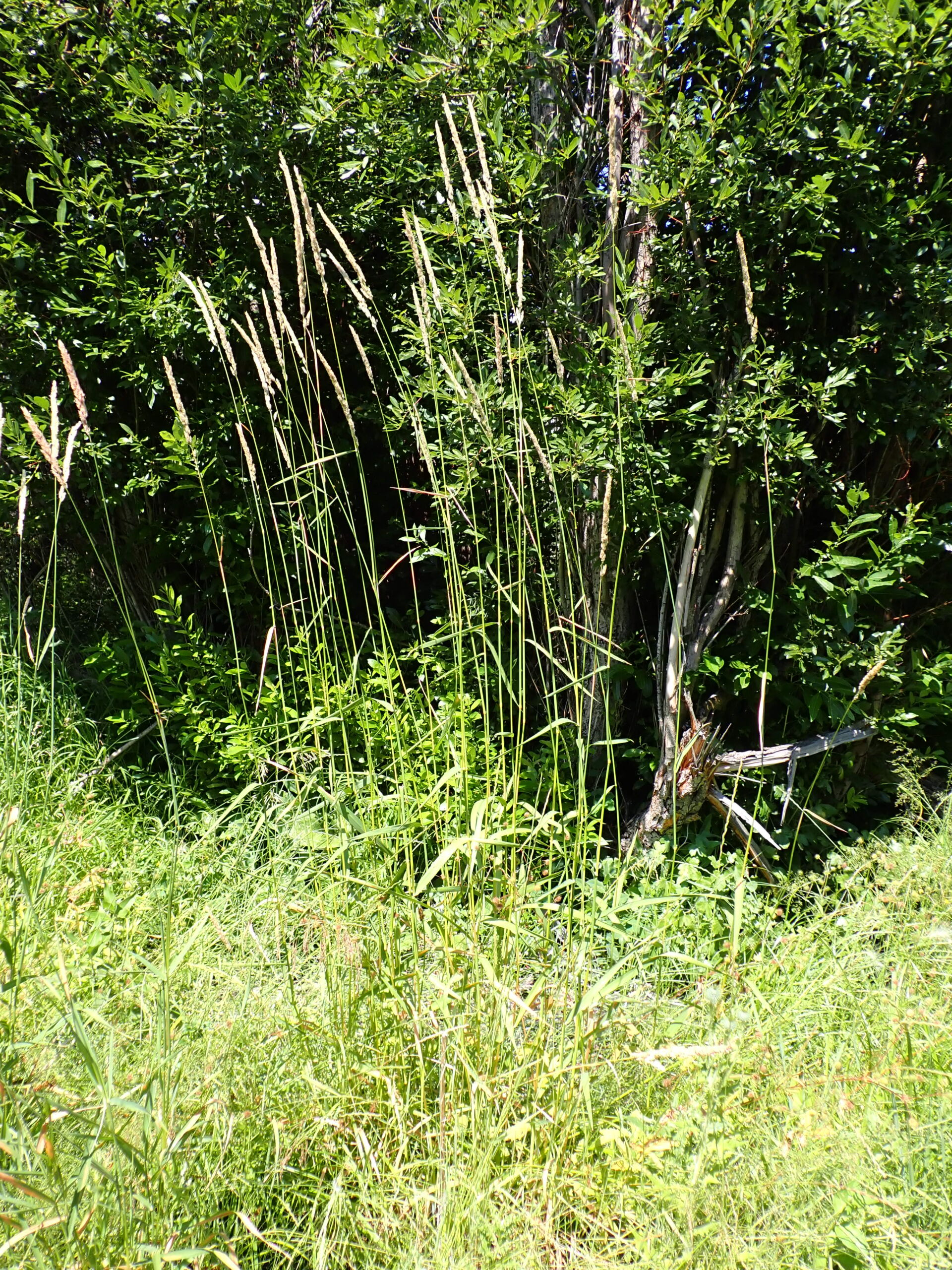
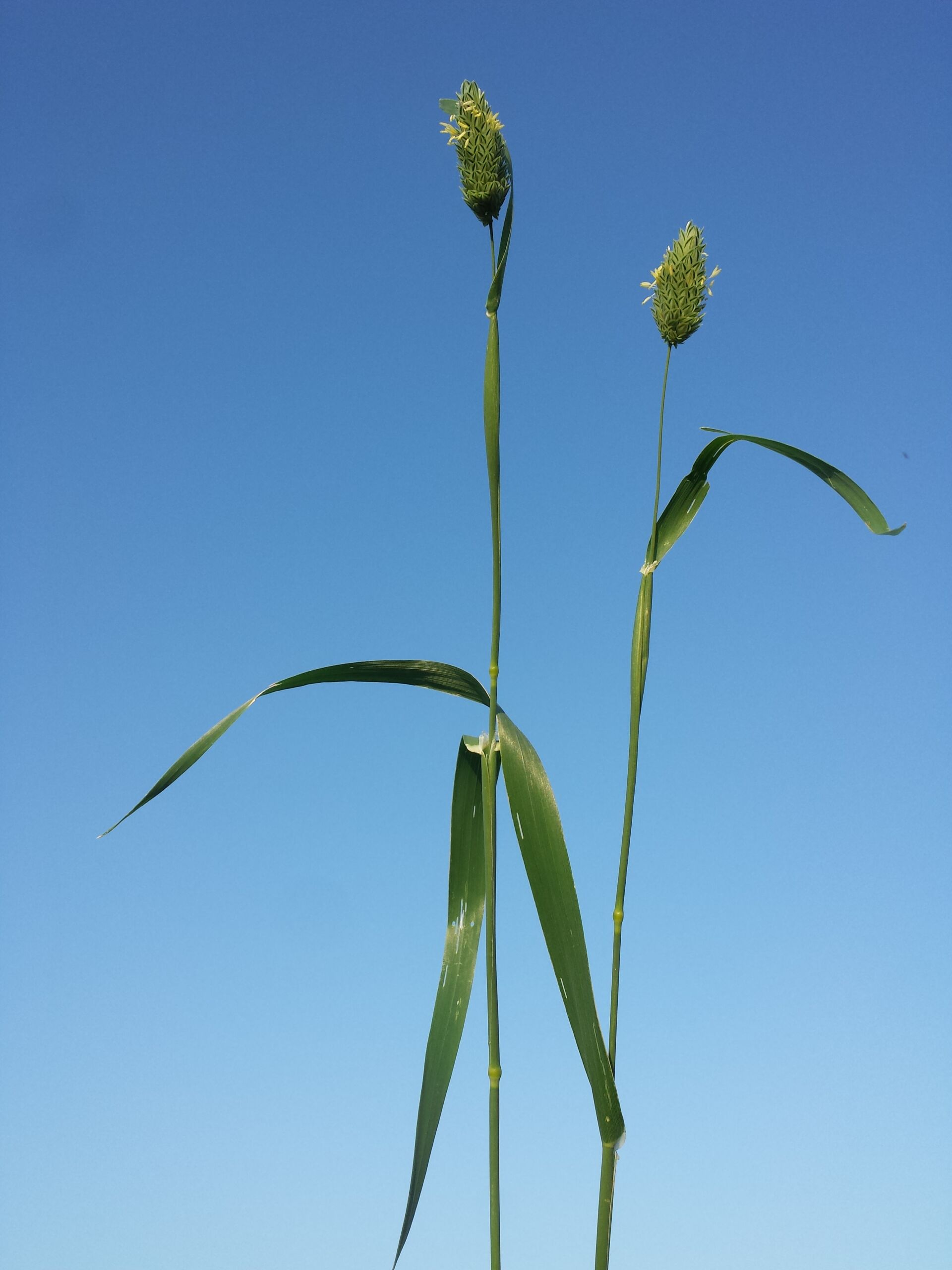
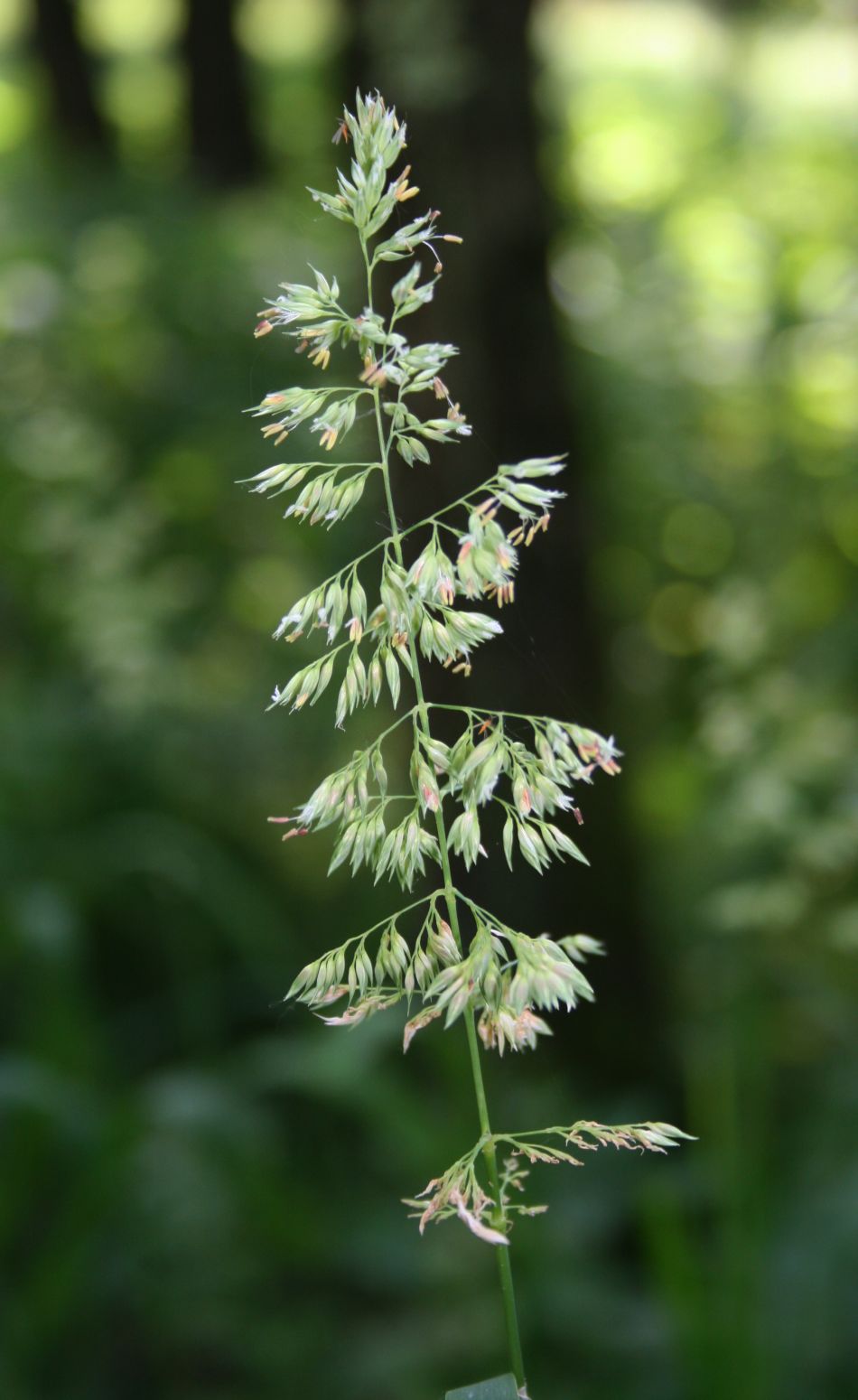
Canary grass is a common name that points in two directions at once, and this guide exists to keep those directions apart. In the strict sense, canary grass is Phalaris canariensis, an annual grass of the Mediterranean, grown commercially around the world for birdseed — hence its other common name, birdseed grass. In the loose sense, “canary grass” is the whole genus Phalaris, and its most famous member is reed canary grass, Phalaris arundinacea, a tall perennial forage and wetland grass that is a different plant with a different life cycle, a different temperament, and a very different reputation. The butterfly guide that brings us here uses the loose sense, and that is why this is a genus guide: the Woodland Skipper guide names its host as “canary grass (Phalaris)” — genus in parentheses, species unnamed — and a guide that pinned the name to one species would be guessing. This guide covers Phalaris spp., names the two canary grasses inside it, and refuses to pretend the butterfly meant one of them in particular.
Phalaris is a genus of 15 to 22 species of grasses in the grass family (Poaceae), distributed across all continents except Antarctica, in habitats from below sea level to thousands of feet above sea level and from wet marshy areas to dry places. The genus name is the Greek name for a grass of this genus, thought to mean “shining”, referring to the seed heads — and the seed heads are the giveaway. Phalaris spikelets are glossy, compact, and distinctive, whether they are packed into the dense, spike-like head of the annual or spread through the tall panicle of the reed. If you have ever tipped a bag of birdseed into a feeder and wondered what those glossy, pale seeds were, you have met Phalaris canariensis. If you have ever walked a wetland edge and found a single grass species standing in a wall where a dozen species should be, you have met Phalaris arundinacea.
Reed canary grass is the big one, in every sense. Its stems can reach 2 metres — about 6 and a half feet — in height, its leaf blades are usually green but may be variegated, and its panicles reach up to 30 centimetres long, with spikelets light green, often streaked with darker green or purple. It is a perennial that spreads underground by thick rhizomes, and it commonly forms extensive single-species stands along the margins of lakes and streams and in wet open areas, with a wide distribution in Europe, Asia, northern Africa, and North America. Other common names for it include gardener’s-garters and ribbon grass, for the variegated forms — cultivars such as ‘Castor’ and ‘Feesey’, the latter with a pink tinge to its leaves — which are sold as ornamentals and which, like the species, like abundant water and can even be grown as an aquatic plant. Its native status in North America is a matter of debate: it is generally considered native to both North America and Eurasia, but North American populations appear to be a mixture of introduced European cultivars and indigenous varieties, and the introduced, vigorous biotypes are the ones that cause the trouble.
Annual canary grass is the small one, and the better-behaved one. It is an annual, typically reaching about 30 to 100 centimetres, with long, flat, smooth leaves of a pale green to bluish-green color, and a dense, spike-like flowering head that resembles club wheat more than it resembles its perennial cousin’s open panicle. It is native to southern Europe and the Canary Islands, has been introduced to temperate regions worldwide, and is grown commercially for birdseed — the seeds are a traditional bird food, and the plant’s whole commercial existence is as a crop, not as a garden ornamental. It resembles reed canary grass in the way two cousins resemble each other: same genus, same glossy spikelets, but shorter, annual, and not a wetland conqueror. A third member worth naming, so it is not mistaken for either: Mediterranean canary grass, Phalaris minor, is another annual, growing 1.5 to 2.5 feet tall and flowering in August in California, and it rounds out the picture of a genus that keeps producing small annuals alongside its one giant perennial.
The butterfly context is one guide, at genus level, and the guide’s own wording is the evidence for this guide’s scope. The Woodland Skipper guide, in its Host plants section, lists the caterpillar’s grasses as “Bermuda grass (Cynodon dactylon), canary grass (Phalaris), wildrye (Elymus), and wheatgrass (Agropyron)” — every other host named to species or genus with a Latin name, and canary grass given the genus Phalaris and nothing finer. The Woodland Skipper is a western grass skipper, of the western United States east to North Dakota and New Mexico and southwestern Canada, flying July to October, and its caterpillars feed on many grasses; canary grass is one item on a generalist’s menu, not a specialist’s sole host. This draft covers the forms “canary grass” and “Phalaris” in that section only. It does not cover Bermuda grass, wildrye, or wheatgrass, each of which is its own unit, and it does not claim that the skipper eats reed canary grass in particular, or annual canary grass in particular — the guide says Phalaris, and this guide says Phalaris, and that match is the honest one.
How to grow
How to grow Phalaris depends entirely on which Phalaris you mean, and for one of them the answer is “do not”. Reed canary grass is, in many places, an invasive species in wetlands, particularly in disturbed areas, and when it invades a wetland it inhibits native vegetation, reduces biological diversity, alters the entire ecosystem, propagates by seed and rhizome, and once established is difficult to eradicate. It is listed as invasive by Minnesota as a non-native terrestrial plant and a particular threat to natural wetlands, where it forms large stands with which other plants cannot compete, and it is listed as invasive by the North Carolina Invasive Plant Council and by many other states. It has been widely planted for forage and erosion control in poorly drained areas, and the cultivated varieties typically are Eurasian biotypes selected for vigor — which is to say, selected for invasiveness. Do not plant reed canary grass deliberately, and do not plant its variegated cultivars near any wetland, ditch, stream, or stormwater feature, because a variegated cultivar is still Phalaris arundinacea, and its rhizomes do not read plant tags. If you already have it, the management story is the same as for any rhizomatous perennial weed: it is a multi-year removal, it resprouts from rhizome fragments, and local extension guidance beats any general advice, including this guide’s.
Annual canary grass is a different proposition, and a narrower one. As a crop, it is sown in open ground, grown for a season, and harvested for seed; as a garden plant, it has almost nothing to recommend it beyond curiosity and birdseed. Sow it the way you would any small-grain annual — in open, sunny ground, in a soil that is ordinary rather than rich, and with no expectation that it will return next year, because it will not, except as volunteers from spilled seed. Its value in a butterfly garden is indirect at best: it is one grass among many that a generalist skipper’s caterpillars may eat, and a western skipper garden is better served by the native grasses of its region — wildrye, wheatgrass, and the local bunchgrasses — than by a Mediterranean birdseed crop. If you grow it, grow it for the seed heads and the birds, keep it out of natural areas, and do not confuse it with reed canary grass when you tell your neighbors what you planted. The two plants share a genus and a common name; they do not share a garden role.
For the genus as a whole, the growing pattern is: sun, open ground, and moisture matched to the species. Reed canary grass wants wet feet and will take standing water at the margins; annual canary grass wants ordinary open soil and no wetland at all; the genus spans wet marsh to dry places, so “Phalaris wants wet soil” is true of one member and false of another, and any guide that gives the genus a single watering rule is lying by averaging. Propagation follows the life cycle: reed canary grass by rhizome division — which is also how it escapes — and by seed; annual canary grass by seed only. A gardener who wants a Phalaris for ornament should look at the variegated reed canary cultivars only with the invasive warning attached, and preferably look instead at a native grass with the same vertical, shining-headed effect and none of the rhizome empire.
Florida note, stated plainly: this is not a Florida garden recommendation. The Woodland Skipper is a western butterfly, reed canary grass is a northern and western wetland problem, and annual canary grass is a Mediterranean crop. None of them belongs on a Florida planting list, and reed canary grass near a Florida wetland would be a new problem in a state that already has enough wetland invaders. A Florida reader’s use for this guide is the same as for the other genus guides in this project: identification, butterfly context, and the discipline of naming the genus when the butterfly guide names the genus, rather than forcing a Florida plant into a western butterfly’s menu.
Water & feeding
Water and feeding split by species, as everything in this genus does. Reed canary grass grows well on poor soil and even on contaminated industrial sites — researchers have suggested it for phytoremediation on brownfield sites, and it can be turned into bricks or pellets for biomass burning, and provides fiber for pulp and papermaking — which tells you everything about its appetite: it is a plant that thrives on neglect in wet ground, and feeding it is like feeding a fire. In a genuinely wet site with normal rainfall it waters itself, and in a dry spell it sulks but rarely dies, because its rhizomes hold reserves and wait. Annual canary grass, by contrast, is a crop annual: it wants the water a small grain wants during its growing season, and then it is done, and no amount of watering next spring will bring back a plant that completed its life cycle last autumn. The soil science, for both, is the grass story: grasses are nutrient-cyclers with fibrous roots that build soil organic matter fast, and a perennial grass with rhizomes builds it faster and holds ground longer than an annual ever will. That is why reed canary grass is both a useful forage and a terrible neighbor: the same root system that holds a streambank holds a wetland hostage.
One feeding caution belongs to the genus, not to either species alone. Some Phalaris species contain gramine, which in sheep and to a lesser extent in cattle is toxic and can cause brain damage, other organ damage, central nervous system damage, and death, and reed canary grass, among others, is known to contain tryptamine alkaloids and related compounds. This is not a reason to panic about a birdseed crop, and it is not a how-to for anything; it is a reason not to graze livestock on a Phalaris planting, not to let a Phalaris patch become pasture, and to treat the genus as an ornamental and crop group rather than a forage free-for-all. The alkaloid levels vary by species, strain, and season, and the literature’s tables are a research topic, not a garden rule — but the direction is consistent: Phalaris is not salad, for you or for your sheep.
Common problems
- Confusing the two canary grasses. Annual canary grass (Phalaris canariensis) is a Mediterranean birdseed annual; reed canary grass (Phalaris arundinacea) is a tall rhizomatous perennial wetland invader. Same genus, same loose common name, opposite garden roles. Name the species before you plant, buy, or recommend anything.
- Planting reed canary grass near water. The most consequential problem in this guide. It forms single-species stands, displaces natives, alters wetlands, and is difficult to eradicate once established. Do not plant it or its variegated cultivars near wetlands, ditches, or streams.
- Assuming a variegated cultivar is safe. ‘Feesey’, ‘Picta’, ‘Strawberries & Cream’, and the other ribbon-grass forms are Phalaris arundinacea. Variegation is not sterility, and rhizomes do not stay variegated or stay put.
- Grazing livestock on Phalaris. Some species contain gramine, toxic to sheep and, to a lesser extent, cattle. Do not use a Phalaris planting as pasture.
- Treating the genus as one watering rule. Reed canary grass wants wet ground; annual canary grass wants ordinary open soil. A genus-level watering rule is wrong for at least one member, whichever way you write it.
- Forcing a species onto the butterfly’s menu. The Woodland Skipper guide says “canary grass (Phalaris)” — genus only. Claiming the skipper eats reed canary grass specifically, or annual canary grass specifically, would be guessing past the evidence.
- Letting reed canary grass seed or rhizome escape. It spreads by both. A patch left to seed by a ditch is a patch planted in the next wetland downstream.
Harvest
The harvest of Phalaris is seed, and the seed tells the two species apart better than any description. Annual canary grass seed is the harvest: glossy, pale, birdseed-grade seed, harvested when the dense heads ripen, dried, and fed to caged birds, as it has been for centuries — the plant’s entire commercial reason for existing. Some species are also used in dried flower arrangements, for the same reason the genus name means “shining”: the heads keep their gloss when dry. Reed canary grass harvest is a different industry: hay and forage where it is grown as a crop, fiber for pulp and paper, and biomass for burning, with researchers trialing it as a bioenergy crop. None of that is a home-garden harvest, and none of it changes the invasive warning: a crop that pays in one field costs in the next wetland, and the line between the two is a rhizome. The simplest honest harvest for a home gardener is the annual’s seed heads, cut for the birds, and the knowledge — worth more than the seed — that “canary grass” is two plants, and you now know which one you have.
Browse all plant & pest guides
Saving seeds
Stop. Read this paragraph before you read the rest of the section, because this guide’s whole problem is that “canary grass” is two plants wearing one name, and only one of them should ever be deliberately seeded. Reed canary grass (Phalaris arundinacea), the tall rhizomatous perennial, is an aggressive wetland invader that forms single-species stands along lakes and streams and crowds out native marsh plants. Do not collect it, do not sow it, and do not plant it anywhere near a wetland, a ditch, or a waterway — and check your state’s invasive list, because it is regulated in some states. Everything below is about annual canary grass (Phalaris canariensis), the Mediterranean birdseed annual, and only about that plant.
Annual canary grass is refreshingly cooperative about seed saving, because it was bred to be a grain. Let the heads mature fully on the plant — this grass resists shattering, so unlike some grains it will not dump its seed on the ground the moment you look away. Maturity arrives roughly a hundred days after sowing, when the kernels are hard and the compact, oval panicle has turned pale, white-beige. Cut the heads with shears, then thresh them gently: rub or beat the heads over a tray or inside a bag, and winnow away the light chaff. Go easy on the threshing — the hull is meant to stay on the seed, giving it that shiny birdseed look, and over-aggressive threshing that strips or cracks the hull hurts quality. Wear a dust mask while you thresh, because canary grass dust is irritating, especially on a hot day, and your lungs are not part of the harvest.
Drying is the step Florida gardeners most often skip and most often regret. Grain stores safely at around twelve percent moisture, and in Florida humidity, “looks dry” is not dry. Spread the cleaned seed thinly in a warm, airy spot out of direct sun until the kernels are hard and rattle crisply, then store airtight with a desiccant packet, in a cool, dark place. Properly dried seed kept cool holds its germination well into the next season or two; sow within a season or two for best results rather than banking it for years. To sow, plant shallowly in cool weather — this is a cool-season grass that wants an early start, and hot weather drags its yields down — and expect germination in roughly one to two weeks in warm, moist soil.
Do saved seeds grow true? For an open-pollinated stand grown for birdseed or cover, yes, usefully so: the next generation will be canary grass, with the usual field variation in height and head size. If you are growing a named variety, expect a little drift, and keep your seed lot pure by saving from the middle of a solid stand rather than from stray plants at the field edge. Isolation is a minor concern for home-scale saving — this is a crop grass, not a show flower, and a neighbor’s lawn grass is not going to ruin your birdseed — but do not save seed from heads that matured next to a reed canary grass patch, because the last thing any waterway needs is a seed lot with a stowaway. Label the jar with the species name, not just “canary grass,” and future-you — and anyone you share with — will know exactly which of the two plants is inside.
Species
Phalaris is a genus of 15 to 22 species, and this section names the ones a North American gardener or butterfly-watcher is most likely to meet, in plain text. Reed canary grass (Phalaris arundinacea) is the tall perennial wetland grass, to 2 metres, with panicles to 30 centimetres, rhizomatous spread, and invasive behavior in wetlands; its variegated cultivars include ‘Castor’ and ‘Feesey’, sold as ribbon grass or gardener’s-garters. Annual canary grass (Phalaris canariensis) is the Mediterranean birdseed annual, typically 30 to 100 centimetres, with a dense spike-like head, grown commercially for birdseed. Mediterranean canary grass (Phalaris minor) is another annual, 1.5 to 2.5 feet tall, flowering in August in California. Bulbous canary grass (Phalaris aquatica) is a perennial sometimes invasive in wetlands, named here so it is not mistaken for reed canary grass. No other Phalaris species is claimed by this genus guide as a garden plant, and the Woodland Skipper’s “canary grass (Phalaris)” form is wired here at genus level, not to any one of these species.