
🌿 Cardamine
What it looks like
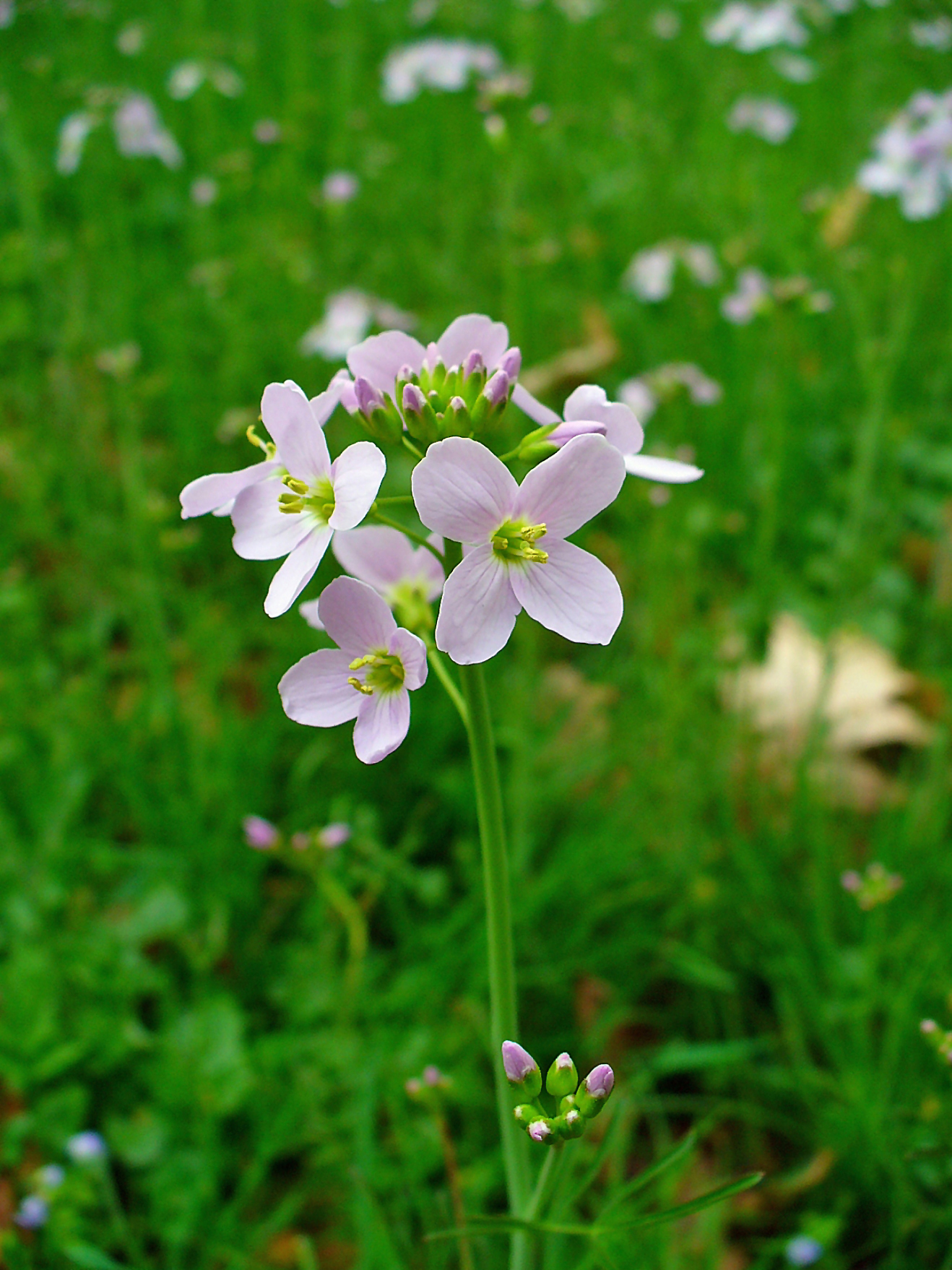
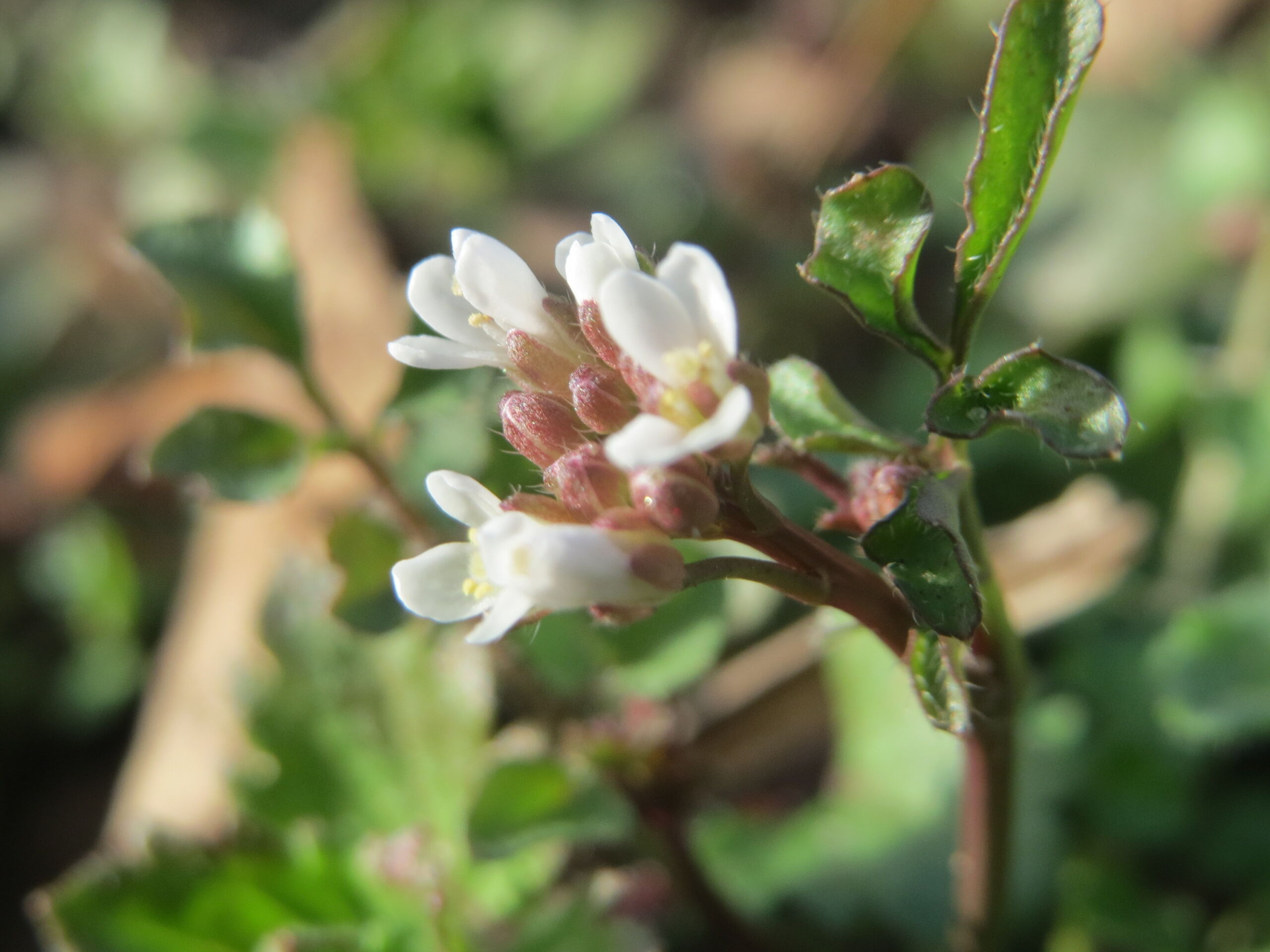
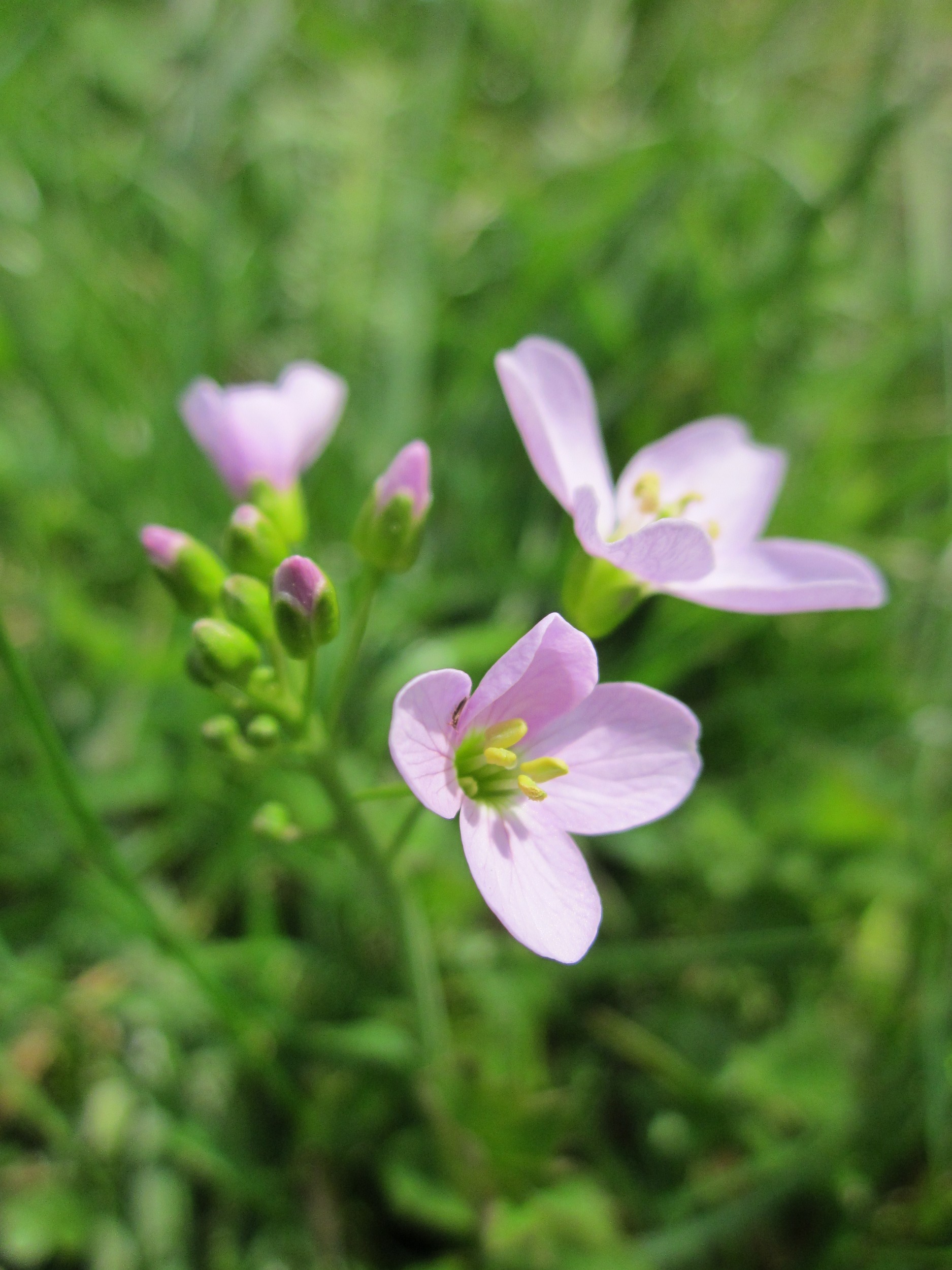
Cardamine is the genus of the bittercresses and the toothworts, and it is one of those genera that every gardener has met, whether they know it or not. It is a large genus — over 200 species in the mustard family (Brassicaceae) — of annual and perennial herbs found in temperate regions nearly worldwide, and it splits, in the gardener’s mind, into two very different characters. On one side are the toothworts: spring woodland wildflowers of rich, moist forests, with white or pink four-petalled flowers, divided leaves, and fleshy underground rhizomes. On the other side are the bittercresses: small, fast, weedy annuals of lawns, paths, and garden beds, whose seed pods pop open at a touch and fling seed across the bed. Same genus, same four-petalled mustard flower, wildly different reputations — and both of them matter to butterflies, which is why this guide exists.
The mustard flower is the giveaway, and once you learn it you will see it everywhere. Every Cardamine flower has four petals arranged in a cross — the old name for the family was Cruciferae, the cross-bearers — usually white or pale pink, sometimes lilac, with six stamens, four long and two short. The leaves are divided, pinnately or palmately, into leaflets that range from round and neat (the basal leaves of cuckoo flower) to deeply cut and toothy (the toothworts). The fruit is a long, narrow pod called a silique, and in the bittercresses it is a spring-loaded device: when ripe, the two valves curl back explosively and scatter the seeds. Gardeners know this as the moment they brush past a bittercress in April and feel tiny seeds pinging off their sleeves. Botanists know it as ballistic dispersal, and it is the reason a single bittercress in a pot becomes a hundred bittercresses in the bed by June.
The name history is worth a paragraph, because it explains why the same plants appear under two names in older books. The toothworts were long placed in their own genus, Dentaria, from the Latin dens, tooth — a nod to the tooth-like segments of their knobby underground rhizomes, which look like a string of teeth. Modern botany has folded Dentaria into Cardamine, so the two-leaved toothwort that older guides call Dentaria diphylla is now Cardamine diphylla, and the cut-leaved toothwort Dentaria laciniata is now Cardamine concatenata. The genus name Cardamine itself comes from the Greek kardamine, a kind of cress, and it carries the peppery hint: crush a bittercress leaf and you get the sharp, watercress-like bite that gives the whole group its common name. That bite is mustard chemistry — glucosinolates, the same family of compounds that make mustard hot and cabbage pungent — and it is the chemistry that ties this genus to its butterflies.
That butterfly story is the reason this genus guide is written at the genus level. The Falcate Orangetip guide lists its caterpillar hosts at the genus level: mustards including toothworts (Cardamine species), alongside rock cresses, winter cress, and peppergrass. The caterpillars of the mustard-white butterflies are mustard specialists, and their nurseries are the spring mustards of woodland and meadow — toothworts in the woods, cuckoo flower in the damp meadows, bittercresses wherever the ground is open and moist. The adult butterflies, meanwhile, nectar on the same early spring flowers, because in early spring there is little else blooming and a four-petalled mustard flower is an open, accessible nectar bar. A genus guide is the honest unit for the Falcate Orangetip’s menu: the butterfly’s list says Cardamine species, and a guide that covered only one species would leave the rest of the menu unexplained.
One plain-text disambiguation, because the species inside this genus have their own stories and their own units, and this genus guide must not swallow them. This guide claims Cardamine species as a genus only. Two-leaved toothwort (Cardamine diphylla) and cuckoo flower (Cardamine pratensis) are the named hosts of the Mustard White guide, and cut-leaved toothwort (Cardamine concatenata) is the named host of the West Virginia White guide alongside two-leaved toothwort — those are species-level forms, and they belong to species units, not to this genus guide. Buy and plant by Latin name, species by species, and let this guide be the map of the genus, not a substitute for any one of its members.
How to grow
Growing Cardamine starts with the only decision that matters: which half of the genus are you planting, the woodland wildflower or the weed you already have? The toothworts are woodland spring ephemerals, and they want woodland conditions: part to full shade, moist, humus-rich, well-drained soil, leaf litter, and neighbors that do not crowd them in spring. Plant them in a shade garden or woodland edge, among ferns and other spring ephemerals, and then leave them alone — they do their growing in the cool weeks before the trees leaf out, flower, set seed, and then retreat underground for the summer. Do not expect summer show from a toothwort; its season is spring, and its summer is a dignified absence. Give it a spot where that absence reads as woodland floor, not as a gap in the border, and it will come back year after year from its rhizomes, slowly spreading into a drift.
The meadow species, cuckoo flower above all, want a different garden: damp meadow, stream margin, or the wet corner of the garden that nothing else likes. Cuckoo flower grows in damp, rich soil, in sun to part shade, and it is a perennial that returns from a short rhizome, flowering in April and May in spikes of pale pink or white four-petalled flowers. It suits a rain garden margin, a pond edge, or a damp meadow patch left unmown through spring — mow it in early spring and you mow the flowers off with the grass. The bittercresses, meanwhile, need no planting advice at all, because they plant themselves: hairy bittercress and its relatives arrive in lawns, paths, pots, and beds wherever the soil stays moist, germinate in cool weather, flower while still small, and pop their seed before you have decided whether to weed them. If you want bittercress for the butterflies, the honest advice is to tolerate a patch in a quiet corner and pull it everywhere else before the pods ripen — the plant’s whole strategy is to outrun your weeding, and it usually wins.
Propagation follows the two halves of the genus. Toothworts spread by their rhizomes: divide clumps after flowering, while the plants are still visible, and replant the knobby rhizome segments shallowly in humus-rich soil — or simply let a drift expand on its own, which it will, slowly, if the shade and moisture are right. Cuckoo flower divides the same way, or grows from seed sown fresh in damp soil. Bittercresses need no help: their pods do the sowing, explosively, and their seeds germinate in cool, moist soil whenever they land. That is the whole propagation chapter for the weedy half, and it is also the warning: a bittercress you let seed is a bittercress you will meet again, many times over, next spring.
Florida note, stated by species rather than by genus, because the genus-level answer would be a lie. Cardamine is mostly a northern and temperate woodland and meadow genus, and its famous toothworts are creatures of rich northern forests, not Florida gardens. Florida gardeners should not expect a toothwort drift to thrive in a hot, sandy garden, and should check any Cardamine species’ native range before buying, rather than assuming the genus suits the state. The bittercresses are the exception that proves the rule: hairy bittercress and its relatives are widespread weeds of moist, shady ground across much of the country, and a Florida gardener is more likely to meet Cardamine as a lawn weed to tolerate in a corner than as a wildflower to plant in a bed. Either way, plant and tolerate by Latin name, and let the species’ range, not the genus name, make the decision.
Water & feeding
Water, for the garden Cardamine species, is a question of moisture without sogginess — with the woodland and meadow species on the moist side of that line and the weedy species happy wherever the soil stays damp. The toothworts want the moisture of a woodland floor: soil that stays moist through spring, enriched by leaf litter, never baked dry and never standing in water. In a genuinely moist shade garden with normal rainfall they largely water themselves through their short season, and a mulch of leaf litter does more for them than any watering can, holding moisture and feeding the soil life that keeps woodland soil healthy. Cuckoo flower wants the same moisture turned up a notch: damp meadow soil, a stream margin, a rain garden edge — somewhere the ground stays damp into early summer, because a cuckoo flower in dry soil is a short, sulky plant that flowers once and gives up. The bittercresses, by contrast, take whatever moisture the lawn and the path offer, and their presence in a bed is often a moisture signal in itself: where bittercress thrives, the soil stays damp.
Feeding: modest, across the genus. Cardamine species prefer average, humus-rich soil, and a topdressing of compost or leaf mold in autumn is the right scale of feeding — not a heavy fertilizer program, which mostly produces soft, leggy growth and, in the bittercresses, even more seed. In a woodland or meadow site, the nutrients arriving with leaf litter are often plenty on their own. The soil science here is the spring story: cool, moist, humus-rich soil is a nutrient highway in spring, regularly replenished with leaf litter and organic matter, and the microbes, fungi, and invertebrates of that soil cycle nutrients fast as the ground warms. A toothwort’s rhizome lives in that community, storing energy through summer dormancy and sending up new growth through it each spring, and its yearly leaf fall returns its leaves to the soil as organic matter, feeding the next cycle. Planting a native toothwort in a woodland edge is therefore not just decorating the shade — it is installing a spring nursery on top of a soil-building machine, and the peppery mustard chemistry in the leaves is the nursery’s password: only the butterflies that evolved to read it can eat there.
Common problems
- Bittercress taking over. The most common problem in the genus, and it is self-inflicted: let one bittercress ripen its pods and the popping seed will sow the bed. Pull bittercress before the pods ripen, or tolerate a patch in a corner and weed it everywhere else.
- Drying out in spring. The woodland and meadow species want moist soil through their flowering season. A toothwort that vanishes early or a cuckoo flower that sulks usually means the soil dried. Mulch with leaf litter, site it moist, and water in a dry spring — or pick a different plant.
- Wrong species, wrong region. A northern woodland toothwort in a hot, sandy garden is a plant out of place. Check the species’ native range before you buy, and buy by Latin name.
- Garlic mustard confusion. The mustard-white butterflies’ tragedy is a warning for gardeners too: garlic mustard smells like a host to egg-laying females, but its caterpillars usually die on it, and it forms monocultures that push out the native mustards. Pull garlic mustard wherever you find it, and do not confuse it with a toothwort — it is the nursery that kills.
- Summer disappearance. Toothworts retreat underground after spring. That is dormancy, not death. Mark the spot, do not dig it up in July, and let it return next spring.
- Caterpillar nibbling. Orangetip and white butterfly caterpillars may eat leaves and flowers in spring, and that is the point of planting it. A healthy drift recovers, so do not spray the caterpillars — they are the crop.
Harvest
Cardamine’s harvest is leaves, seed, and butterfly-watching — in that order, and with one firm boundary that this guide states plainly. The peppery leaves of the bittercresses and cuckoo flower are edible as a salad green and a watercress substitute, and country cooks have used them that way for generations — but only harvest plants you have identified with certainty, from ground you know is clean, because mustard-family lookalikes exist and roadside or sprayed ground is not a kitchen. The toothwort rhizomes, crunchy and peppery, were likewise eaten historically, but this guide does not recommend digging up a slow woodland wildflower for a snack: leave the toothworts in the ground, where their value is as butterfly nurseries, and eat the bittercress from the lawn instead, where the plant is abundant and the harvest is also weeding.
If you want seed, the bittercresses will give it to you whether you ask or not — collect the pods just before they pop, or let a patch self-sow in its corner and weed the strays. If you want more toothworts, divide rhizomes after flowering, while the plants are still visible, and replant shallowly in humus-rich shade. The simplest harvest, though, is a spring morning in a woodland edge with no agenda at all: white and pink four-petalled flowers, a small white butterfly laying one egg per flower stalk, and the knowledge that the plant under your feet is both the flower and the nursery, and that its pepper is what makes the butterflies safe. Leave most plants standing through the season for the caterpillars, let the bittercress patch seed in its corner if you have one, and let the woodland drift come back bigger next spring. That is the crop, and it arrives without a single spray — because spraying it would kill the very thing you planted it for.
Browse all plant & pest guides
Saving seeds
Cardamine does not so much drop its seed as fire it. This is a genus of the mustard family, and its long, thin pods, called siliques, are spring-loaded: when ripe, the two pod walls coil back violently and fling the small seeds away from the parent, a trick called ballochory. In popping cress, the best-studied example, the pods do not even wait until they are dry; they explode while still green and hydrated, powered by pressure in the pod wall itself. That is a wonderful piece of plant biomechanics and a terrible trait for a seed saver who turns their back for a day. If you want the seed, you have to catch it mid-flight, or rather, before the flight.
The practical method is gloriously low-tech: bag the stalks. Slip a small paper bag or a scrap of muslin over a flowering stalk before the pods ripen, tie it loosely below the pods, and leave it in place. When the pods pop, they pop inside the bag, and you collect the bag instead of hunting for seeds across the bed. Alternatively, cut whole stalks just as the pods start to pale and dry, and finish them in a closed paper bag indoors. Either way, shake out the small, reddish-brown seeds, winnow away the pod fragments, and dry the seed briefly in the shade before storing it cool, dark, and dry in a labeled envelope. A word of warning up front, because this genus contains both treasures and pests: do not deliberately save seed of weedy bittercress unless you actively want it everywhere. Hairy bittercress will colonize every pot, path, and bed edge you own if you let a single plant go to seed, so for weedy species the correct seed-saving advice is to pull them before the pods pop.
Sowing depends on which Cardamine you have, and this is a genus of over 200 species, so species matters. For bittercress types, scatter the seed on the soil surface and press it in without burying it; these seeds need light to germinate, and burial is a good way to get nothing. Keep the soil cool and moist, and expect sprouts within a week or two in spring or late summer. Woodland toothworts and other perennial species are a different story: they may be slower, may want a cold period, and are often far more reliably increased by division of their rhizomes in the dormant season than by seed at all. Do not store Cardamine seed like a bean crop and expect it to wait patiently for years; sow it reasonably promptly while it is fresh, and sow a little thick to allow for the usual losses.
On growing true, a species grown on its own will usually give you seedlings that resemble the parent, but a mixed patch of Cardamine species flowering together can produce variable offspring, and hybrids are not unheard of in this genus. If you need an exact plant, division is your clone route, and it is the sensible choice for a prized woodland toothwort. In Florida, two cautions apply: humidity will mold seed that is jarred before it is truly dry, so dry thoroughly and add desiccant, and moist, mild beds are exactly where weedy bittercress thrives, so deadhead or pull the weeds before their pods arm themselves. Save seed from the Cardamine you love, on purpose, in a bag, and you will have it. Let the genus save itself, and you will have it everywhere, which is not the same thing at all.
Species
Cardamine is a genus of over 200 species, and no guide can list them all, so this section names the species a North American gardener or butterfly-watcher is most likely to meet, in plain text, and states plainly which ones have their own units. Two-leaved toothwort (Cardamine diphylla) is the woodland spring ephemeral of eastern forests, a named host of the Mustard White and West Virginia White guides, and a separate species unit, not covered by this genus guide. Cuckoo flower (Cardamine pratensis) is the pale pink damp-meadow perennial, a named host of the Mustard White guide, and a separate species unit, not covered by this genus guide. Cut-leaved toothwort (Cardamine concatenata) is the toothed-rhizome woodland species of eastern forests, a named host of the West Virginia White guide, and a separate species unit, not covered by this genus guide. Hairy bittercress (Cardamine hirsuta) is the small white-flowered weed of lawns, paths, and beds, widespread wherever soil stays moist. Pennsylvania bittercress (Cardamine pensylvanica) is its wetter-ground relative, similar in habit and easily confused with it. Grow the native species of your region, by its Latin name, and let the genus guide be the map, not a substitute for any species on it.