
❤️ Cardinal Climber
What it looks like
How to grow
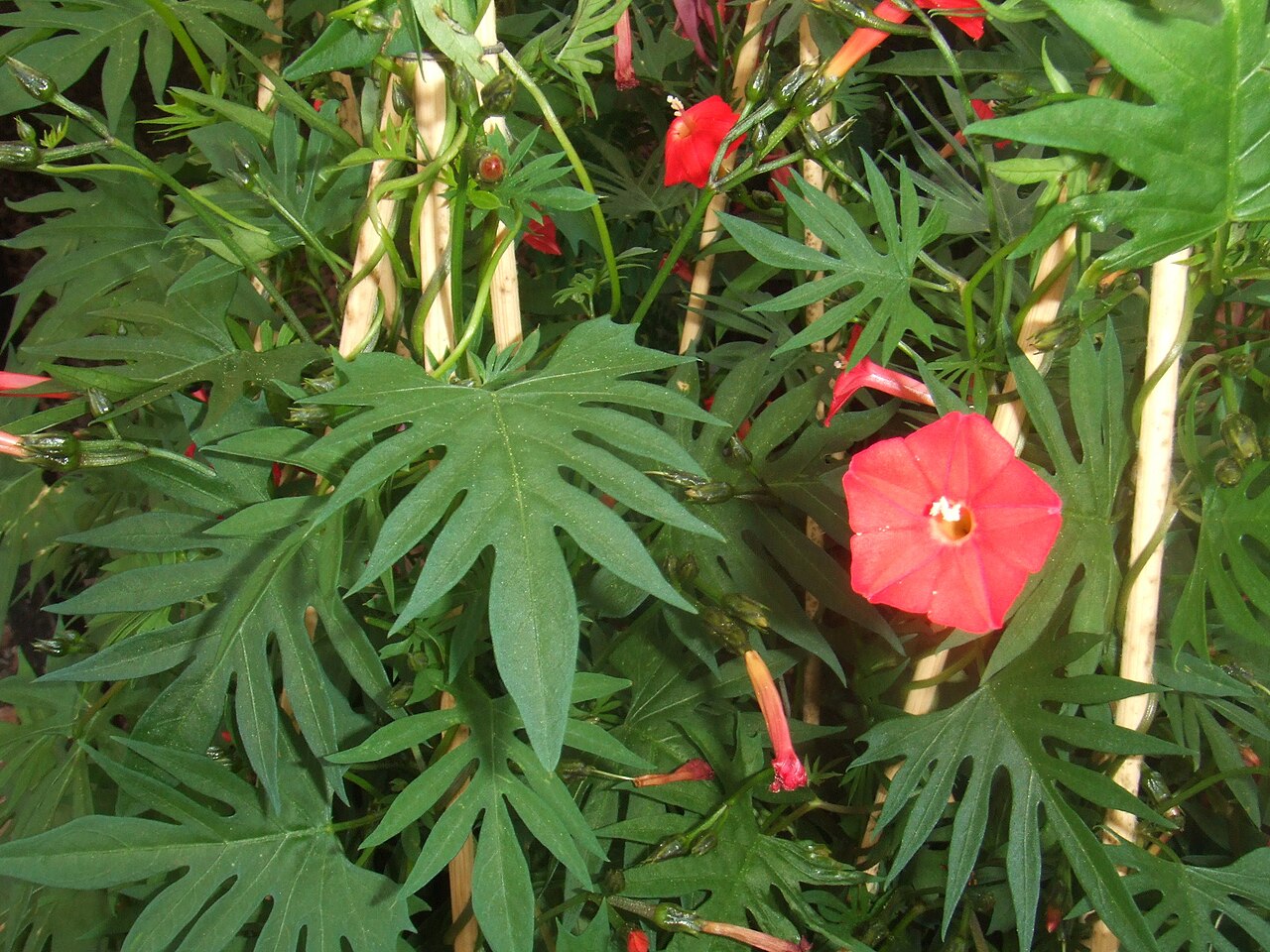
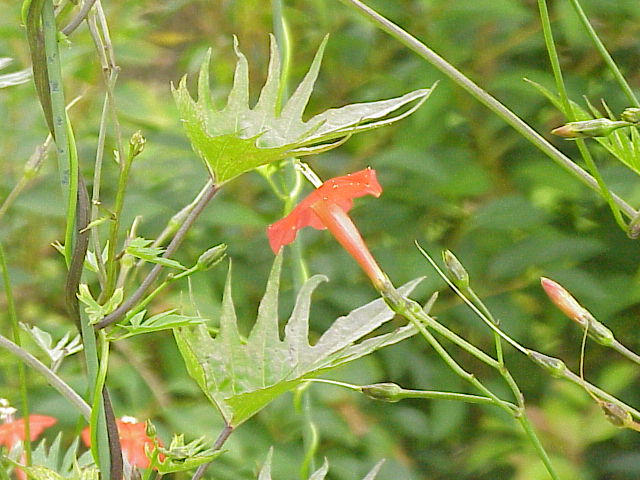
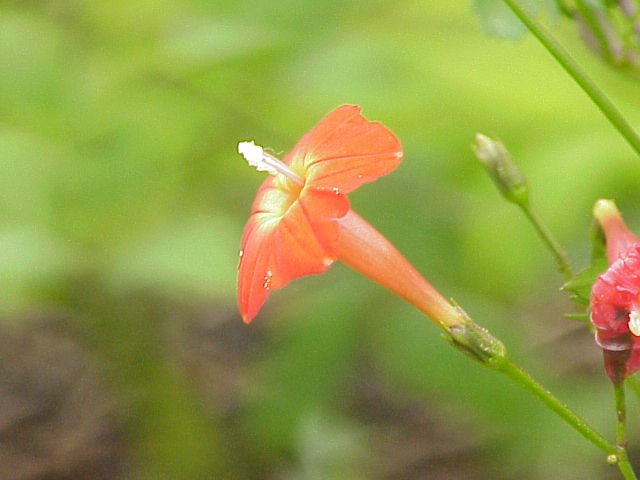
Cardinal climber is a hybrid annual vine, a cross between cypress vine and scarlet morning glory, grown for its deeply lobed, feathery leaves and profusion of small scarlet trumpet flowers that point upward, perfect for hummingbird tongues. True cardinal climber is Ipomoea × multifida; seed sold under this name is sometimes actually cypress vine, so check the Latin name on the packet if the distinction matters to you. Sow seed after last frost — soak overnight, sow 1/4 to 1/2 inch deep — or start indoors 4-6 weeks before last frost in biodegradable pots, since morning glory roots dislike disturbance. Plant in moist, well-drained soil at the base of a trellis, arbor, fence, or hanging basket, and let it twine.
Water & feeding
Water regularly, about an inch a week, and keep soil moist in heat; this tropical vine sulks in drought. It needs little to no fertilizer unless soil is very poor — rich soil and heavy feeding grow leaves at the expense of the scarlet trumpets. Mulch to hold moisture, and prune only to maintain size; the vine does not need shaping to bloom well. In containers, use quality potting mix and water more often, since pots dry faster than garden soil.
Common problems
- Seed packet confusion — if your ‘cardinal climber’ has very fern-like leaves and pink or white flowers, you likely got cypress vine; both are good vines, but they are not the same plant.
- Self-seeding in mild winters — pull volunteers in spring where you do not want them, especially in zones 9 and warmer.
- Toxic if eaten — all morning glory relatives carry this caution; keep seed and foliage away from children and pets.
- Slow start in cold soil — wait for warm soil and warm nights, or start indoors; cold-sown seed grows weakly and blooms late.
Harvest & notes
No edible harvest — the flowers are for hummingbirds, which will visit daily once bloom starts. Save seed by letting pods dry on the vine in fall: cardinal climber comes true from seed, so saved seed gives you the same plant next year, unlike many hybrids. Cut the vine down at frost and compost it, or leave a few pods to self-sow where a scarlet fence is welcome again.
Saving seeds
Handle with care first: cardinal climber seeds are toxic if eaten, to people and to pets. Save them in a labeled jar, out of reach, and do not let children shell pods unsupervised. The vine itself is harmless to admire; the seeds are the part that demands respect.
Here is the plot twist that makes this vine a seed saver’s favorite: cardinal climber is a hybrid, and hybrids are supposed to be unreliable from seed, yet this one breeds true. It is an allotetraploid, a plant carrying a doubled set of chromosomes from its two parents, red morning glory and cypress vine, and after more than a decade of failed crosses its breeder finally got one seed that grew into a plant whose offspring matched it. The hybrid cannot be crossed back to either parent, which in this case is a feature: saved seed gives you the same scarlet trumpets next year, not a lucky dip.
Collect in fall, when the rounded capsules have dried on the vine to a papery brown. Pick them before they split, because once a capsule cracks it flings its two to four hard, dark, irregularly shaped seeds wherever it pleases, and in Florida that is a promise, not a threat. Crack the dry capsules open by hand, pick out the seeds, and spread them to dry for about a week in a dry room. No wet fermentation, no fuss: these are morning glory seeds, and dry handling is the whole cleaning process.
For sowing, the hard seed coat is the only obstacle. Nick each seed with a nail file or sandpaper, or rub a batch gently between two sheets of sandpaper, then soak overnight in warm water. Sow about a quarter inch deep after the soil is warm, or start indoors a few weeks before the last frost in a pot that can go straight into the ground, since morning glories resent root disturbance. Expect sprouts within a week or two from treated seed.
For storage, Florida humidity is the enemy: dry the seed thoroughly, then seal it in an airtight jar with a small desiccant packet and keep it cool and dark. Kept that way, cardinal climber seed is generally good for a couple of years, though fresh seed germinates most eagerly. And one Florida-specific warning: in cold climates a hard frost kills stray seed, which is why northern gardeners call this vine well behaved. Florida winters offer no such cleanup crew. If you do not want a self-sown scarlet fence next year, deadhead before the capsules brown, or accept the volunteers and thin them like the gift they are.