
🌿 Cardiospermum
What it looks like
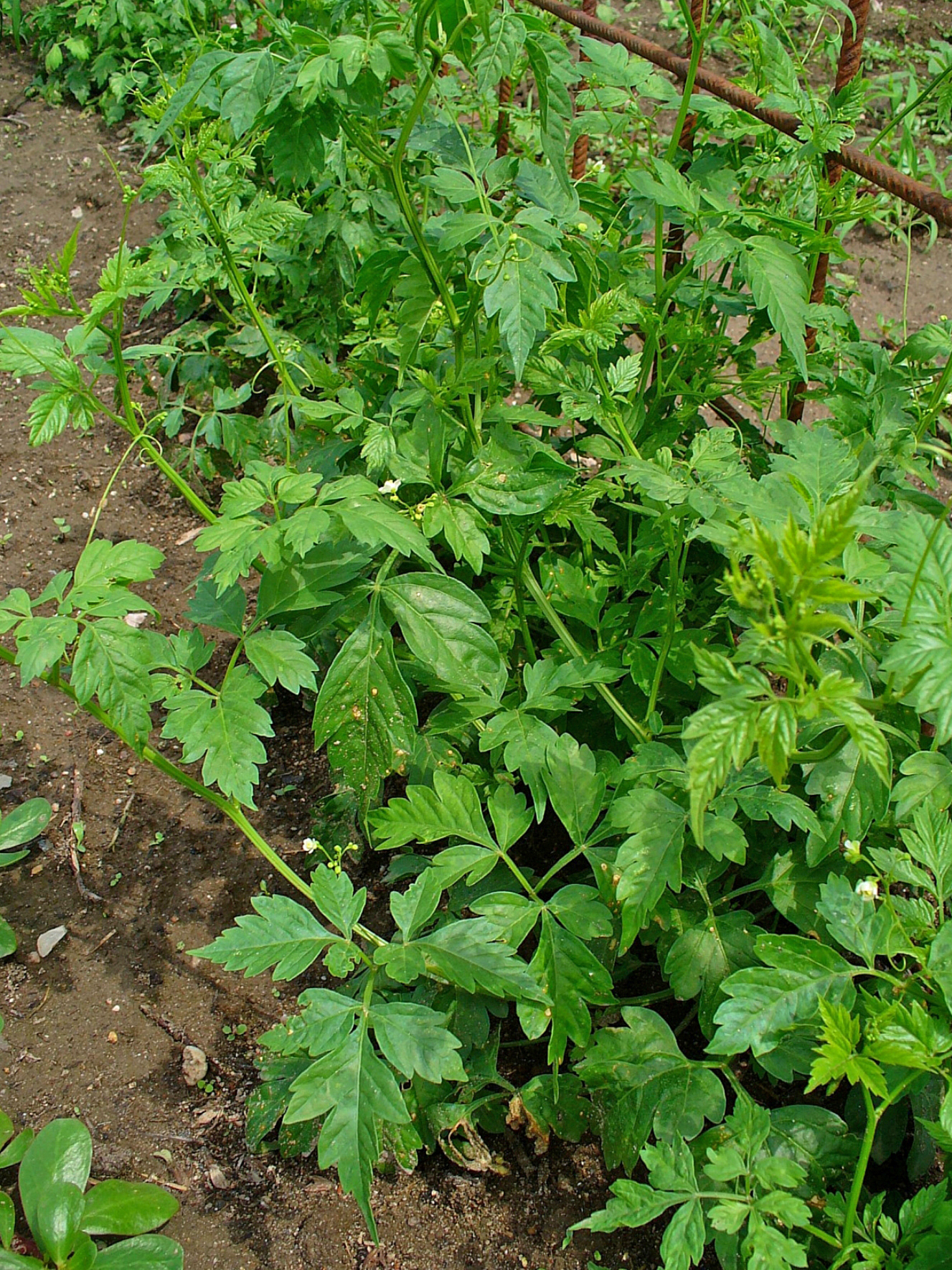
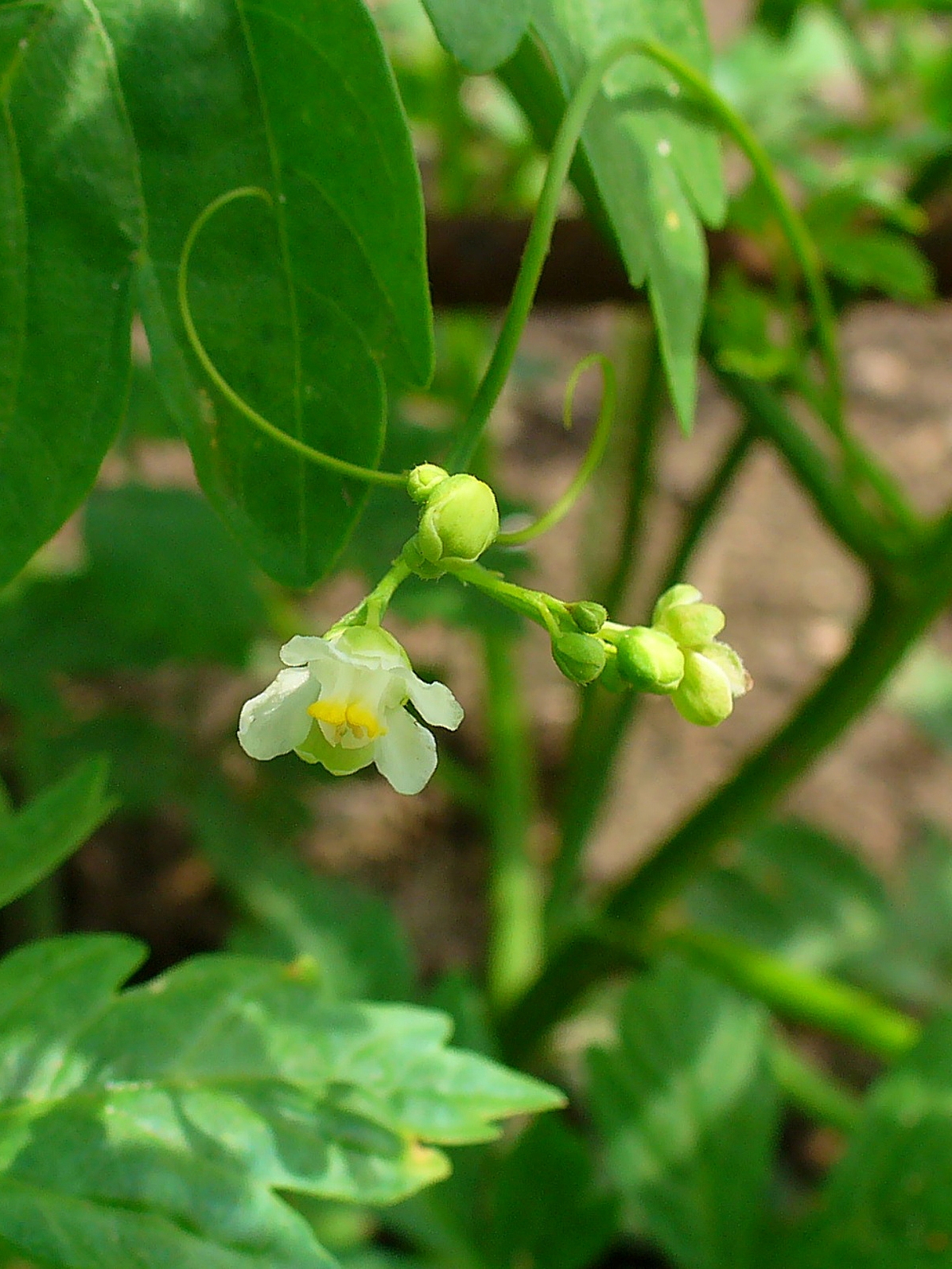
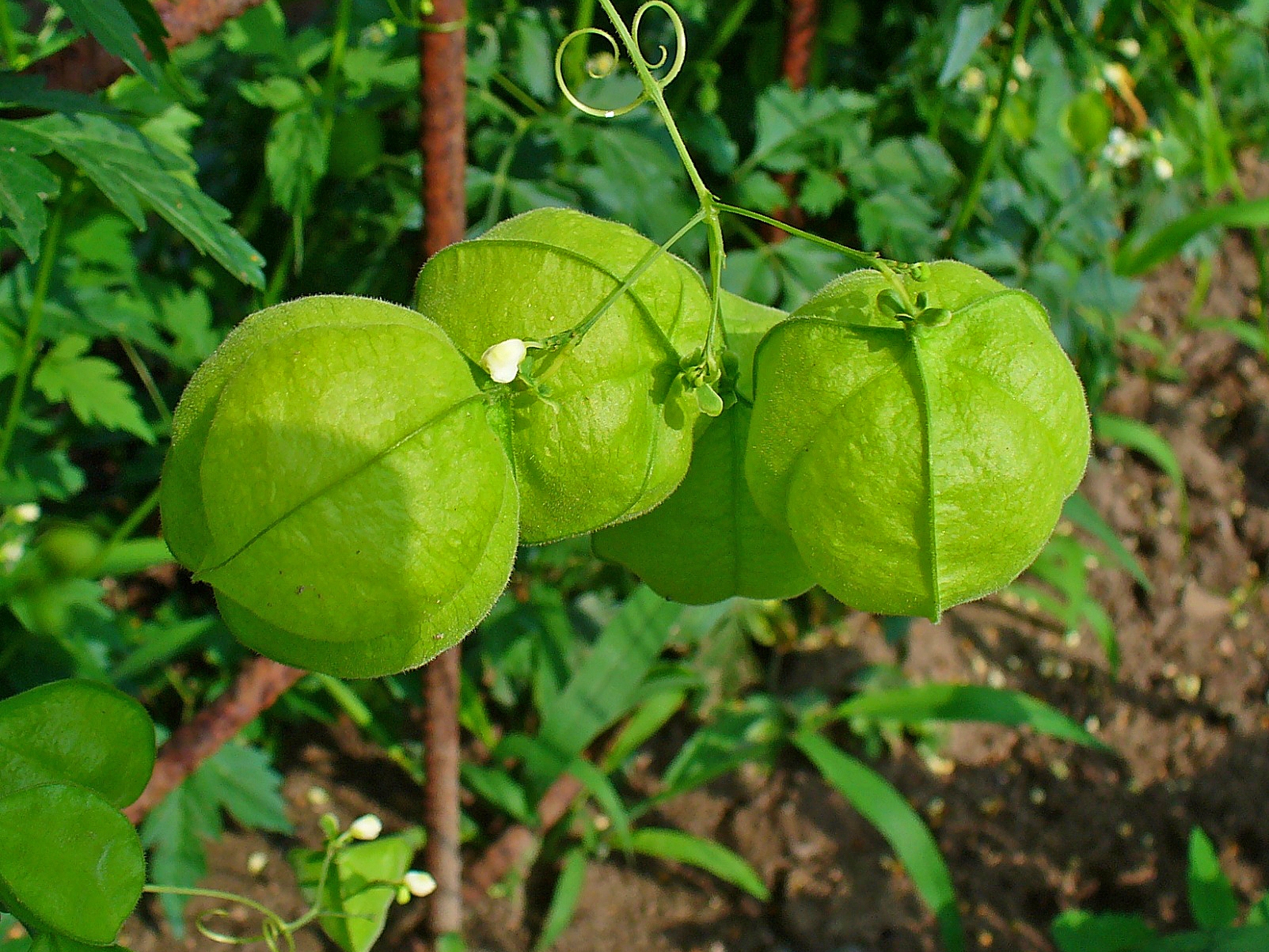
Cardiospermum is the genus of the balloon vines, and it is one of those plants that announces itself before you learn its name. It is a small genus — roughly a dozen to fourteen species, depending on the checklist — of climbing herbaceous vines in the soapberry family (Sapindaceae), native mostly to tropical and subtropical America, with members now naturalized across the warm world. The vines climb with tendrils, carry divided, toothed leaves that look almost fern-like at a glance, and bear small white flowers that nobody plants them for. What people plant them for, and what children notice first, is the fruit: an inflated, papery, three-chambered capsule that looks like a small green balloon, or a paper lantern, dangling from the vine. Inside each balloon are three seeds, black and round, each marked with a white, heart-shaped spot. The genus name is that spot, spelled out in Greek: kardia, heart, and sperma, seed. Heartseed. It is the most literal plant name in the garden, and it is accurate down to the last seed.
The climbing system deserves a paragraph of its own, because it is the reason this vine behaves the way it does. Cardiospermum vines climb with tendrils that grow from the flower clusters themselves — a pair of coiled tendrils at the base of each inflorescence, reaching out, wrapping around anything nearby, and hauling the vine upward. The stems are slender, ribbed, sometimes grooved, and flexible enough to scramble over fences, shrubs, and other plants, and the leaves are biternate — divided twice into threes — with coarsely toothed leaflets that give the vine its feathery look. The flowers are small and easy to miss: four petals, white with yellow markings, functionally unisexual, clustered on long stalks. The balloons are impossible to miss: papery capsules that start green and inflate as they grow, then dry and brown as they ripen, each one a little greenhouse around three seeds. Open a ripe balloon and the seeds sit there like tiny black beads with white hearts — a party trick, a seed packet, and a botanical signature all at once.
And then there is the other side of the story, which this guide states plainly and early, because it changes every planting decision. Balloon vine is a vigorous, fast-growing vine that seeds freely, and outside its native range it behaves as a weed: it scrambles over native vegetation, smothers shrubs and small trees under its own weight, and spreads by seed along roads, rivers, fences, and disturbed ground. In parts of the southern United States and in South Africa it is regarded as an invasive weed, and in South Africa its two weedy species are listed invaders, one of them a major transformer weed of forest margins. In Florida and the warm Southeast, that history matters more than the flowers do: a vine that climbs this fast and seeds this freely must be planted deliberately, watched closely, and never allowed to escape into a natural area. This guide recommends it only where it is already present or where a local authority confirms it is appropriate — and it recommends pulling it everywhere it is not wanted, before the balloons ripen.
The butterfly story is the reason this genus guide exists, and it is written at the genus level in one guide and at the species level in another, so this paragraph keeps the two apart. The Miami Blue Butterfly guide lists its caterpillar hosts at the genus level: balloon vine (Cardiospermum species), alongside gray nickerbean and blackbead. That genus-level form is what this guide covers. The Silver-banded Hairstreak guide, by contrast, names its host at the species level: balloon vine (Cardiospermum halicacabum), a vine whose balloons the caterpillars live inside, eating the seeds — the guide says to look for the caterpillar by opening a balloon gently, finding a small green caterpillar eating seeds, and closing the balloon again, because the caterpillar’s house is also its pantry. That species-level form belongs to a Cardiospermum halicacabum species unit, not to this genus guide, and this guide names it here for completeness, not as a claim.
One caution that belongs in the butterfly paragraph, not buried in the growing advice. The Miami Blue is an endangered butterfly, and its guide deliberately does not invite gardeners to attract it — it says plainly not to try. Do not plant balloon vine in order to summon a Miami Blue, and do not seek out its caterpillars. Grow balloon vine, where it is appropriate at all, for the common hairstreaks that already use it, for the balloons, and for the sheer delight of a vine that grows paper lanterns — and leave the endangered butterfly to the conservationists, the habitat, and the quiet that its own guide asks for.
How to grow
Growing Cardiospermum starts with the only decision that matters, and it is not about soil or sun — it is about whether you should plant it at all. Check first: is balloon vine already growing in your area, is it listed as invasive or weedy by your local extension or state authority, and is there a native vine that would do the same job without the escape risk? If the answers point away from balloon vine, plant the native instead, and this guide will have done its job by talking you out of it. If balloon vine is appropriate where you garden — already present, not listed, and wanted for its balloons and its hairstreaks — then the growing advice is simple, because the vine does most of the work itself.
Give one vine one support it is allowed to cover: a fence, a trellis, an arbor, or a sturdy shrub that can carry a scrambling vine without being smothered. Balloon vines grow fast in warm weather, climb by tendrils, and reach well over head height in a season where frost does not cut them back, so the support must be built for the vine it will become, not the seedling you planted. Plant in full sun to part shade, in average, well-drained soil, and water through establishment; once growing, the vine tolerates the moist, disturbed ground it favors in the wild — thickets, riverbanks, field edges, and garden corners that stay damp. Space vines so each has room to climb without tangling into its neighbor, and train the tendrils onto the support as they grow, because a balloon vine left to its own devices will climb whatever is nearest, including the shrub you meant to keep.
Propagation is seed, and seed is the reason for the caution in this guide. Collect the balloons as they brown, open them, and sow the black, heart-marked seeds in warm soil after frost, or start them indoors and transplant after the weather warms — germination is usually ready, because this is a vine built to colonize. Cuttings root as well, but seed is the honest method for a plant whose whole strategy is seed. And the other half of propagation is containment: pull seedlings where they are not wanted, cut the vine back before the balloons ripen if you do not want self-sowing, and never dump vine trimmings with ripe balloons into a natural area, a compost heap that will not heat, or a roadside. A balloon vine you compost carelessly is a balloon vine you planted somewhere else, and the somewhere else is usually the place that least wants it.
Florida note, stated with the nativity question left open, because the sources leave it open. Balloon vine’s native distribution is obscured by centuries of cultivation and spread, and floras disagree at the margins about where it is native and where it is introduced — what is not in dispute is that it grows, scrambles, and seeds freely in Florida’s warm, moist, disturbed ground, along fences, edges, and waterways. Florida gardeners should treat it as a plant to manage, not a plant to release: grow it on a support you control, pull it where it escapes, cut it before the balloons ripen if you do not want more of it, and check with local extension before planting it near a natural area. A vine this charming and this vigorous earns its caution honestly, and a gardener who respects both halves of that sentence will enjoy the balloons without becoming the reason they are everywhere.
Water & feeding
Water, for balloon vine, is a question of moisture without fuss. The genus favors moist ground — thickets, riverbanks, field edges, and the damp corners of gardens — and in a moist site with normal rainfall it largely waters itself once established, growing fast and ballooning freely. In a dry spell it wants deep watering, because a thirsty vine thins out, stops climbing, and stops making balloons, which defeats the purpose of planting it. A mulch of wood chips or leaf litter helps, holding moisture and cooling the roots in summer, and it doubles as habitat for the soil life that keeps moist soil healthy rather than sour. Do not plant balloon vine in a bog or a permanently wet spot and expect it to behave; it wants moist, not waterlogged, and its roots rot in standing water like any other vine’s.
Feeding: modest, across the genus. Balloon vines prefer average soil, and a spring topdressing of compost is the right scale of feeding — not a heavy fertilizer program, which mostly produces even faster, softer growth that flops off the trellis and seeds even more freely. In a moist, disturbed site, the nutrients arriving with leaf litter and garden compost are often plenty on their own. The soil science here is the opportunist’s story: moist, disturbed soil is a nutrient highway, regularly replenished with organic matter, and the microbes, fungi, and invertebrates of that soil cycle nutrients fast in warm conditions. A balloon vine’s roots live in that community, storing energy and sending up new growth through it, and its yearly leaf fall returns a large crop of leaves to the soil as organic matter, feeding the next cycle. Planting a balloon vine on a fence at a moist garden edge is therefore not just decorating a boundary — it is installing a fast, scrambling soil-builder with paper lanterns on it, and the tendrils are the vine’s way of making sure it gets to the light first.
Common problems
- Escaping and smothering. The most consequential problem in the genus. Balloon vine climbs fast, seeds freely, and smothers shrubs and small trees under its weight. Grow it only on a support you control, pull it where it escapes, and cut it before the balloons ripen if you do not want self-sowing.
- Planting it to attract an endangered butterfly. Do not plant balloon vine to summon a Miami Blue, and do not seek out its caterpillars. The Miami Blue guide asks gardeners not to try, and this guide repeats that, because an endangered butterfly needs habitat and quiet, not a garden campaign.
- Frost. Balloon vines are warm-climate plants, tender where frost bites. In a frosty garden they die back or die outright; grow them as warm-season annuals there, or do not grow them at all.
- Weak support. A fast, scrambling vine needs a sturdy fence, trellis, or arbor. A flimsy trellis will bend or collapse under a mature vine, and a vine on a shrub it was not invited onto will smother that shrub.
- Caterpillars in the balloons. Silver-banded hairstreak caterpillars live inside the balloons and eat the seeds, and that is the point of planting it where it is appropriate. A healthy vine makes more balloons than the caterpillars can eat, so do not spray the balloons — the caterpillars are the crop, and the balloon is their house.
- Soapberry bugs. The vine’s other famous insects are the soapberry bugs that feed on its seeds, and in places where balloon vine is invasive, the bugs have followed it and changed with it. They are a curiosity, not a reason to spray — and one more reason not to spread the vine where it does not belong.
Harvest
Cardiospermum’s harvest is balloons, seeds, and butterfly-watching — in that order, and with one firm boundary that this guide states twice because it matters. The balloons are the crop: collect them as they brown, open them gently, and admire the black seeds with their white hearts — and then decide, before you scatter a single one, whether you want more vines. The leaves and young shoots have been eaten as greens in some traditions, and seed extracts appear in skin preparations marketed for eczema and related conditions, but this guide does not recommend eating the plant or using it medicinally: the traditional uses are history and marketing, not a reason to experiment, and the plant’s value here is as a vine, a balloon-maker, and a caterpillar pantry, not as a remedy.
If you want more plants, sow the heart-marked seeds in warm soil after frost, and transplant after the weather warms — germination is usually ready, because this is a vine built to colonize, and that readiness is also the warning. If you want fewer plants, pull seedlings where they are not wanted, cut the vine before the balloons ripen, and never compost ripe balloons where they can escape. The simplest harvest, though, is a summer afternoon by a balloon vine fence with no agenda at all: green paper lanterns overhead, a small hairstreak drifting through the shade they made, and the knowledge that inside one of those balloons a small green caterpillar is eating seeds in a house that is also its pantry. Leave most balloons standing through the season for the caterpillars, prune after frost, and let the vine come back next warm season. That is the crop, and it arrives without a single spray — because spraying it would kill the very thing you planted it for, and because a vine that has run its tendril-and-balloon system across the warm world does not need your intervention, only your willingness to keep it where it belongs.
Saving seeds
Read this before you save a single seed: in Florida, the best-known balloon vine, Cardiospermum halicacabum, is rated a high invasion risk by the University of Florida’s assessment program, and it smothers native vegetation where it escapes. Saving its seed is easy. That is exactly the problem. Save seed only for your own contained garden, never scatter it, never share it with anyone gardening in Florida, and bag and trash any pods you do not want rather than composting them. The native Florida balloon vine, Cardiospermum corindum, is a different plant with a gentler reputation, but the two are easily confused, so if you are not certain which species you hold, treat it as the invasive one.
With that boundary set, the mechanics are simple and rather charming. Each papery balloon is an inflated capsule that starts green and dries to brown, and inside are usually three black seeds, each marked with a white heart-shaped scar that gave the genus its name, heart seed. Collect the balloons as they brown, before they split and drop their cargo. Open them gently over a bowl, pick out the seeds, and spread them to dry for several days in a dry room. No fermentation, no washing: dry seed from a dry pod is already clean.
To grow them, sow indoors six to eight weeks before the last frost, about a quarter inch deep in moist mix, or sow directly outdoors once all danger of frost has passed. Germination typically takes two to four weeks at warm room temperature. The vine can also be raised from stem cuttings, which is the safer choice if you want an exact copy of a plant you already trust, since cuttings carry no seed-uncertainty with them.
Seedlings grown from saved seed will generally resemble their parent, since this is an open-pollinated genus rather than a named hybrid, but do not promise purity if you grow more than one Cardiospermum species within pollinator range of each other. Insects visit the small white flowers, and a mixed planting can produce mixed parentage. For storage, the Florida rule applies double: dry thoroughly, seal airtight with a desiccant packet, and keep cool and dark. Sow the following season for the best germination, since no widely agreed shelf life exists for this seed, and fresh seed beats a hopeful jar every time. Above all, remember that a balloon vine’s seed is not just next year’s plant. In a warm climate it is a potential escape artist, and the responsible seed saver is the one who keeps count of every balloon.
Browse all plant & pest guides
Species
Cardiospermum is a genus of roughly a dozen to fourteen species, and no guide can list them all, so this section names the species a North American gardener or butterfly-watcher is most likely to meet, in plain text, and states plainly which ones have their own units. Balloon vine (Cardiospermum halicacabum) is the lesser balloon vine, the common weedy species of warm, disturbed ground, the named host of the Silver-banded Hairstreak guide, and a separate species unit, not covered by this genus guide. Large balloon vine (Cardiospermum grandiflorum) is the bigger, woodier relative, similar in fruit but larger in all parts, a major weed in South Africa and a plant to treat with even more caution than its smaller cousin. Balloon vine (Cardiospermum corindum) is a closely related species whose name appears as a synonym in some references and as its own species in others, and this guide lists it here so gardeners are not confused when the name turns up. Grow balloon vine only where it is appropriate, by its Latin name, and let the genus guide be the map, not a substitute for any species on it.