
🌿 Woollyfruit Sedge
What it looks like
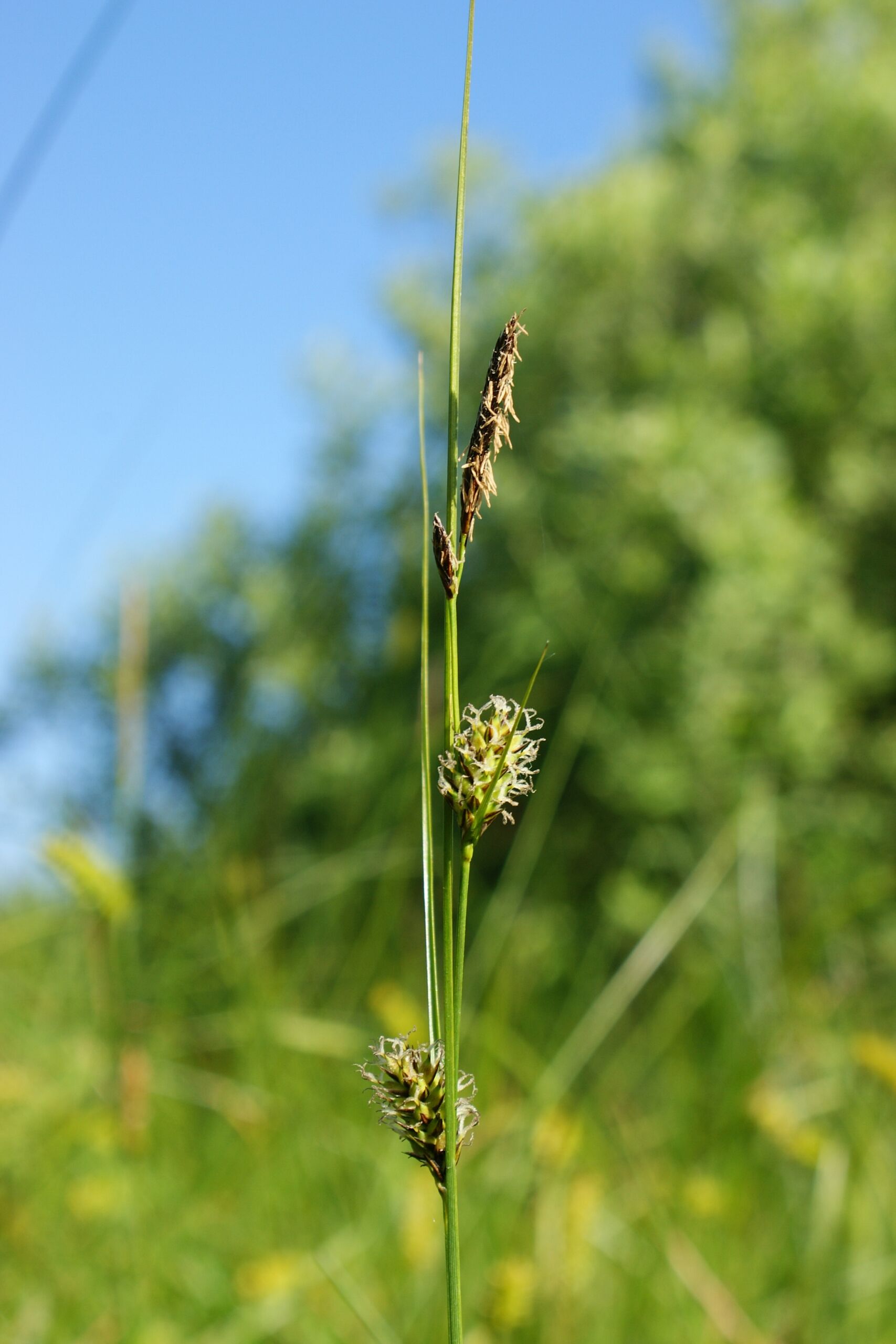
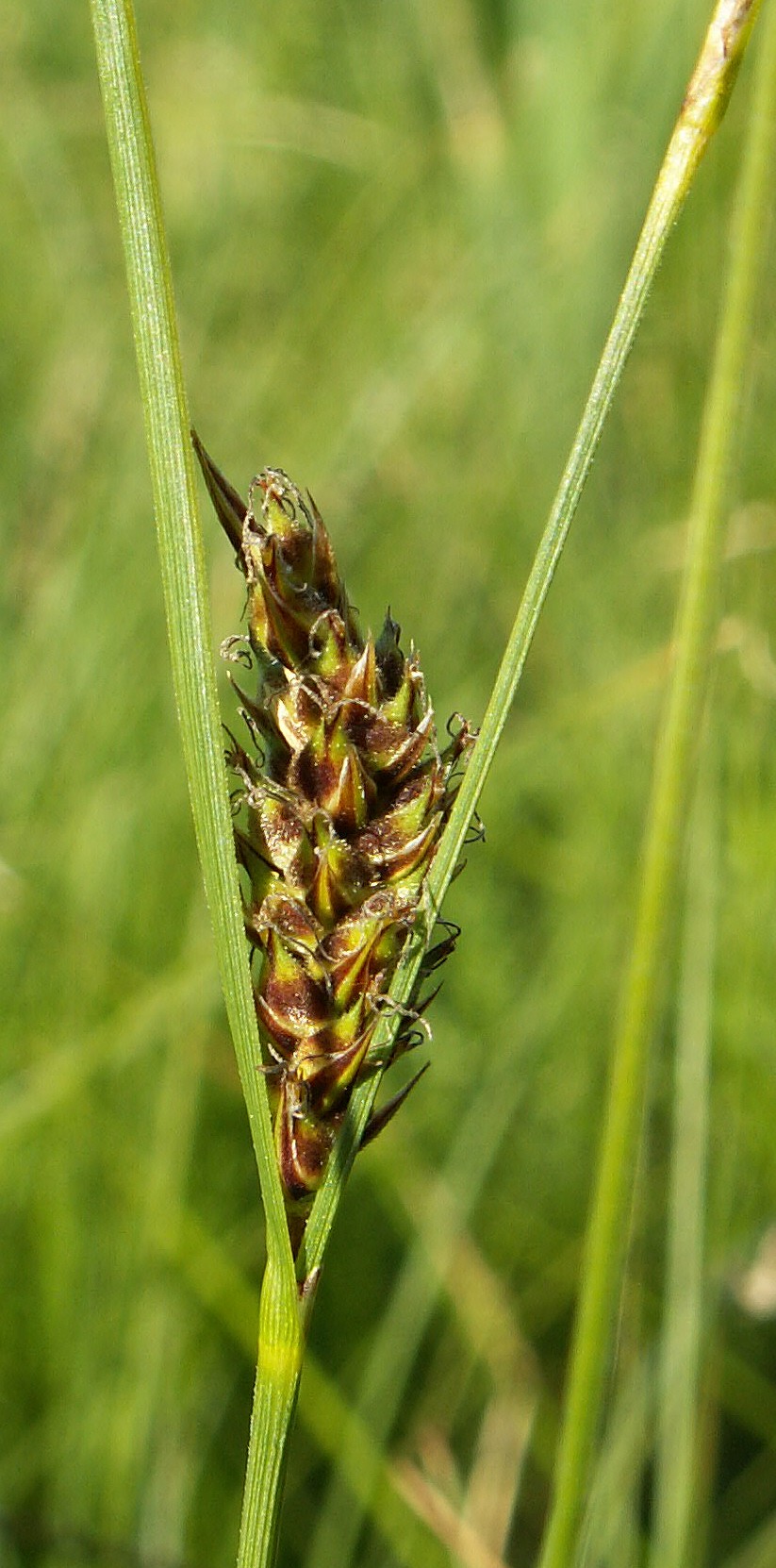
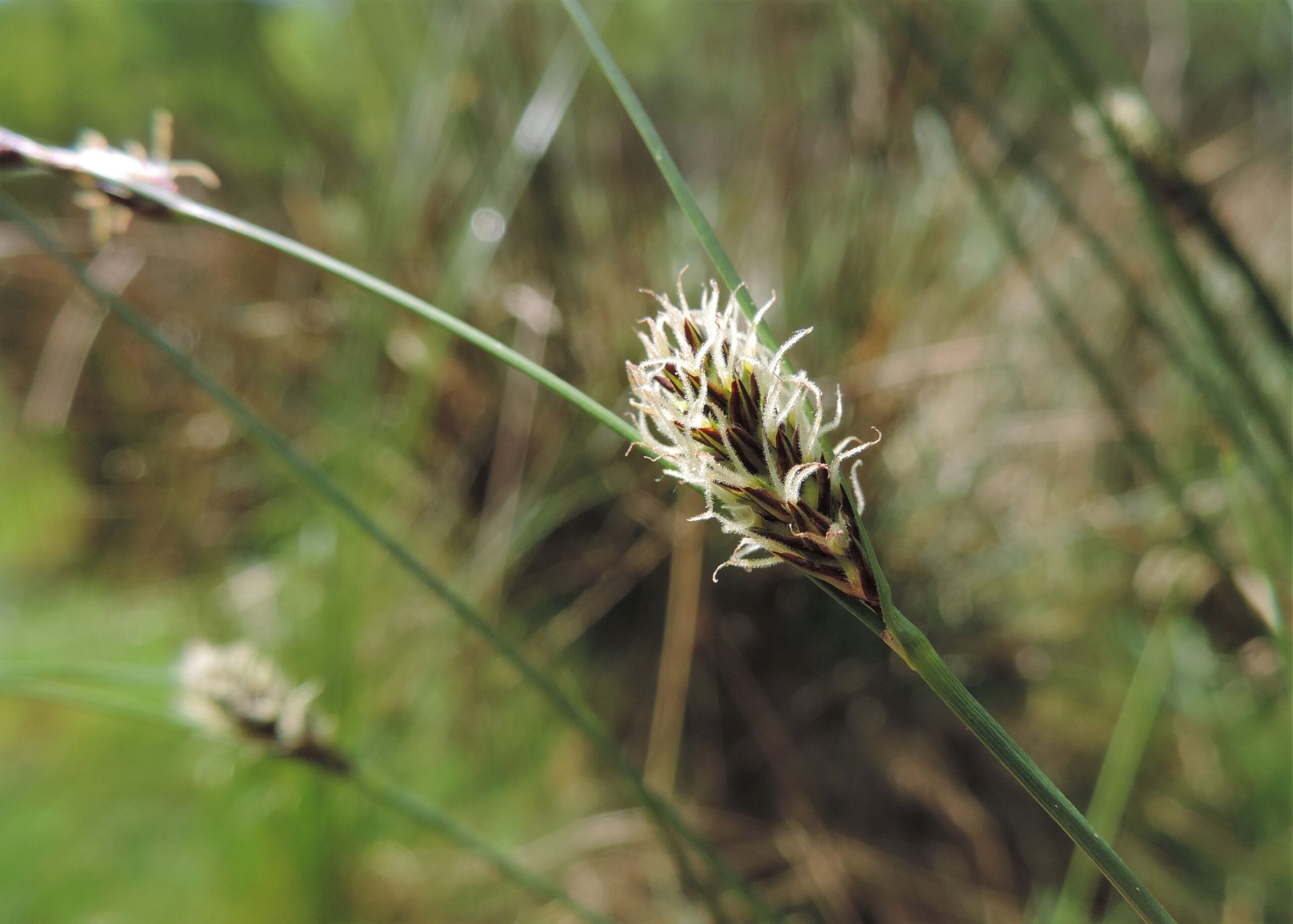
Woollyfruit sedge is a sedge that refuses to behave like a garden plant, and that is exactly its charm. It is a perennial of the sedge family (Cyperaceae), in the great genus Carex, and it grows from long, creeping rhizomes into loose colonies and, in the right wetland, into nearly monospecific stands that stretch as far as you can see. The stems are erect, roughly 40 to 120 centimeters tall — knee to waist height, sometimes a little more — rising singly or a few together from the rhizome mat, wine-red at the bases where the bladeless basal sheaths wrap them in reddish-purple. The leaves are the giveaway at a distance: narrow, gray-green blades only about 1 to 2 millimeters wide, folded inward along the midrib so they look almost threadlike, with the leaves of non-flowering shoots drawn out into long, curled, filament-thin tips. A big stand in late season is unmistakable because those dried, faded, curly leaf tips turn the whole colony pale straw — a whole meadow gone blond, which is a better field mark than any hand lens.
Like all sedges, it passes the rhyme test: sedges have edges. The stems are triangular in cross-section, not round like a grass stem or hollow like a rush, and the leaves are arranged in three ranks. The flowers are the quiet, wind-pollinated kind that sedges specialize in: no petals, no scent, no nectar, just spikes. The inflorescence runs 6 to 20 centimeters, with one to three staminate (male) spikes at the tip and one to two, sometimes three, pistillate (female) spikes below, ascending on short stalks. The female scales are lance-shaped, purplish with a pale midstripe, often tipped with a short awn. And then there is the fruit, the reason for the name: each female flower sits inside a perigynium, a little sac that encloses the achene, and in this species the perigynia are broadly egg-shaped, 3 to about 4.3 millimeters long, and densely hairy — so hairy that the hairs hide the veins and the surface detail underneath. Run a finger over a ripe female spike and you understand the common name at once: it feels woolly. That wool is not decoration. It is the plant’s signature, and it is how you separate this sedge from its smooth-fruited neighbors when the flowers are done and the spikes are all that is left.
The range is the other half of the story. Woollyfruit sedge is circumboreal — found across the northern latitudes of North America, Europe, and Asia — and in North America it runs from Alaska and the Yukon across Canada to the Atlantic, and south to California, the interior West, the upper Midwest, and down the East Coast to Virginia. North American plants are often distinguished as subspecies americana, with slightly smaller perigynia and shorter beak teeth than their Eurasian relatives, though many floras treat the whole complex as one variable species. Its habitats are all wet: bogs, fens, sedge meadows, lakeshores, stream banks, and the wettest ground a wetland can offer, usually in very wet sites and sometimes out in the water itself. In New York it is considered an indicator species for fens, which is a formal way of saying that where this sedge grows, the ground is a fen and not just a damp field. And in sheltered bays it does something few sedges manage: it forms thick floating mats, rafts of rhizome and root that float on the water and carry an entire community on their backs — sphagnum moss, heath shrubs, orchids, carnivorous plants — a floating garden anchored by a sedge.
The butterfly context is what earns this sedge its place in this project, and it is a serious one. The Mitchell’s satyr guide lists, in its Host plants section, sedges including tussock sedge (Carex stricta) and other Carex species such as Carex buxbaumii, Carex lasiocarpa, Carex leptalea, Carex prairea, and Carex sterilis, plus bulrush in some records. The Mitchell’s satyr is a federally endangered butterfly of prairie fens and sedge meadows, and captive food-preference trials found that six Carex species — including this one — support normal larval development through to the third-instar diapause in August. That is not a casual nibble; it is a tested food plant for a butterfly with almost no habitat left. Field observers have also confirmed larval feeding on this species in the wild. So this is not a plant you grow for a flower bed. It is a plant of protected fens, and its garden role is restoration and rain-garden work inside its native range, from nursery-propagated stock, never from wild collection.
One plain-text disambiguation, because the sedge world is full of lookalikes and this guide must not swallow its neighbors. This guide covers Carex lasiocarpa only. The site’s Sedge genus guide lists woollyfruit sedge among its group members, but a genus listing is not a species guide, and this guide is the species unit — the genus guide does not cover this plant in particular, and this guide does not cover the genus. Woollyfruit sedge is sometimes called slender sedge, a name it shares with other sedges, and older floras and nursery lists may file it under Carex lanuginosa, so buy by the current Latin name and check the woolly perigynia, not the tag. Its close lookalike in the field is woolly sedge (Carex pellita), a separate species with wider, flat leaves rather than the narrow, permanently folded blades of this one. And it hybridizes, reportedly, with tussock sedge (Carex stricta), though those reports need confirmation — another reason to buy from a reputable native nursery rather than from a ditch.
How to grow
Growing woollyfruit sedge starts with an honest question: do you have a wetland? This is not a plant for a border, a container, or a dry shade corner, and pretending otherwise is how sedges die. It wants saturated, peaty soil — a rain garden that holds water, a pond margin, a constructed fen edge, a bog garden — in full sun to light shade, where the ground stays wet through the growing season. In its native fens it grows in ground that is wet to the point of standing water, and in a garden it is happiest where the soil never really dries out. If your site dries in August, this is the wrong sedge; pick a dry-shade Carex instead and leave the fen plants to the wet ground they belong to.
Plant nursery-propagated stock, in spring, into wet, organic soil, and then — this is the hard part for a gardener — leave it alone and let it run. Woollyfruit sedge spreads by long rhizomes into colonies, and a colony is the planting, not a specimen. Space with that in mind: a small patch will become a stand, and a stand is the point, because the plant’s ecological work — holding a shoreline, building a floating mat, feeding satyr caterpillars — happens at colony scale. Do not mow it, do not edge it into a tidy clump, and do not drain the ground around it to make it behave. In a pond margin it will creep toward the water and, where conditions allow, out onto it; that floating-mat habit is a feature, not a fault, and it is how the plant builds habitat for everything from sphagnum to orchids.
Propagation is by division of the rhizome mat, which is straightforward in spring: lift a section of rhizome with shoots attached and replant it into wet ground at the same depth. Seed is the slower road, as with most sedges: sow fresh seed in fall into moist soil and let winter do the stratification, and expect seedlings to stay small for a season or more before they amount to anything. Either way, the first year is establishment, not display. A fen sedge builds roots before it builds height, and a colony that looks unimpressive in year one is often a colony that will own the shoreline by year three. Patience is the fertilizer here, along with water.
Florida note, stated plainly because it matters for this site’s readers: woollyfruit sedge is not a Florida plant. Its North American range runs south only to Virginia on the East Coast, and it belongs to northern bogs, fens, and lakeshores, not to Florida gardens. Florida readers should admire it from the Mitchell’s satyr story and plant the wetland sedges native to their own region instead. Growing a northern fen sedge in Florida heat would be an act of optimism, not horticulture, and this guide does not recommend it.
Water & feeding
Water is not a chore for this plant; it is the whole job. Woollyfruit sedge wants its feet wet — saturated soil, seasonal standing water, a pond edge that never fully dries — and in a genuinely wet site with normal rainfall it largely waters itself. In a rain garden or pond margin, the design does the watering: the basin holds the water, the sedge holds the basin. If the ground dries out for weeks in summer, the colony thins, the leaf tips crisp, and the plant tells you, in the plainest language it has, that the site is wrong. Mulch is not the answer here the way it is in a border; in a wetland, the mulch is the peat and the leaf litter that accumulate naturally, and the soil life of that wet, organic ground — the microbes, fungi, and invertebrates that cycle nutrients in low-oxygen soil — is the plant’s real feeding system.
Feeding: none, in any normal sense. Do not fertilize a fen sedge. Fen plants live in nutrient-poor water by design, and added fertilizer mostly feeds algae and aggressive competitors that will outgrow the sedge you were trying to help. The plant’s nutrition comes from the slow cycling of its own litter and the mineral-poor groundwater of its habitat, and a colony that has established in wet, peaty ground needs nothing from a bag. If the colony looks yellow and thin, the problem is almost always water — too little of it, or drainage that took it away — not food. Fix the water and the sedge fixes itself.
Common problems
- Drying out. The most common garden failure, by a wide margin. A fen sedge in dry ground is a fish on a lawn. Site it wet, keep it wet, or pick a different sedge.
- Wild collection. Never dig this plant from a fen, a bog, or a lakeshore. Fen habitat is rare, protected in many places, and slow to recover. Buy nursery-propagated stock, and only where the species is native.
- Wrong sedge, wrong name. Common names collide — slender sedge, woolly sedge, woollyfruit sedge — and older names like Carex lanuginosa still circulate. Buy by the Latin name Carex lasiocarpa and check the woolly perigynia.
- Drainage “improvements”. Ditching, tiling, or regrading a wet corner to make it drier will kill a fen planting and the habitat around it. If the ground wants to be wet, let it be wet.
- Competition from aggressive wetland plants. In a small rain garden, cattails, reed canary grass, and other bullies can shade out a young sedge colony. Give the sedge its patch and keep the bullies out until it is established.
- Expecting a flower show. Sedge flowers are wind-pollinated spikes, not blossoms. The show here is the colony, the straw-pale leaf tips, and the floating mats — not petals.
Harvest
The harvest of woollyfruit sedge is not a crop; it is a colony, a shoreline, and a butterfly. There is nothing to eat here and nothing to brew — sedges are not food plants in any practical garden sense, and this guide recommends no ingestion of any part. If you want more plants, divide the rhizome mat in spring, as described above, and replant into wet ground. If you want seed, collect the female spikes in summer when the perigynia are ripe and woolly, and sow fresh into moist soil in fall. And if you want the real harvest, walk a fen edge in late June, when the satyrs fly low over the sedges, and understand that the plant under your feet is the reason the butterfly is there at all. Leave the wild colonies standing, keep the water where it belongs, and let the sedge do what it has done since the glaciers retreated: hold the wet ground together, one rhizome at a time.
Saving seeds
A note on method first: the seed technique below is genus-level Carex practice, applied here because woollyfruit sedge follows the same pattern as its relatives. Where this species has its own tell, it is named. And a boundary to match: propagate only garden-grown plants. Wild fen colonies are habitat, not a nursery, and this sedge’s floating mats shelter wildlife that cannot be replanted, so leave wild stands standing and work from plants already in cultivation.
The sedge version of a seed is a small nutlet tucked inside a perigynium, the little bottle-shaped sac that gives each spike its texture. In woollyfruit sedge the clue is in the common name: collect the female spikes in summer, when the perigynia are ripe and distinctly woolly. Cut whole spikes into a paper bag, not plastic, and let them dry in a shady, airy spot. Once dry, rub the spikes gently to free the seed, and pick out the larger bits of stem and scale by hand. No water, no fermentation: sedge seed wants dry handling, and wet processing only invites mold.
Fresh seed is the best seed. Sow it in fall, on the surface of constantly moist mix or directly into wet ground where the plants are to grow, pressing it into contact with the soil rather than burying it, since many sedges germinate best with light. If you are holding seed over winter instead, give it a cold, moist stratification first: mix it with damp sand or sphagnum in a sealed bag in the refrigerator for several weeks. Sources range from about a month to six weeks or more, so treat a full six weeks as the safe end of the range, then sow into warmth, light, and unrelenting moisture. Germination after chilling typically takes a few weeks, and the seedlings must never dry out, not once, not briefly.
For storage, keep seed cool and dry in an airtight container with a desiccant packet, and sow it the following season rather than banking it for years; sedge seed viability in home storage is not well documented, and fresh seed outperforms old seed by a wide margin. Seedlings will resemble their parents in the broad strokes, since this is a wild species rather than a cultivar, but a seed-grown sedge is a genetic individual, not a photocopy. If you want an exact copy of a particular colony, divide instead: in spring, lift a section of the rhizome mat with shoots attached and replant it straight into wet ground, keeping it soaked until it takes hold. Division is the reliable route, seed is the patient one, and a gardener with a wet edge has room for both.
Browse all plant & pest guides
Species in this group
Woollyfruit sedge (Carex lasiocarpa) — the species described in this guide, the circumboreal fen sedge with densely hairy perigynia, curled filament leaf tips, and floating-mat colonies.
Tussock sedge (Carex stricta) — the wetland architect of eastern marshes, a fellow Mitchell’s satyr host and the dominant sedge of many satyr fens, covered by the Sedge genus guide’s group listing, not by this guide.
Buxbaum’s sedge (Carex buxbaumii) — a northern fen and wet-meadow sedge, another tested Mitchell’s satyr food plant, not covered by this guide.
Bristly-stalked sedge (Carex leptalea) — a delicate, single-spiked fen and swamp sedge, another Mitchell’s satyr host, covered by its own species guide, not by this one.
Prairie sedge (Carex prairea) — a tussock-forming calcareous fen sedge, another Mitchell’s satyr host, covered by its own species guide, not by this one.
Dioecious sedge (Carex sterilis) — a dioecious calcareous fen sedge, another Mitchell’s satyr host, covered by its own species guide, not by this one.
Woolly sedge (Carex pellita) — a separate, wider-leaved species that shares woolly perigynia and some old names with this one; not the same plant, and not covered here.