
🌿 Bristly-Stalked Sedge
What it looks like
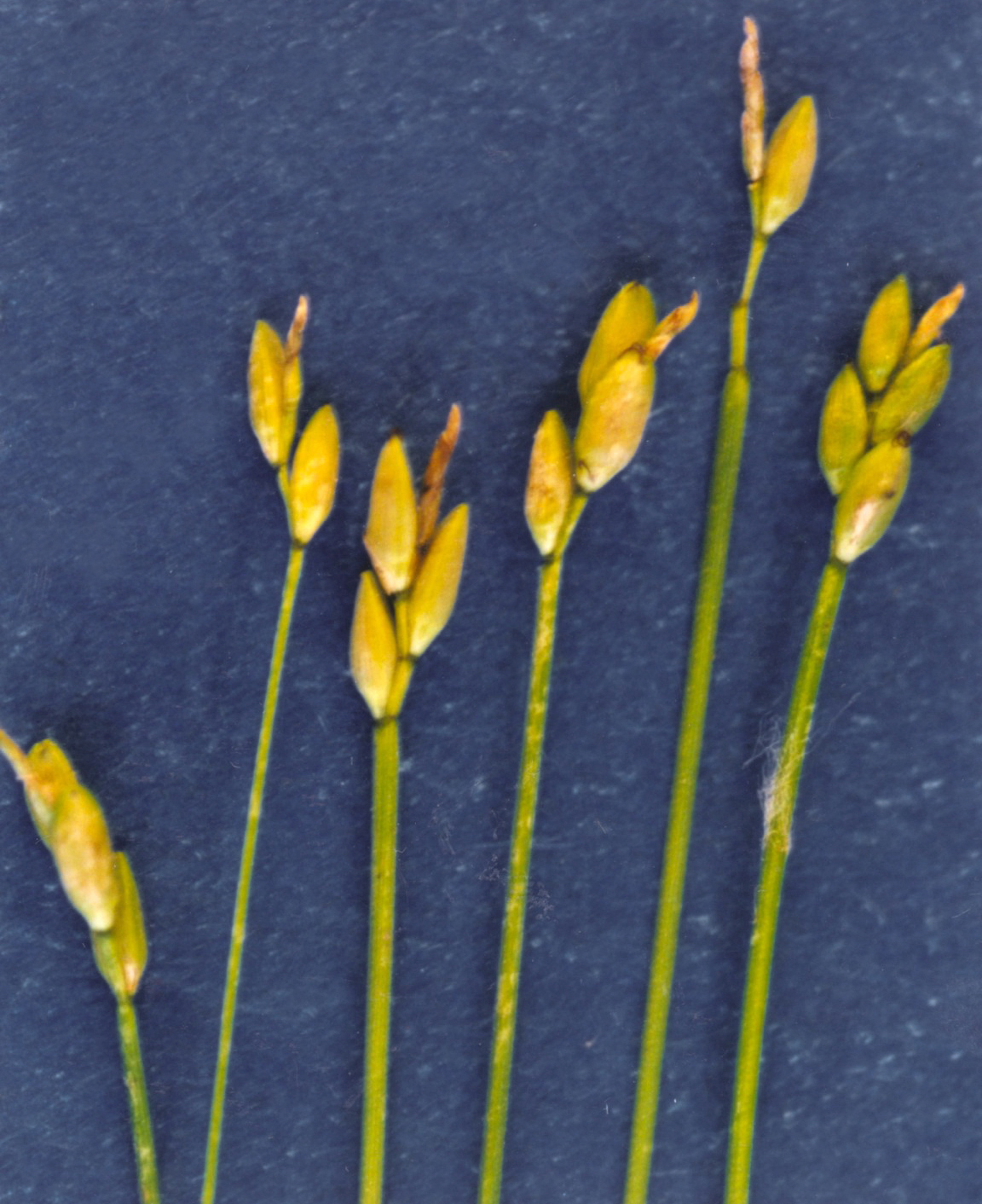
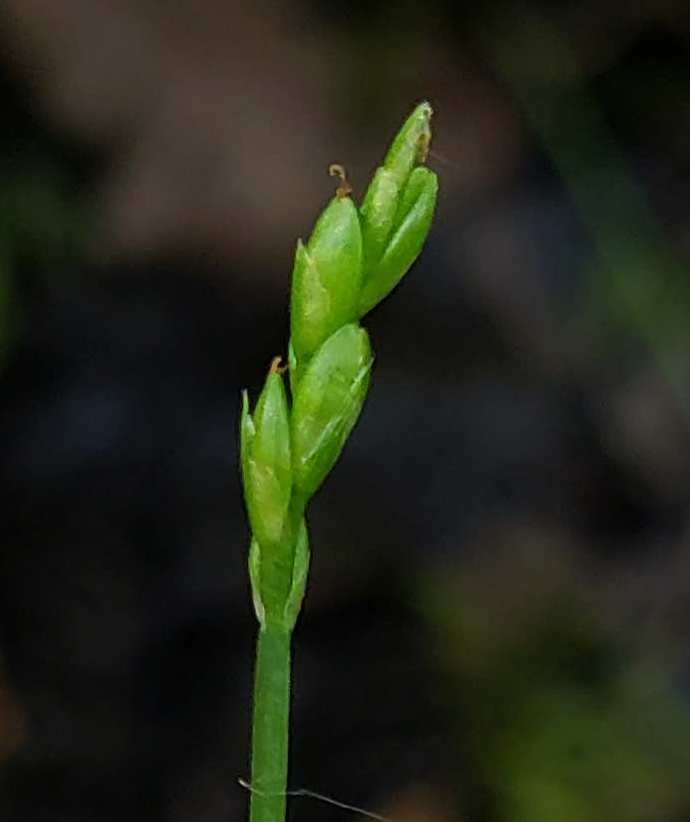
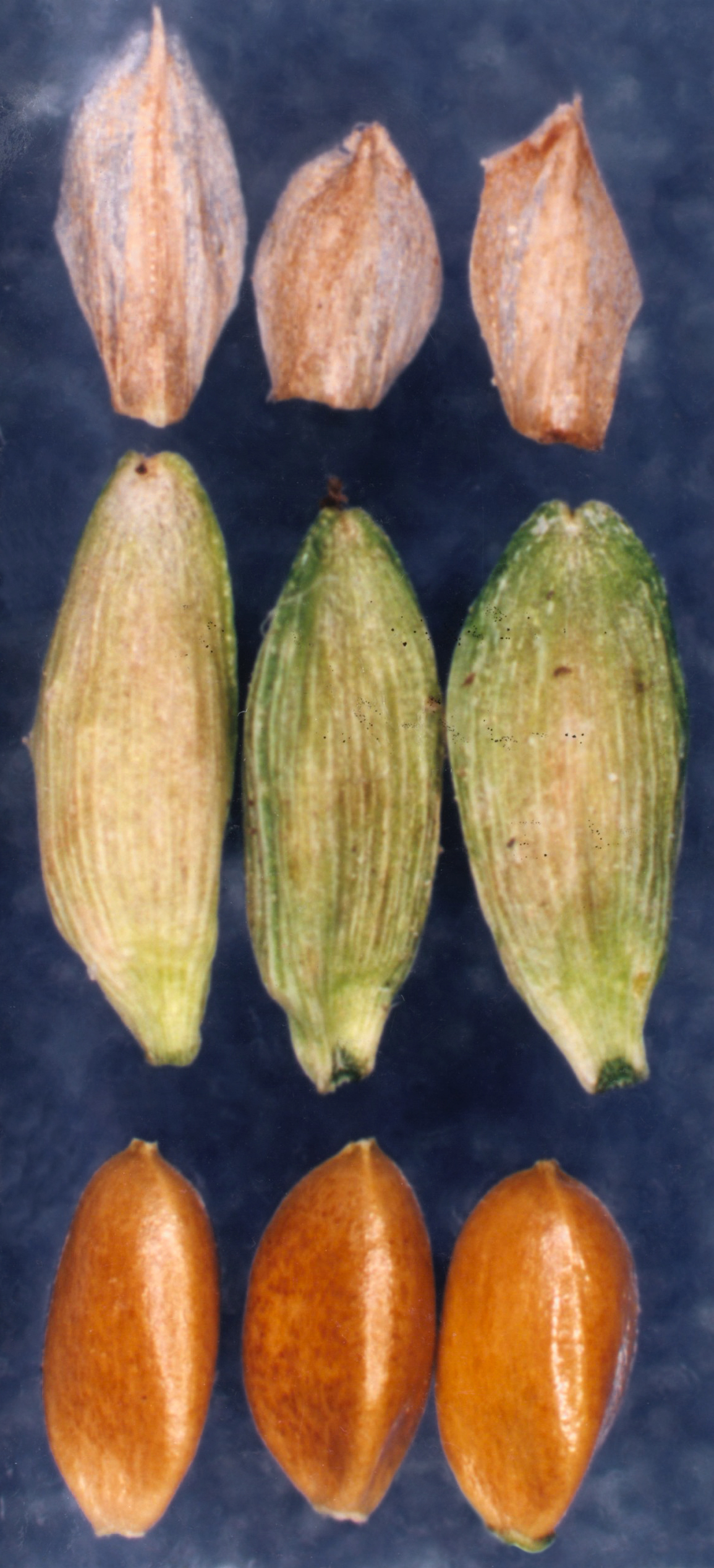
Bristly-stalked sedge is the sedge you walk past a hundred times before you ever actually see it. It is a small, delicate perennial of the sedge family (Cyperaceae), in the genus Carex, and it grows in dense clusters of thin stems from a network of branching rhizomes, usually 15 to 70 centimeters tall — ankle to knee height — with thin, deep green leaves that are soft, hairless, and sometimes drooping, only about 1 to 1.5 millimeters wide. The whole plant has a fine, almost hairlike texture, and in a fen or swamp it reads as a soft green haze at ground level rather than as a clump you would notice from a path. That delicacy is the point: this is a sedge built for the quiet, wet, shaded corners of wetlands, not for the middle of a sunny meadow.
The flower head is the identification, and it is gloriously minimal. Where most sedges carry a cluster of spikes, bristly-stalked sedge carries one: a single, solitary, bractless spike at the stem tip, up to about 16 millimeters long but only 2 to 3 millimeters wide, yellow-green, with the male flowers above and the few female flowers below. The female flowers sit on long, bristly stalks — the “bristly stalks” of the common name — and the perigynia themselves are few, green, veined, narrowly elliptic, beakless, and thick-stalked, with three stigmas. If you find a sedge with a single tiny spike and long-stalked perigynia in a fen, a swamp, or a wet forest, you have probably found this one, and the hand lens will confirm it: one spike, three stigmas, beakless perigynia on stalks. Its lookalikes are distinguished by exactly these details — a related sedge with more than one spike, or with fatter, reflexed perigynia, is a different plant.
The range is the headline that Go Botany states plainly: bristly-stalked sedge has the widest geographic range of any North American sedge. It runs from Labrador to Alaska, south through most of the United States to California, Texas, and central Florida, and into the Dominican Republic, and it only grows in wetlands — it is an obligate wetland species, which means that in the wild you will not find it anywhere but wet ground. Three subspecies divide that range: subspecies leptalea, the widespread northern and western form; subspecies harperi, the southeastern form, from Texas and Florida north to Missouri and Pennsylvania; and subspecies pacifica, the Pacific coastal form of Washington, British Columbia, and southeastern Alaska. In New England it is typically a plant of rich forests, swamps, and fens, often in rich soils or over circumneutral bedrock; in the mountains it turns up in rich fens at high elevation; in the Southeast its subspecies harperi haunts bogs and coniferous swamps. Everywhere, the address is the same: wet, and only wet.
The butterfly context is the Mitchell’s satyr story, shared with its fen neighbors. The Mitchell’s satyr guide lists, in its Host plants section, sedges including tussock sedge (Carex stricta) and other Carex species such as Carex buxbaumii, Carex lasiocarpa, Carex leptalea, Carex prairea, and Carex sterilis, plus bulrush in some records. The Mitchell’s satyr is a federally endangered butterfly of prairie fens and sedge meadows, and captive food-preference trials found that six Carex species — including this one — support normal larval development through to the third-instar diapause in August. For a butterfly whose habitat is measured in a handful of fens, every tested food plant matters, and this one matters across nearly the whole continent because the plant itself is nearly everywhere wet ground exists. The adults, by contrast, may barely feed at all, with a flight of only a couple of weeks — the caterpillar’s sedge is the whole economy of the species.
One plain-text disambiguation, because this sedge’s common names are a tangle. This guide covers Carex leptalea only. The site’s Sedge genus guide lists bristly-stalked sedge among its group members, but a genus listing is not a species guide, and this guide is the species unit. The common name “slender sedge” is also used for this species in some regional lists, and it is also used for woollyfruit sedge (Carex lasiocarpa) — two different plants sharing one nickname, which is why this guide files by Latin name and why you should buy by Latin name too. Older synonyms include Carex harperi, now treated as subspecies harperi, and Carex microstachys and Carex polytrichoides. And note the spelling trap: “bristly-stalked” and “bristle-stalked” and “bristlystalked” are all the same plant in different sources, not three plants.
How to grow
Growing bristly-stalked sedge starts with the same honest question as every fen sedge: do you have wet ground, and does it stay wet? This species wants wet to moderately wet soil, part shade to full shade, in a bog edge, a swamp margin, a wet woodland, a rain garden that holds water, or a fen restoration — and it tolerates most soils except rocky ground, preferring loamy or clay soils and growing poorly in sand. It is a cool-season sedge, actively growing in the cool months, and it spreads slowly by re-seeding and moderately fast by rhizomes into small colonies. Plant nursery-propagated stock in spring into wet, organic soil at the same depth it grew at, and give it a patch rather than a specimen hole: a colony of fine stems reads as a soft green carpet at the wet edge, and a single plant reads as a weed you forgot.
Shade is a genuine preference here, not just a tolerance. Where its fen neighbors want open sun, bristly-stalked sedge is at home in part to full shade — under a wet woodland canopy, at a shaded swamp edge, in a boggy corner where the trees close overhead. That makes it one of the more gardenable fen sedges for a woodland rain garden, provided the water is there. Do not plant it in a sunny, dry border and expect the shade tolerance to save it; shade without water is still a dry site, and this is an obligate wetland plant. The two conditions travel together: wet and shaded, or not at all.
Propagation is by division of the rhizome clumps in spring, which is reliable and simple: lift a section with shoots and roots, replant into wet ground, and keep it wet until established. Seed is the slower road: sow fresh seed in fall into moist soil and let winter stratify it, and expect small seedlings that take a season or more to amount to a colony. Either way, the first year is roots, not display. A sedge that looks like a tuft of green thread in year one is doing exactly what it should, and by year three it should be a soft colony at the wet edge, feeding nothing showy and everything important.
Florida note, and this one is actually good news for once: bristly-stalked sedge is the one sedge in this batch that reaches Florida. Its southeastern subspecies harperi runs from Texas and Florida north to Missouri and Pennsylvania, and the species as a whole is recorded south to central Florida. That does not make it a plant for every Florida garden — it still wants wet, shaded, boggy or swampy ground, and it is scattered rather than common in the state — but a north or central Florida gardener with a genuinely wet, shaded bog edge and nursery-propagated harperi stock is working inside the plant’s real range. South Florida gardeners should still look to the wetland sedges native to their own region instead.
Water & feeding
Water is the whole job, again, with a shade chaser. Bristly-stalked sedge wants consistently moist to wet soil — weekly watering in a garden setting where rainfall does not do it, mulch to hold moisture, and ground that never dries to dust. In a rain garden or swamp margin with normal rainfall it largely waters itself once established, and it tolerates occasional dryness better than its fen cousins, but “tolerates occasional dryness” is not “likes dry ground,” and a colony that dries out repeatedly will thin and vanish. The soil life of wet, organic ground does the feeding: microbes, fungi, and invertebrates cycling nutrients in damp soil, with leaf litter as the slow-release fertilizer.
Feeding: none from a bag. Do not fertilize a wetland sedge. Added fertilizer in wet ground mostly feeds algae and aggressive competitors, and this is a small, delicate plant that loses a nutrient race to cattails and reed canary grass every time. If the colony looks thin, check water and shade first, and check competition second: a young colony shaded out by a bully is not hungry, it is crowded. Clear the bullies, restore the water, and let the sedge be small and steady, which is its whole strategy.
Common problems
- Drying out. The usual killer. An obligate wetland plant in dry ground is on borrowed time. Site it wet, keep it wet, or pick a dry-shade sedge instead.
- Too much sun without water. Shade helps, but shade is not a substitute for wet soil. Wet and shaded together is the requirement.
- Sandy soil. This species grows poorly in sand. Loam or clay, wet and organic, is what it wants.
- Wild collection. Never dig this plant from a fen, bog, or swamp. Fen and bog habitat is rare and slow to recover. Buy nursery-propagated stock, and only where the species is native.
- Name collisions. Slender sedge, bristly-stalked sedge, bristle-stalked sedge, flaccid sedge — and slender sedge also means woollyfruit sedge elsewhere. Buy by the Latin name Carex leptalea, and by subspecies where it matters (harperi in the Southeast).
- Expecting a specimen. This is a fine-textured colony plant, not a focal point. Planted alone in a mulch bed it looks lost; planted as a wet-edge colony it looks like it belongs, because it does.
Harvest
There is no food or medicine harvest here, and this guide recommends eating or brewing no part of the plant. The harvest is division in spring — lift a rhizome section, replant into wet ground — and seed in summer, sown fresh into moist soil in fall for a winter’s stratification. The real harvest is quieter: a wet, shaded corner that holds water, holds a colony of fine green thread, and holds, in the places where the Mitchell’s satyr still flies, a caterpillar’s dinner. Leave the wild colonies standing, keep the water where it belongs, and let the smallest spike in the fen do its unshowy, continent-wide work.
Saving seeds
A note on method first: the seed technique below is genus-level Carex practice, applied here because bristly-stalked sedge follows the same pattern as its relatives. And a boundary to match: propagate only garden-grown plants. This is an obligate wetland plant of fens and wet shade, and wild colonies are habitat, not a nursery, so leave wild stands standing and work from plants already in cultivation.
The sedge version of a seed is a small nutlet tucked inside a perigynium, the little bottle-shaped sac that gives each spike its texture. Collect the spikes in summer, when the perigynia are ripe, dry, and easily detached, cutting whole spikes into a paper bag, not plastic, and letting them dry in a shady, airy spot. Once dry, rub the spikes gently to free the seed, and pick out the larger bits of stem and scale by hand. No water, no fermentation: sedge seed wants dry handling, and wet processing only invites mold.
Fresh seed is the best seed. Sow it in fall, on the surface of constantly moist mix or directly into wet, shaded ground where the plants are to grow, pressing it into contact with the soil rather than burying it, since many sedges germinate best with light. If you are holding seed over winter instead, give it a cold, moist stratification first: mix it with damp sand or sphagnum in a sealed bag in the refrigerator for several weeks. Sources range from about a month to six weeks or more, so treat a full six weeks as the safe end of the range, then sow into warmth, light, and unrelenting moisture. Germination after chilling typically takes a few weeks, and the seedlings must never dry out, not once, not briefly. For this species the moisture rule is doubly strict, since it is the plant that fails first when a site dries.
For storage, keep seed cool and dry in an airtight container with a desiccant packet, and sow it the following season rather than banking it for years; sedge seed viability in home storage is not well documented, and fresh seed outperforms old seed by a wide margin. Seedlings will resemble their parents in the broad strokes, since this is a wild species rather than a cultivar, but a seed-grown sedge is a genetic individual, not a photocopy. If you want an exact copy, divide instead: in spring, lift a section of the rhizome clump with shoots and roots attached and replant it straight into wet, shaded ground, keeping it soaked until it takes hold. Division is the reliable route, seed is the patient one, and a gardener with a wet, shady corner has room for both.
Browse all plant & pest guides
Species in this group
Bristly-stalked sedge (Carex leptalea) — the species described in this guide, the delicate single-spiked wetland sedge, with subspecies leptalea (widespread), harperi (southeastern, including Florida), and pacifica (Pacific coastal).
Woollyfruit sedge (Carex lasiocarpa) — a larger, colony-forming fen sedge with woolly perigynia, another Mitchell’s satyr host, covered by its own species guide, not by this one; it also answers to “slender sedge” in some lists, which is a name collision, not a relationship.
Prairie sedge (Carex prairea) — a tussock-forming calcareous fen sedge, another Mitchell’s satyr host, covered by its own species guide, not by this one.
Dioecious sedge (Carex sterilis) — a dioecious calcareous fen sedge, another Mitchell’s satyr host, covered by its own species guide, not by this one.
Tussock sedge (Carex stricta) — the dominant sedge of many satyr fens, covered by the Sedge genus guide’s group listing, not by this guide.
Buxbaum’s sedge (Carex buxbaumii) — a northern fen and wet-meadow sedge, another tested Mitchell’s satyr food plant, not covered by this guide.