
🌿 Winter Cassia
What it looks like
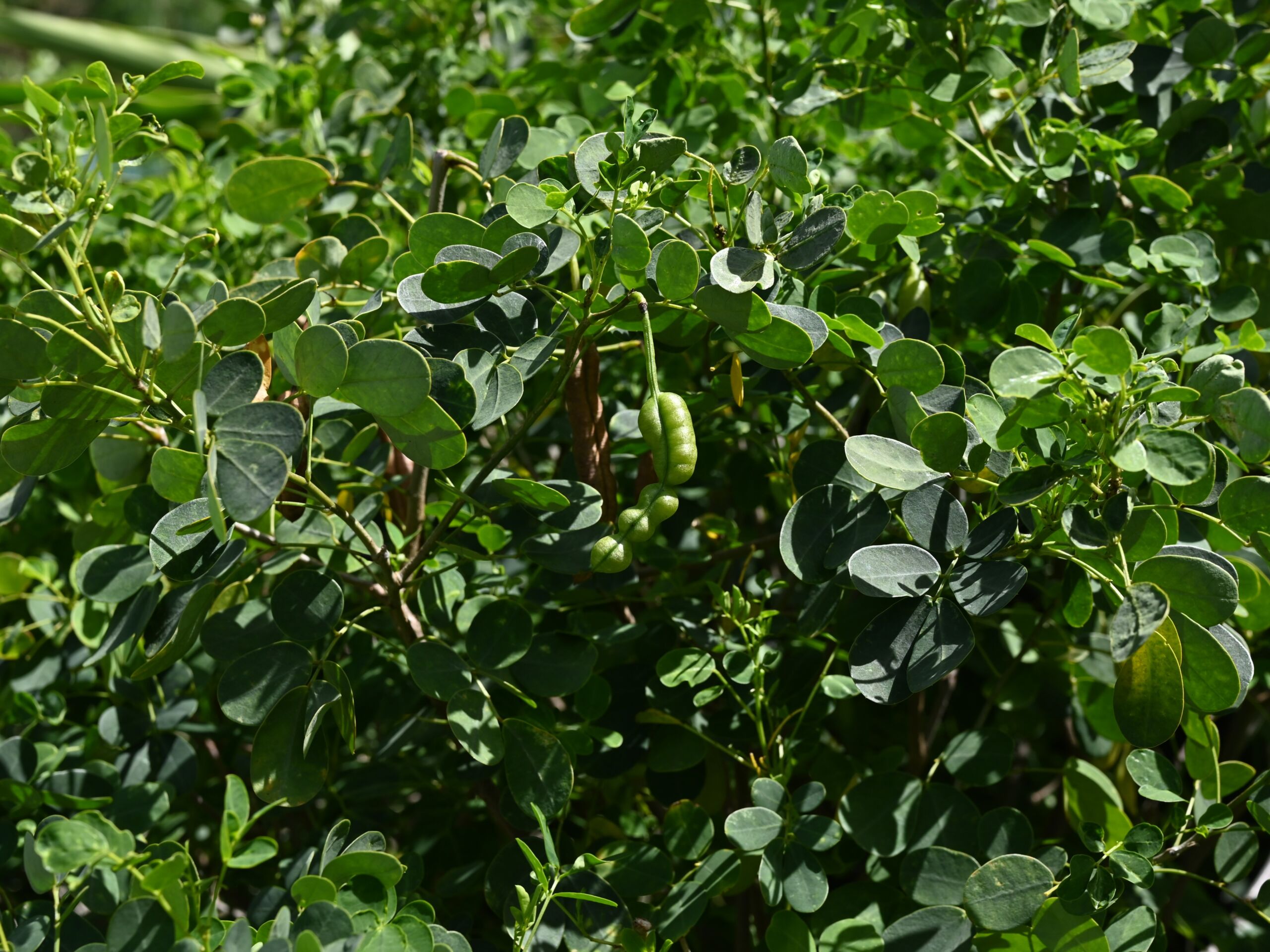
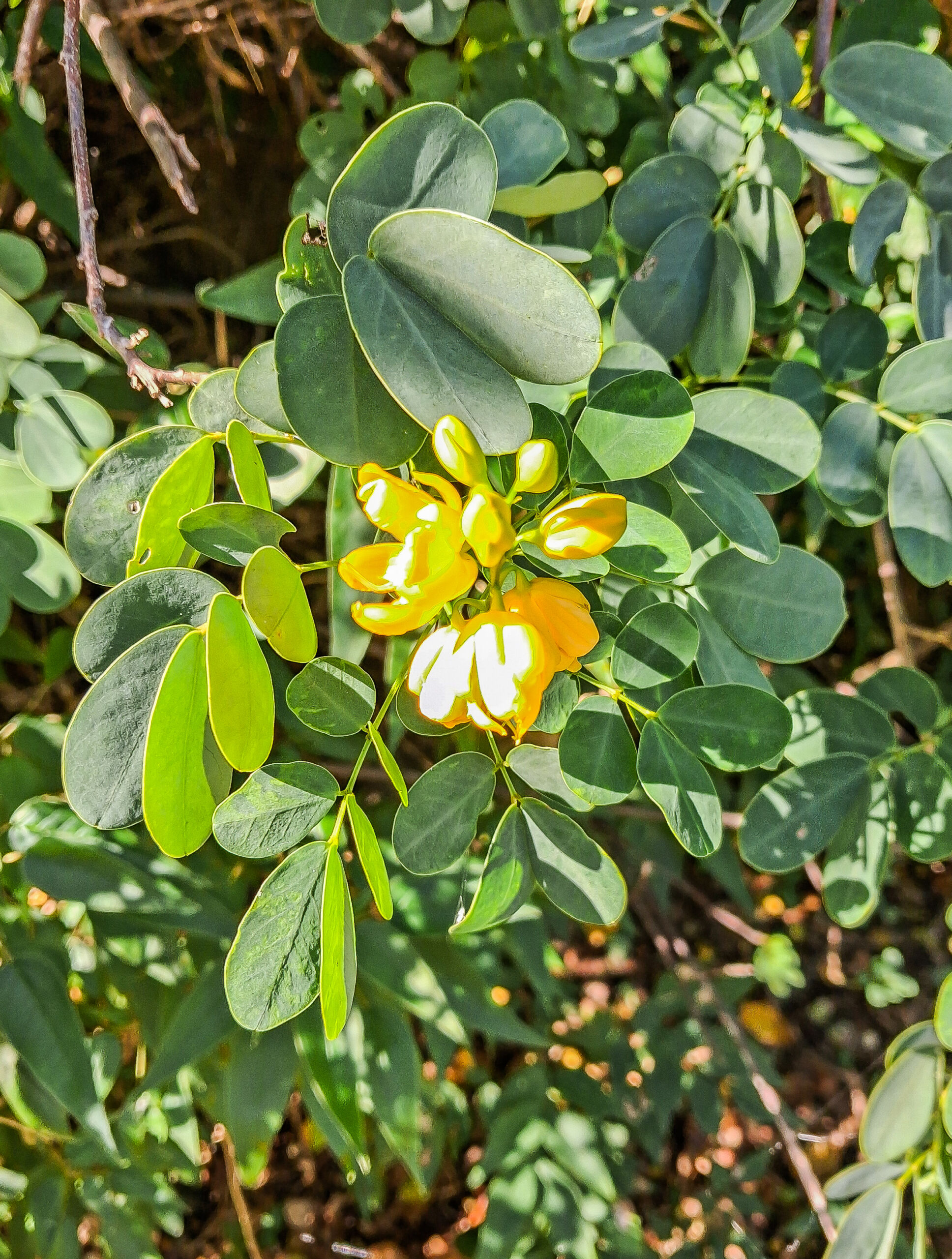
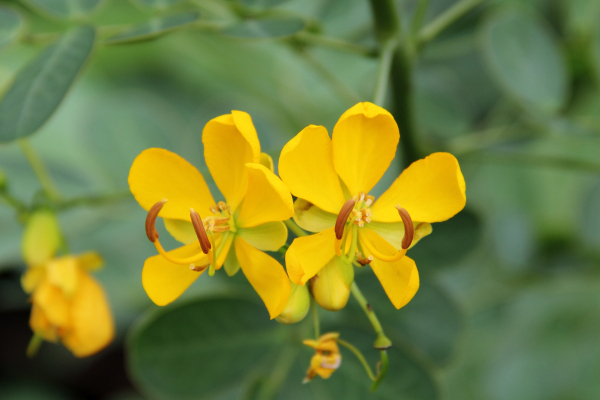
First, the name, because this guide wears its name problem on its sleeve and you deserve to know before you shop. The butterfly guide that sent you here lists this plant in its Host plants section as Cassia emarginata. That name is real — Carl Linnaeus published Cassia emarginata in 1753 — but modern taxonomy treats it as a synonym of Senna bicapsularis, the winter cassia, rambling senna, Christmas bush, money bush, and yellow candlewood of northern South America, Panama, and the West Indies. The old Cassia genus was split up in the 1980s, and most of its New World members landed in Senna, which is why the butterfly guide’s old name and the nursery tag’s new name point at the same shrub. This guide keeps the butterfly mention form in its slug so the link lands, but it teaches the current name throughout, and if you go shopping, shop for Senna bicapsularis — or for winter cassia — because Cassia emarginata on a tag is either an old label or a different seller’s idea of the same plant.
The plant itself is a sprawling, semi-evergreen shrub, 8 to 12 feet tall with an 8 to 10 foot spread, branching from near the base into a low, spreading crown. It is not a tree and not a tidy hedge; it is a big, arching, slightly scrambling shrub that wants room to sprawl, and it will reward room with a fall show that earns its other nursery name, butterfly bush. While other trees are preparing for winter, as the UF/IFAS Extension profile puts it, this one is just waking up: bright yellow flowers appear in fall and run into winter, at a time of year when little else is in bloom, and the blossoms genuinely resemble golden butterflies clustered on the branch tips. The flowers are about 12 to 16 millimetres long, carried in masses on short racemes, with a few also tucked into the leaf axils.
The leaves are the field mark that separates this species from its most confusing lookalike, and they are worth learning, because the confusion is not theoretical — it is the Florida nursery trade’s favorite mix-up, and it is detailed below. Winter cassia leaves are pinnate, 2.5 to 9 centimetres long, with six to eight leaflets, which is to say three or four pairs per leaf. The leaflets are 1.6 to 4.5 centimetres long and 1.1 to 2.3 centimetres broad, wide and rounded at the tip — and the name emarginata itself refers to that notched, rounded leaflet tip, the little nick at the end of the leaflet that Linnaeus saw. The leaf stalk is glandless between the lowest pair of leaflets in the older descriptions, and the fruit is a long, many-seeded legume pod, the classic pea-family bean, which ripens after the long fall bloom.
That pea-family membership is not trivia; it is the soil story of the whole senna clan. Like other legumes, winter cassia partners with root-nodule bacteria that fix atmospheric nitrogen into forms plants can use, so a senna shrub is not just taking from its soil — it is quietly enriching it, dropping nitrogen-rich leaf litter and feeding the soil food web underneath its own canopy. A shrub that feeds sulphur caterpillars above ground and soil microbes below it is doing two jobs at once, and that is the kind of plant a butterfly garden should be built around, provided — and this guide is blunt about the provided — you plant the right senna and not its invasive cousin.
The butterfly context is specific and small, and this guide states it plainly rather than inflating it. The Yellow Angled-Sulphur butterfly guide lists Cassia emarginata in its Host plants section, which is the single mention this species guide covers. Sulphur caterpillars in general feed across the senna genus — the site’s senna genus guide covers that wider menu — but this species guide claims only the one exact mention: Cassia emarginata, host plant, Yellow Angled-Sulphur guide. If you plant winter cassia hoping for yellow angled-sulphurs, you are planting a genuine recorded host, not a guaranteed butterfly magnet, and the honest expectation is sulphur caterpillars among the yellow flowers in fall, not a scheduled air show.
How to grow
Grow winter cassia as a specimen shrub in full sun, in zones 9A through 11, and give it the room its spread demands. UF/IFAS lists it for specimen planting, containers or planters, decks or patios, and highway medians, which tells you how tough and sun-hungry it is, but the home-garden translation is simpler: one shrub, full sun, 8 to 10 feet of elbow room, and soil that drains. It tolerates clay, sand, or loam, and acidic to slightly alkaline soil, so most Florida and Gulf Coast garden soils suit it without amendment heroics, provided water does not stand around its roots. Plant it where its fall flowers will be seen — near a patio, at the end of a path, against a sunny fence it can sprawl along — because a shrub that blooms when the garden is otherwise winding down deserves a front-row seat, not a back-corner exile.
Pruning is where winter cassia repays attention. UF/IFAS recommends frequent pinching of the young shoot tips during the growing season, up to the beginning of September, which encourages branching and increases the number of flowers — more branch tips, more racemes, more golden butterflies in fall. Prune in winter after the blooms are gone to keep the sprawl in check; in areas without freezes it can get very large, and a winter haircut is what keeps a 12-foot sprawler a garden shrub instead of a garden takeover. Where frost knocks it down, cut the frost-killed stems off at ground level and let the vigorous sprouts emerge in spring — the roots, if they did not freeze outright, will regrow the shrub fast, and a freeze is a pruning event, not necessarily a funeral. In the mildest parts of its range it stays semi-evergreen; where temperatures drop below freezing it is more likely to be deciduous, dropping its leaves and waiting out the cold.
Propagation is by seed or by cuttings, and the seed has a catch worth knowing. Winter cassia seeds have a tough outer coat, and successful germination is reported to need mechanical scarification — nicking or abrading the coat so water can get in — which is why this shrub is also commonly grown from vegetative cuttings. If you sow seed, scarify first and do not be surprised by slow or patchy germination; if you want a reliable copy of a good plant, take cuttings. Either way, deadhead after flowering if you do not want seedlings: the shrub can reseed, and while UF/IFAS lists its invasive potential as not assessed or incompletely assessed rather than as a confirmed invader, a responsible gardener prunes off the spent pods rather than letting a tropical seeder write its own expansion plan.
Florida note, and this one matters more than most, because Florida is where this plant’s identity gets stolen. In Florida, Senna pendula — Christmas senna, the plant of the site’s Christmas Senna identification guide — is usually cultivated as, and misapplied to, Senna bicapsularis, which means a Florida gardener buying winter cassia may actually be buying Christmas senna, a similar-looking species with invasive tendencies in some areas. Tell them apart by the leaves: true winter cassia has 3 pairs of leaflets per leaf and elongated flower stalks, while Senna pendula has 4 to 7 pairs of leaflets, a gland between each pair, and shorter flower stalks, and it can flower from as early as late summer rather than late fall to winter. Buy by Latin name, count the leaflet pairs, and if the tag says Cassia emarginata and the plant has seven pairs of leaflets, you are not looking at this guide’s shrub. The site’s Christmas Senna guide exists precisely because this mix-up is so common, and this species guide does not cover Christmas senna — it is a different species with its own warning label.
Water & feeding
Water winter cassia like the tropical shrub it is: generously while it establishes, then moderately, with drainage doing more work than the hose. UF/IFAS describes it as moderately drought tolerant once settled, and the pattern that suits it is deep watering in dry spells rather than daily sprinkles — wet the root zone thoroughly, let it drain, and let the soil breathe between waterings, because a legume shrub in standing water is a shrub with rotting roots, not a shrub with a nitrogen problem. A thick mulch of wood chips or leaf litter helps enormously, holding moisture, cooling the roots in summer, and feeding the soil life that keeps a legume’s root zone healthy rather than sour. In a genuinely moist site with normal rainfall it largely waters itself once established; in a drought it wants a deep drink and a root zone that does not bake to dust.
Feeding: modest, as befits a nitrogen-fixer. A legume shrub that makes its own nitrogen does not want a heavy fertilizer program, which mostly produces soft, leggy growth that flops out of shape and delays the fall bloom. A spring topdressing of compost is the right scale of feeding, and in a mulched bed the nutrients arriving with leaf litter are often plenty on their own. The soil science here is the legume story: root-nodule bacteria take nitrogen gas from the air pockets in the soil and turn it into ammonium the plant can use, the plant feeds the bacteria sugars in return, and when leaves and fine roots die back, that nitrogen enters the soil organic matter for everything growing nearby. Planting a winter cassia at a sunny garden edge is therefore not just installing a fall flower show — it is installing a slow-release nitrogen source that feeds the bed around it, and the sulphur caterpillars eating its leaves are part of that same cycle, turning shrub into butterfly and butterfly into the next generation of garden visitors.
Common problems
- Buying Christmas senna by mistake. The most consequential problem in Florida. Senna pendula is routinely sold as winter cassia and has invasive tendencies. Count leaflet pairs (3 for true winter cassia, 4 to 7 for pendula) and buy by Latin name.
- Frost kill. Stems die back in freezes. Cut frost-killed stems to ground level in spring and let the roots resprout; the whole plant may die if its roots freeze outright.
- Getting too big. A sprawling shrub in a frost-free garden can reach 12 feet and sprawl wider. Pinch shoot tips through the growing season up to early September and prune after the fall bloom.
- Reseeding. The shrub can reseed from its pods. Deadhead after flowering to prevent volunteers, especially near natural areas.
- Soggy soil. Winter cassia wants drainage. Standing water rots roots; plant it where water moves through, not where it ponds.
- Caterpillar defoliation. Sulphur caterpillars may chew leaves in fall, and that is the point of planting a host. A healthy shrub recovers quickly, so do not spray the caterpillars — they are the crop.
- Wrong name on the tag. Cassia emarginata, Cassia bicapsularis, Senna bicapsularis, winter cassia, Christmas bush, money bush, yellow candlewood — all the same shrub, except when the tag is wrong and the plant is pendula. Latin name plus leaflet count settles it.
Harvest
Winter cassia’s harvest is flowers, seed, and butterflies — in that order, and with one firm boundary this guide states plainly. This is not a food or medicine plant in this guide’s telling: sennas as a genus have a long history as purgatives, and that history is a reason to leave the plant alone medicinally, not a reason to experiment with it. If you want seed, collect the long pods after the fall bloom, scarify the tough-coated seeds before sowing, and expect patchy germination; if you want more plants, take cuttings, which root more reliably than unscarified seed. If you want the real harvest, leave most plants standing through the fall bloom for the sulphurs, deadhead only what you must to prevent reseeding, and prune in winter after the flowers are gone.
The simplest harvest is a fall afternoon beside a winter cassia in full bloom, when the rest of the garden is winding down and this shrub is just hitting its stride: golden flowers like small butterflies, actual sulphurs drifting among them, and the knowledge that a plant with three names and one long history is doing exactly what it evolved to do — bloom late, feed caterpillars, fix nitrogen, and come back bigger next spring. Leave the pods you do not need for seed, cut the frost-killed stems in spring, and let the shrub sprawl. That is the crop, and it arrives without a single spray — because spraying it would kill the very thing you planted it for.
Saving seeds
First, the boundary this guide has already drawn, restated here because seed envelopes have a way of inviting experiments: winter cassia is not a food or medicine plant. Sennas as a genus have a long history as purgatives, and the seeds carry that same chemistry. Save them to grow shrubs, not to brew, eat, or dose anything with. With that out of the way, winter cassia is a generous seed plant, and its seeds are built like tiny safes.
Collect the long pods after the fall bloom, once they have turned brown and dry and feel papery rather than fleshy. Split them open and shake out the hard, bean-like seeds. The hardness is the whole story of senna seed: the coat is waterproof by design, an evolutionary bet that some seeds should wait out a bad year rather than germinate into it. Unscarified seed can sit in soil for years doing nothing, which is why gardeners sometimes conclude their seed was dead when it was merely locked. To unlock it, nick each seed coat lightly with sandpaper or a nail file, just enough to breach the coat without gouging the embryo, or pour hot (not boiling) water over the seeds and let them soak overnight. Sow the ones that swell; the ones that stay hard and wrinkled can go through the treatment again.
Sow scarified seed about a centimetre deep in a warm, free-draining mix, and keep it warm, roughly room temperature or warmer, because this is a tropical shrub and its seeds germinate on tropical time. Expect sprouts over one to three weeks, and expect patchiness even with good seed, so sow more than you need and thin to the strongest. If you want an exact copy of your plant rather than a seedling lottery ticket, take cuttings instead: cuttings root more reliably than unscarified seed and repeat the parent precisely.
For storage, dry the seeds thoroughly before they go anywhere near a jar. Florida humidity is the quiet saboteur here: seed that feels dry on a damp afternoon may not be dry at all, so finish drying indoors, out of direct sun, until pods snap and seeds feel hard and cool. Then store in a labelled, airtight container with a small desiccant packet, somewhere cool and dark. Hard-coated legume seed stored this way generally keeps for a few years, though germination slowly declines, so sow older seed more thickly and do not be surprised if it is lazier than fresh seed.
Two honest caveats before you scatter. First, open-pollinated seed is not guaranteed true: bees work senna flowers enthusiastically, and if other sennas are blooming nearby, some seedlings may be crosses, showing leaf or flower differences you did not order. If purity matters, isolate by distance or by bagging a few flower clusters, or just propagate by cuttings. Second, winter cassia reseeds itself when you let it. If you do not want volunteers popping up in the border, deadhead the pods you do not need for seed, the way this guide already advises. Saved seed is a gift, but a shrub that plants itself everywhere is a chore wearing a gift’s clothing.
Browse all plant & pest guides
Species
Winter cassia (Senna bicapsularis) is the species described here, filed under the butterfly guide’s mention form Cassia emarginata. It is a single species, not a genus, and this guide claims no other senna. The site’s senna genus guide covers the wider senna menu — candlestick senna (Senna alata), coffee senna (Senna occidentalis), sicklepod (Senna obtusifolia), partridge pea (Senna chamaecrista), Maryland senna (Senna marilandica), privet senna (Senna ligustrina), and the rest — and it names winter cassia among them without covering it at species depth, which is what this guide does. Christmas senna (Senna pendula) is a different, similar-looking species with its own identification guide and invasive warning, and it is listed here only so it is not mistaken for this plant. Fruticosa senna (Senna fruticosa, sold under the old name Cassia fruticosa) is another distinct species with its own species guide, and the two guides are kept strictly separate: emarginata is bicapsularis, fruticosa is fruticosa, and neither name covers the other.