
🌿 Catstongue
What it looks like
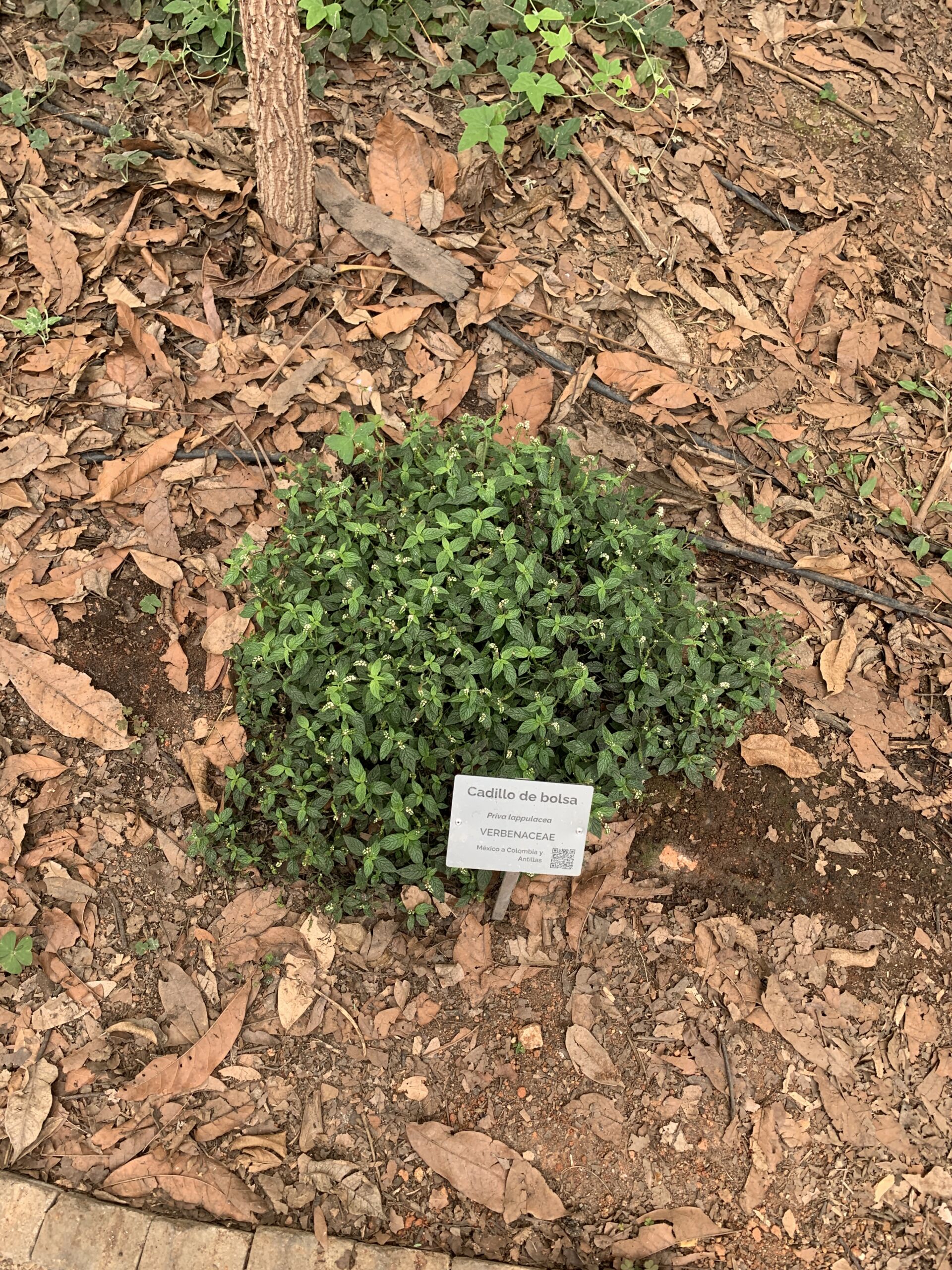
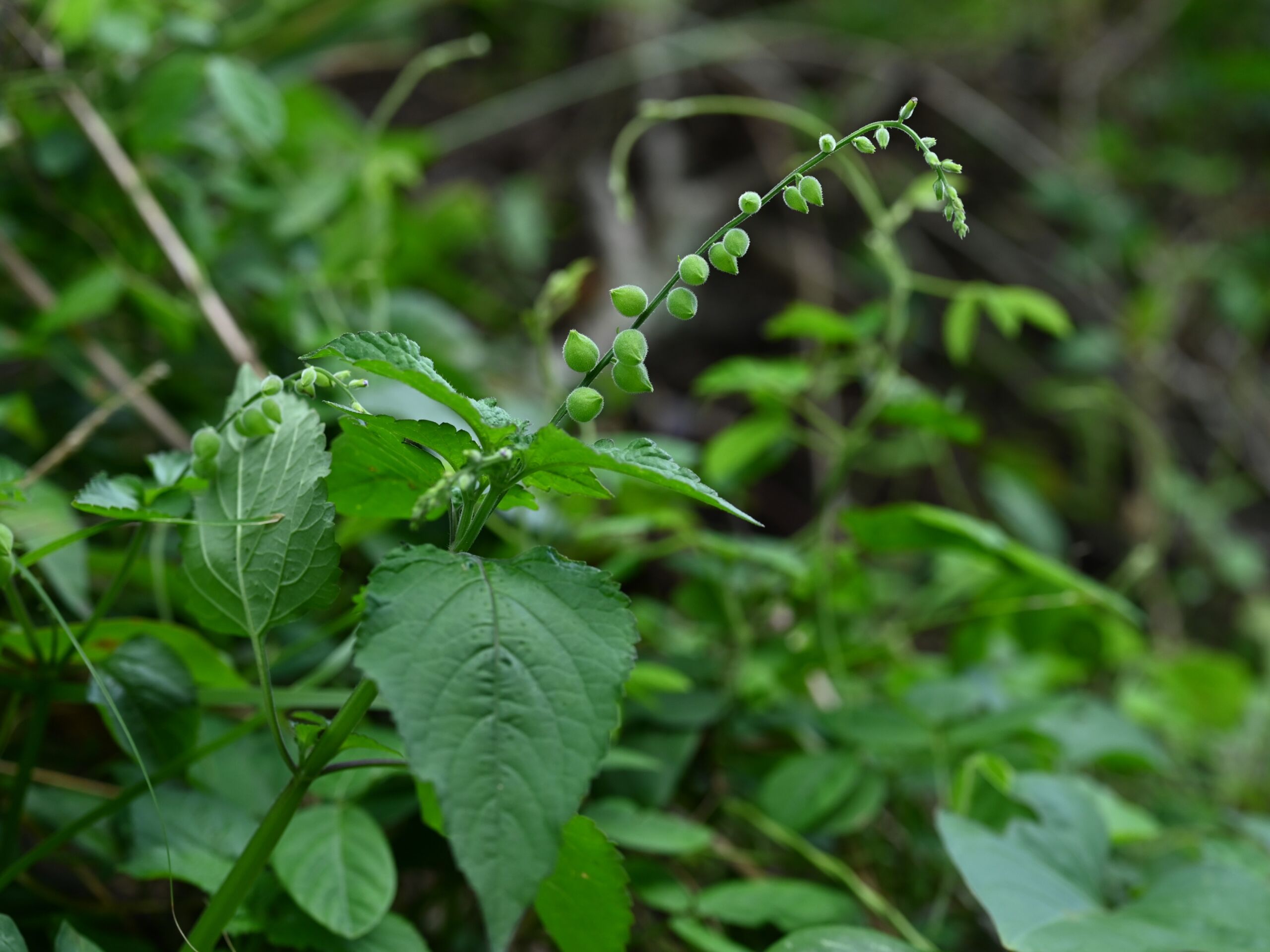
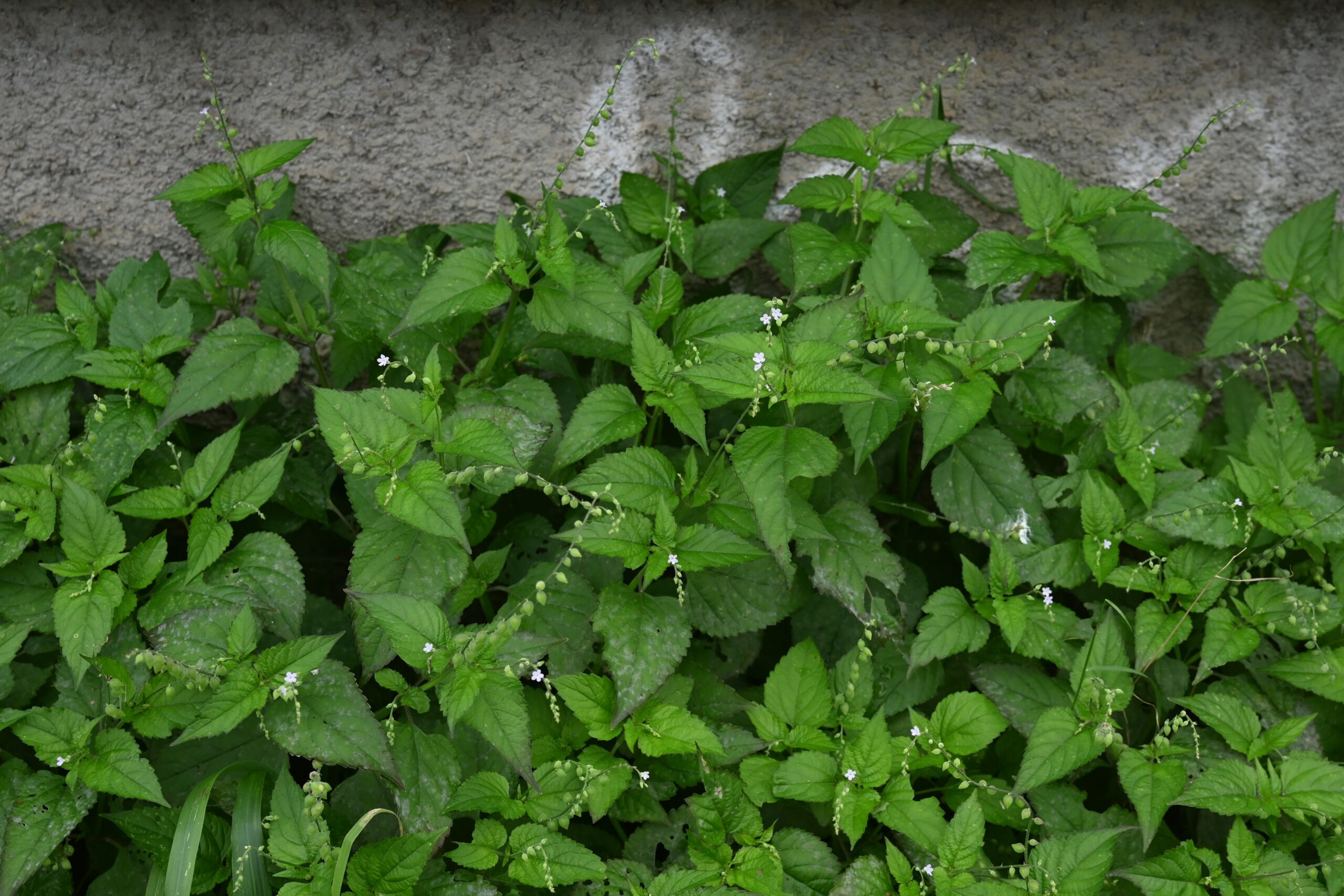
Catstongue is one of those plants you meet by accident: a small herb in the verbena family (Verbenaceae) that turns up in hammocks, pinelands, fields, thickets, and roadsides, and in Florida in disturbed areas, flowering somewhere in its range in every month of the year. Its scientific name is Priva lappulacea (L.) Pers., and its other common names tell you what it is like to meet it: velvet-bur and bur vervain, alongside catstongue. The “bur” names are the honest ones. This is a plant that travels by sticking to things, and if you have ever picked its burs off your socks, you understand its entire dispersal strategy in one annoyed minute.
The plant itself is unshowy in the way good weeds are unshowy. It is described as an annual herb, with opposite leaves — two at each stem node — that are ovate to oblong with shallowly toothed edges and a slightly hairy upper surface. The flowers come in curve-tipped clusters or spikes, small and purplish, with five-lobed, slightly asymmetrical corollas; peek into a blossom’s throat and you find two stamens on show and two more hidden lower down the corolla tube, which is exactly the verbena-family pattern. Nothing about the flower shouts for attention, and that is the point: catstongue is not competing for your admiration, it is competing for a ride.
The ride is the fruit, and the fruit is the nerdiest part of the plant. As soon as the flowers are pollinated and the corollas fall, bladder-like pods develop, and inside the persistent calyx sit a pair of prickly nutlets, with hooked hairs that cling readily to passing creatures. That is the whole trick: the plant makes a tiny piece of Velcro, attaches it to fur, feathers, clothing, or a dog’s leg, and lets the animal do the planting. A plant that disperses this way does not need showy flowers or sweet fruit. It needs to be in the path, at ankle height, with its hooks out — and catstongue is very good at being in the path.
Its range explains why it shows up in a Florida butterfly guide at all. Catstongue is native to south Florida and south Texas in the United States, and through the West Indies, Mexico, Central America, and South America — a genuinely American-tropical plant that reaches its northern edge in the warmest corners of two states. In Florida it grows in hammocks and pinelands as well as disturbed ground; in Texas it is recorded from fields, resacas, thickets, and roadsides. It is a native plant in that range, not an introduced weed there, which matters for how you treat it: in its home ground it is part of the flora, even when it is also in your socks.
The butterfly context is simple and specific. The Potrillo Skipper guide lists catstongue (Priva lappulacea) in its Host plants section — the caterpillars feed on it. That single host record is the reason this guide exists: the butterfly guides name the plant, so the plant gets a guide, even though no gardener sets out to plant it. Do not over-read that record into a planting recommendation. A host plant and a garden plant are different jobs, and catstongue’s job, historically, has been to volunteer.
How to grow
Let us be honest about the verb in this section’s heading: nobody really “grows” catstongue on purpose, and this guide does not recommend starting a catstongue bed. This is a wild, self-seeding herb of warm climates and disturbed ground, and the practical growing advice is about what to do when it shows up, and what it wants if you leave it alone. It wants sun — the Florida flora treatment rates it as a high-light plant — and well-drained soil, and it tolerates the poor, scuffed-up soils of roadsides and field edges that fussier plants refuse. Give it warmth, light, and a gap in the vegetation, and it will do the rest without your help, which is both its charm and its warning.
If you are managing it as a butterfly host rather than as a weed to remove, the management is mostly about timing. Let plants that caterpillars are using stand through flowering and caterpillar season, and cut or pull plants you do not want before the burs ripen, because once the hooked nutlets are mature, every passing animal — including you — becomes a sowing machine. Seed enjoys warm soil and steady moisture to germinate, so a warm, damp patch of bare ground is where you will see the next generation. In a garden that values tidy beds, that means catstongue belongs at the wild edge, in a hammock-margin or pineland-style planting, not in the middle of a perennial border where its burs will colonize your cuffs.
Propagation, if you ever needed it, is by seed, and the seed comes with its own dispersal system built in — which is to say, propagation is rarely the problem. The problem is containment. A prolific self-seeder with hooked fruit will spread through a garden on pets, shoes, and wildlife, and in Mexico it has been reported as an aggressive and dangerous weed in tree plantations and orchards, where a plant that clings and spreads is a genuine nuisance rather than a curiosity. That report is from outside its Florida and Texas native range context, and it is included here as a caution, not as a claim about every garden: the same traits that make it a successful native weed make it a pest when it gets into the wrong place.
Florida note: In Florida, catstongue is a south Florida plant of hammocks, pinelands, and disturbed areas — not a statewide garden plant, and not a plant to order from a nursery catalog. If it volunteers in a south Florida yard, it is a native doing what natives do, and the butterfly-host case for leaving a patch at the wild edge is real. If it volunteers in a formal bed, pull it before the burs set and you will have solved the whole problem in one afternoon. Either way, do not confuse it with the ornamental verbenas and porterweeds it is related to: catstongue is the small, bur-bearing cousin, and its flowers are small and purplish, not the long, showy spikes of a porterweed.
Water & feeding
Water: catstongue is a plant of warm, humid, tropical and subtropical ground, and it grows where rainfall is enough to keep disturbed soil from baking to dust, but it is not a wetland plant and it does not want standing water. In a garden setting, the honest advice is that you will never need to water it on purpose — if the spot is warm and the soil holds a little moisture, it grows; if the spot is dry and baked, it waits for rain or for a better gap. A plant that colonizes roadsides has already told you its water requirements: whatever falls from the sky, plus whatever the soil holds.
Feeding: do not feed it. Catstongue grows in low-nutrient, disturbed soils as readily as in fertile ones, and fertilizer would only push soft growth and more seed. The soil science here is the weed story in miniature: disturbed ground is a nutrient pulse — bare soil, light, and a flush of available nitrogen from whatever was cleared — and pioneer herbs like catstongue are built to grab that pulse fast, flower fast, and set hooked seed before the perennials close the gap. Feeding a pioneer is like feeding a sprinter before a race it has already won.
Common problems
- It sticks to everything. The hooked, prickly nutlets cling to clothing, pet fur, and wildlife. Pull or cut plants before the burs ripen if you do not want the next generation distributed by your dog.
- It self-seeds prolifically. A single plant that sets seed can populate a bed edge for years. Deadhead or remove before seed set to keep it where you want it.
- It is a weed in the wrong place. Reported as an aggressive weed in Mexican tree plantations and orchards. In a formal garden, treat it as a wild-edge plant, not a border plant.
- Mistaken identity. Catstongue is a small, bur-bearing verbena relative, not a porterweed and not an ornamental verbena. Check for the hooked burs and the small, purplish, five-lobed flowers before you name it.
- Cold. A tropical and subtropical plant reaching only south Florida and south Texas in the United States. It is not a cold-climate garden plant, and no hardiness zone is claimed for it here.
- Caterpillar defoliation. If potrillo skipper caterpillars are feeding on it, leaf damage is the point, not a problem. Leave host plants standing through caterpillar season.
Harvest
There is no kitchen harvest for catstongue in this guide, and no medicinal recommendation either. Traditional-use reports exist — a Mexican traditional-medicine source describes a tea of catstongue with a spiny nettle relative drunk for a kind of hip pain — but a traditional report is not a recommendation, and this guide makes none. The harvest, such as it is, is seed for propagation (collected before the burs scatter, if you can stand the Velcro) and the butterfly-watching that comes from leaving a host patch alone: small skippers in the wild edge, feeding caterpillars on a plant most gardeners pull without looking. If you want that harvest, the method is gloriously low-effort: do not pull that patch, do not spray it, and let the burs do what burs do — somewhere you do not mind them doing it.
Browse all plant & pest guides
Saving seeds
First, the warning up front, because this plant earns it: catstongue does not need your help to reproduce, and in most gardens it should not get it. This is a prolific self-seeding weed of disturbed ground across the American tropics, reported as an aggressive weed in plantations and orchards in Mexico, and its whole reproductive strategy is built around sticking to things. The flower’s old calyx turns into a burr covered in hooked hairs, holding a pair of prickly nutlets, and that burr rides away on fur, socks, trouser legs, and anything else that brushes past. If you are reading this section hoping to grow more catstongue on purpose, the responsible advice is to stop there and admire it where it already grows wild instead.
That said, understanding how its seed works is exactly how you keep it from taking over. The seed is the burr itself: once the little purplish flowers are pollinated and the petals fall, the calyx swells into a bladder-like pod that dries into the hooked burr, and the nutlets inside are the seed. There is no special cleaning ritual and no dormancy trick worth learning, because the plant’s problem, from a gardener’s point of view, is the opposite of reluctance. Sow the dry burs shallowly in warm, moist soil and they germinate readily in warm weather, which is why a single plant left standing can seed a whole path edge by the next season. No named garden variety of catstongue exists to come true or fail to come true; seedlings are simply the wild species again, variable in the ordinary way of wild plants, and every bit as good at hitching a ride as their parents.
If you already have catstongue and want to keep it from spreading, the seed-saving move is really a seed-stopping move: cut the flowering stems before the burs dry and harden, bag them, and throw them away with household rubbish rather than composting them, since a home compost pile is not reliably hot enough to kill weed seed. Check cuffs, shoes, and pets after walking past a seeding plant, because you are the dispersal vector now, and that is not a metaphor, it is the plant’s entire business model. If you are holding dry burs for identification or study, keep them sealed, labelled, and dry in a cool, dark place, and treat them the way you would any weed seed: contained, or not kept at all. No reliable viability figure is pinned down for stored catstongue seed in the references checked for this guide, so do not count on old burs being dead, and do not count on them being alive either; fresh burs are the safe assumption. The nerdy punchline is that catstongue solved seed dispersal without paying for a sweet fruit to bribe an animal, and the gardener’s job is simply not to be the animal.
Species
Catstongue (Priva lappulacea) is the species this guide covers, and no varieties or cultivars of it are claimed here — no named garden variety of catstongue was verified, and this guide does not invent one. The species was first described as Verbena lappulacea by Linnaeus in 1753, and the name Priva echinata is a synonym of Priva lappulacea in the older Plant List treatment. Other Priva species exist in the American tropics, but they are not covered by this guide, and a plant sold or found under a Priva name other than lappulacea should be checked by its own name before it is treated as catstongue.