
🍃 Cercospora Leaf Spot
Signs and symptoms
Leaf spots that start small and expand, typically with tan or grey centres and darker borders. The details vary by host, which is the point of this guide: on cucurbits the spots have light centres; on crucifers and beets they are circular and may drop out, leaving holes. In severe cases plants defoliate and yields drop. UF/IFAS south-Florida scouting has found Cercospora on crucifers, beets, and lettuce at moderate levels in wet periods.
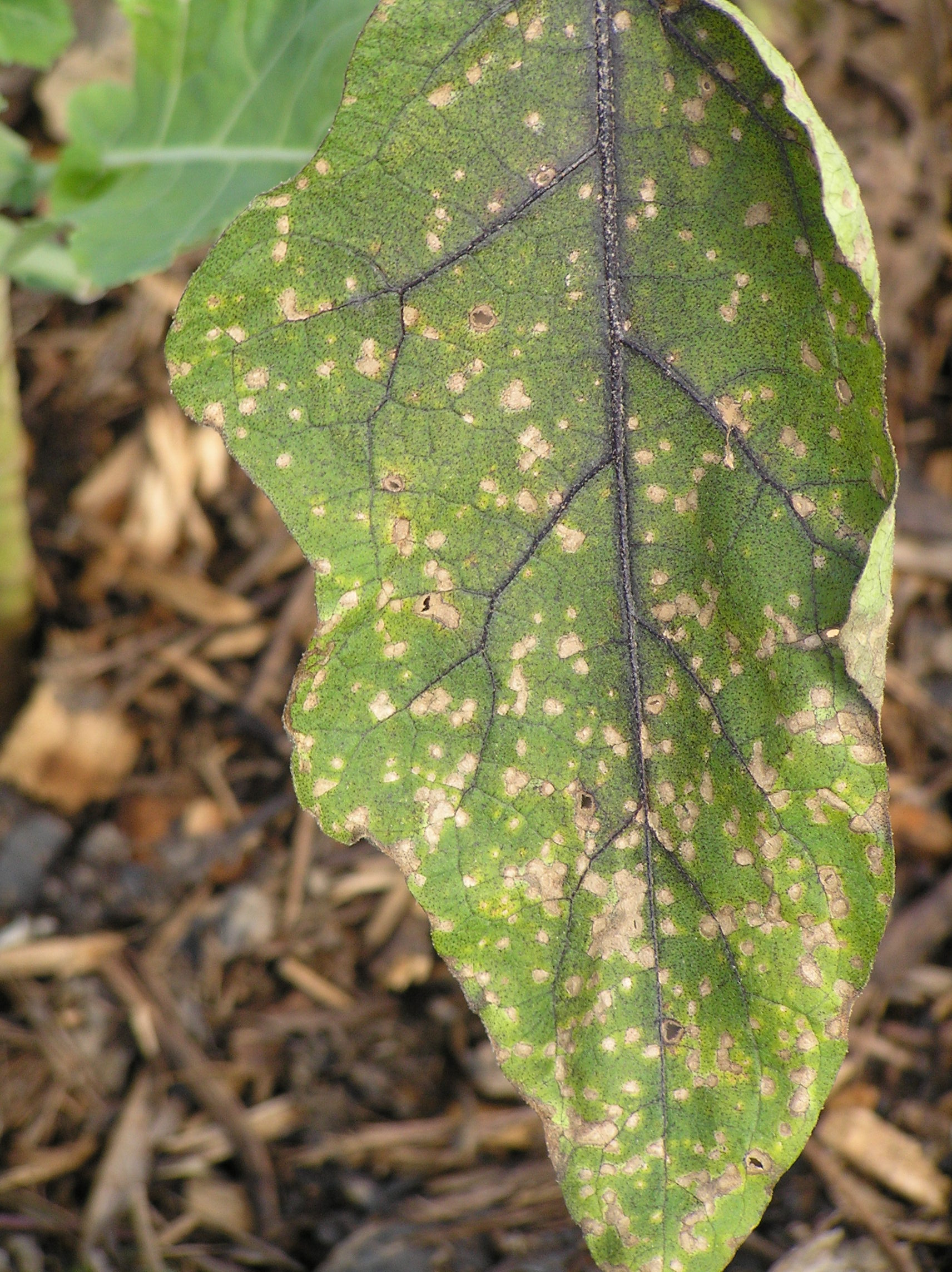
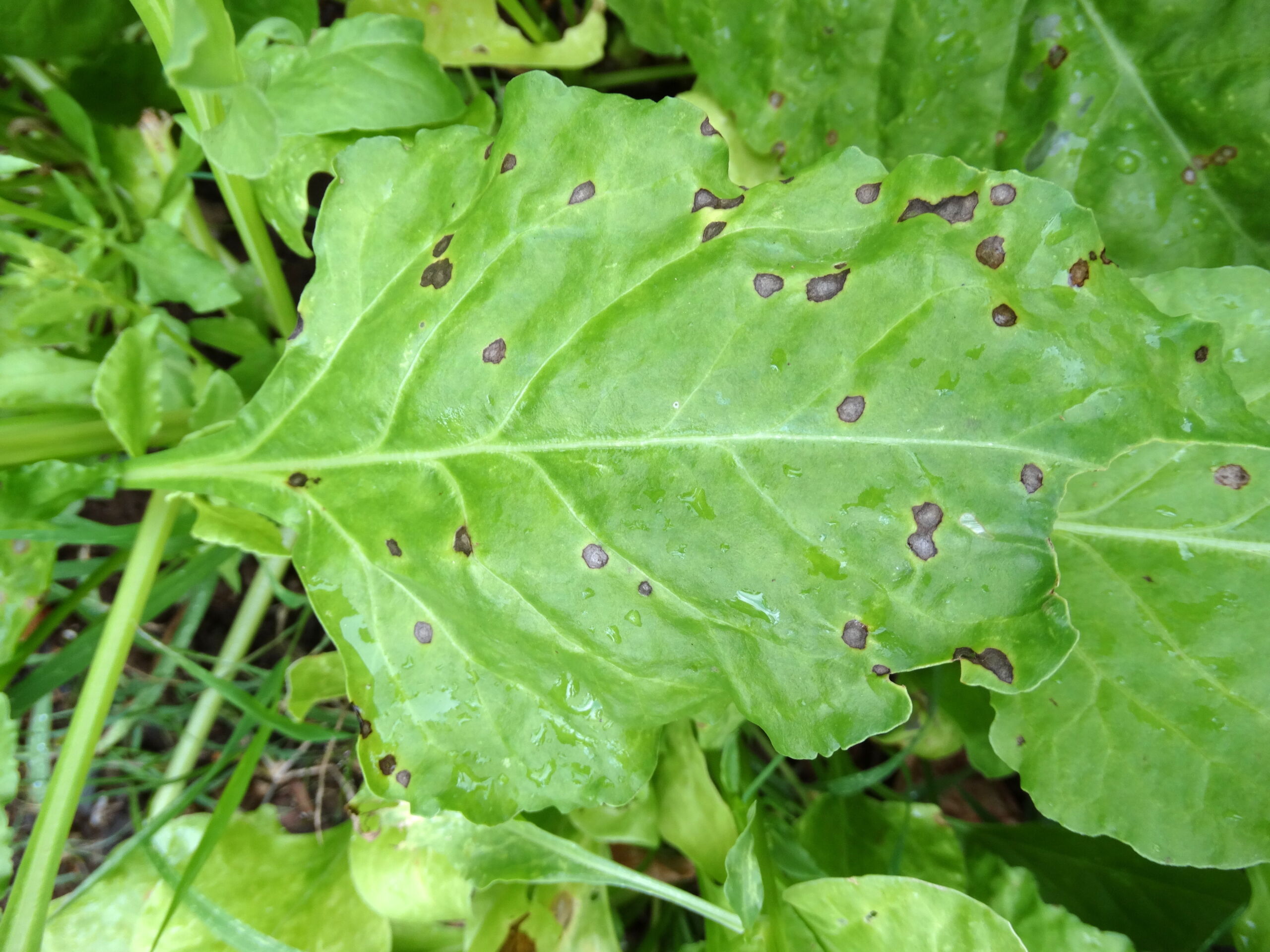
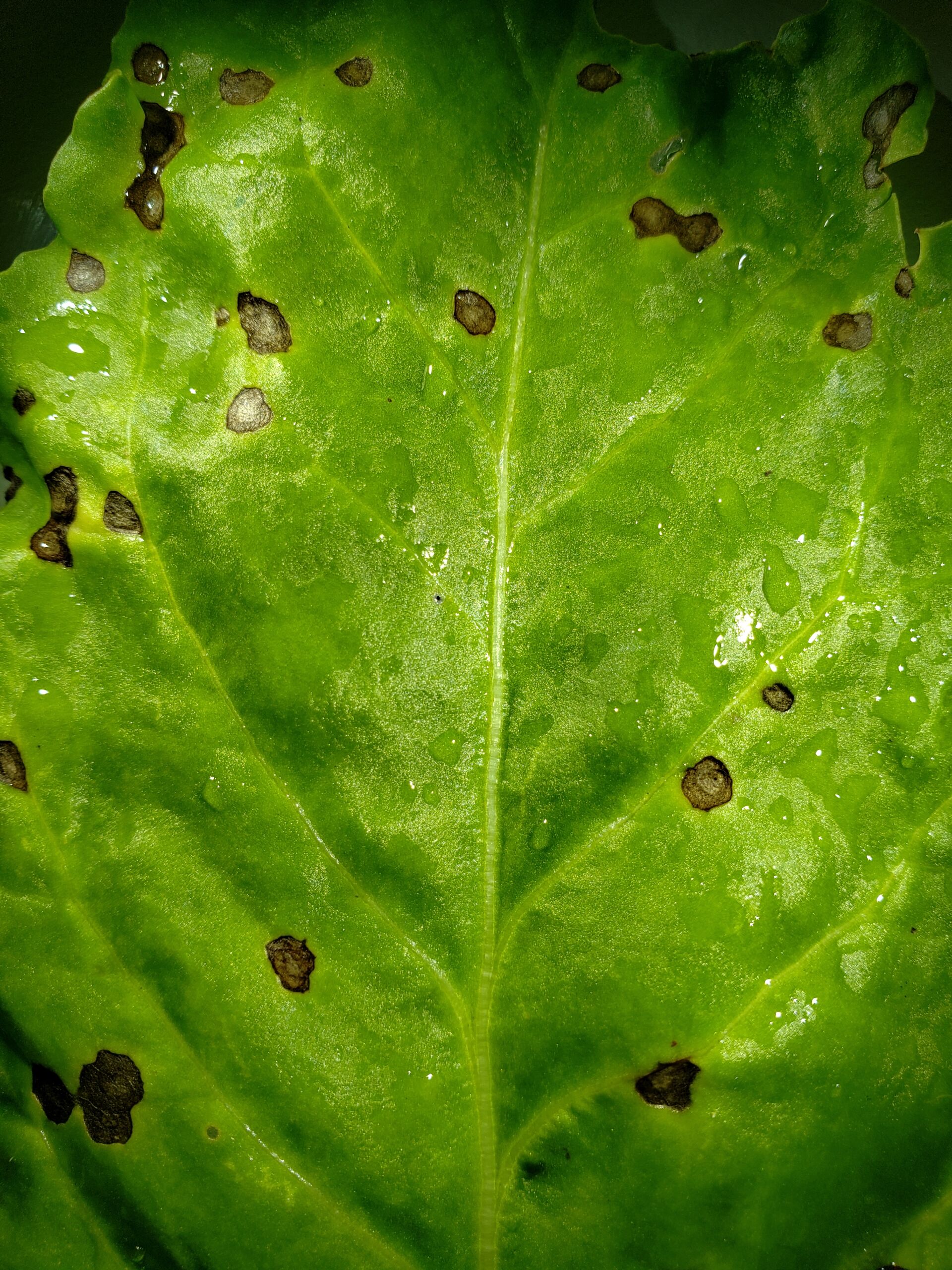
By host: C. citrullina on cucurbits and watermelon, C. beticola on beet, C. brassicicola on crucifers, and C. sojina on soybean (frogeye leaf spot).
Plants it attacks
Watermelon and other cucurbits, beets, cabbage and other crucifers, lettuce, soybean, and peanut. Do not assume one species fits all of them — this is a genus-level guide with host sections, not a single-species story stretched across crops.
What to do
- Remove affected leaves promptly and destroy them; do not compost diseased material.
- Improve air flow and spacing, and avoid overhead watering that keeps leaves wet.
- Rotate to a non-host crop.
- A labelled fungicide is only a later option, used per label — not the first move.
Prevention
Rotate crops, space for air flow, water at the base, use clean seed and transplants, clean up debris in fall, and choose resistant varieties where available.