
🍒 Cherries Jubilee Allamanda
What it looks like
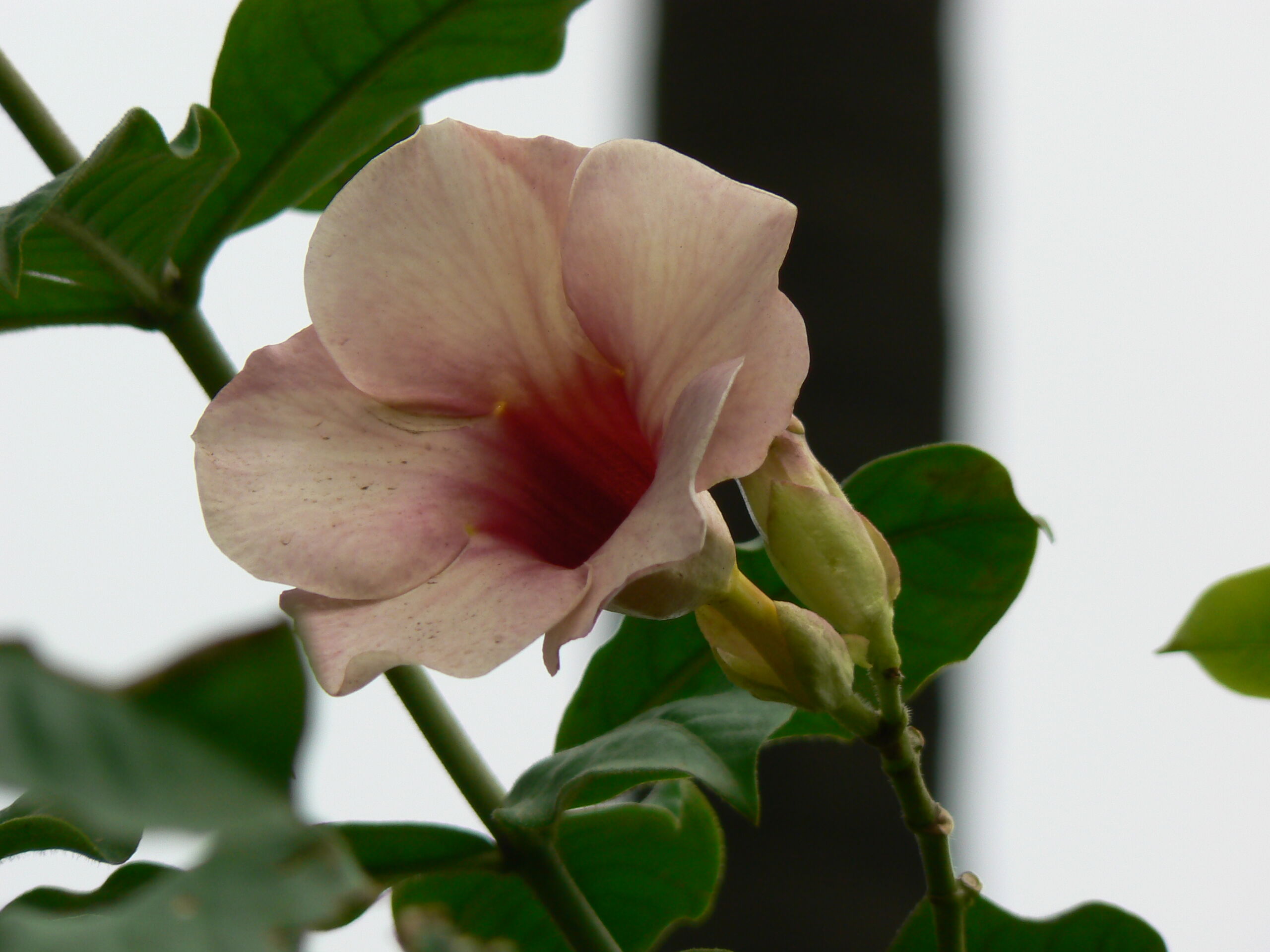
Cherries Jubilee breaks the allamanda colour rule: instead of golden yellow, it produces showy cherry-red to light-purple trumpet flowers, with a dark purple throat, in small clusters near stem tips, larger than the typical yellow form’s blooms. The foliage is the familiar glossy green, which makes the cherry trumpets pop even harder by contrast.
Why this variety
Cherries Jubilee is the allamanda for gardeners who love the trumpet form but are tired of yellow. Its cherry-pink to deep-mauve flowers are larger than the species’ yellow blooms, pleasantly fragrant — most strongly at night — and produced on a vigorous vine or creeper that works on a trellis, a fence, or in a container with support. It is the least common allamanda colour in most gardens, which is itself a reason to grow it.
A naming note, because sources disagree and honesty beats false precision: some catalogs list Cherries Jubilee as a cultivar of Allamanda cathartica, while others attribute it to Allamanda blanchetii, the purple allamanda, which it closely resembles. This guide follows the cathartica listing used by major references, but the flower colour and care are the same either way — full sun, warmth, rich soil, and a support to climb.
How to grow
Plant in spring in full sun in rich, well-drained soil, against a trellis, fence, or in a large container with support, and tie stems as they grow — allamanda scrambles rather than twining. In Florida it is perennial in zones 9-11, tolerating light freezing to about 30°F briefly as a mature plant; young plants must be protected, and in colder parts of the state a container is the safer choice.
Prune in late winter or early spring to shape and remove cold-damaged wood, and deadhead through the season to keep new trumpets coming. Work worm castings into the planting hole and mulch well; in sandy soils, compost top-dressing each spring holds moisture and feeds the soil. Cherries Jubilee is a little more tender than the yellow form, so site it in a sheltered, sunny spot rather than an exposed, windy one.
For the general picture, start with the Allamanda growing guide, then use this guide for the details that make Cherries Jubilee different. And a plain-language note on the hero stats above, because vines and shrubs are not vegetables: “Spacing” here means mature planting distance, and “Days to harvest” means time to first bloom — the moment the plant starts paying you back in flowers, not a picking date.
And a plain-language note on the hero stats above, because vines and shrubs are not vegetables: “Spacing” here means mature planting distance, and “Days to harvest” means time to first bloom — the moment the plant starts paying you back in flowers, not a picking date.
Water & feeding
Water to establish, then deeply during dry spells; consistent warm-season moisture keeps the cherry trumpets coming. Feed in spring and through flowering with a balanced organic fertilizer, avoid waterlogging, and reduce water in winter while growth slows. In a container, water more often — a vine in a pot dries fast in Florida heat.
Common problems
- Mealybugs and scale on stems and leaf joints — inspect regularly and treat with horticultural oil or insecticidal soap in mild weather.
- Leaf spot and sooty mold in humid, crowded growth — improve airflow, water at soil level, and prune out spotted growth.
- Cold damage — a light freeze burns foliage back. Wait for spring growth before pruning, and protect young plants on cold nights in the northern part of its range.
- Sap toxicity — allamanda sap is irritating and all parts are toxic if eaten. Wear gloves when pruning and keep it out of grazing reach.
Harvest
The harvest is cherry trumpets for cutting and for the fence show. Cut stems in the morning for vases — the cherry colour holds well indoors — and deadhead to keep new buds coming. Prune in late winter or early spring, wear gloves for the milky sap, and keep all parts away from grazing pets and children.
Browse all plant & pest guides
Saving seeds
Cherries Jubilee is a named cultivar, so seed saved from it won’t come true — take cuttings instead. The Propagation section of the Allamanda guide covers how the species is propagated.