
🌿 Chromolaena odorata
What it looks like
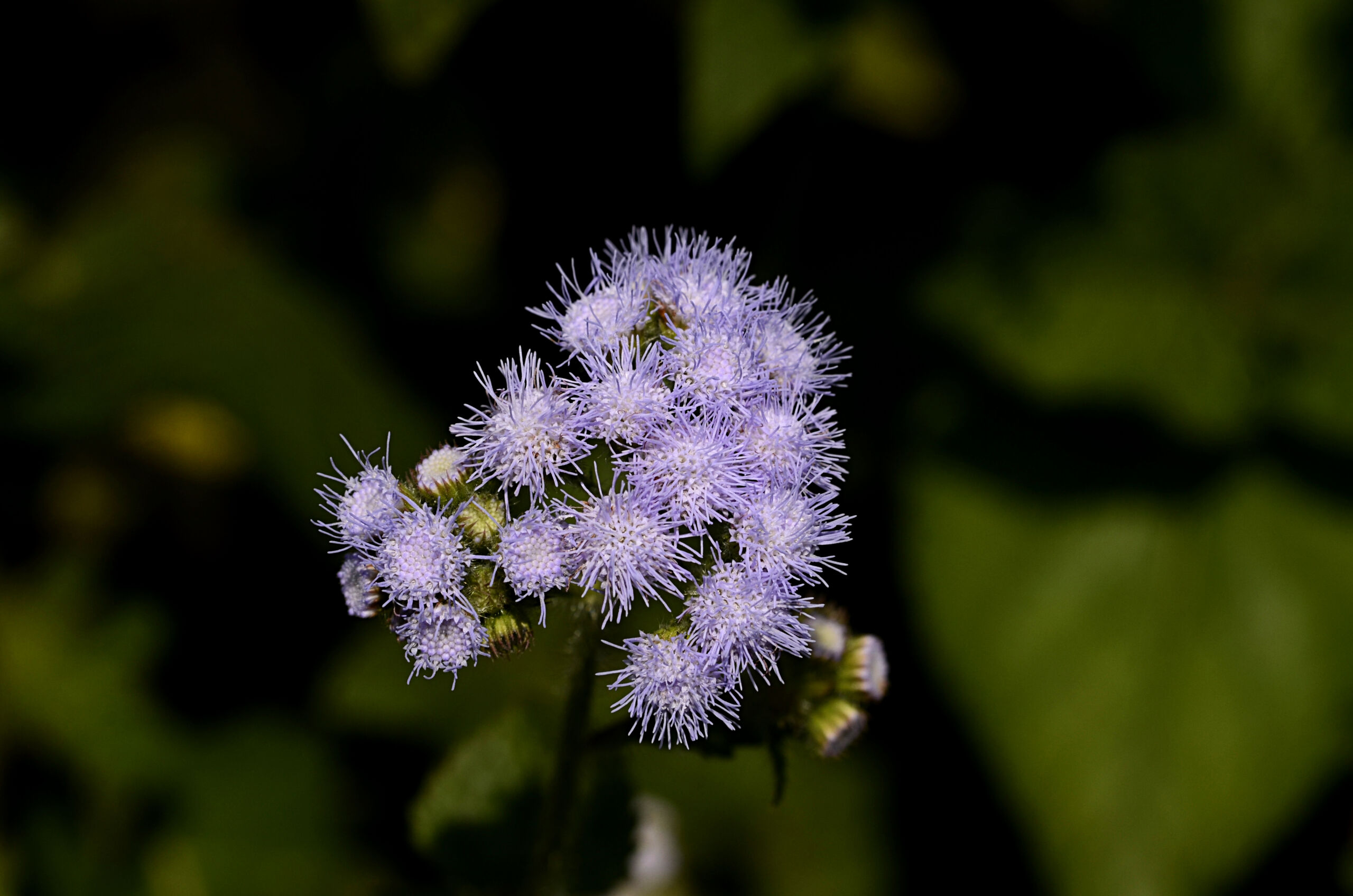
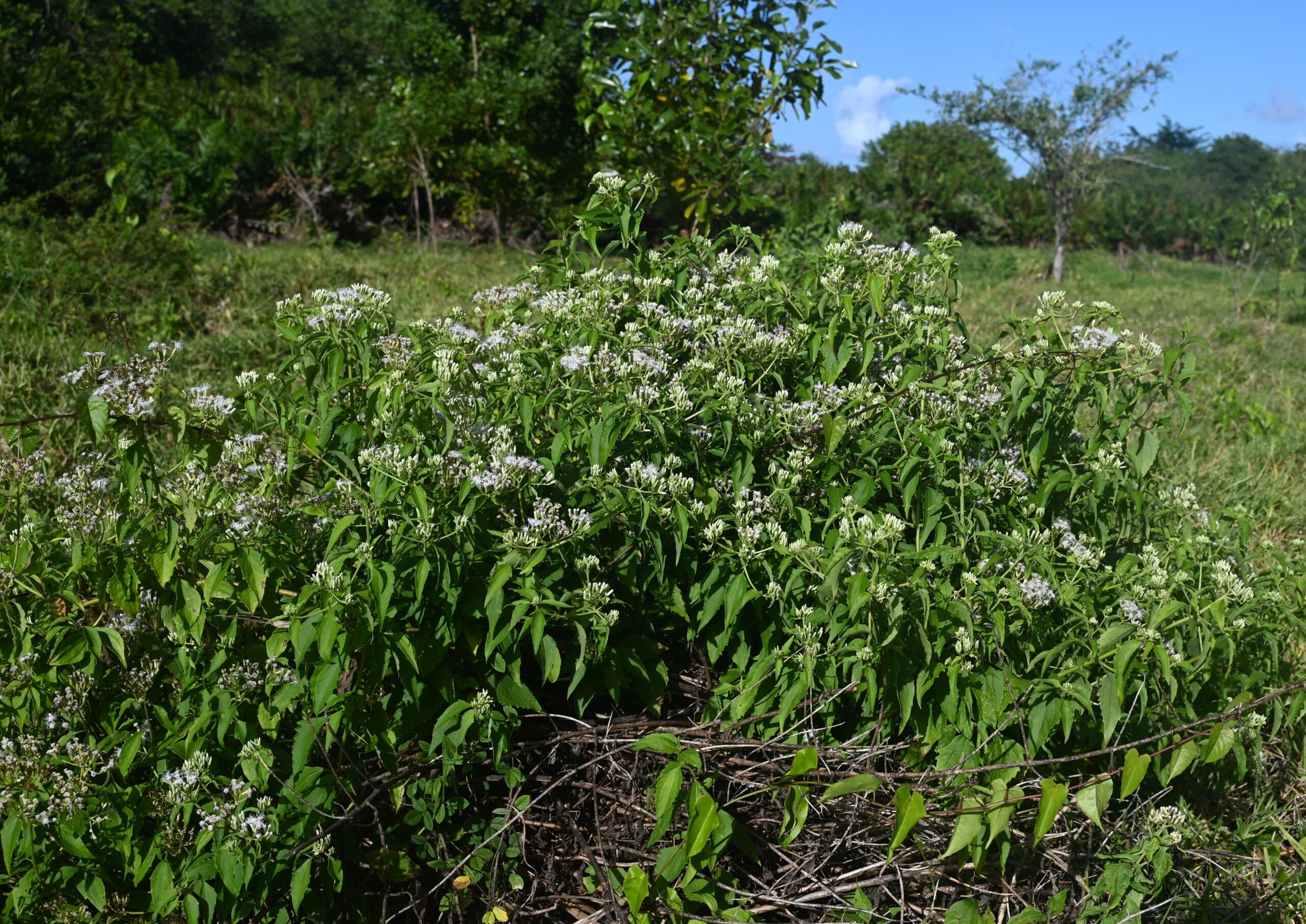
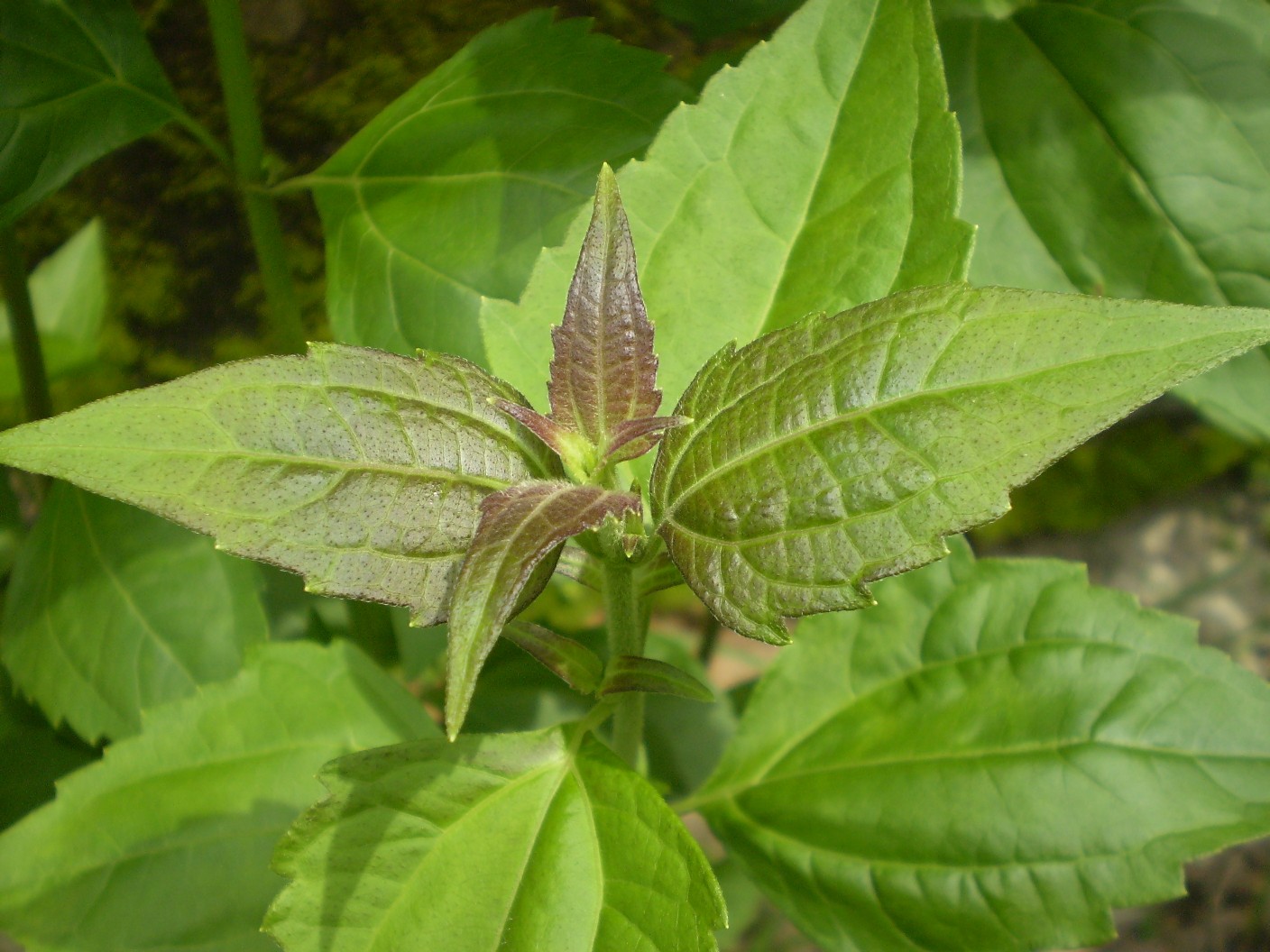
Chromolaena odorata is a tropical and subtropical flowering shrub in the sunflower family (Asteraceae), and it is a plant with two reputations that are both true, in different places. In North America it is a deciduous sub-shrub, 2 to 6 feet tall, with branched stems curving upward; in the tropics it is a shrub, and where it is introduced it forms dense, tangled thickets up to 5 metres that smother everything beneath them. Its common names are a list in themselves — Siam weed, jack-in-the-bush, fragrant boneset, fragrant mistflower, blue mistflower in the broad sense, bitter bush, devil weed, Christmas bush, and common flossflower — and the length of that list is a clue to how widely it has travelled and how many people have had to name it. Its old genus name, Eupatorium odoratum, still shows up in older books, because in the 1970s the huge genus Eupatorium was split and this plant landed in Chromolaena; the species name odorata means fragrant, for the pungent odor the crushed leaves give off.
Identification starts with the leaves, which are the best field mark. They grow in opposite pairs along the stems, are somewhat triangular or arrowhead-shaped, 5 to 12 centimeters long and 3 to 7 centimeters wide, with three characteristic veins in a pitchfork pattern running from the leaf base. Crush one and the smell hits: pungent, sharp, unmistakable, the odorata in the name. The flowers are the second mark: lilac to bright purplish-blue, sometimes nearly white, clustered into showy, ageratum-like heads at the branch tips, each head a cluster of small tubular florets with no ray petals, fluffy with protruding styles. The fruit is a small dry cypsela, the sunflower family’s single-seeded fruit, carried on the wind. Stems are branched, curving upward, produced from a long-lived rootstock, and the habit is upright, sprawling, or scrambling — a shrub that leans on its neighbors when it gets the chance. Put together — opposite pitchfork-veined leaves, pungent crush, lilac fluffy heads, scrambling shrub — and you have Siam weed, not a boneset, not a mistflower of the garden kind, and not anything to plant on purpose.
The native-versus-invasive story is the heart of this guide, and it needs telling carefully, because a careless version gets it wrong in both directions. Chromolaena odorata is native to the Americas, from Florida and Texas in the United States south through Mexico and the Caribbean to South America — in the United States, that means south Florida and south Texas, with the Rio Grande Plain and Coastal Bend as its stronghold, confirmed by vouchered herbarium specimens, not just sightings. It is not an introduced plant in Florida or south Texas; it belongs there. But it has been introduced to tropical Asia, West Africa, and parts of Australia and the Pacific, and in its introduced range it is considered one of the most problematic invasive weeds in the world: it is included in the Global Invasive Species Database’s list of the world’s worst invasive alien species, it forms dense stands that prevent other species establishing, through competition and allelopathic effects, it blocks regeneration of trees in shifting cultivation in West Africa, it is a major weed of disturbed areas and coconut plantations in Sri Lanka, and its flammability affects forest edges. It reached Asia in the 1920s, reportedly via ship ballast from the West Indies, and Africa in the 1940s, probably via contaminated seed, and it has been expanding ever since. So the honest framing is geographic: a native butterfly host in its home range, and a serious invasive everywhere it was carried. A guide that called it simply invasive would lie about Florida and Texas; a guide that called it simply native would lie about the rest of the tropics. This guide says both, and the planting advice follows from the geography, not from either half alone.
The butterfly context is the reason this guide exists in this project, and it is a south Texas story. The Rounded Metalmark guide lists, in its Host plants section, Siam weed (Chromolaena odorata), pink thoroughwort, and probably other mistflowers, for a small metalmark of south Texas, southern Mexico, and Venezuela. The metalmark’s caterpillars feed on aster-family hosts in weedy ground, woodland openings, and edges, and Siam weed is one of the hosts they actually use in the wild. That is the plant’s ecological role in its home range: a native aster that feeds a native metalmark, in the weedy corners where both live. It is also a warning about common names: the Rounded Metalmark guide calls Siam weed blue mistflower in the broad sense, but blue mistflower is also the common name of a different plant, Conoclinium coelestinum, the garden mistflower — so a gardener chasing blue mistflower for a butterfly garden and landing on Siam weed has followed a common name into the wrong plant, and this guide exists partly to stop that from happening.
How to grow
This guide gives no planting instructions for Chromolaena odorata, deliberately, and that omission is the advice. Do not plant it outside its native range — in tropical Asia, Africa, Australia, or the Pacific, it is a serious invasive weed, restricted or under eradication in several jurisdictions, and planting it there is how the next thicket starts. Do not plant it as a butterfly plant anywhere you can plant a native aster instead, because the metalmarks and other butterflies that use it also use native mistflowers and thoroughworts that do not carry its escape risk. Within its native range of south Florida and south Texas, it grows on its own in open, disturbed, and edge ground without anyone’s help, and a gardener there does not need to plant it to see it — the honest move is to recognize it, leave the wild plants that are feeding metalmarks alone, and keep it out of garden beds where it will sprawl, seed, and take over.
If it is already in your yard, the safe approach follows the pattern used for other aggressive plants on this site. Pull seedlings by hand whenever you see them, because seedlings are the easiest stage to stop and this plant makes a great many of them. Cut off flower heads before they set seed, so no new wind-borne seed enters the soil or blows into neighboring ground. Do not dump clippings, flower heads, or pulled plants in natural areas or anywhere they can take root; bag seed-bearing material and dispose of it with household trash. Expect resprouting from the long-lived rootstock, so cutting once is rarely the end of it — dig out roots where you can, and keep pulling regrowth. If the plant has escaped into a natural area near you, that is a job for your county extension office or local land manager, not a solo herbicide adventure, and this guide recommends no specific herbicide products. Report it rather than ignoring it: in its introduced range, early reporting is how eradication stays possible, and in its native range, a county extension office can tell you whether the patch in front of you is a native plant doing its job or a problem worth removing.
Florida and Texas note, stated by geography rather than by slogan. In south Florida and south Texas, Chromolaena odorata is native, and removing every plant of it there would remove a metalmark host for no ecological gain. Outside that native footprint — anywhere else in the United States, and anywhere in the tropics where it was introduced — it does not belong, and planting it is the wrong move. The site’s Florida gardeners should plant native mistflowers and thoroughworts for metalmarks and other aster-feeders, and treat Siam weed as a plant to recognize, not a plant to buy. No nursery should be selling it outside its native range, and a tag offering it as blue mistflower should be checked against the leaf test above before it goes anywhere near a garden.
Water & feeding
Chromolaena odorata needs no watering or feeding advice, because no reader of this guide should be cultivating it — and that is the whole section, honestly stated. In the wild it grows on many soil types but prefers well-drained ground and rainfall over about 1000 millimeters a year, which is why it thrives in the wet tropics and struggles where it is dry or frosty. It is frost-tender, which is the only climate fact that limits it in the United States, and that limit is why its native United States range stops at south Florida and south Texas. The soil science is the weed story: a fast-growing, deep-rooted, allelopathic shrub that colonizes disturbed ground, shades out seedlings beneath it, and changes the soil chemistry around its roots so competitors struggle. That is not a plant that needs feeding; it is a plant that feeds itself by starving its neighbors, and the right response to that talent is recognition and removal, not compost.
Common problems
- Planting it outside its native range. The most consequential problem in this guide. In tropical Asia, Africa, Australia, and the Pacific it is a top-tier invasive weed. Do not buy it, do not plant it, and do not carry seed there.
- Confusion with blue mistflower. The garden mistflower, Conoclinium coelestinum, shares the common name blue mistflower with Siam weed in the broad sense. Check the leaf test: opposite, triangular, pitchfork-veined, pungent when crushed means Siam weed.
- Seed spread. Light, wind-carried seed in huge numbers, plus a long-lived rootstock that resprouts after cutting. Remove flower heads before seed set and bag seed-bearing material.
- Thicket formation. Dense, tangled stands up to 5 metres where introduced, smothering native ground cover and tree seedlings. Early pulling beats late clearing by years.
- Fire risk at forest edges. In its introduced range its flammability affects forest edges, carrying fire into ground that would otherwise not burn. Another reason not to let it accumulate near woodland.
- Reported livestock toxicity. Chromolaena odorata is reported to contain pyrrolizidine alkaloids and to be toxic to cattle, and it can cause allergic reactions in people. Handle with care, keep grazing animals off it, and do not use it as fodder or medicine on the basis of this guide — this guide makes no medicinal recommendation, and its traditional wound-healing uses elsewhere are context, not advice.
Harvest
Chromolaena odorata has no harvest in this guide, and that absence is deliberate. It is not a food plant, not a medicine plant by this guide’s recommendation, and not a garden plant to propagate. Its traditional uses for wound-healing in parts of Africa and Asia are recorded in the literature, and they are recorded here as context only, not as a recommendation — the same caution this site applies to every plant with a folk-medicine history and a toxicity report attached. If you are removing it, the harvest is the removal itself: bagged seed heads, dug roots, and a patch of ground returned to native plants that feed the same butterflies without the weed risk.
The simplest harvest is the recognition moment: standing in weedy south Texas ground, crushing a leaf, smelling the pungent odor, seeing the pitchfork veins and the lilac fluffy heads, and knowing you are looking at a native plant doing a native job — feeding a metalmark — in the one part of the United States where it belongs. Leave the wild plants that are feeding butterflies alone, pull the seedlings that are heading for your beds, and plant native mistflowers for the garden. That is the crop, and it is knowledge: knowing which plant you are looking at, where it belongs, and where it does not.
Browse all plant & pest guides
Varieties
No named varieties of Chromolaena odorata are listed in the sources checked for this guide, and this guide invents none. The plain-text relatives and look-alikes a reader is most likely to meet are: pink thoroughwort (Fleischmannia incarnata), the other named host in the Rounded Metalmark guide, a separate aster, not covered by this guide; blue mistflower (Conoclinium coelestinum), the garden mistflower that shares Siam weed’s broad-sense common name and is a different plant; and the many other species of the genus Chromolaena, none of which this guide covers. This guide is Chromolaena odorata only, identified by opposite, triangular, pitchfork-veined, pungent leaves and lilac fluffy heads, and it recommends planting none of them from a Siam weed tag.