
🌿 Cinnamon Fern
What it looks like

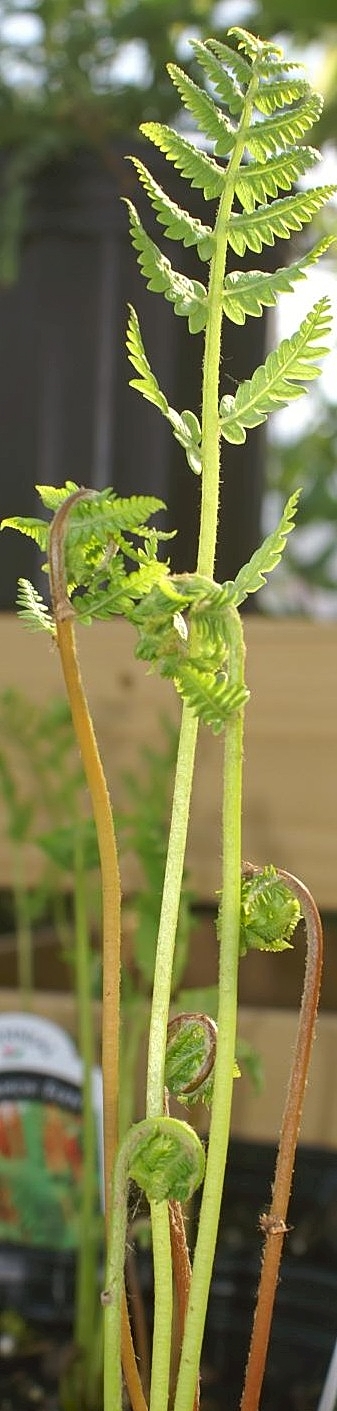

Meet the fern
Cinnamon fern is the drama queen of the wet shade garden, and it earns the title honestly. Each spring, a ring of big green sterile fronds unfurls around a central spike of fertile fronds that turn the color of ground cinnamon as their spores mature. That cinnamon-colored spike is where the common name comes from — not from any spice connection, and not from anything you should sprinkle on your oatmeal. The plant itself is a clumping, deciduous fern: UF/IFAS Extension notes that the green fronds carry the show through the growing season, and in winter the foliage is gone, so plan your bed like a good stage manager and give it evergreen neighbors to hold the scene while it sleeps.
One naming note, because plant people love a good rename: the native profile on this site lists it as Osmunda cinnamomea, and UF/IFAS Extension’s Escambia County office now writes it as Osmundastrum cinnamomeum. Same fern, new filing cabinet. If a nursery tag says either name, you are holding the right plant.
For the full native-plant portrait — including its place in Florida’s native flora — see the Cinnamon Fern native profile. This guide is the hands-on growing companion to it, and the broader Fern guide covers the family at large.
Where it wants to live
Think like a stream bank. In the wild, cinnamon fern grows in swamps, wet woods, and along streams — places where the soil stays damp long after the rain stops. UF/IFAS Extension lists it as a rain garden plant for North Florida, which tells you everything about its priorities: it wants a low spot, a pond edge, or a shady bed that never quite dries out. Part shade to full shade is ideal. It will tolerate some sun, but only if the moisture never quits; sun plus dry soil is how a cinnamon fern turns into a crispy brown lesson.
Florida gardeners, read the zone line twice: this is a zones 8–10 plant in the native profile, happiest where winters give it a real rest and summers bring real rain. In a Florida shade garden, the winning combination is morning light or dappled shade, deep organic mulch, and soil that holds water without becoming a stagnant puddle. If your yard’s idea of shade is “dry sand under a live oak,” this is not the fern for that spot — give that job to a drier-shade fern and put cinnamon fern where the hose (or the rain garden) actually reaches.
How to plant it
Plant in spring, when the fiddleheads are still thinking about it rather than already unfurling. Dig a hole as deep as the pot and a little wider, set the crown level with the soil surface — never buried — and backfill with the native soil mixed with compost or leaf mold. Then water deeply, and mulch 2–3 inches deep with shredded leaves, pine straw, or compost. That mulch is doing three jobs at once: holding moisture, feeding the soil life, and mimicking the forest floor this fern evolved in. (Your soil microbes will throw a tiny party. You won’t hear it, but the fern will show it.)
Space plants about 2–3 feet apart. They clump rather than run, so they will fill in politely instead of staging a takeover — a refreshing change from plants that treat your garden bed as a land grab. Give a new planting consistent water through its first growing season; an established clump is more forgiving, but “forgiving” here still means “don’t let it dry out,” not “ignore it all summer.”
Water & feeding
Water is the whole game with cinnamon fern. The native profile puts it bluntly: never let it dry out — it will crisp. Keep the soil consistently moist, and in a dry spell, water deeply rather than sprinkling the surface. A rain garden, a spot near a downspout overflow, or the edge of a pond is worth more than any fertilizer you could buy.
Feeding is gloriously low-key. A spring top-dressing of compost or leaf mold is plenty; the fern is built for humus-rich forest soil, not for a heavy synthetic feeding schedule. If you feed your garden with worm castings, a modest handful worked into the mulch layer in spring fits right into this fern’s worldview: slow, organic, and soil-first. Skip the urge to over-fertilize — lush, soft, overfed fronds are more likely to flop and scorch than to impress anyone.
Through the seasons
Spring is the main event. The fuzzy fiddleheads — the coiled young fronds — unfurl, and the fertile cinnamon spikes rise from the center of the vase. This is also the moment to divide an overgrown crown, if you must: the native profile advises dividing large crowns in early spring before the fiddleheads emerge, and replanting immediately, because cinnamon fern resents being moved. Divide only when necessary, not as a casual weekend project.
Summer is maintenance mode: keep the water up, keep the mulch topped, and enjoy the big green vase doing its architectural thing. Fall may bring some color as the fronds die back — UF/IFAS Extension notes the leaves can offer fall color as they decline. Winter: leave the old fronds standing through winter and cut back in early spring before new growth, per the native profile. Those spent fronds shelter the crown and the small creatures overwintering in the clump.
Common problems
- Brown, crispy frond edges — almost always drought stress or too much sun. Move the water, not the plant, first: deep, consistent watering and thicker mulch fix most cases.
- A plant that sulks after transplanting — normal. Cinnamon fern resents being moved, so plant it once, plant it well, and give it a full season to settle before judging it.
- Crown rot in waterlogged, stagnant soil — it loves wet soil, not a swamp with no oxygen. A rain garden that drains between storms is perfect; a permanently flooded hole is not.
- Slugs on young fiddleheads in wet springs — a fern-family hazard. Hand-pick at dusk, and keep mulch pulled slightly back from the crown in slug season.
- Wild-collected plants — not a pest, but a real problem: the fibrous old root mass (osmunda fiber) was historically harvested for orchid potting. Always buy nursery-grown cinnamon fern, never wild-collected, as the native profile urges.
Wildlife & garden partners
The dense vase shelters salamanders, frogs, and ground-nesting birds, according to the native profile — which makes cinnamon fern a working part of a backyard habitat, not just a pretty shape. Pair it with other moisture-lovers in a shade or rain garden: it looks wonderful with evergreen ferns that carry the winter, with spring wildflowers at its feet, and along a woodland path where its spring cinnamon spikes stop visitors mid-stride. (They will ask what it is. You will know the Latin. This is the gardener’s equivalent of a mic drop.)
Propagation
Division is the home gardener’s route: in early spring, before fiddleheads emerge, lift a large crown, cut it into sections each with roots and growing points, and replant immediately at the same depth in moist, humus-rich soil. Water well and mulch. Ferns also reproduce by spores rather than seeds — those cinnamon spikes are spore factories — but spore propagation is a slow, fiddly project best left to patient specialists and greenhouses. Division gives you a real plant this year, which is the timeline most of us are working on.
Meet the native profile: Cinnamon Fern · Back to the Fern guide · Browse all plant & pest guides
Sources: UF/IFAS Extension Escambia County, “The Beauty of Cinnamon Fern”; UF/IFAS Extension EDIS, Florida-Friendly Landscaping plant lists (cinnamon fern as a rain garden plant); Living Root Garden native profile for Cinnamon Fern.