
🍠 CMC40 Cassava
What it looks like
Why this variety
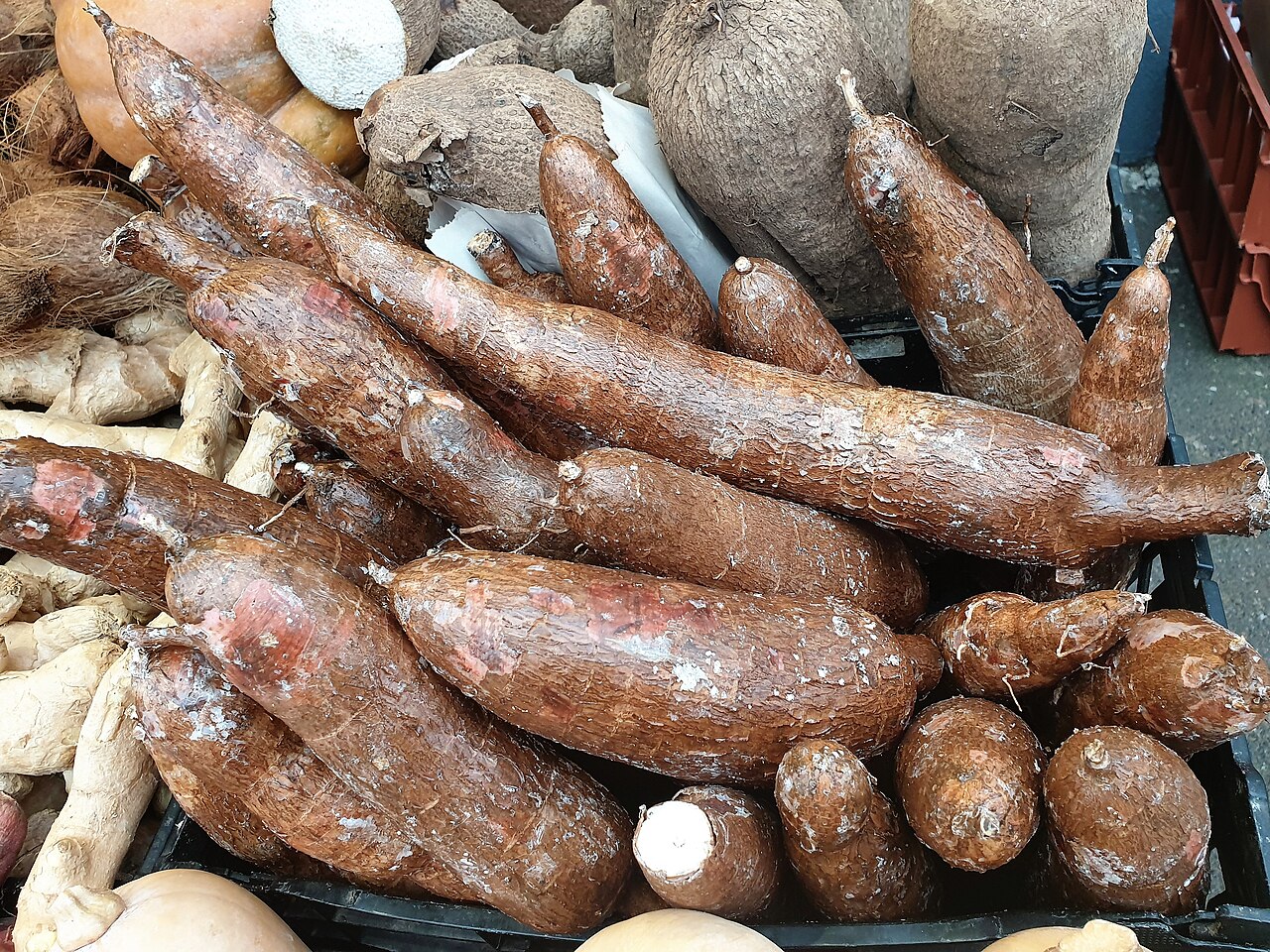
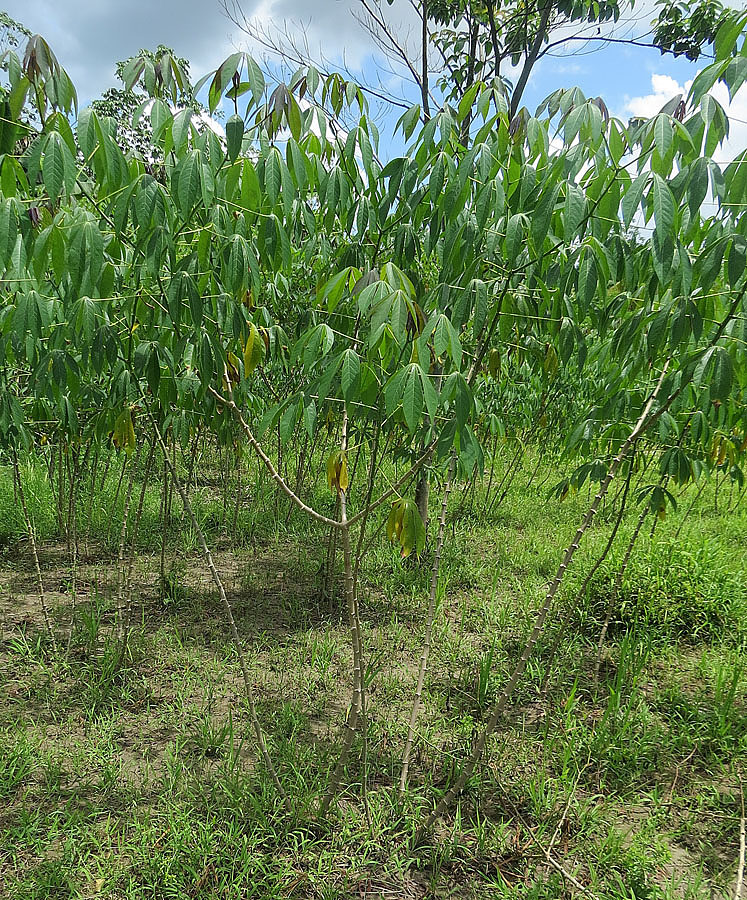
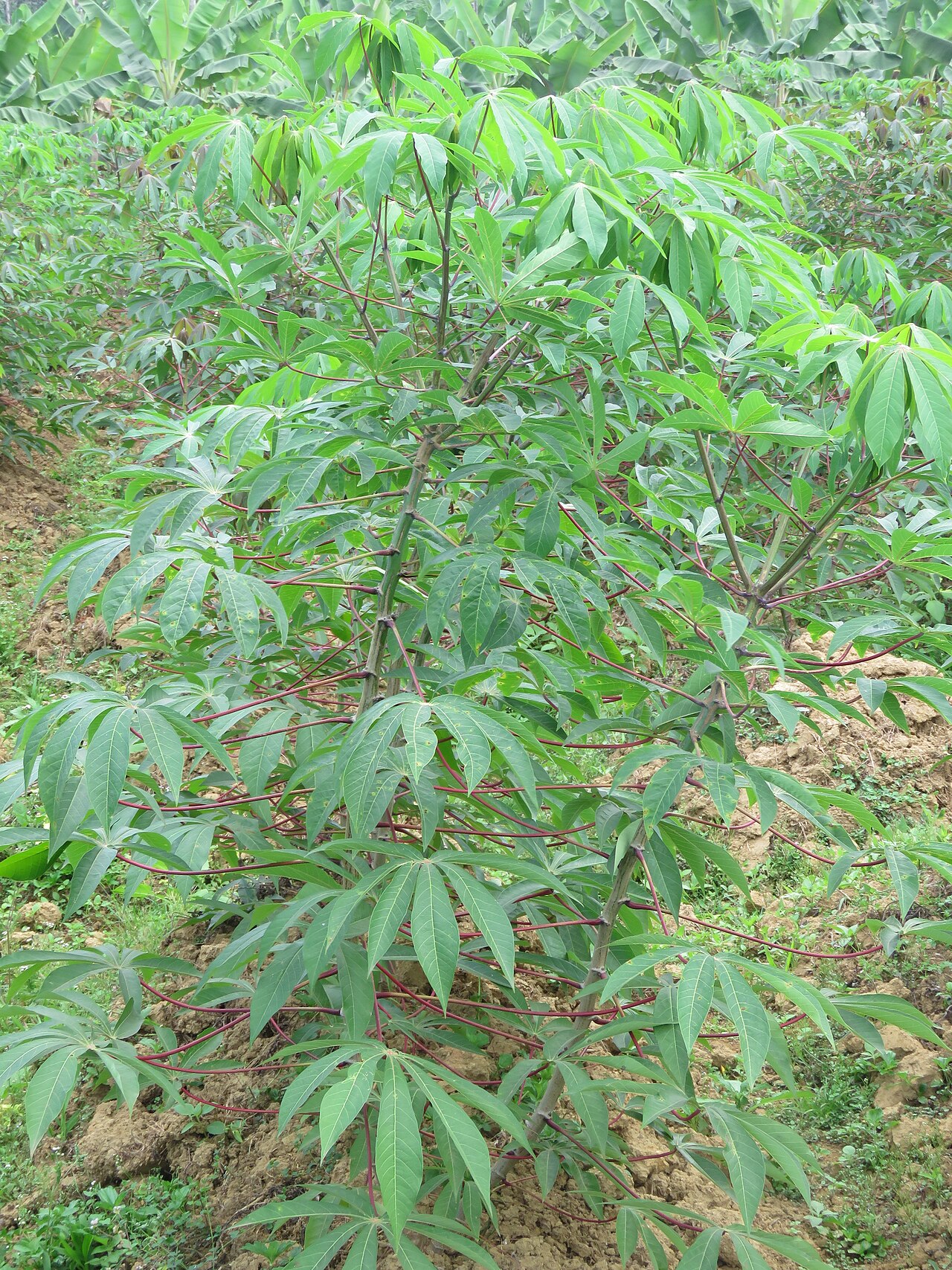
CMC40 is the cassava for gardeners who want a harvest, not just a conversation piece. It is a documented cultivar selected from the Colombia Manihot Collection and sold by Florida nurseries as a high-yield, sweet-type cassava with mild, fine-grained roots — the kind of cassava you plant when you intend to dig, peel, and cook a serious starch crop. It roots easily from stem cuttings, grows fast in heat, and turns a sunny bed into a small thicket of handsome palmate leaves in a single season.
In Florida, CMC40 is a Central and South perennial and a North annual: plant cuttings after frost danger in full sun and well-drained soil, water to establish, then let heat do the work. Harvest roots after a long warm season, usually 9 to 12 months, before frost in the North or whenever roots size up in the South. And the safety rule is absolute and non-negotiable: cassava roots must be peeled and cooked thoroughly before eating, and raw cassava must never be eaten, because cassava carries cyanogenic compounds that cooking removes. Sweet types like CMC40 are lower in those compounds than bitter types, but lower is not zero, and no cassava is a raw snack.
If you are new to choosing between cultivars, the Varieties Matter guide explains why the name after the plant matters as much as the plant itself. CMC40 is a perfect example: it is not just a cassava in the abstract, it is a cassava with a specific job, a specific history, and specific strengths.
How to grow
Plant stem cuttings in spring, after frost danger, in full sun and well-drained soil — cassava is a tropical root crop that wants heat, sun, and drainage, and it grows from a stick of stem the way willow grows from a wand. Bury cuttings at an angle with several nodes underground, work worm castings into the bed at planting, and space 3 to 4 feet apart for the mature thicket. Water to establish, then water moderately, and mulch to hold moisture. Harvest roots after a long warm season, and remember the safety rule on every page of this guide: peel and cook thoroughly, never eat raw.
Set plants 3-4 feet in soil with a pH around 5.5-7.0. Work worm castings into the bed at planting and mulch to hold moisture. A well-fed cassava plant rewards that care directly: steadier growth, better bloom, and a show that actually shows up.
Water & feeding
Water to establish, then water moderately — cassava is drought-tolerant once established and sulks in waterlogged soil, but it yields best with steady moisture through the growing season. Water at the soil line, mulch to hold moisture, and feed lightly: castings at planting plus a balanced organic feed during fast growth. In a drought, occasional deep watering keeps it growing; in a wet season, drainage is the care program. And always: peel and cook roots thoroughly, never eat raw.
Common problems
- NEVER EAT RAW — cassava roots must be peeled and cooked thoroughly; raw cassava carries cyanogenic compounds, and no variety, sweet or bitter, is a raw snack.
- Freeze damage — cassava foliage dies at frost; in cold zones, harvest before frost or grow as an annual.
- Spider mites and whiteflies — blast with water and encourage predators; stressed, dry plants attract pests first.
- Root rot in waterlogged soil — cassava wants drainage; do not plant it where rain ponds.
- Ornamental Variegata is NOT food — Variegata is grown for looks only; do not harvest its roots for eating, per UF/IFAS Extension caution.
Harvest
Harvest roots after a long warm season, usually 9 to 12 months after planting, when stems are thick and roots have sized up — dig carefully, because cassava roots break easily and a broken root left in soil rots. Peel roots completely, removing all skin and the woody core, and cook thoroughly by boiling, frying, or baking before eating; never eat cassava raw, and never taste-test a raw root. Save stem cuttings from harvested plants for next season, because a cassava harvest is also next year’s planting material. Variegata is never harvested for food — it is ornamental only.
Browse all plant & pest guides
Saving seeds
CMC40 is a named cassava cultivar that roots easily from stem cuttings — keep it by planting cuttings, not seed. The Propagation section of the Cassava guide covers how the species is propagated.