
🌿 Coastal Dog Fennel
What it looks like

How to recognize it
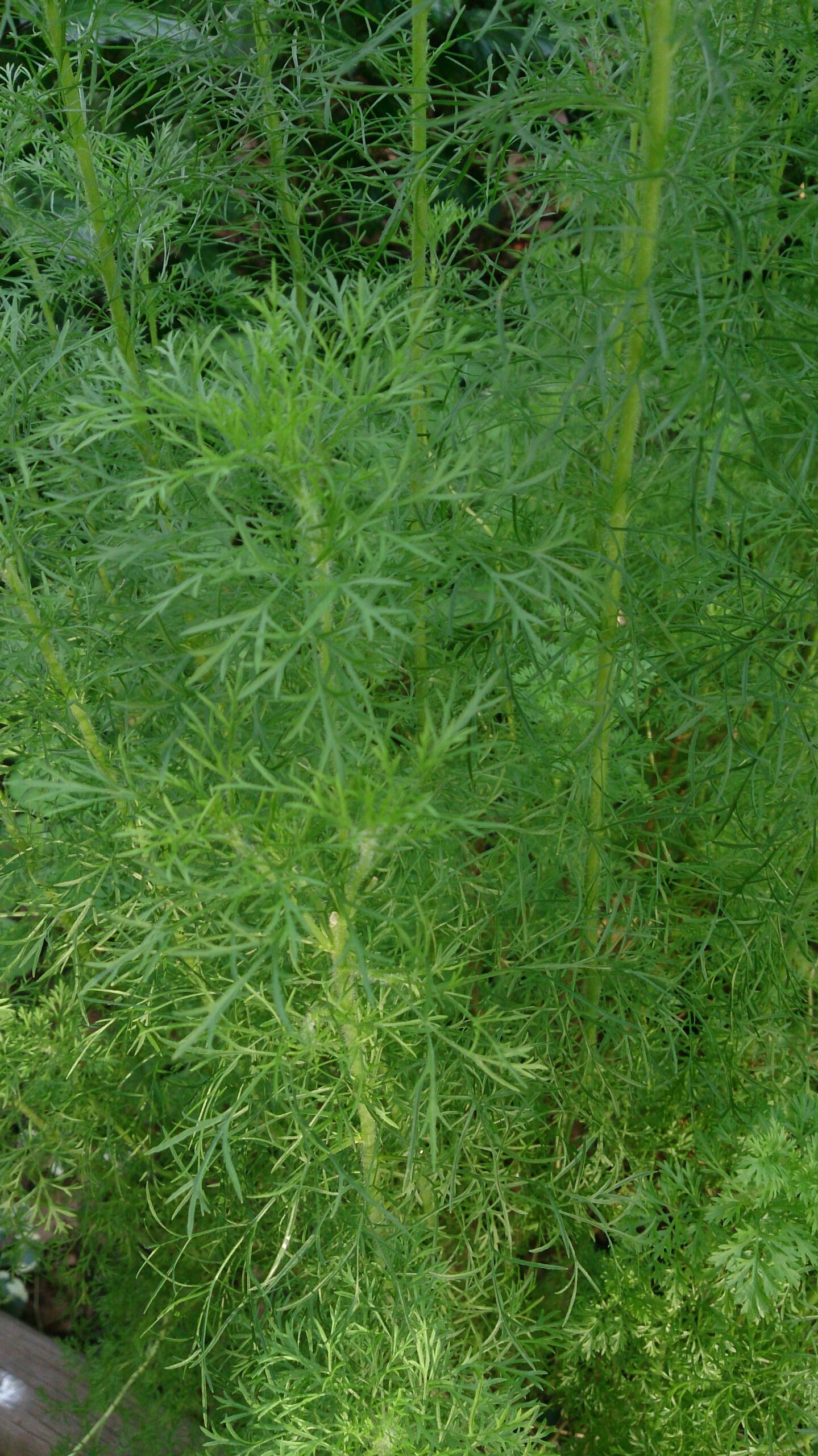
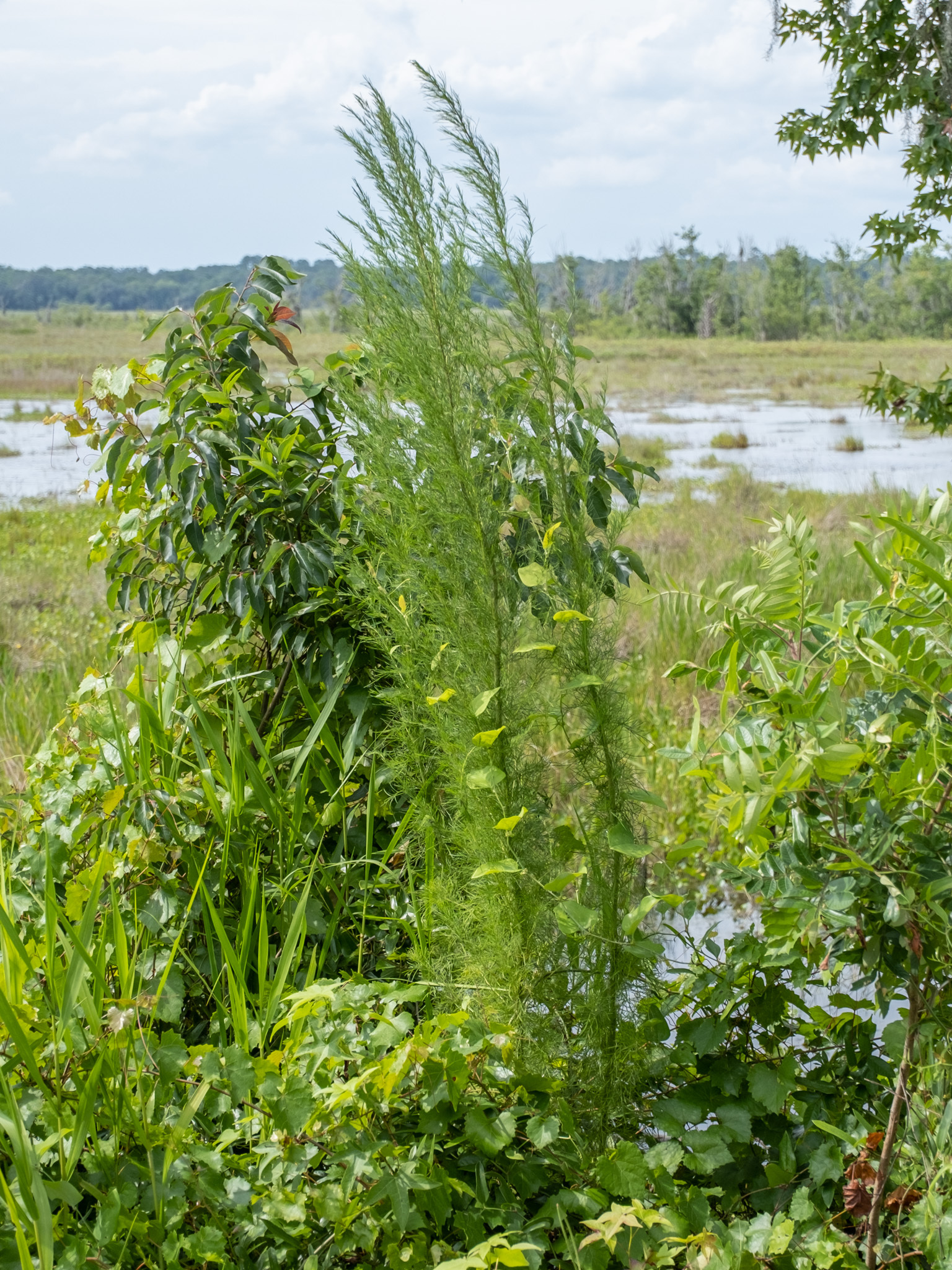
Dog fennel is the plant most Floridians meet without ever planting it. It starts as a low overwintering rosette, then sends up one tall, narrow, barely-branching shoot that can pass 8 feet in a pasture (3 to 6 feet is more typical in a garden), clothed head to toe in leaves so finely divided they look like green hair. The species name gives it away: capillifolium means hair-thin leaves. Crush a leaf and it smells pungently like fennel — which is how it got its common name, and also how you know it is absolutely not the fennel you cook with. That is a different plant entirely, and dog fennel is not food.
Leaves run 1 to 4 inches long, pinnately divided into thread-like segments, bright green and dotted with glands, arranged opposite or alternate and crowded along the stem. In fall, September through November, the tops erupt into feathery panicles of tiny white to dusty-white disc flowers that butterflies mob. A close cousin, yankeeweed (Eupatorium compositifolium), looks similar but is mostly restricted to the Coastal Plain; dog fennel is the one you will find nearly statewide in Florida, from old fields and clearcuts to roadsides, pastures, and the weedy corner of your own yard. It is native here — southeastern United States, the Bahamas, and the Caribbean — and it is such a successful native that UF/IFAS calls it the number one most commonly occurring pasture weed in Florida.
How to grow it
Let us be honest about the usual direction of this relationship: dog fennel grows you. It wants full sun (six or more hours for the best flowering) but tolerates part shade, and it is happy in soils from wet to dry, including clay, sand, and the poor, tired ground where other plants sulk. Once established it handles drought without complaint. It does not need fertilizer, pampering, or encouragement of any kind. If you are deliberately growing it — say, a back-of-the-border pollinator patch — give it 24 to 36 inches of space and a spot you can watch, because it spreads two ways at once: wind-blown seeds with little hairs that travel a long way, and underground rootstocks sprouting from the main taproot. One plant can become a colony in about three years.
Seed needs light to germinate and sprouts when soil temperatures reach about 65°F, so surface-sow rather than burying it. You can also divide established plants in spring. The real skill with dog fennel is not growing it but managing it: deadhead before the seed ripens if you do not want volunteers, and pull young plants with as much rootstock as you can get. Mowing alone will not kill it — it regrows from a woody base, which is exactly why pasture managers find it so frustrating.
Water & feeding
Average water is plenty, and established plants shrug off dry spells. Rich soil and steady irrigation mostly just produce a bigger plant, so there is no reason to feed it. In a container or a tended bed, let the soil dry a bit between waterings and skip the fertilizer entirely.
Wildlife value
Here is the case for keeping a patch: those fall flowers are a serious late-season pollinator magnet. Butterflies and all manner of other insects work the feathery white heads at a time of year when nectar gets scarce. If you have the space to let a clump stand at the back of a wild corner, the insects will use it. Just keep it away from anywhere livestock graze.
The honest warning
Dog fennel leaves contain low levels of the toxin tremetol. Cattle normally avoid the plant, but they will eat it when better forage is scarce, and eating it causes dehydration. UF/IFAS lists it as toxic for livestock. So: gorgeous fall pollinator plant, terrible pasture neighbor. Do not plant it near grazing animals, do not let it seed into pastureland, and never confuse it with culinary fennel. It also serves as an indicator species — where dog fennel thrives, the soil has usually been disturbed, which is a useful diagnostic clue about your ground.
Saving seeds
First, the warning that has to travel with this seed packet: dog fennel is a glorious fall pollinator plant and a terrible pasture neighbor. Its leaves contain low levels of the toxin tremetol, and livestock that eat it when better forage is scarce can suffer for it, so never let this plant seed into pastureland, never plant it where grazing animals wander, and never confuse it with culinary fennel — same smell family, very different dinner guest. If you have the space for a wild corner and no livestock in the picture, though, saving its seed is almost comically easy, because this plant’s entire life strategy is making more of itself.
Collect in fall, once the feathery white heads have gone fluffy and brown and the plant looks like it is already trying to leave. Slip a paper bag over a head, snip the stem, and shake: the tiny seeds, each riding a tuft of fluff built for wind travel, will rain down obligingly. That fluff is the whole point of the plant’s dispersal plan, so do this on a calm day unless you want to sow the entire neighborhood. Winnow out the chaff by pouring the seed gently between two containers in a light breeze, or just pick out the obvious bits — dog fennel seed is not fussy about a little company, but clean seed stores better and sows more evenly.
Dry the seed thoroughly before it goes anywhere near a jar. Spread it thin on a tray indoors for a week or so, out of direct sun, until it feels papery and completely dry. In Florida humidity this step is not optional decoration: seed that goes into storage even slightly damp will mold in an airtight container, and Florida air will happily re-wet anything left out on a counter. Store dry seed in a labeled, airtight jar with a small desiccant packet, somewhere cool and dark. Use the freshest seed first; older seed germinates more patchily, and this is one plant where you will never be short of a fresh supply.
To sow, scatter seed on the surface of moist, well-drained soil in spring, or let fall-sown seed overwinter in place, and press it in without burying it — these are light-loving seeds, and buried seed sulks. Keep the soil evenly moist until seedlings appear, then thin or transplant the toughest-looking youngsters to about two to three feet apart. Dog fennel is a straight species, not a named hybrid, so seedlings generally grow up looking like their parent, with the usual wild-plant variation in height and vigor. One exception matters: the sterile garden selection Elegant Feather Dog Fennel sets no viable seed, so do not bother collecting from it — that sterility is the entire selling point. And if you do not want a colony, deadhead before the fluff flies. With dog fennel, saving seed and preventing a takeover are the same job, just pointed in opposite directions.
Varieties
Every named variety of coastal dog fennel with its own growing guide:
- Elegant Feather Dog Fennel — The sterile garden selection: all of the feathery foliage, none of the seeding takeover, and it turns brick red in fall.