
🌿 Palm-Leaf Mistflower
What it looks like

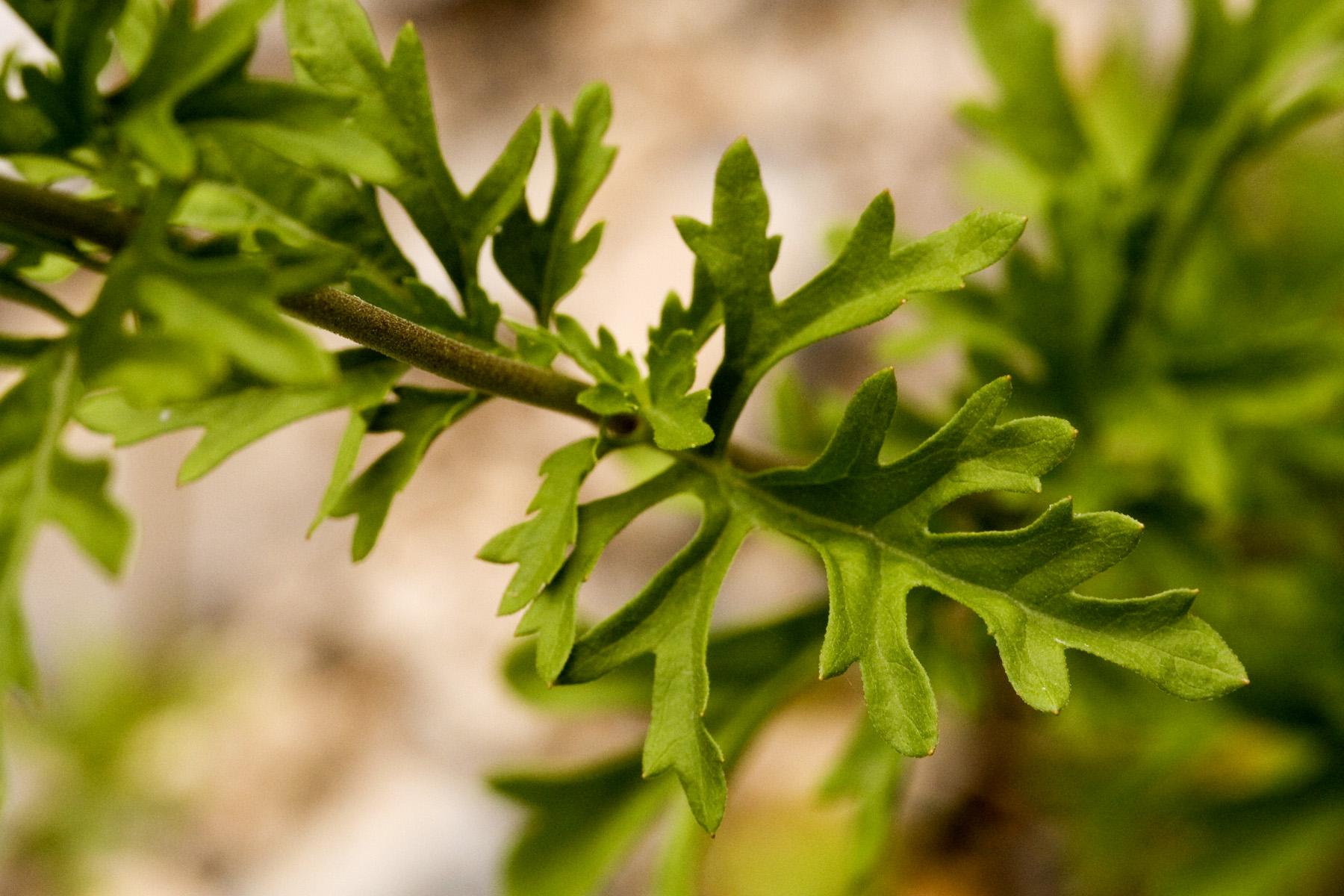
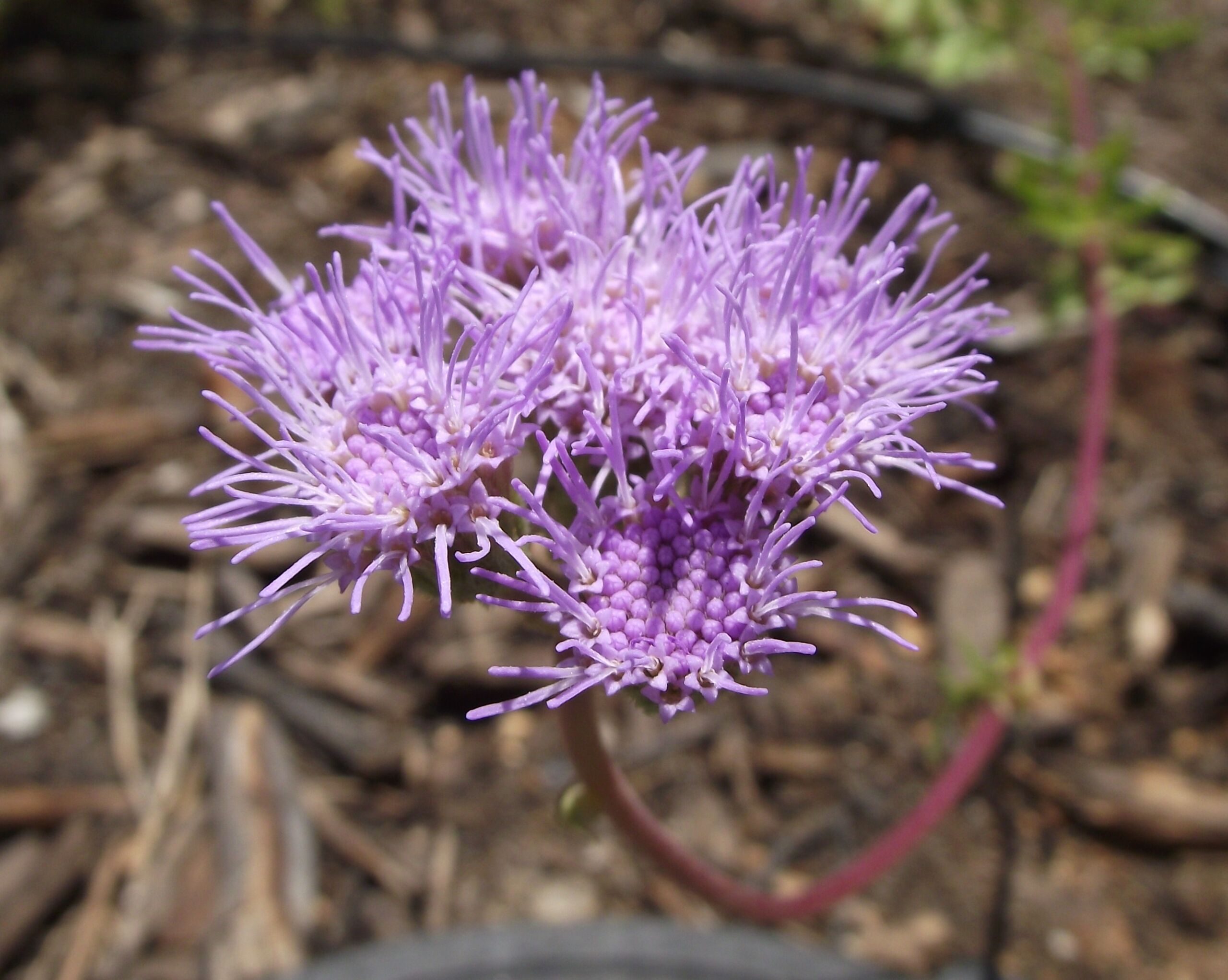
Palm-leaf mistflower is the mistflower that learned to live in the desert, and it looks like it. Conoclinium dissectum is a perennial of the aster family (Asteraceae), native to Texas, New Mexico, and south into Mexico, growing on rocky slopes, in canyons, and along dry washes where most mistflowers would give up and go home. It is a low, spreading plant, typically 1 to 2 feet tall and wider than it is tall, with rhizomes that let it form colonies, and it carries its identity in its leaves: deeply dissected, palmately lobed leaves that really do look like tiny green palms, a leaf shape no other mistflower in its range shares. The flowers are the classic mistflower puff — clusters of small, lavender-blue to violet disk florets with no ray florets at all, the whole head reading as a soft, fuzzy button — blooming in warm months and drawing butterflies the way a porch light draws moths, only prettier and with better ecological credentials.
The name history is worth a paragraph, because gardeners will meet this plant under three names and assume they are three plants. It was long known as Eupatorium greggii, and older nursery tags, field guides, and butterfly references still carry that name; it is also sold and discussed as Gregg’s mistflower, for the same reason. Modern taxonomy places it in Conoclinium as Conoclinium dissectum, and the butterfly guide that names it uses that Latin — which is why this guide uses it too. All three names are the same plant. If a nursery tag says Eupatorium greggii, a seed packet says Gregg’s mistflower, and a butterfly guide says Conoclinium dissectum, they are all pointing at the low, palm-leaved, lavender-flowered perennial of the Texas and New Mexico dry country, and the gardener who buys by any one of those names and checks the leaf shape is buying the right plant.
The butterfly context is the reason this species guide exists, and it is a host story. The Rawson’s Metalmark guide lists palmleaf thoroughwort (Conoclinium dissectum, formerly Eupatorium greggii) in its Host plants section, alongside shrubby boneset, meaning Rawson’s metalmark caterpillars feed on this plant. “Palmleaf thoroughwort” is the butterfly guide’s common-name form for the same species — thoroughwort being the old aster-family common name for the Eupatorium group it once belonged to — and this guide treats palmleaf thoroughwort, palm-leaf mistflower, and Gregg’s mistflower as common names for one species, not as three plants. One plain-text disambiguation, because the mistflower name causes real confusion. This guide covers Conoclinium dissectum only. Blue mistflower (Conoclinium coelestinum) is a different species, an eastern and southeastern plant of moist ground, and it already has its own Florida native profile on the site — it is not covered here, and it should not be wired to this guide. The two mistflowers share a genus and a flower shape and almost nothing else: one is a desert plant of the Southwest, the other a moisture-loving plant of the East, and planting one where the other belongs is how a mistflower dies politely in a single season.
In the garden, palm-leaf mistflower earns its place the desert way: it blooms in heat, it tolerates drought once established, it spreads into a groundcover that flowers, and it feeds butterflies and bees through the warm months when the garden needs them most. Monarchs visit the flowers, and the plant’s value as a nectar source is part of why it shows up in pollinator plantings across its range — but its host-plant role for Rawson’s metalmark is the rarer credential, and the reason a Texas or New Mexico gardener planting for metalmarks plants this species by Latin name rather than grabbing any mistflower off the shelf.
How to grow
Growing palm-leaf mistflower starts with the one decision that matters: drainage. This is a plant of rocky slopes and dry washes, and it wants full sun and well-drained, lean to average soil, with water that moves through rather than sits. Give it that, and it will spread by rhizomes into a flowering groundcover, bloom through the warm months, and largely look after itself. Give it heavy, waterlogged soil, and it will rot, which is the desert plant’s way of filing a complaint. It tolerates drought once established, and in fact prefers a garden that waters it deeply and then leaves it alone to a garden that sprinkles it daily — desert plants read constant surface moisture as a warning, not a kindness.
Plant in spring or fall, spacing plants 18 to 24 inches apart and expecting them to fill in by rhizome, and mulch lightly with gravel or coarse bark rather than thick wood mulch, which holds too much moisture against the crown in wet winters. Cut back spent flower stems through the season to encourage rebloom, and cut the whole plant back in late winter before new growth starts, because the previous year’s stems are done and the new growth comes from the base and the rhizomes. In cold winters the top growth may die back entirely and return from the roots in spring, which is normal and not a death — wait for spring growth before declaring anything dead, as with all rhizomatous perennials of the Southwest.
Propagation is easy, which is another way of saying this plant wants to be shared. Divide rhizome clumps in spring or fall, and each division re-establishes quickly in well-drained soil. Seed sown in spring germinates readily, and self-sown seedlings appear around happy plants, though a colony left entirely to itself will wander, which is fine in a wildflower bed and less fine in a formal border — edit the wanderers in spring, or give the plant a bed it is allowed to own.
Florida note, stated plainly because the range matters. Palm-leaf mistflower is a plant of Texas, New Mexico, and Mexico, and it is not a Florida native and not a Florida garden prospect outside careful trial in the warmest, best-drained spots. Florida gardeners planting for mistflower butterflies should start with blue mistflower (Conoclinium coelestinum), which has its own Florida native profile and belongs in Florida’s moist ground, and leave dissectum to the Southwest gardens it evolved in. A mistflower is not a mistflower is not a mistflower — the Latin name is the whole story.
Water & feeding
Water, for palm-leaf mistflower, is a question of drainage first and quantity second. The plant wants soil that drains freely — rocky-slope drainage, wash-margin drainage — and in a well-drained site with normal rainfall it largely waters itself once established, while in a dry spell it wants deep, infrequent watering and a root zone that dries between waterings, because a constantly wet crown rots and a desert plant that never dries out is a desert plant in trouble. A light gravel mulch helps, holding down weeds without holding moisture against the crown, and it doubles as the plant’s native soil cover in a way wood mulch does not. Site selection beats irrigation here: a plant in the right rocky spot needs no hose, and a plant in the wrong boggy spot will never be happy no matter how carefully you water it.
Feeding: lean, as with most desert perennials. Palm-leaf mistflower prefers lean to average soil, and no fertilizer program is needed — a spring topdressing of compost is more than enough, and a heavy fertilizer program mostly produces soft, leggy growth that flops and needs cutting back. In a rocky or wildflower bed, the nutrients arriving with decaying plant matter are often plenty on their own. The soil science here is the dry-country story: lean, well-drained soil is a nutrient system that runs on scarcity, with microbes and fungi that cycle nutrients slowly and steadily, and a plant adapted to it grows at the pace the soil allows, storing energy in rhizomes and sending up new growth through them. Planting palm-leaf mistflower at a sunny, rocky garden edge is therefore not just decorating a dry spot — it is installing a metalmark nursery on top of a soil system that rewards restraint, and the plant’s willingness to spread is the nursery’s expansion plan.
Common problems
- Wet feet. The most common problem, and almost always a siting problem. Rotting crowns and thinning colonies mean the soil stayed wet. Move it to drainage that moves, mulch with gravel, and water deeply but infrequently.
- Wrong mistflower. Blue mistflower (Conoclinium coelestinum) is a different, moisture-loving eastern species. Buy by Latin name, and check the leaf shape — dissectum’s leaves are deeply dissected and palm-like.
- Old names. Nursery tags may say Eupatorium greggii or Gregg’s mistflower. Same plant. Check the leaf, not just the tag.
- Winter dieback. Top growth may die back in cold winters and return from rhizomes in spring. Wait for spring growth before declaring it dead.
- Wandering. Rhizomes spread, and a happy colony wanders. Edit volunteers in spring, or give the plant a bed it is allowed to own.
- Too much fertilizer. Rich soil and heavy feeding produce soft, floppy growth. Feed lean, or not at all.
- Caterpillar feeding. Rawson’s metalmark caterpillars eat the leaves, and that is the point of planting it. A healthy colony recovers, so do not spray the caterpillars — they are the crop.
Harvest
Palm-leaf mistflower’s harvest is divisions, seed, and a warm-season butterfly show — in that order, and with one firm boundary that this guide states plainly. This is an ornamental and wildlife plant, not a food or medicine plant, and no part of this guide recommends eating, brewing, or otherwise ingesting it. If you want more plants, divide rhizome clumps in spring or fall — each division re-establishes fast in well-drained soil — or collect seed in fall and sow in spring. If you want flowers for cutting, the lavender puffs cut well for a small vase, and cutting spent stems through the season encourages rebloom, which is the rare case where harvesting and gardening are the same act.
The simplest harvest, though, is a warm afternoon at the edge of a colony in full bloom, with no agenda at all: butterflies working the lavender puffs, bees in the disk florets, and the knowledge that the plant putting on this show is doing it in heat and lean soil where most garden plants would have quit. Leave most colonies standing through the season for the caterpillars, cut back in late winter, and let the rhizomes come back bigger next spring. That is the crop, and it arrives without a single spray — because spraying it would kill the very thing you planted it for, and because a plant that has run its dry-wash system for a very long time does not need your intervention, only your willingness to give it drainage and then get out of its way.
Browse all plant & pest guides
Saving seeds
Palm-leaf mistflower does not make you work for its seed — it makes you work for restraint. This is a rhizomatous spreader that colonizes by underground stems as enthusiastically as it seeds, so the seed-saving story here has two halves: how to raise new plants from seed, and how to keep the plants you already have from staging a quiet takeover. Both halves matter, and the second one matters more.
Start with the flowers. After the lavender-blue puffs fade, the heads dry to brown. Clip whole heads into a paper bag before they shatter, finish drying them indoors for a week in a shaded, airy spot, then shake and crumble them over a bowl to release the small dark seeds. Pick out the larger chaff — a little dust is harmless — and spread the seed in a single layer until it feels thoroughly dry. In Florida humidity, do not rush this: seed that feels dry on a dry day can still carry enough moisture to mold in a jar. Store it labeled with species and year in a paper envelope inside an airtight container with a desiccant packet, kept cool and dark, and use it within a year or two for the strongest germination.
Sowing is forgiving. Mistflower seed germinates warm and bright: press it onto the surface of moist seed mix and barely cover it, or leave it uncovered, since these small seeds do best with light. Kept warm and consistently moist, sprouts typically appear within one to two weeks — quick by perennial standards, and a pleasant surprise after plants that demand a winter of chilling first. No cold stratification is needed for this one; it is a warm-climate native, and it germinates like it. Prick out the seedlings once they have a few true leaves, grow them on in pots until they are sturdy, and plant out after the weather settles. If you want a head start, start seed indoors several weeks before your last expected frost and harden the young plants off before they meet the garden.
Will seedlings grow true? Seed from the straight species grows true to species, with the usual variation between seedlings. But here is the mistflower-specific trap: this plant is easily confused with its eastern cousin, blue mistflower, and the two have been shuffled between genera and common names for years. Seed saved from a mislabeled plant will faithfully produce the wrong plant. Save seed only from plants you have identified by Latin name — Conoclinium dissectum, the palm-leaved one — and label the packet with that name, not just “mistflower.”
And the honest shortcut: division. In spring or fall, dig a clump, slice the rhizome mass into pieces each carrying shoots and roots, and replant immediately, watering well. Every division is an exact clone, it establishes faster than a seedling, and — usefully — it is also how you control the spread: lifting and dividing a colony every few years keeps it where you want it instead of where it wants to be. Save seed for sharing and for starting new colonies; divide for fidelity and for discipline. A mistflower allowed to run is a gift to butterflies and a headache to the gardener next door, and both of those things are true at the same time.
Varieties
Palm-leaf mistflower is grown as the straight species, and for butterfly and wildlife planting the straight species is the right choice, because it is the plant the butterfly guide names. No named garden varieties of Conoclinium dissectum are claimed in this guide, and none is needed: the species is uniform enough in cultivation that a nursery plant sold under any of its three names — Conoclinium dissectum, Eupatorium greggii, or Gregg’s mistflower — is the plant, provided the leaf shape checks out. Buy by Latin name where possible, check the dissected palm-like leaves on arrival, and let the species do what a cultivar list would pretend to do.