
🐝 Cool Splash Bush Honeysuckle
What it looks like
Why this variety
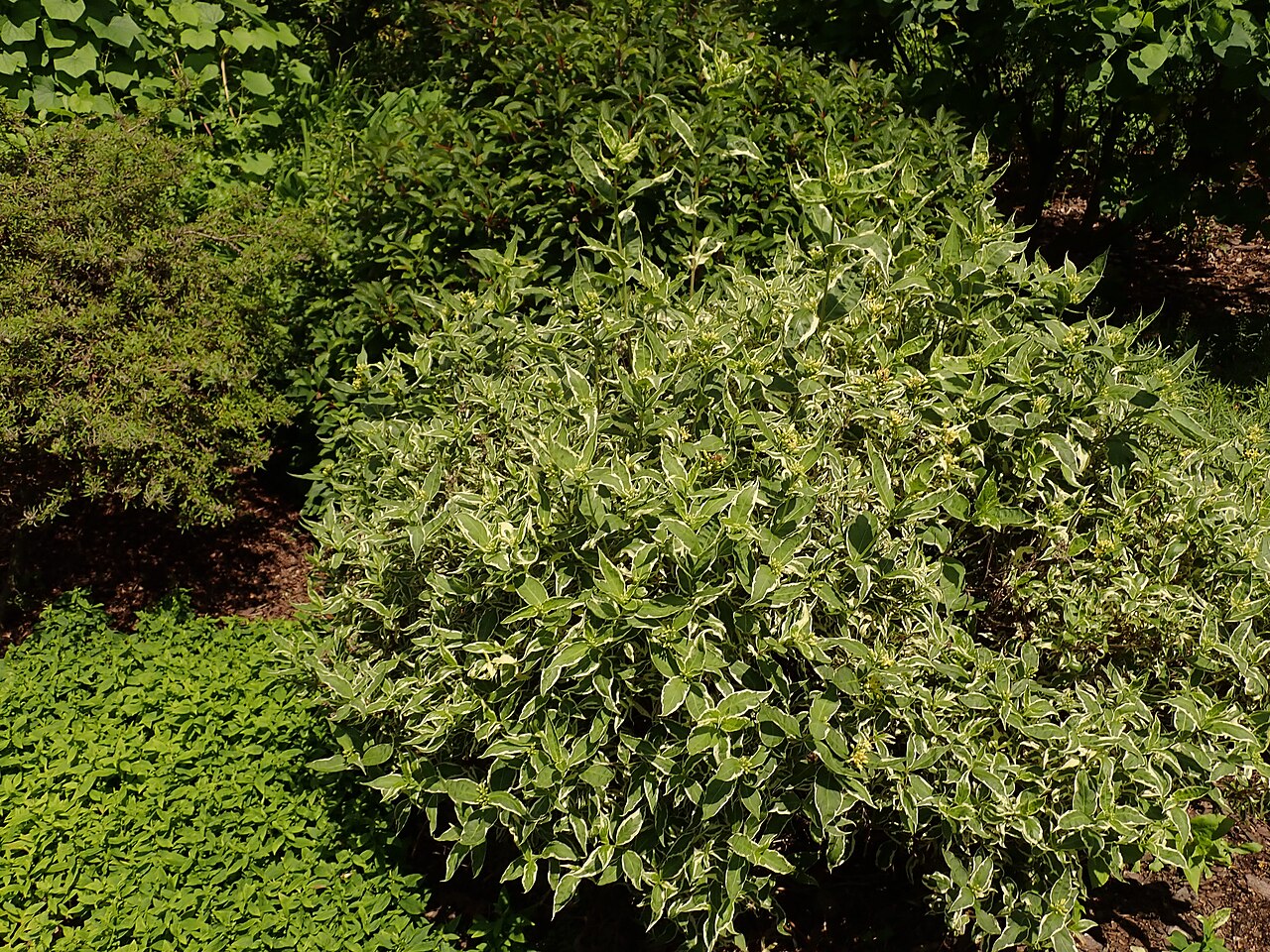
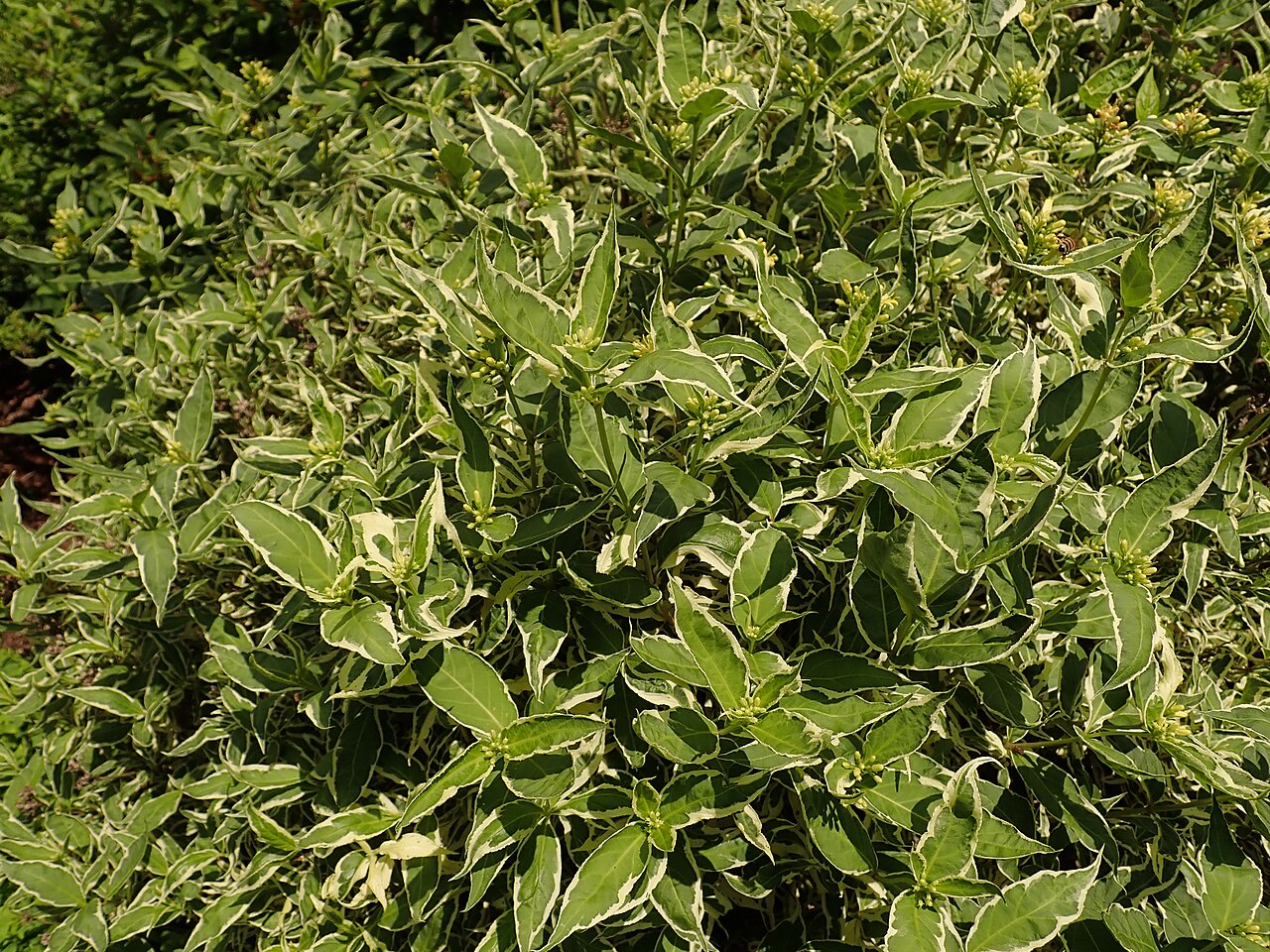
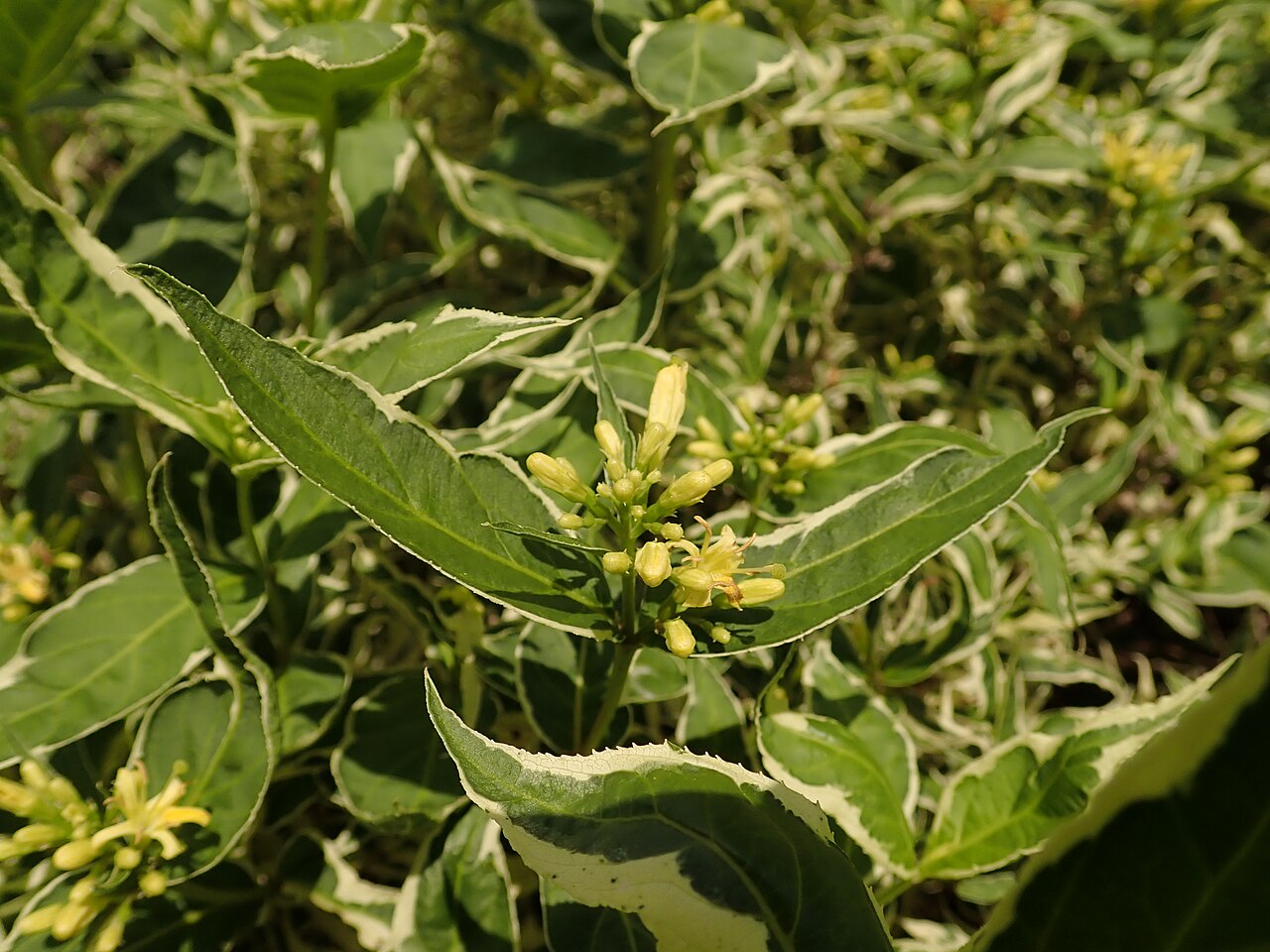
Cool Splash is the bush honeysuckle for gardeners who want variegation without the fuss: a southern bush honeysuckle selection with dark-green leaves edged in crisp white, which lights up a shady corner the way a variegated dogwood does, but on a tougher, smaller, native shrub that also flowers. Its yellow trumpet flowers still come in summer, and its fall color is good, but the foliage is the show — white margins that hold through the season without scorching in the way variegated leaves often do. It is the Diervilla to plant where you want a bright spot in a border, a foundation planting with personality, or a native alternative to an overused variegated shrub.
The trade-off is the same Diervilla bargain: it suckers, so give it room or edit the suckers, and it is a deciduous shrub, so winter is bare stems, not evergreen structure. Cool Splash is also a southern-species selection, which means it is marginally more heat-tolerant than its northern cousins but still a zones 4-7 plant at heart — do not stretch it into a climate it does not want and blame the cultivar. Plant it in sun to part shade, in soil that drains, and let it colonize a bed the way it wants to, and it will be one of the lowest-maintenance variegated shrubs you own.
If you are new to choosing between cultivars, the Varieties Matter guide explains why the name after the plant matters as much as the plant itself. Cool Splash is a perfect example: it is not just a bush honeysuckle in the abstract, it is a bush honeysuckle with a specific job, a specific history, and specific strengths.
Florida honesty: Cool Splash is the bush honeysuckle with the best shot at warmth, and it still is not a Florida plant — the southern species reaches zone 8, which leaves even North Florida a stretch, and Central and South Florida are out of the question. Plant it only as a North Florida trial in afternoon shade with cool, mulched roots, and expect it to struggle in a hot summer. For most Florida gardeners, the honest pick is a heat-loving native with variegated or bright foliage, not a Diervilla, however pretty Cool Splash is in photographs.
How to grow
Plant in spring or fall in full sun to part shade, in well-drained soil — bush honeysuckle is a low, mounding native shrub that suckers to form colonies, so give it room or be ready to edit suckers. Work worm castings into the planting hole, mulch to hold moisture, and water through the first season; after that it is drought-tolerant and deer-resistant with almost no care. Prune lightly after bloom if you like tidiness, and do not confuse it with invasive true honeysuckles: Diervilla is a different genus with no invasion risk.
Set plants 3-4 feet apart in soil with a pH around 5.0-7.5. Work worm castings into the bed at planting and mulch to hold moisture. A well-fed bush honeysuckle plant rewards that care directly: steadier growth, better bloom, and a show that actually shows up.
Water & feeding
Water through the first season, then water sparingly — bush honeysuckle is drought-tolerant once established and handles dry shade better than most shrubs. Water at the soil line, mulch to hold moisture, and feed lightly: castings at planting is usually enough, because rich soil makes soft growth that flops. In a drought, occasional deep watering keeps it vigorous; in a wet site, improve drainage, because soggy soil sulks it.
Common problems
- Suckering colonies — roots send up suckers; give it room or edit suckers, and never plant it in a tight bed you want to stay tidy.
- Heat failure south of its range — Diervilla wants cool summers; Florida heat outside a North Florida trial ends it.
- Bare winter stems — bush honeysuckle is deciduous; winter is stems, not structure, so pair it with an evergreen.
- Leaf scorch on variegated types in hot sun — give Cool Splash afternoon shade in warm climates to protect its white margins.
- Confusion with invasive honeysuckles — Diervilla is not Lonicera; it has no invasion risk, but neighbors may worry, so the distinction is worth stating.
Harvest
There is no food harvest — bush honeysuckle is grown for its flowers and foliage, and its fruit is not a garden crop. The seasonal work is editing suckers where they are not wanted, cutting back a tired stem or two in late winter, and leaving the shrub standing through summer bloom and fall color. Cut a few flowering stems for small bouquets in summer if you like — the yellow trumpets suit wildflower arrangements — and compost the rest.
Browse all plant & pest guides
Saving seeds
Cool Splash is a variegated bush honeysuckle selection — keep it from cuttings or division, not seed; seedlings won’t hold the crisp white leaf margins. The Saving seeds section of the Bush Honeysuckle guide covers seed for the straight species.