
🌿 Cordia
What it looks like
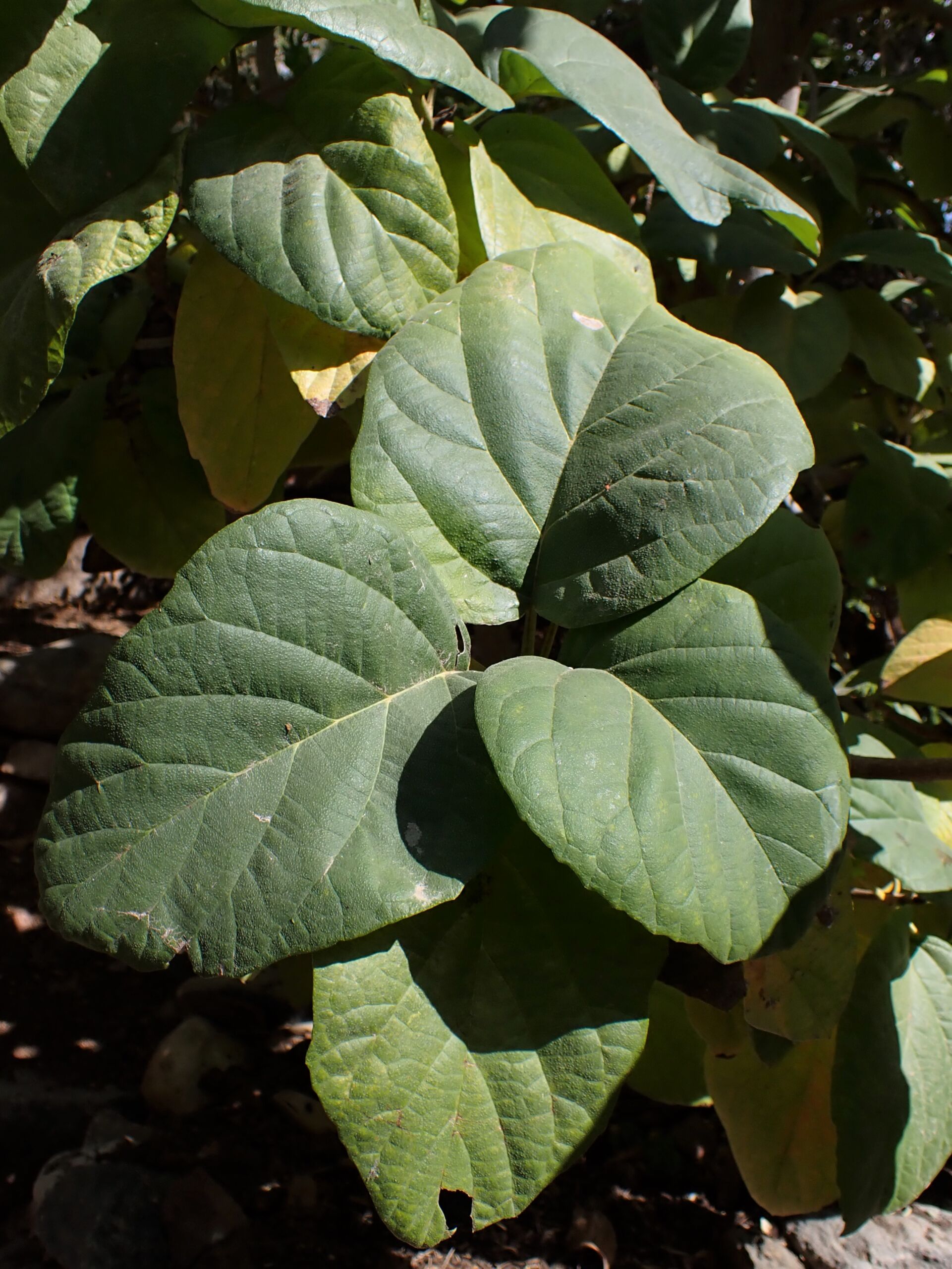
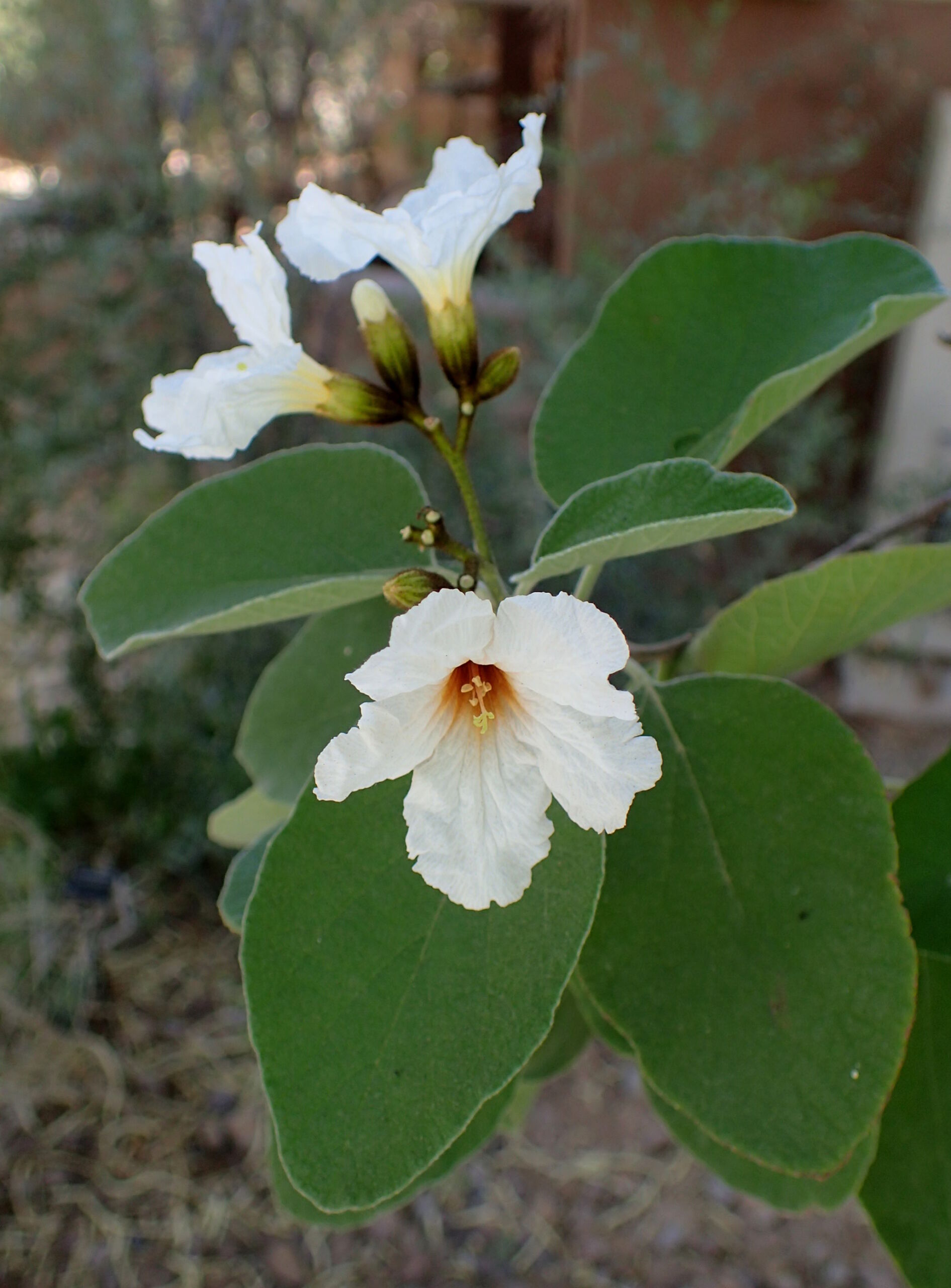
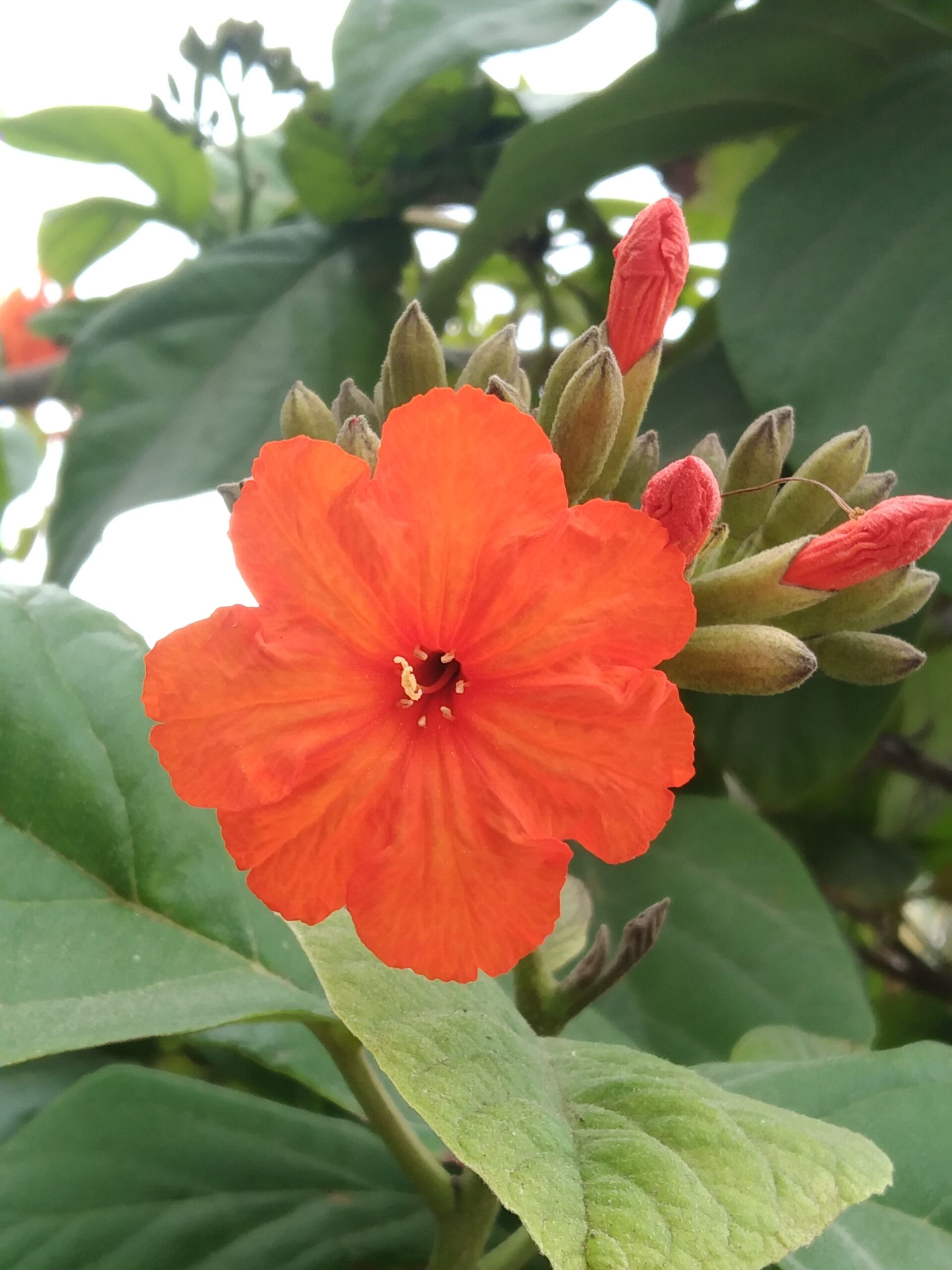
Cordia is the genus of the trumpet-flowered trees, and it is one of the great warm-climate genera for gardeners who want flowers, fruit, and butterflies from the same plant. It is a large genus — roughly 300 species, with checklists differing on the exact count — in the borage family (Boraginaceae), and it includes trees and shrubs distributed across tropical and subtropical regions worldwide, with concentrations in the Americas, Africa, and Asia. The garden members are the famous ones: trees and large shrubs with alternate, often rough-textured leaves, clusters of trumpet- or funnel-shaped flowers in white, yellow, or brilliant orange-red, and fleshy, olive-like fruits that birds eat with enthusiasm, which is how Cordia travels from garden to hedgerow without any help from gardeners at all. If you have ever seen a geiger tree in full orange bloom against a blue south Florida sky, you do not forget it: the whole crown catches fire, and the butterflies arrive before you have finished admiring it.
The North American garden species are the ones this guide names, because they are the ones a gardener or butterfly-watcher in the United States is most likely to meet. Geiger tree (Cordia sebestena) is the orange-flowered Caribbean and south Florida tree, a small to medium tree with large, rough leaves and clusters of vivid orange trumpet flowers through much of the year in frost-free climates, and it is the Cordia most Florida gardeners know by sight even if they do not know its Latin. Texas wild olive, also called anacahuita (Cordia boissieri), is the white-flowered Texas native, a small tree or large shrub of the Rio Grande Valley and south Texas, with white trumpet flowers and a drought tolerance its tropical cousins do not share. The genus also includes tropical timber and fruit species grown elsewhere in the world, but this guide keeps its focus on the garden species of the United States, because a genus guide that tried to cover 300 species would be an encyclopedia, not a guide, and an encyclopedia is not what a butterfly gardener needs at planting time.
The butterfly context is the reason this genus guide exists, and it is written at the genus level in the guides themselves. The Band-celled Sister guide lists Cordia among the nectar sources in its “Nectar plants and adult food” section, alongside croton and baccharis, and the Rusty-tipped Page guide lists Cordia in its Nectar plants section, among lantana, croton, and other nectar plants. Both guides name the plant as Cordia, without a species attached, which is exactly the case for a genus guide: the butterflies drink from Cordia flowers, and the species doing the flowering in a given garden depends on the garden’s climate — geiger tree in south Florida, Texas wild olive in south Texas — so the honest unit is the genus, and a guide that covered only one species would leave the other garden’s nectar unexplained.
One plain-text disambiguation, because the Cordia name causes real confusion and real misplanting, and because this genus guide must not swallow the species guides around it. This guide claims Cordia species as a genus only. Geiger tree (Cordia sebestena) already has its own Florida native profile on the site, and it is listed here for completeness, not claimed by this genus guide — the profile is the species page, and this guide is the map of the genus. Texas wild olive (Cordia boissieri) is a separate species unit in its own right, and it is listed here the same way. Buy and plant by Latin name, species by species, and let this guide be the map of the genus, not a substitute for any one of its members. And a naming caution for shoppers: “wild olive” is a name shared with unrelated olive-family plants, so a tag that says wild olive without a Latin name proves nothing — check for Cordia boissieri before you buy.
How to grow
Growing Cordia starts with the only decision that matters: which species, native or adapted to your climate, are you actually planting? The genus spans tropical trees and drought-tolerant subtropical shrubs, and the growing advice for a frost-free Caribbean tree and a south Texas native are not interchangeable, so this section gives the genus pattern and names the species differences where they change the plan. For the garden species generally, the pattern is: full sun, well-drained, average to fertile soil, and warmth. Give a tree a sunny gap with room to reach its mature crown, plant in spring after the last frost where frost occurs, and water through the first growing season until established. Geiger tree wants frost-free warmth and sulks, then dies back, where hard freezes reach it; Texas wild olive tolerates more cold and considerably more drought, and suits a sunny, well-drained Texas garden in a way its tropical cousin never will.
Spacing follows the species: a geiger tree is a small to medium tree and wants a garden gap, not a foundation bed, while Texas wild olive works as a small tree or large shrub and can anchor a sunny corner. Mulch the first year to hold moisture and suppress weeds, prune lightly in late winter to remove dead wood and shape the crown, and otherwise leave the natural form alone, because a Cordia pruned into a ball looks wrong in exactly the way a flowering tree forced into topiary looks wrong. The fruits drop and can stain patios and stain shoes, so site fruiting trees where the drop is an asset — over mulch, over lawn, over a bed birds visit — rather than over a white patio you intend to keep white.
Propagation follows the tree and shrub patterns respectively: seed, sown fresh, which germinates readily for the garden species, or cuttings, which root moderately well, and air-layering for the trees. Seed-grown plants vary a little, which is fine for a wildlife planting, and nursery-grown stock is the practical route for most gardeners, since the species are regional nursery items and wild collection is never the answer. If your local native nursery does not carry the species for your region, ask — native nurseries track demand, and a request for Cordia sebestena in south Florida or Cordia boissieri in south Texas is a request they understand.
Florida note, stated by species rather than by genus, because the genus-level answer would be a lie. In Florida, the Cordia story is a south Florida story. Geiger tree is the Florida Cordia, native to the southern peninsula and the Keys, and the species south Florida gardeners should grow for butterflies and for bloom. It is freeze-sensitive, so central and north Florida gardeners should not expect it to behave as a landscape tree through hard freezes, and should treat it as a container or protected specimen at best, if at all. Texas wild olive is a Texas plant, not a Florida native, and Florida gardeners planting for the butterflies in the guides should start with geiger tree, not with a Texas species shipped across the Gulf. Plant the species native nearest your region, and check its cold tolerance before buying, rather than assuming any Cordia suits any warm garden.
Water & feeding
Water, for the garden Cordias, is a question of establishment moisture followed by restraint. The species want well-drained soil that stays moist through the first growing season, and in a moist site with normal rainfall they largely water themselves once established, while in a dry spell they want deep watering and a root zone that does not dry out completely, because a thirsty Cordia thins out and stops flowering, which defeats the purpose of planting it. Texas wild olive is the exception that proves the pattern: once established, it tolerates real drought, and overwatering it produces soft growth and root trouble faster than underwatering does. A mulch of wood chips or leaf litter helps in the first year, holding moisture and cooling the roots, and it doubles as habitat for the soil life that keeps garden soil healthy rather than sour.
Feeding: modest, across the genus. Cordias prefer average to fertile, well-drained soil, and a spring topdressing of compost is the right scale of feeding — not a heavy fertilizer program, which mostly produces soft, leggy growth that flops and flowers less. In a garden bed, the nutrients arriving with leaf litter and organic matter are often plenty on their own. The soil science here is the warm-climate story: well-drained, humus-rich soil is a nutrient highway, regularly replenished with organic matter, and the microbes, fungi, and invertebrates of that soil cycle nutrients fast in warm conditions. A Cordia’s roots live in that community, storing energy and sending up new growth through it, and its yearly leaf fall and fruit drop return organic matter to the soil as food for the next cycle. Planting a Cordia at a sunny garden edge is therefore not just decorating a gap — it is installing a butterfly nectar bar on top of a soil-building machine, and the birds that eat the fruit are the bar’s cleanup crew.
Common problems
- Freeze damage. The most consequential problem in the genus. Geiger tree is frost-sensitive and dies back or dies outright in hard freezes. Plant it only where winters allow, or keep it as a protected specimen.
- Wrong species, wrong region. A south Florida tree in north Florida, or a Texas shrub in a wet eastern garden, is a plant out of place. Check the species’ native range and cold tolerance before you buy, and buy by Latin name.
- Fruit drop. Ripe Cordia fruits drop and stain. Site fruiting trees over mulch or lawn, not over a patio you want to keep clean.
- Overwatering the drought-tolerant species. Texas wild olive wants drainage and restraint once established. Constant wet soil rots it faster than drought stresses it.
- “Wild olive” confusion. Unrelated olive-family plants share the wild-olive name. A tag without the Latin Cordia boissieri proves nothing.
- Geiger tree vs. genus guide. The Florida native profile for geiger tree is the species page. This genus guide does not replace it, and species mentions should wire to the species page, not here.
- Caterpillar and butterfly traffic. Butterflies visiting for nectar are the point of planting it. A healthy tree handles the traffic, so do not spray the visitors — they are the crop.
Harvest
Cordia’s harvest is seed, cuttings, and a warm-season butterfly show — in that order, and with one firm boundary that this guide states plainly. Some Cordia fruits are eaten by people in their native regions, but no part of this guide recommends eating any Cordia fruit, because species, ripeness, and preparation vary and this guide is a garden and butterfly guide, not a foraging guide. If you want seed, collect ripe fruits, clean the seed, and sow fresh, because the seed germinates best without long storage. If you want more plants, take cuttings, though rooting is moderate rather than easy, and give every new planting a full season to establish before you judge it.
The simplest harvest, though, is a warm afternoon under a Cordia in full bloom, with no agenda at all: trumpet flowers overhead, butterflies working them flower by flower, birds arriving later for the fruit, and the knowledge that the tree over your head is both the bar and the pantry, and that its flowers are what brought the butterflies in the first place. Leave most trees standing through the season for the visitors, prune lightly in late winter, and let the crown come back bigger next spring. That is the crop, and it arrives without a single spray — because spraying it would kill the very thing you planted it for, and because a plant that has run its tropical flowering system for a very long time does not need your intervention, only your willingness to plant the right species and then get out of its way.
Browse all plant & pest guides
Saving seeds
A note on scope first, because Cordia is a genus of roughly 300 species, not a single plant, and no one seed method fits every member of it perfectly. What follows is the genus-level pattern for the Cordia species most often grown in warm gardens, above all the Geiger tree, Cordia sebestena, with its orange trumpets and white, pear-shaped drupes. If you are growing a different Cordia species, use this section as the map and check the details against your own species, because fruit size, ripeness signs, and germination speed vary across a genus this large. The pattern holds; the fine print moves.
Collect from ripe fruit, either picked from the tree or gathered fresh from the ground, and do it in the warm season when the tree is in fruit. Ripe Geiger tree fruits soften and color up, and the seed inside sits in pulp that must come off before sowing. Soak the fruits in water for a day or so to soften the pulp, then rub it away and wash the seeds clean. Dry the cleaned seed in the shade for a few days, not in harsh sun, and handle it with the ordinary care you would give any unfamiliar fruit: this guide does not recommend eating Cordia fruit, because species, ripeness, and preparation vary, and a garden guide is not a foraging guide.
Sow fresh, because that is the single most important sentence in this section. Cordia seed germinates best without long storage, and a jar kept for years is a gamble with worsening odds. If you must store seed briefly, dry it thoroughly, keep it in a labeled, airtight container with a desiccant packet in a cool, dark place, and remember Florida humidity when you judge whether it is truly dry. Sow in spring or summer, in a warm, moist, well-drained mix, covered lightly, and keep the mix evenly moist but never waterlogged.
Germination is slow and uneven, and sources disagree on exactly how slow, which is worth saying out loud rather than papering over with a single confident number. The hard, corky seed coat is the reason: it lets water in reluctantly, so some seeds sprout in weeks and others take months, and the batch straggles in rather than marching out together. Lightly scarifying the coat, nicking or abrading it just enough to let water in without damaging the seed inside, and then soaking the seed in water before sowing, can speed and even out germination noticeably. Warmth helps throughout; a cool windowsill in winter is not the place for a tropical tree’s seed. Once seedlings are up and sturdy, pot them on individually and give them a full season to establish before judging them, because a young Cordia spends its first months building roots you cannot see.
Do seedlings grow true? For species-grown Cordia, broadly yes: seed from a Geiger tree grows into a Geiger tree, not into a different species. Named selections and garden forms are another matter, and if several Cordia species are flowering together, crossing is possible, so a gardener who wants a pure species line should save from a planting where one species dominates. Cuttings are the alternative when you want an exact copy of one tree, and they root moderately well, though not as eagerly as some shrubs. For most gardeners, though, the ritual is simple and satisfying: ripe fruit, clean seed, sow fresh, scarify if you are impatient, and wait warmly. A tree that feeds butterflies all summer is worth a slow start.
Species
Cordia is a genus of roughly 300 species, and no guide can list them all, so this section names the species a North American gardener or butterfly-watcher is most likely to meet, in plain text, and states plainly which ones have their own pages. Geiger tree (Cordia sebestena) is the orange-flowered Caribbean and south Florida tree, with its own Florida native profile on the site, and it is listed here for completeness, not claimed by this genus guide. Texas wild olive, also called anacahuita (Cordia boissieri), is the white-flowered Texas native, a separate species unit, and it is listed here the same way. Other Cordia species grown in warm gardens around the world exist, but they are outside the scope of a United States butterfly-garden guide, and this guide does not promise them. Grow the species native or adapted to your region, by its Latin name, and let the genus guide be the map, not a substitute for any species on it.