
🌿 Cuckoo Flower
What it looks like
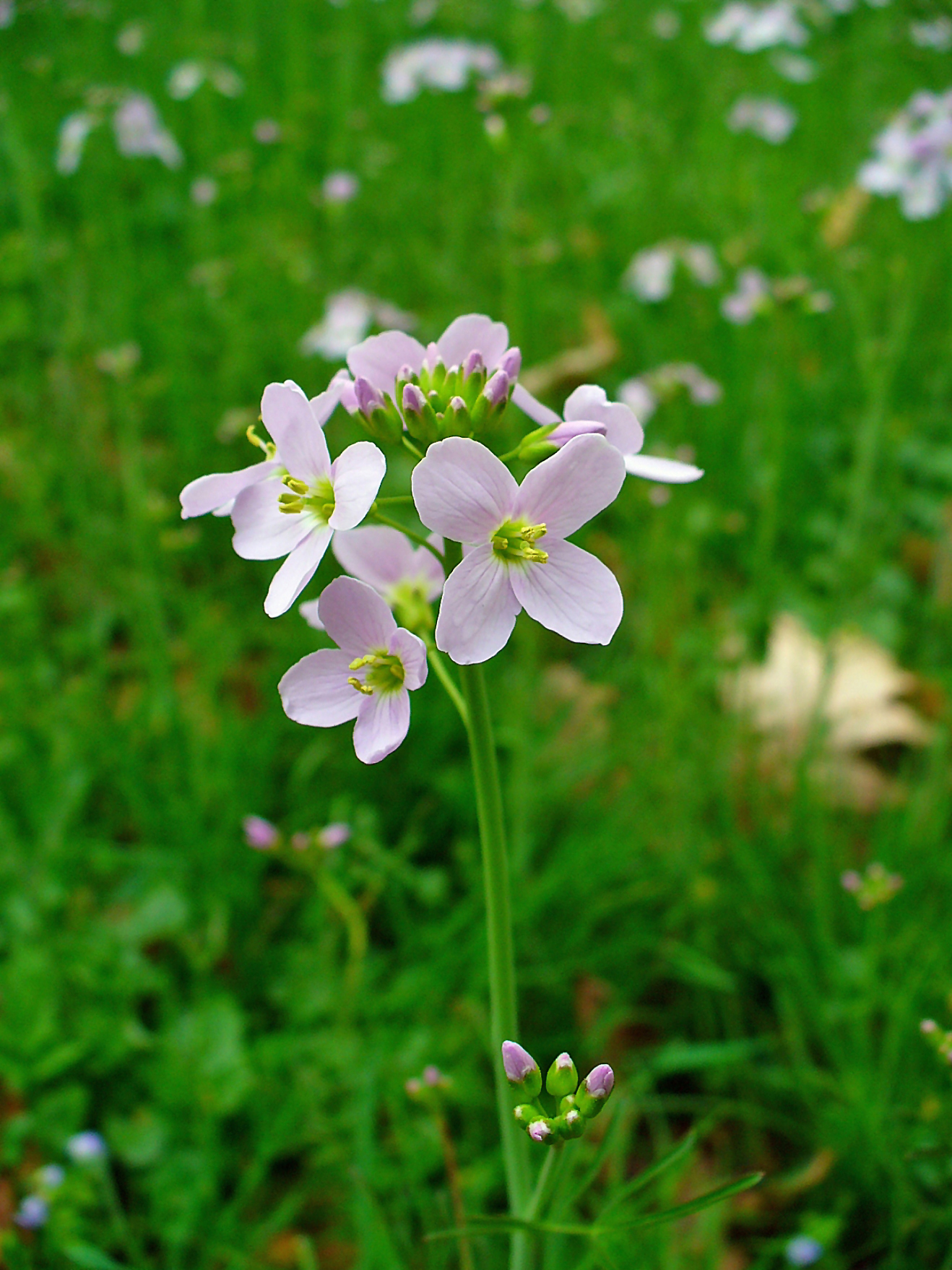
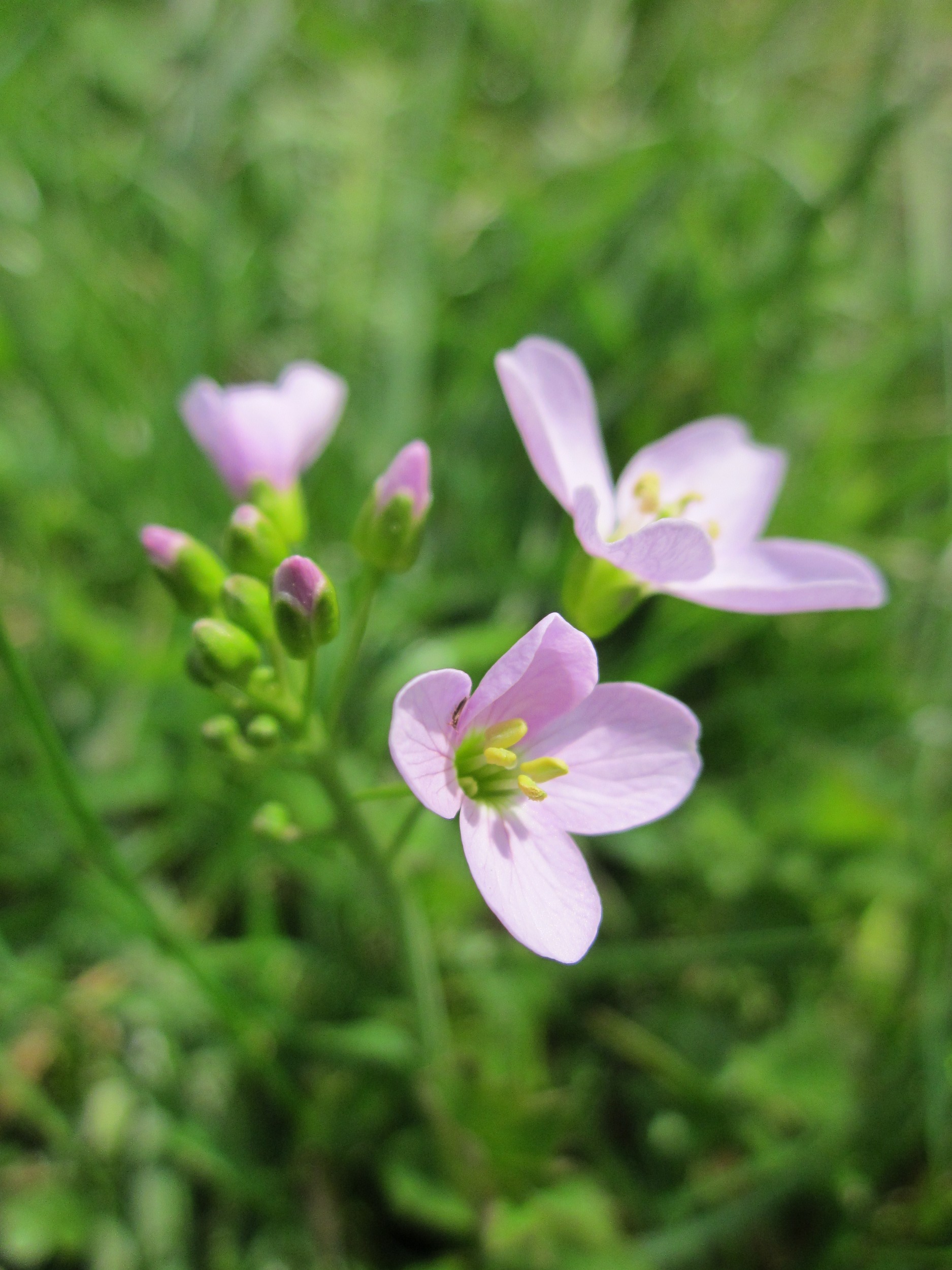
Cuckoo flower is a small plant with a large personality, and it is one of those wildflowers whose common names tell you everything about how people used to live with it. It is Cardamine pratensis, a herbaceous perennial in the mustard family (Brassicaceae), native to Eurasia and naturalized in North America, and it grows in the places where spring arrives as water: wet meadows, damp pastures, ditches, pond margins, and the banks of streams. It is also called lady’s smock, milkmaids, and mayflower, and every one of those names is a clue. Lady’s smock, for the cupped shape of the flowers. Milkmaids, for the old custom of bread and milk for breakfast around the season it first blooms. And cuckoo flower, because its pale blossoms open around the time the first cuckoo starts calling in the British Isles — so reliably, in fact, that one old writer noted the first full blooming of the cuckoo flower predicts the first hearing of the bird itself. A plant that tells you a bird is back is a plant worth knowing.
In the field, cuckoo flower is a low, hairless perennial, growing to about 40 to 60 centimeters (roughly 16 to 24 inches) tall, with a basal rosette of rounded leaves at ground level and slender, upright stems rising in spring. The leaves are pinnate, 5 to 12 centimeters long, with 3 to 15 leaflets, each leaflet about a centimeter long — watercress-like, which makes sense, because watercress is a mustard cousin and the family resemblance runs deep. The flowers are carried on a spike 10 to 30 centimeters long, each flower 1 to 2 centimeters across, with four very pale violet-pink petals (rarely white), veined with darker violet, six stamens with yellow anthers, and the four-petalled cross shape that marks every mustard. The flowers droop and close at night or in heavy rain, and the greatest profusion runs April to June, with May the peak month in most of its range. After flowering come long, thin, bright green seed pods, up to about 5 centimeters, which split when ripe and fling their small seeds a short distance — the mustard family’s signature exploding-pod trick, in miniature.
Underground, cuckoo flower is a semi-rosette perennial with a short horizontal rhizome and shallow roots, overwintering as a tiny, almost insignificant leaf rosette that you would walk past without noticing. It is a plant of closed grassy turf rather than bare, disturbed ground: it colonizes gaps in vegetation where grazing, cutting, or moderate disturbance keeps taller competitors in check, and it is only weakly competitive against tall, rank, heavily shading species. It prefers moderately acid to neutral soil, roughly pH 5 to 7.5, in moderately fertile ground, and it performs best in damp to wet, open, well-lit meadows — seasonally flooded ground is its home, not a hardship. It is never found on steep slopes or shallow, rocky ground, and it does not want permanently wet ground either; damp, not drowned, is the rule. It also propagates occasionally from buds in the axils of its lower leaves, little plantlets that root where they touch damp soil, which is how a drift thickens year by year without any help from you.
The butterfly context for this species guide is a single Host plants mention, and it is the reason this guide is a species guide rather than a genus note. The Mustard White guide lists its native mustard hosts as two-leaved toothwort, cuckoo flower, watercress, and rock cress — cuckoo flower named by common name in that list, with the Latin Cardamine pratensis recorded in the project’s plant data. This draft covers that exact species form, “cuckoo flower” and “Cardamine pratensis”, only. It does not cover the Cardamine genus as a whole: the genus guide for Cardamine, built in an earlier wave, covers genus-level forms such as “toothworts (Cardamine species)” and explicitly does not cover this species, and its photographs happen to include Cardamine pratensis specimens without making it a species guide. The two guides coexist the way genus and species guides should: the genus guide is the map, this guide is the one flower on it.
One plain-text disambiguation, because the mustard family is full of lookalikes and this species has close relatives in the same butterfly guides. Two-leaved toothwort (Cardamine diphylla) is a different Cardamine species, also a Mustard White host, and a separate species unit — not this plant. Cut-leaved toothwort (Cardamine concatenata, formerly Dentaria laciniata) is another Cardamine species, a West Virginia White host, and a separate species unit — not this plant. Hairy bittercress (Cardamine hirsuta) is the small, white-flowered, weedy Cardamine of lawns and paths, and it is not this plant either; cuckoo flower’s flowers are larger and pink, not small and white. Garlic mustard (Alliaria petiolata) is not a Cardamine at all, and it matters here for a sad reason: it lures mustard-white females to lay eggs, and the caterpillars die on it — a trap plant, named in the genus guide, and the reason a gardener planting for Mustard Whites should plant the true native mustards, cuckoo flower among them, and pull the garlic mustard. And watercress, named alongside cuckoo flower in the Mustard White host list, is a Nasturtium species, not a Cardamine. Buy and plant by Latin name, species by species.
How to grow
Growing cuckoo flower is easy, provided you give it the one thing it actually wants: damp ground. Grow it in moist to wet loamy or sandy soil, in full sun to part shade, in a spot that stays damp through spring — a pond margin, a stream bank, a damp meadow corner, a bog-garden edge, or a low spot in the lawn that never quite dries out. Sow seeds in spring or autumn, shallowly, and keep the soil consistently moist until the seedlings are established. Thin seedlings to at least 6 inches apart, or let a drift thicken on its own, because cuckoo flower naturalizes gently in suitable conditions and will not take over a garden the way a true invasive does. Once established it is low maintenance: it wants mowing limited (a meadow cut after seed set, not a weekly lawn cut), competition kept in check, and otherwise to be left alone. Deadheading extends the show a little, but the plant’s real season is spring, and after June it politely fades into the grass until next year.
Propagation follows the plant’s own habits: seed, sown fresh in spring or autumn, germinating in two to four weeks if kept moist but not waterlogged, with seed-raised plants taking up to two years to reach flowering size; division of the short rhizome in autumn or early spring; and the leaf-axil plantlets, which can be detached and potted where they form. A double-flowered form, known as Flore Pleno, exists in cultivation — a compact, low, clump-forming plant about 8 inches tall and 12 inches wide, with double pink flowers — and it is listed here in plain text as a garden form of the species, not as a separate plant. If you grow the double form, know that its doubled petals may offer less to pollinators than the single wild form, and plant the wild form where the butterflies are the point.
Florida note, stated honestly rather than hopefully. Cuckoo flower is a cool-temperate plant of northern meadows and damp grasslands, and it is not a Florida garden plant in any general sense. Its reported hardiness, zones 4 to 8, already tells the story: it wants a cold winter and a cool, damp spring, and the Florida peninsula offers neither. A north Florida gardener with a genuinely damp, shaded microclimate might try it as an experiment, but this guide does not recommend it as a Florida butterfly plant, and the Mustard White — the butterfly behind this guide’s host mention — is a northern butterfly of the Great Lakes and New England, not a Florida one. Florida gardeners feeding white butterflies should plant the native mustards of their own region, and let cuckoo flower be what it is: a northern spring flower, doing its cuckoo-announcing work where cuckoos actually call.
Water & feeding
Water is the whole game with cuckoo flower. It prefers moist or wet soil and suffers in dry ground: a plant in a dry bed thins out, fails to flower well, and disappears within a season or two, while the same plant in a damp meadow margin thickens into a drift. In a suitable site with normal rainfall it largely waters itself, but in a dry spell it wants watering that keeps the root zone damp, not just the surface wet — think pond-margin damp, meadow-after-rain damp, not sprinkler-damp. A mulch of leaf litter helps, holding moisture and mimicking the meadow floor it evolved in, and it doubles as habitat for the soil life that keeps damp soil healthy rather than sour. Do not plant it in a permanently waterlogged bog, though: damp to wet is the range, and standing water through the whole season is beyond it.
Feeding: light, across the board. Cuckoo flower performs best in moderately fertile soil and needs no fertilizer program at all — a spring topdressing of compost or leaf mold is the right scale, and a heavy feed mostly produces soft growth that flops and invites mildew. The soil science here is the wet-meadow story: damp, humus-rich soil with a steady, moderate nutrient supply, cycled by the microbes and invertebrates of a meadow that floods in spring and drains in summer. A cuckoo flower’s roots live in that community, storing energy in a short rhizome over winter and sending up a rosette and flowering stems through it in spring, and its yearly leaf fall returns a small crop of leaves to the soil as organic matter, feeding the next cycle. Planting cuckoo flower at a pond margin is therefore not just decorating a wet corner — it is installing a spring nectar station on top of a soil-building machine, and the caterpillars that eat its leaves are the reason the station exists.
Common problems
- Drying out. The most common problem, and usually fatal to the planting. If the site dries in summer, cuckoo flower fades and does not return. Site it damp, water in dry spells, or pick a different plant.
- Outcompeted by tall vegetation. Cuckoo flower is weakly competitive and cannot establish among tall, rank, shading species. Keep the surrounding grass cut or grazed enough to let light reach it, and do not plant it in an unmown jungle.
- Mown at the wrong time. A weekly lawn cut through April and May removes the flowers and the caterpillar food with them. If it is in a lawn, leave that patch unmown until after seed set, or move it to a meadow margin.
- Confusion with other mustards. Hairy bittercress (small, white flowers, weedy lawns), two-leaved toothwort (woodland, different leaves), and garlic mustard (the trap plant) are all mustards a gardener might mistake for cuckoo flower or plant instead of it. Check flower size and color — large, pink, four-petalled — and buy by Latin name.
- Flea beetles, white rust, and mildews. The mustard family’s usual pests and diseases visit cuckoo flower, as they visit most mustards. A healthy plant in a damp, airy site usually outgrows them; a stressed plant in dry ground does not. Fix the site before reaching for a spray, and never spray a caterpillar host while caterpillars are feeding.
- Caterpillar defoliation. Mustard White and, in Europe, orange-tip caterpillars eat the leaves and developing seed pods, and that is the point of planting it. A healthy drift recovers, so do not spray the caterpillars — they are the crop.
Harvest
Cuckoo flower’s harvest is modest and mostly about the table, not the garden center. The leaves are edible, with a peppery taste similar to watercress — the mustard family’s signature bite, from the same glucosinolate chemistry that makes mustard hot and that makes the plant a caterpillar host in the first place. Pick young leaves in spring, before flowering, from plants you have grown yourself in clean, damp ground, and wash them well; do not pick from roadsides or sprayed ground, and do not strip a drift that is feeding caterpillars. The flowers, too, are edible as a garnish, pale pink and peppery, and they are the prettiest thing on a spring salad plate.
The garden harvest is seed: collect the long, thin pods in May to July, when they are ripe but before they split and fling their seed, and sow fresh in autumn or spring. The simplest harvest, though, is a spring morning in a wet meadow with no agenda at all: pale pink flowers across the grass, the first butterflies working them, and the knowledge that the flower in front of you has been announcing spring since before anyone wrote the name down. Leave most plants standing through the season for the caterpillars, cut the meadow after seed set, and let the drift come back pinker next April. That is the crop, and it arrives without a single spray — because spraying it would kill the very thing you planted it for.
Browse all plant & pest guides
Saving seeds
Cuckoo flower will save its own seed whether you help or not, which is both the good news and the complication. The plant is Cardamine pratensis, a mustard-family perennial, and like many mustards it ripens seed in slender pods that split open with a snap when ready, flinging the tiny seeds a metre or more. The pods do not all ripen on the same day, so the first ripe ones will have fired their seed into the grass before you get round to the last ones. If you want seed in a packet rather than seed in the lawn, you have to beat the plant at its own game.
Choose your seed plants early and leave them alone. A plant grown for seed is not a plant grown for salad leaves, and it is not a plant you should strip bare: cuckoo flower feeds orange-tip and green-veined white butterfly caterpillars, which eat leaves and developing pods alike. Leave a generous drift untouched for the butterflies, and mark one or two healthy plants in a damp spot as seed mothers. Watch daily once the pods swell and turn from green toward straw. The moment the first pods look pale and papery, slip a small paper bag or a square of fine muslin over the pod cluster and tie it loosely below the pods; the bag catches the seed as the pods pop.
Cleaning has one rule: do not wash the seed. The seed coat turns sticky when wet, which is how it hitches rides on birds’ feet and animal fur in the wild, and wet seed in a packet is seed on its way to mould. Tip the bag’s contents onto a tray, pick out the papery pod valves, and use a fine sieve and a gentle puff of air to separate most of the chaff. The seed is very small and light brown, so work over a tray; one or two plants will still give you far more than you need. Then comes the honest catch: cuckoo flower seed does not keep like bean seed. Sources disagree on how long buried seed survives, with some measurements suggesting it is short-lived and others reporting persistence for several years in soil, so nobody should promise you a five-year packet. Treat saved seed as a one-season proposition. Dry it thoroughly, which matters doubly in Florida humidity, store it in a small airtight container with a desiccant packet in a cool, dark place, and sow it the following spring or autumn. Sow shallowly on moist compost and keep it damp; germination typically takes a few weeks, and seed-raised plants may take a couple of seasons to reach full flowering size.
Will seedlings grow true? Mostly, yes, with a caveat. Cuckoo flower is largely self-incompatible, meaning a flower generally needs pollen from a different plant to set good seed, so seed from a drift is genetically mixed rather than a clone of one parent. That is normal for a wildflower, and the offspring will still be recognisably cuckoo flower, in the usual range of pale pink to white. A named double-flowered form, however, will not come true from seed; increase doubles by division instead. Division is the easier route in general: lift a clump in spring or autumn, tease it apart, and replant the pieces in damp soil. One Florida note, since this guide’s hardiness range tops out around zone 8: in most of Florida, cuckoo flower is a cool-season experiment for the dampest, shadiest corner you own, not a set-and-forget perennial, so sow fresh, keep it wet, and enjoy it while the weather allows.
Species
Cuckoo flower, as this guide covers it, is a single species, Cardamine pratensis, and this section says so plainly rather than padding a list. The garden form Flore Pleno is a double-flowered form of the same species, listed here for completeness, not as a separate plant. Other Cardamine species are separate units, not covered here: two-leaved toothwort (Cardamine diphylla), cut-leaved toothwort (Cardamine concatenata), and hairy bittercress (Cardamine hirsuta) are named in this guide for identification only. The Cardamine genus guide covers genus-level forms such as toothworts (Cardamine species) and is not replaced by this species guide. Watercress (Nasturtium species) and garlic mustard (Alliaria petiolata) are mustards named in the Mustard White context, not Cardamine species, and not covered here. Buy and plant by Latin name, species by species.