
🌻 Cucumberleaf Sunflower
What it looks like
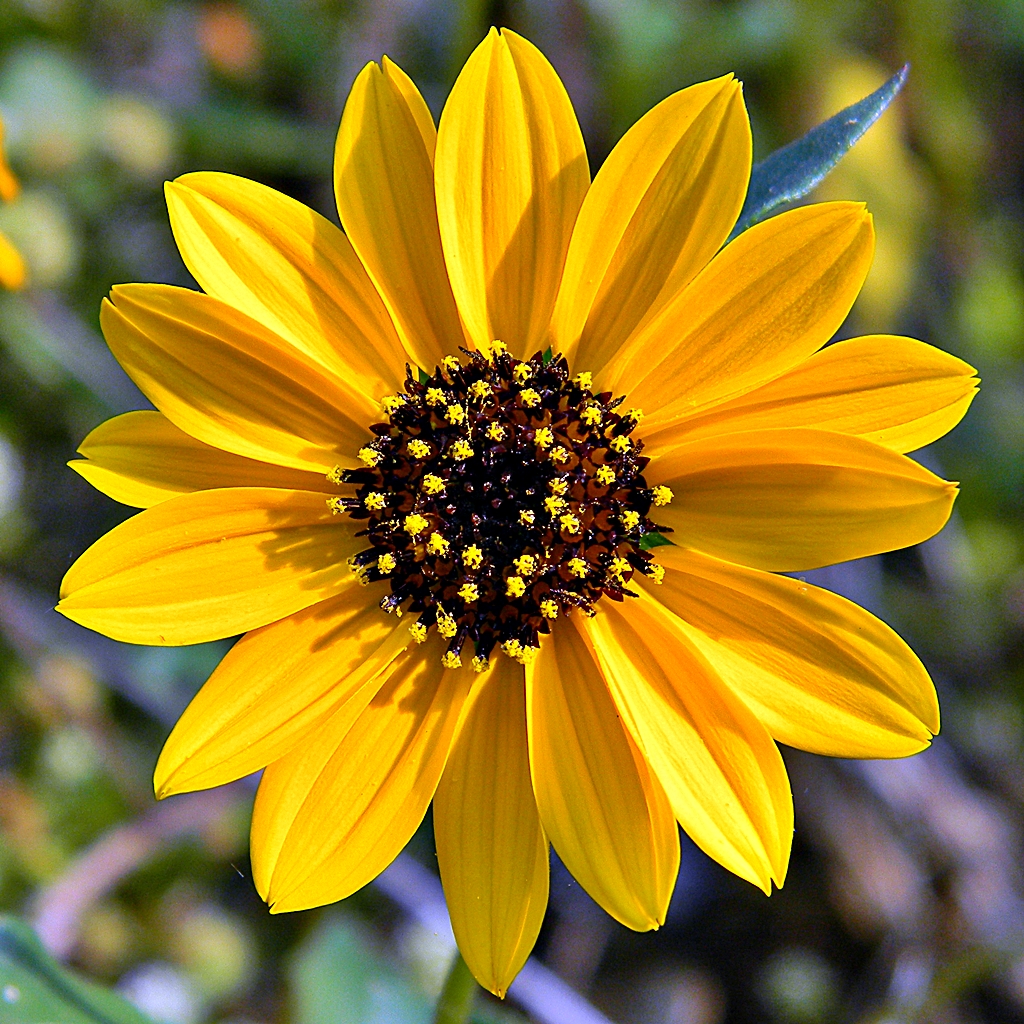
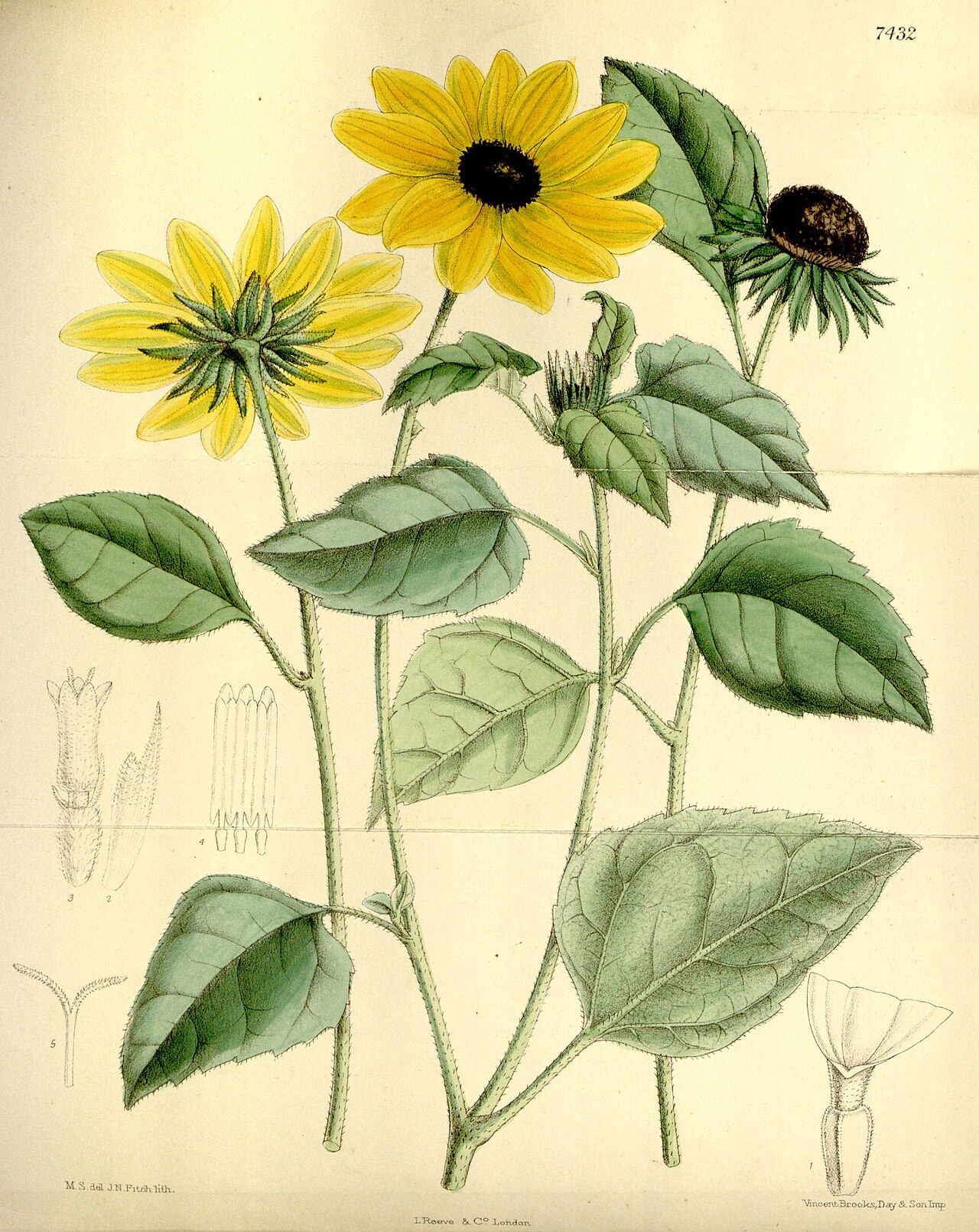
Cucumberleaf sunflower is the subspecies of Helianthus debilis with the widest distribution, found along the Atlantic and Gulf Coasts from the Carolinas to Texas, while its cousin beach sunflower, subsp. debilis, is endemic to Florida alone. In appearance it shares the species’ character: a low, sprawling, hairy-stemmed perennial with decumbent stems that root and spread, leaves that may be entire or shallowly lobed, and flower heads with 11 to 20 bright yellow rays and 30 or more reddish disk flowers with dark anthers. The stems are often red or brown mottled, and the plant rises up to 6 feet in flower above 1 to 3 foot long sprawling stems in lush conditions, though in most gardens it stays lower and wider.
The name cucumberleaf comes from the leaf shape in older classifications, when this subspecies was treated as its own species, Helianthus cucumerifolius, and the name stuck even after botanists folded it back into Helianthus debilis as a subspecies. Gardeners meeting it under either name are meeting the same plant: a tough, sprawling, yellow-flowered sunflower for hot, sandy, coastal ground.
Why this variety
Choose cucumberleaf sunflower when you want beach sunflower’s toughness with a wider coastal range and a slightly larger, more vigorous habit. It is the subspecies planted on beaches and dunes across the southeastern coast, where it forms a sand-binding groundcover that prevents erosion and stabilizes dunes, and in a garden it does the same job in a parking strip, a dune edge, or a hot, sandy border. Its flowers feed native bees and butterflies nearly year-round in warm climates, and its seeds feed small birds.
It is also the subspecies to plant if you garden outside Florida but in the coastal Southeast or Gulf Coast, where the Florida-endemic beach sunflower is not native but cucumberleaf is. In Florida, both subspecies grow well, and the choice between them is mostly about provenance: plant the Florida endemic in a Florida native garden, and cucumberleaf in a coastal garden where its wider range is the story.
How to grow
Sow or plant in spring in deep sand and full sun, spacing 18 to 24 inches apart and letting it sprawl. Like the species, it wants poor sand, not rich soil, and fertilizer makes it floppy. Direct-sow seed in spring after the soil warms, with no cold treatment needed, or plant transplants with the root mass just below the surface. It blooms nearly year-round in warm climates with no deadheading needed, and it self-sows freely, so treat it as a permanent patch that renews itself from seedlings rather than as a single long-lived plant.
Florida note: cucumberleaf sunflower grows in Florida as well as across the Gulf and Atlantic coasts, and it is a good choice for a Florida coastal garden, though the Florida-endemic beach sunflower is the more strictly native choice for a Florida native planting. Do not plant the imperiled hairy beach sunflower, subsp. vestitus, which is rare and not a garden plant. Cucumberleaf is the common, garden-worthy, wide-ranging form, and it will thrive in Florida sand with sun and almost no water.
Water & feeding
Water to establish, then almost nothing. Cucumberleaf sunflower is drought-tolerant in deep sand, and overwatering makes it floppy. Skip fertilizer entirely; lean sand is what it wants.
Common problems
Flopping in rich soil or with fertilizer: plant in sand and leave it alone.
Short life: a short-lived perennial that renews from seed. Let seedlings replace older plants.
Self-seeding: it reseeds freely. Edge it in a formal bed, or let it fill a sandy area.
Shade or wet soil: full sun and dry sand are essential. Shade makes it leggy, wet soil rots it.
Harvest
The harvest is flowers and seed, nearly year-round: cut stems for bouquets, leave seed heads for birds, and let seedlings renew the patch. The species’ flowers and seeds were historically used for natural dyes, a history this guide notes without recommending you try it. The modern harvest is a sandy spot that flowers in every warm month, for free.
Saving seeds
Cucumberleaf sunflower is one of the easiest plants to save seed from, and one of the easiest to save seed from badly, because the two problems are the same problem: everybody wants the seed. Birds, squirrels, and assorted small mammals all consider a ripening sunflower head a buffet you have thoughtfully raised for them. If you do nothing, you will still get seedlings next year, because this plant self-sows freely in sand. If you want seed in a packet, on your schedule, you need to get there first.
This is Helianthus debilis subsp. cucumerifolius, the wide-ranging coastal subspecies of beach sunflower, and its seed is the familiar sunflower achene: a single seed in a dry, husk-like fruit, packed cheek by jowl into the flower head. Let the flowers do their work first. Sunflowers are insect-pollinated and largely cross-pollinated, so a head needs pollen from neighbouring plants, and a lone plant in splendid isolation may set disappointingly little seed. Grow a patch, not a specimen, and let the bees commute between heads. When the petals fall and the back of the head turns from green to yellow and then to brown, and the seeds look plump and fully coloured and feel hard when pressed, the head is ready.
The practical move is to bag the heads while they finish. As soon as the petals drop, slip a paper bag or a square of cheesecloth over each head you want to save and tie it loosely around the stem. Paper breathes, which matters in Florida, where a plastic bag over a ripening head is a small mould factory. Leave the bagged heads on the plant until the backs are brown and the seeds rub out easily, then cut the whole head with a few inches of stem, bring it indoors, and rub the seeds out over a tray. Discard anything thin, hollow, or mouldy, and keep only the fattest, hardest seeds. Spread those in a single layer on a screen or tray in a dry, airy spot out of direct sun for a week or so, stirring occasionally, until a seed snapped between your fingers breaks cleanly instead of bending. That snap test is the difference between seed that stores and seed that rots in the jar.
Storage is where Florida gardeners earn their keep. Sunflower seeds are oily, and oily seeds go rancid and lose vigour faster than starchy seeds when they sit warm and damp. Dry them thoroughly, then store them in an airtight jar with a desiccant packet, in a cool, dark place; a refrigerator is a genuine upgrade here, not a fussy extra. How long they last is a subject on which sources cheerfully disagree, with some advising use within a year and others reporting useful germination for several years under cool, dry storage. The safe play is to sow saved seed the following season and keep any older packet as a backup, not the plan. Will seedlings grow true? Only if you control the pollen. Cucumberleaf sunflower crosses readily with other Helianthus debilis subspecies, including Florida’s own endemic beach sunflower, and with other sunflowers flowering nearby, and bees do not respect garden boundaries. Grow only one sunflower type for seed, or bag heads before they open and hand-pollinate between flowers of the same type. And a word on enthusiasm: this Florida native sprawls, roots where its stems touch sand, and self-sows with gusto, which is a virtue in a dune garden and a nuisance in a formal bed, so deadhead the heads you do not want seeding.