
🌸 Dalechampia
What it looks like
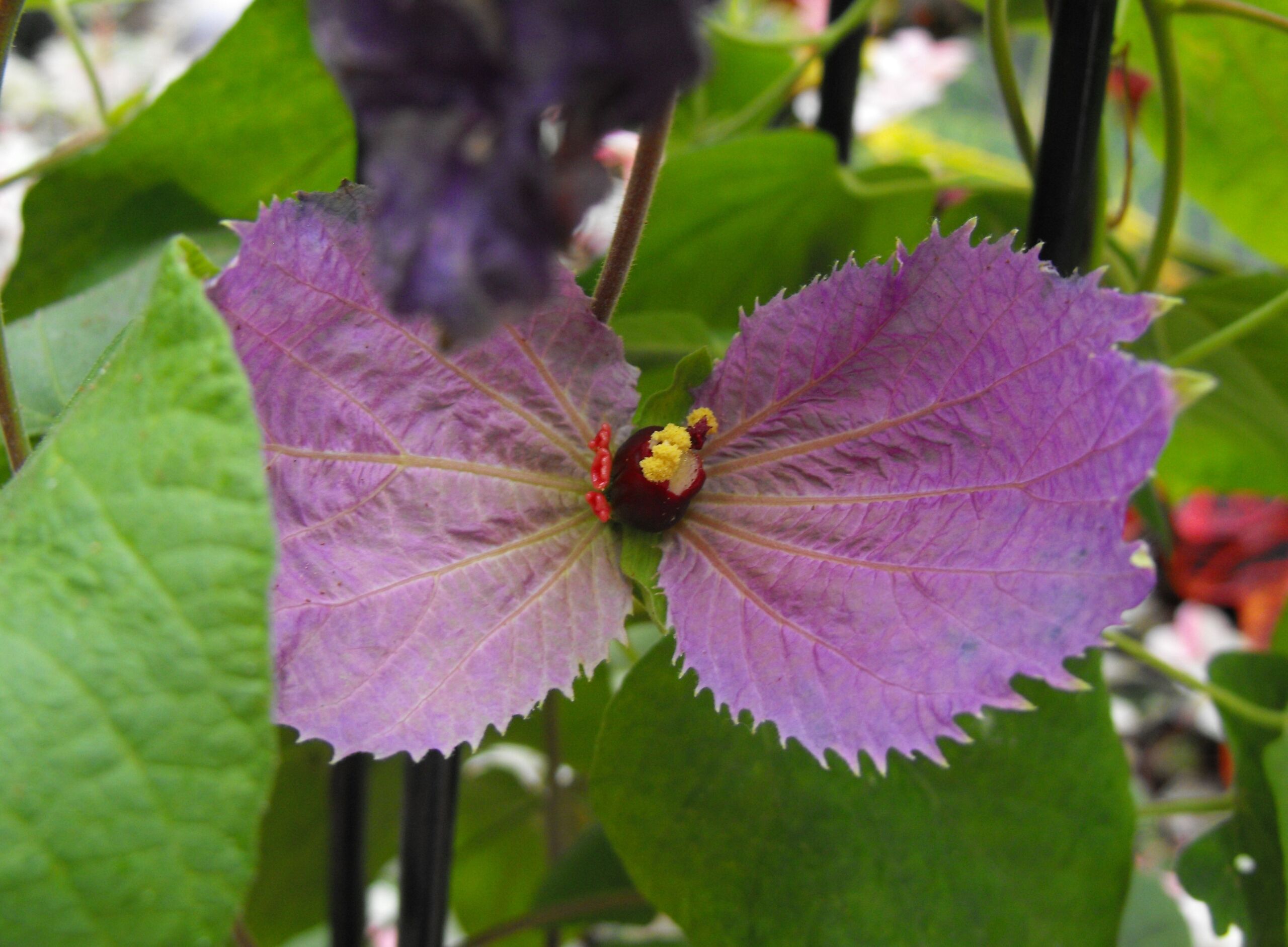
First, the scope note, because this guide is a genus guide and that matters: Dalechampia is a genus of roughly 120 species, and butterfly guides that list “dalechampia” as a host plant are naming the genus, not one species. This guide covers the genus — its shared habits, its famous flowers, and its notable species — and it does not pretend that every species behaves identically. When a guide says cracker or bluewing caterpillars eat Dalechampia, it means plants in this genus, and this is the guide those links point to.
Dalechampia belongs to the spurge family, Euphorbiaceae, and it is the only genus in its own subtribe, Dalechampiinae — a whole taxonomic branch to itself, which tells you botanists found it distinctive enough to fence off. The genus is widespread across lowland tropical areas, generally below 2,000 metres above sea level, primarily in the Americas, with smaller numbers of species in Africa, Madagascar, and southern Asia, and new species are still being described. Most are twining vines or scrambling shrubs, climbing by winding stems over whatever support they can reach, and several are very rare and at risk of extinction in the wild.
The flowers are the reason scientists care so much about this genus — its pollination and floral evolution have been studied more intensively than perhaps any other member of the spurge family, which is saying something for a family of over 7,000 species. Here is the trick: Dalechampia has unisexual flowers, male and female separately, but they are secondarily united into bisexual blossoms called pseudanthia, which act as the pollination units. In plain language, the plant builds a fake single flower out of several real ones, wraps it in showy bracts, and lets pollinators treat the whole assembly as one blossom. It is floral cosplay, and it works beautifully.
The pollinators are part of the show too. In the neotropics, most species are pollinated by resin-collecting female bees, including euglossine bees and Hypanthidium bees, which gather the plant’s resin to build their nests. About a dozen neotropical species, including D. spathulata, flipped the script: they are pollinated by fragrance-collecting male euglossine bees, which gather scents to attract females. The genus has made that evolutionary switch from resin to fragrance at least three times independently. And the showy part humans notice is the bracts: in the two horticultural stars, D. spathulata and D. aristolochiifolia, the blossoms carry bright pink to purple bracts that look like petals and stop passers-by mid-stride. One caution from the trade: D. aristolochiifolia, from Peru, has become very popular recently but is mistakenly advertised and distributed under the name D. dioscoreifolia — if you buy a “dioscoreifolia” with huge pink bracts, you very likely have aristolochiifolia instead.
The type species, and the one most relevant to North American gardeners, is Dalechampia scandens, spurgecreeper: a slender, stinging annual vine growing up to 3 metres long, with cylindrical stems covered in soft white or reddish hairs, simple alternate leaves on petioles 2 to 12 cm long, and blades deeply palmately lobed with 3 or sometimes 5 lobes, 6 to 13 cm across. Its inflorescence sits in the leaf axils on a slender, hairy stalk, with two trilobed bracts 2 to 3 cm long, cream, white, or pale green with five palmate veins, sheltering a compact group of three female flowers around a small umbel of nine to ten male flowers. The female flowers carry 6 to 12 deeply lobed, feathery sepals with clearly visible stinging glandular hairs, and the fruit is a distinctly three-chambered, globe-shaped capsule 8.5 to 10 mm wide, holding smooth, grey, black-mottled seeds 3 to 4.5 mm across. It is a larval host for Hamadryas cracker butterflies, which is exactly why the butterfly guides list it.
How to grow
Dalechampia is a tropical plant, and it wants to be treated like one: warmth, sun, moisture, and something to climb. Give it full sun to part shade, a rich, moist, well-drained soil, and a sturdy trellis, arbor, or fence — these are vigorous vines that will swamp a flimsy support and then look for the next one. Plant out only once nights are reliably warm; a single frost will kill the top growth of most species, and cold soil will rot a newly planted vine before it starts. In frost-free climates they persist as perennials; everywhere else, grow them as summer annuals or overwinter a cutting indoors, the way you would a tropical passionflower.
Space plants 3 to 6 feet apart along their support, and prune to shape: pinch shoot tips early to encourage branching rather than one long rope of vine, and cut back hard in late winter in frost-free regions to keep the plant within bounds. The vines are not shy — a happy Dalechampia in a warm climate can cover a fence in a season — so plant it where its enthusiasm is an asset, not where it will smother a prized shrub. Mulch to hold moisture, and water steadily through the growing season; tropical vines sulk in drought, dropping leaves and aborting blossoms.
Florida note: this is a mixed story, and honesty matters here. Dalechampia scandens is introduced in Florida, not native, and the Florida Plant Atlas lists it as not native with FISC Category II status — a plant that has shown potential to disrupt native plant communities. It grows in Florida’s warmth without any trouble, and cracker butterflies use it, but do not plant it near natural areas, do not let it seed into wild spaces, and consider whether a native host or a contained planting serves your garden better. The showy ornamental species (D. spathulata, D. aristolochiifolia) are greenhouse or container plants for most Florida gardeners: gorgeous on a patio trellis, and far easier to keep contained than a self-seeding vine in the ground.
Propagation is by seed or cuttings. Seed from the three-chambered capsules should be sown warm and fresh; cuttings of semi-ripe stems root readily in warm, humid conditions. Wear gloves when handling D. scandens and its stinging relatives: those glandular hairs on the female flower sepals are urticating, meaning they sting, and while this is not a plant to fear, it is a plant to handle with respect and long sleeves.
Water & feeding
Water regularly and generously through the growing season. Dalechampia comes from lowland tropical country where rain is a season, not an event, and it expects consistently moist soil. Let the top of the soil dry slightly between waterings, but never let a container plant dry out completely — wilted tropical vines recover slowly and drop their buds first. In the ground, a thick mulch layer does more for your vine than any watering schedule, holding moisture and keeping roots cool.
Feed like you would any hungry tropical vine: compost or well-rotted manure worked into the planting hole, then a balanced liquid feed every few weeks through the growing season. A vine that is putting on metres of growth and building elaborate blossoms is spending a lot of energy, and a starved plant gives you leaves and no flowers. Ease off feeding in autumn as growth slows, and do not feed a plant you are trying to overwinter indoors into soft, leggy growth — let it rest, keep it just moist, and resume feeding when spring growth restarts.
Common problems
- Frost. The number one killer. A single cold night blackens the foliage and can kill the plant outright. Grow as an annual outside the tropics, or keep a container plant frost-free.
- Stinging hairs. D. scandens and relatives carry stinging glandular trichomes, especially on the female flower parts. Wear gloves and long sleeves when pruning or handling seed heads.
- Self-seeding and escape. Vigorous species seed freely, and D. scandens is introduced and Category II-listed in Florida. Deadhead capsules if you do not want volunteers, and never plant it near natural areas.
- It smothers its neighbors. A happy vine climbs over everything in reach, including shrubs and small trees. Give it its own support and prune wandering stems before they annex the garden.
- Greenhouse pests indoors. Overwintered or container plants can pick up spider mites, whiteflies, and mealybugs in dry indoor air. Check leaf undersides regularly, and wash plants down before bringing them inside.
- No flowers. Usually too little light, too little water, or too much nitrogen pushing leaves at the expense of blossoms. Move it sunnier, water steadily, and switch to a balanced or bloom-leaning feed.
- Caterpillars eating it. Cracker and bluewing caterpillars eat Dalechampia — that is the butterfly connection, and in a butterfly garden it is the point. If you want both the vine and the butterflies, plant extra.
Harvest
There is no food harvest from Dalechampia, and this guide does not invent one. The “harvest” is ornamental and ecological: the bracts, the bees, and the butterflies. If you want seed, let the three-chambered capsules ripen on the vine until they feel dry and papery, then collect them before they split and scatter — wearing gloves for the stinging species — and sow fresh or store cool and dry. If you want cuttings, take semi-ripe stem sections in warm weather, strip the lower leaves, and root them in humid warmth.
For the showy species, the real harvest is the display: a vine in full bract is a conversation piece, and the resin- and fragrance-collecting bees that visit it are a wildlife show in their own right. Sit near a flowering plant on a warm morning and watch the bees work the pseudanthia — you will see why scientists have spent decades studying these blossoms, and why a genus most gardeners have never heard of has one of the richest pollination stories in the plant kingdom.
Saving seeds
This is a genus-level method, stated as such, because Dalechampia is a big tropical genus and the seed logic is shared across it: three-chambered capsules that burst when ripe, seed best sown warm and fresh, and cuttings as the reliable backup for an exact copy. The individual species differ in flower color, bract shape, and cold tolerance, but if you learn the capsule trick once, it serves you across the genus.
The capsule trick is the whole game, and it is a race. After the showy bracts fade and pollinators have done their work, small three-lobed capsules form where the flowers were. Left alone, those capsules dry, turn brown, and then burst open — botanists call it explosive dehiscence, which is a grand name for seeds pinging across the patio — scattering the seed before you ever get to it. The fix is embarrassingly low-tech: tie a small organza bag, a paper bag, or even a bit of old pantyhose over the developing capsules while they are still green. The bag catches the seed when the capsule pops, and you simply collect the bag. If you miss the bagging window, check the vine daily once capsules start browning, and snip any that are brown and taut before they fire. Crack the capsules open over a tray, pick out the seeds, and let them air-dry indoors for a few days out of direct sun.
Sow Dalechampia seed warm and fresh — freshness matters more here than with many garden seeds, since viability fades faster than it does for a bean or a tomato, so this is a save-it-and-sow-it proposition rather than a jar-for-a-decade one. Sow shallowly, barely covered, in a free-draining mix, keep it warm and evenly moist, and be patient: germination is famously sporadic in this genus, with seedlings emerging over weeks and sometimes a couple of months rather than in one tidy flush, so do not throw the tray out after a fortnight of nothing. Seedlings from a single species grown on its own generally resemble their parent, but if you grow several Dalechampia species close together, accept that bees may have mixed the pollen and the seedlings may surprise you. For an exact copy of a favorite plant, skip the seed entirely and take semi-ripe stem cuttings, a few inches long, rooted in warm, moist, sandy mix under humidity — cuttings root in a few weeks and give you the same plant, bracts and all. In Florida, the other thing to plan around is cold: most Dalechampia are tropical and a single frost can blacken the vine, so collect your seed (or take your cuttings) before the first cold snap threatens, and start seed indoors where you can control the warmth. One handling note: this is a spurge relative, so gloves are sensible when you are cracking capsules and handling cut stems, and wash your hands afterwards.
Species
The genus holds roughly 120 species, and no home gardener needs all of them. These are the ones that matter most for growing, for butterflies, or for not confusing one with another.
Dalechampia scandens — the type species, spurgecreeper. Slender, stinging annual vine to 3 metres, deeply lobed leaves, cream to pale green trilobed bracts, stinging glandular hairs on the female flowers. Widespread across Latin America and the West Indies, introduced in Florida (not native, FISC Category II), and a larval host for Hamadryas cracker butterflies. The species behind most butterfly-guide mentions of the genus.
Dalechampia spathulata — one of the two horticultural stars, from Central America and southern Mexico. Showy blossoms with bright pink to purple bracts, and one of the dozen or so neotropical species pollinated by fragrance-collecting male euglossine bees rather than resin collectors.
Dalechampia aristolochiifolia — the other horticultural star, from Peru, with particularly showy pink to purple bracts. Frequently and mistakenly sold as D. dioscoreifolia; if your plant has huge pink bracts and a dioscoreifolia label, it is almost certainly this species.
Dalechampia dioscoreifolia — the real D. dioscoreifolia, native from Central America (Costa Rica, Nicaragua, Panama) through northern and western South America. A genuine species in its own right, just not the one usually sold under its name.
Dalechampia triphylla — a vine of tropical South America, noted as a food plant for the larvae of several butterfly species. Less common in cultivation, but part of the genus’s butterfly story.
Dalechampia tiliifolia — widespread from Central America through northern and western South America to Trinidad, another of the broadly distributed neotropical species.
For most gardeners, the honest advice is this: grow the showy species as contained container or patio vines, treat spurgecreeper as a butterfly plant to manage with care rather than to spread, and buy from a seller who knows which species they are actually selling — in this genus, the label is not always the plant.