
🔔 Dark Towers Penstemon
What it looks like
Why this variety
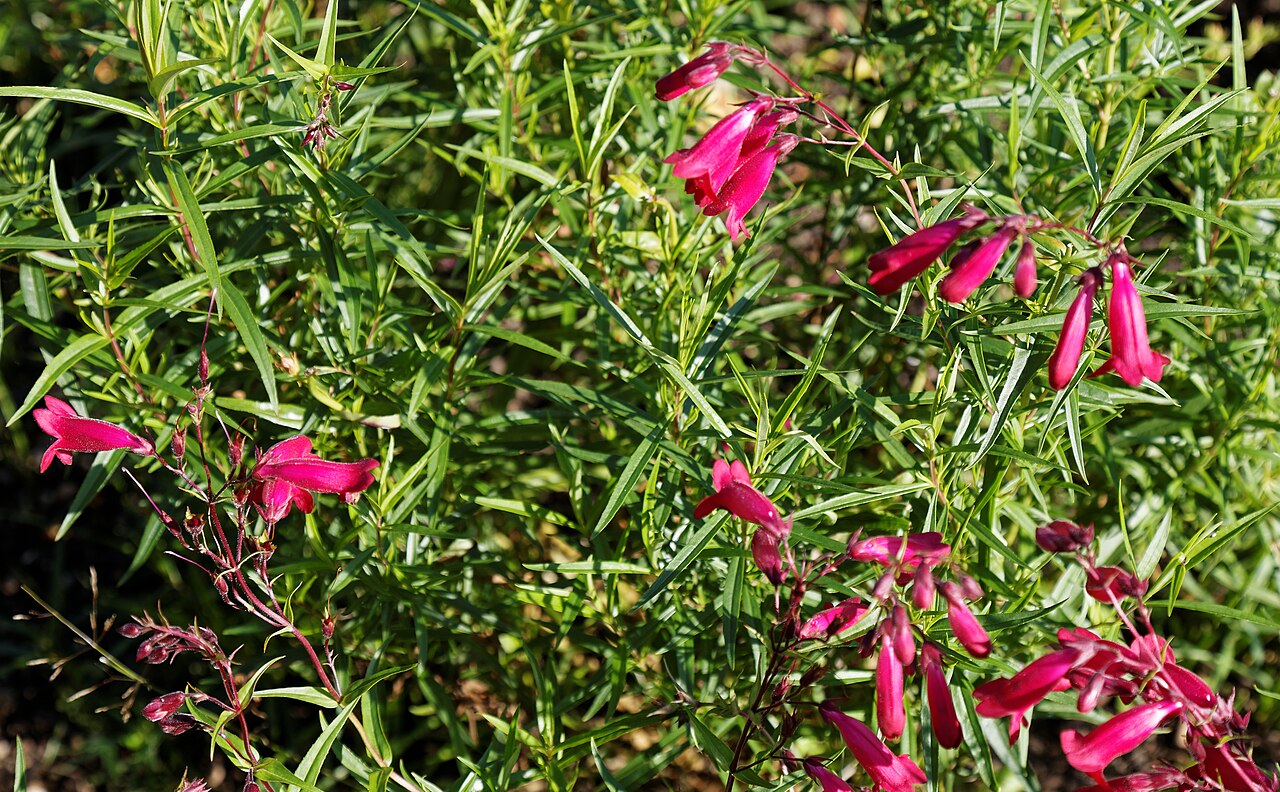
Dark Towers is Husker Red, grown moodier: a selection of foxglove beardtongue with even darker, wine-purple foliage than Husker Red, and pink — not white — flower spikes in late spring, so the whole plant reads as a dark tower with pink lights. It was bred as an improvement on Husker Red for foliage color and habit, and it delivers: darker leaves, a tidier mound, and flowers that contrast beautifully against the dark foliage instead of disappearing into it. If Husker Red is burgundy, Dark Towers is near-black, and in a sunny border that darkness makes every neighboring flower look brighter.
The trade-off is the same as all penstemon: wet soil rots it, rich soil flops it, and shade greens it up — Dark Towers’ dark foliage needs sun to stay dark, so do not plant it in shade and expect towers. Give it full sun to part shade, sharp drainage, and lean soil, cut back after bloom, and do not mulch heavily against the crown. Its darker foliage also shows heat stress sooner, so water through dry spells and give it air. In return you get the darkest penstemon foliage in the trade, which is a real distinction.
If you are new to choosing between cultivars, the Varieties Matter guide explains why the name after the plant matters as much as the plant itself. Dark Towers is a perfect example: it is not just a penstemon in the abstract, it is a penstemon with a specific job, a specific history, and specific strengths.
Florida honesty: penstemon is a North Florida trial, not a statewide perennial, and Dark Towers’ dark foliage makes heat stress more visible in Florida summers — a feature, not a bug, if you read it as a watering signal. In North Florida, plant it in sun with sharp drainage or a raised bed, and treat bloom as a spring triumph. In Central and South Florida, treat it as a cool-season trial and do not expect persistence through wet heat.
How to grow
Plant in spring in full sun to part shade and sharply drained, lean to moderately rich soil — penstemon is a sun-and-drainage plant that rots in wet soil, especially in winter, faster than it starves in poor soil. Work a little worm castings into the bed at planting, do not overfeed, and keep mulch pulled back from the crown. Cut back flower spikes after bloom for a possible second flush, and divide congested clumps in spring.
Set plants 15-18 inches apart in soil with a pH around 6.0-7.5. Work worm castings into the bed at planting and mulch to hold moisture. A well-fed penstemon plant rewards that care directly: steadier growth, better bloom, and a show that actually shows up.
Water & feeding
Water to establish, then water sparingly — penstemon is drought-tolerant once established and rots in wet soil, especially in winter, so overwatering is the mistake to avoid. Water at the soil line, do not mulch heavily against the crown, and feed lightly: castings at planting is usually enough, because rich soil makes floppy penstemon. Lean soil, sun, and drainage make long-blooming spikes.
Common problems
- Crown rot in wet soil, especially in winter — the penstemon killer; plant in sharp drainage, keep mulch off the crown, and do not plant where rain ponds.
- Flopping in rich soil — lean soil makes sturdier penstemon; do not overfeed, and cut back after bloom.
- Greening of dark foliage in shade — Dark Towers and Husker Red need sun to stay dark; shade greens them up, and no fertilizer restores the color.
- Short life in hot, wet summers — heat plus wet soil shortens penstemon life; in warm zones, treat it as a trial in sharp drainage.
- Slugs and snails on young growth in wet weather — pick at dusk and keep mulch pulled back slightly from crowns.
Harvest
Cut spikes for bouquets in late spring and summer, when spikes are fully colored — penstemon lasts well in water and its white or pink spikes suit cottage-style arrangements. Deadhead after bloom for a possible second flush, divide congested clumps in spring, and cut back dead stems in late winter. Leave some spikes standing for hummingbirds, which visit penstemon flowers eagerly, and do not compost diseased foliage.
Browse all plant & pest guides
Saving seeds
Dark Towers is a named penstemon selection bred for darker foliage, so seedlings won’t hold its near-black leaves — divide established clumps in spring instead. The Saving seeds section of the Penstemon guide covers seed for the straight species.