
🌿 Deer Brier
What it looks like
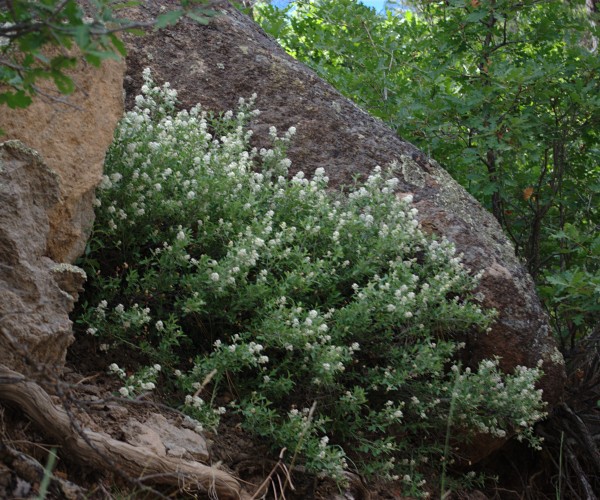
Deer brier is a shrub with a PR problem and a defence strategy. It is a member of the buckthorn family (Rhamnaceae) and the genus Ceanothus, the wild lilacs, and it grows as a twiggy, intricately branched shrub, typically 0.5 to 1.5 metres tall (about 1½ to 5 feet), with some forms reaching 6 feet. Sources disagree on the exact height because the plant itself disagrees: it is smaller and tighter in exposed, high places and lankier where it has shelter and moisture, which is the kind of variability that makes a single pinned height a lie. Its most honest field mark is not its size but its armament. The branchlets are rigid and thorn-tipped, grayish green when young and reddish brown when mature, with spines up to about 2.5 cm (an inch) long, and the whole plant has the look of a shrub that has decided, firmly, that not everything gets to eat it — which is ironic, because deer eat it anyway, and that is how it got its name.
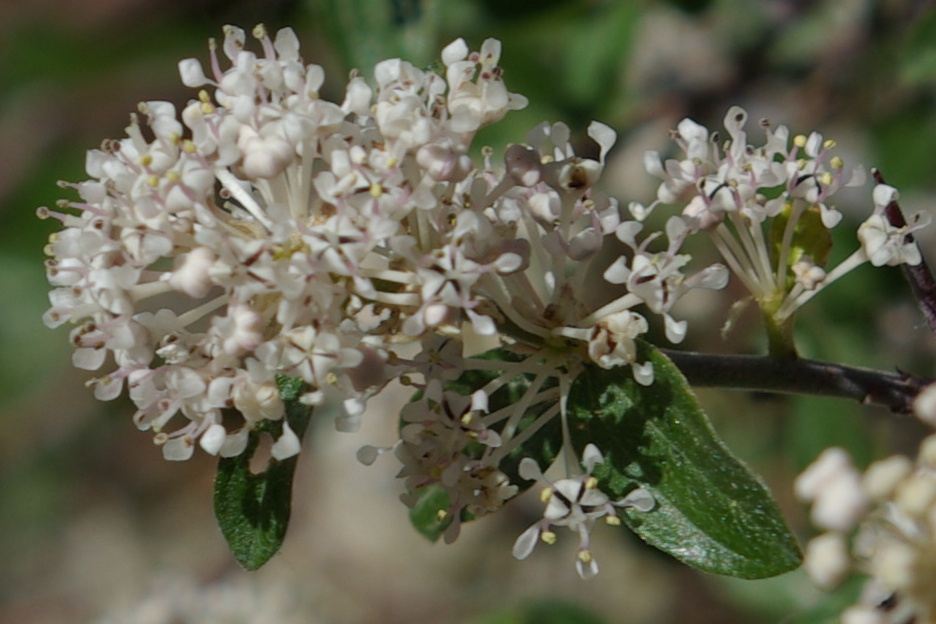
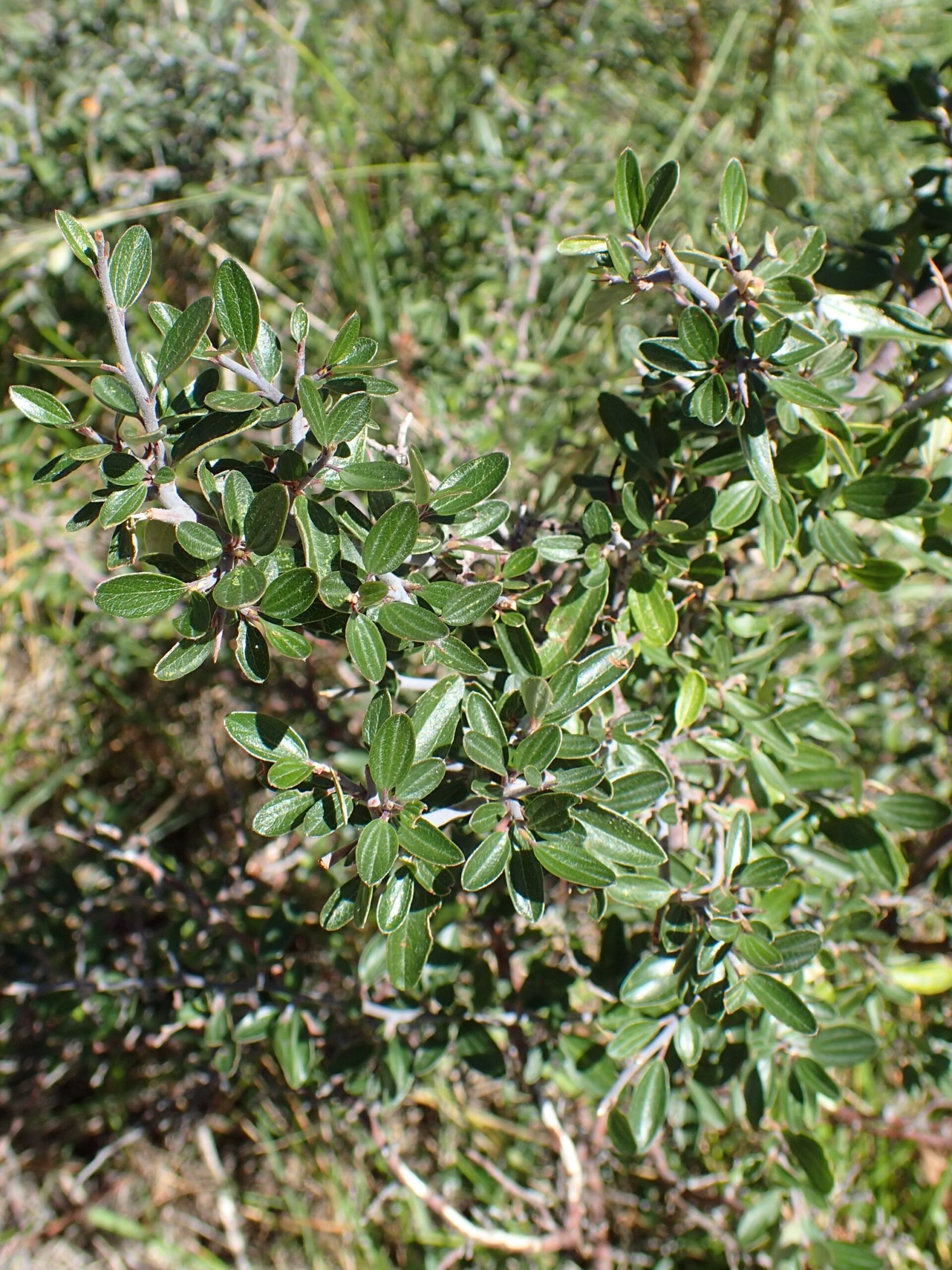
The leaves are small, usually around an inch long, ovate to elliptical, dark green above and paler gray-green below, with three prominent veins running from the base — the three-veined leaf is the Ceanothus signature, and once you have learned it you will start seeing it everywhere in the West. The flowers are the reward for getting past the thorns: tiny, about 2 mm across, white to pinkish, with five spoon-shaped or hooded petals, borne in thick clusters from the leaf axils, particularly on the older stems. They all open at once, so the shrub goes from green tangle to white cloud in a single gesture, usually in late spring into summer, with the exact timing shifting by altitude and weather — April to October across its whole range, June to August in the cooler accounts. The fruits are three-celled capsules, pink and glossy, roughly triangular, ripening in August and September, and when dry they pop open explosively, throwing their small dark seeds away from the parent plant with real force. A shrub that stabs you, feeds deer, and shoots its own seeds is not a shrinking violet. It is a mountain plant with opinions.
How to grow
Deer brier grows where the mountains are dry, rocky, and cold at night, and that is the whole cultivation brief. It is native to northern Mexico, Arizona, New Mexico, west Texas and the northeastern Texas panhandle, Utah, Colorado, eastern Wyoming, and western South Dakota, typically in pine forests at 1,500 to 3,000 metres (about 4,900 to 9,800 feet), and in rocky soils, slopes, open sites, chaparral, and oak-pine and conifer woodlands. Give it full sun to light shade and soil that drains sharply — rocky, gravelly, lean soil is ideal — and plant it where water does not sit. Like other ceanothuses it fixes nitrogen through its root associations, feeding lean mountain soil rather than demanding rich garden soil, which means it wants less fertility than you think, not more. Space it with room to spread and room for its thorns: this is not a shrub for a narrow path edge or a spot where children brush past it. It is a shrub for a dry bank, a rocky slope, or the back of a native border where its spring flower cloud can be admired from a respectful distance.
Propagation follows the mountain-shrub pattern: seed sown in spring, or cuttings taken in autumn, and plants grown from seed vary, which is normal for a wild species rather than a cloned cultivar. Water a new plant until it is established, then back off — a deer brier that is watered like a rose will sulk, and one that is watered like a cactus will feel at home. It needs no pruning to perform, and any pruning should be done with gloves and a plan, because the thorns are not decorative. Leave the seed capsules alone if you want seedlings, or collect them before they pop if you want to control where the next generation lands.
Florida note: Stated plainly, because Florida gardeners deserve it straight: deer brier is not a Florida plant. It is a shrub of high, dry pine forests, and Florida’s humidity, summer rain, and low elevation are the opposite of its home. This guide exists because butterfly guides list it as a host plant, not because it belongs in a Florida garden bed, and planting it in the peninsula would be an experiment with a predictable ending. If you garden in the Mountain West, it is a genuine native. If you garden in Florida, admire it here and plant a ceanothus-free butterfly garden instead.
Water & feeding
Water needs are low once the plant is established, and the plant’s own home explains why: it grows on rocky slopes where rain runs off and the soil dries between storms. Water deeply but infrequently in the first season, then let it live on rainfall in any climate that resembles its own. In a garden that gets regular summer rain, it may need no supplemental water at all, and the danger is always too much water, never too little. Wet, heavy soil around the crown is the fastest way to lose it.
Feeding: barely, or not at all. Deer brier evolved on lean, rocky, mineral soils and makes its own nitrogen with its root partners, so rich soil or heavy fertilizer produces soft growth that the plant does not need and that its mountain constitution does not suit. A gravel mulch that keeps the crown dry and the roots cool is worth more than any fertilizer. The soil science here is the mountain story: thin, rocky soil, a nitrogen-fixing shrub, and a community of microbes and fungi that cycle nutrients slowly in cold, dry conditions. The shrub is not just surviving on poor soil. It is improving it, one root nodule at a time, which is why it shows up after disturbance and why deer keep coming back to it.
Common problems
- Wet soil. The big one. Heavy clay or a low spot that holds water will rot the crown and kill the plant. Plant high, plant rocky, and let the soil drain.
- Thorns. Not a plant problem, a people problem. The thorn-tipped branchlets puncture skin and snag clothing. Site it away from paths and wear gloves when working around it.
- Deer browse. The plant is named for this, so it is hardly a surprise: deer are particularly fond of it, and in one Arizona study it made up to 6.9 percent of mule deer’s summer diet. If you plant it where deer roam, expect it to be eaten, and consider that a compliment from the animal it is named for.
- Wrong region. A high-mountain shrub in a humid lowland garden is a plant out of place. Check the native range before you buy, and buy by Latin name.
- Caterpillar feeding. Duskywing caterpillars eat the leaves, and that is the point of planting it. A healthy shrub recovers, so do not spray the caterpillars — they are the crop.
- Seed popping. Dry capsules throw their seeds forcefully, so seedlings may appear where you did not plant them. Collect capsules before they dry if you want to control the spread.
Harvest
There is no vegetable harvest here, and the traditional uses are history and caution in equal measure, not a recommendation. The leaves have been dried as a tea substitute, the fruits were eaten by the Acoma and Laguna Pueblo people, and the plant is rich in saponins — the soap-making compounds that make crushed parts lather in water — which is why its edibility is marginal at best: the immature fruits are described as bitter, acrid, and soapy, an emergency food rather than a staple, and the plant’s medicinal history includes uses for nervousness that belong to the traditions of the people who developed them, not to a backyard experiment. The home gardener’s harvest is different and safer: seed, collected before the capsules pop, cuttings in autumn, and the spring flower cloud itself, watched from a respectful distance while bees work it and, if you are lucky, a duskywing patrols it. Leave most plants standing through the season for the caterpillars, prune only with gloves, and let the shrub do what mountain shrubs do: hold a slope, feed the soil, and arm itself against everything except the deer.
Browse all plant & pest guides
Saving seeds
Deer brier seed-saving starts with a small explosion, which is fitting for a plant that defends itself with thorns. The capsules ripen and then split open with real force, flinging their seeds away from the parent shrub, so if you wait until the capsules look fully dry, you will be collecting an empty crime scene. The trick is to get there just before the pop: watch the capsules as they swell and start to colour, and when they look nearly ripe, slip a small paper bag or a bit of fine mesh over a branchful and tie it loosely in place. The bag catches the seeds, and saves you crawling around in a spiny shrub.
Clean the catch by shaking the capsules in the bag until they split, then picking out the hard, dark seeds and discarding the capsule husks and any shrivelled or insect-damaged seed. Deer brier seed wears a famously tough coat, and that coat is the whole story of this species. In the wild it is fire that cracks the code: heat opens the seed coat, water gets in, and the seed wakes in the first rainy season after a burn, which is why deer brier is one of the plants that comes roaring back after wildfire. In the garden you imitate fire without actually setting anything alight. The usual genus-level method is a hot-water soak, water that is hot but not boiling, poured over the seed and left to cool and soak for most of a day, followed by a period of cold, moist stratification in the refrigerator for a couple of months. Sources differ on the exact soak time and chill length, and gardeners differ on whether nicking each seed coat with a file works better than hot water, so treat your first batch as an experiment: split the seed into two small lots, try hot water on one and nicking on the other, and keep notes, because your seed lot will tell you which it preferred.
Sow treated seed in spring in a very well-drained, gritty mix, barely covered, and keep it moist but never waterlogged while you wait. Germination can be slow and staggered, with some seeds coming up in a few weeks and others taking their time, which is normal for a plant whose whole strategy is to hedge its bets across seasons. Prick seedlings out carefully when big enough to handle, since ceanothus seedlings resent root disturbance, and grow them on in pots until sturdy. Do not overwater or overfeed them: deer brier is a nitrogen-fixer through its partnership with Frankia bacteria in its roots, so it makes much of its own nitrogen and prefers lean, sunny, well-drained soil to rich, soggy coddling.
Two honesty notes matter here. First, ceanothus species hybridise freely, so seed collected from a plant growing cheek by jowl with other ceanothus species may produce offspring that are not pure deer brier. For plants close to the parent, collect from a vigorous, isolated plant; for an exact copy, take cuttings. Second, stored seed keeps well precisely because of that hard coat: dry it thoroughly, keep it cool, dry, and dark in a labelled envelope inside an airtight jar, and it should stay viable for a few years, though fresh, properly treated seed is still your best bet. Range note: deer brier is a mountain shrub of the interior West, not a Florida plant, so dry seed indoors until hard, add desiccant, and save it for its home range.
Species in this group
Deer brier (Ceanothus fendleri) — the species this guide covers: the spiny, three-veined, white-flowered shrub of high pine forests from South Dakota to northern Mexico, and the host plant named in the Pacuvius Duskywing guide.
Fendler’s ceanothus, greenleaf form (Ceanothus fendleri var. viridis) — plants with glabrous leaves found throughout the species’ range, named as a variety of this species, not a separate species.
Fendler’s ceanothus, venosus form (Ceanothus fendleri var. venosus) — plants with widely elliptic, villosulous leaf blades, also named as a variety of this species.
Ceanothus (Ceanothus species) — NOT this species: the genus guide covers the wild lilacs as a genus, and this species guide does not replace it, nor does the genus guide cover this species in particular. The two coexist, and the Latin name is what tells them apart.
Buckbrush (Ceanothus cuneatus) — NOT deer brier: a separate species that shares the common name “buckbrush,” which is also used for Ceanothus fendleri itself. This is exactly why the guide insists on Latin names: common names are shared, species are not.
Mountain whitethorn (Ceanothus cordulatus) — NOT deer brier: a fellow Pacuvius Duskywing host, listed alongside deer brier in the same butterfly guide, but a separate species.
Hairy ceanothus (Ceanothus oliganthus) — NOT deer brier: another fellow Pacuvius Duskywing host from the same guide list, and a separate species.